Gear Decisions07 September 2026
How to Put On a Dog Harness: A Calm Fit-and-Comfort Guide
How to put on a dog harness without turning it into a struggle: use short, rewarded steps, check fit and movement, and pause when comfort changes.
TextPetzette Editorial
Read5 Min

Evidence status
Source-backed editorial
- Evidence record
- 4 claim cards linked to 4 documented sources.
- Independent expert review
- Not commissioned. Petzette Editorial is responsible for the published wording.
- Source record checked
- 14 July 2026
- Scope
- General guidance. Individual animals and circumstances can differ.
How to put on a dog harness is not just a buckle question. The exact fastening sequence varies by design, but the dog-centered decision stays consistent: make the next step small, keep the harness secure without rubbing, and stop when the dog’s comfort changes.
That approach matters for a new dog, a growing puppy, or any dog who has learned that equipment predicts a difficult moment. A harness should become part of a predictable routine, not a test of how long a dog can tolerate being held.
Before You Put the Harness On, Make the Setup Easy
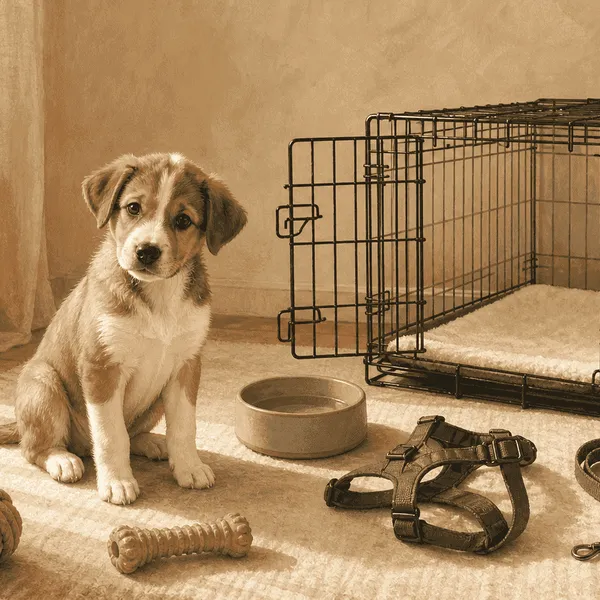
Choose a quiet place with enough room for the dog to turn away. Have the harness open and ready before you call the dog over. If the dog is already trying to leave, stiffening, or avoiding your hand, do not close the distance to finish the job. Give the dog a little space and make the next attempt easier.
Dogs Trust’s handling guidance recommends starting on a body area the dog already enjoys, keeping the session short, rewarding just after touch, and stopping at discomfort. The useful rhythm is simple: brief touch, hand away, reward, pause. The reward is not a way to override pain; it is part of teaching that a small, predictable step can end safely.
The American Veterinary Society of Animal Behavior’s 2021 position statement also recommends reward-based training that teaches the wanted behavior without fear, pain, intimidation, or discomfort. You can use a small food reward if it suits your dog’s daily plan, or another outcome the dog values.
How to Put On a Dog Harness in Small Steps
The steps below are deliberately design-neutral. Use the harness’s intended orientation, but do not copy the fastening sequence from a different model. The goal is to introduce one new movement at a time:
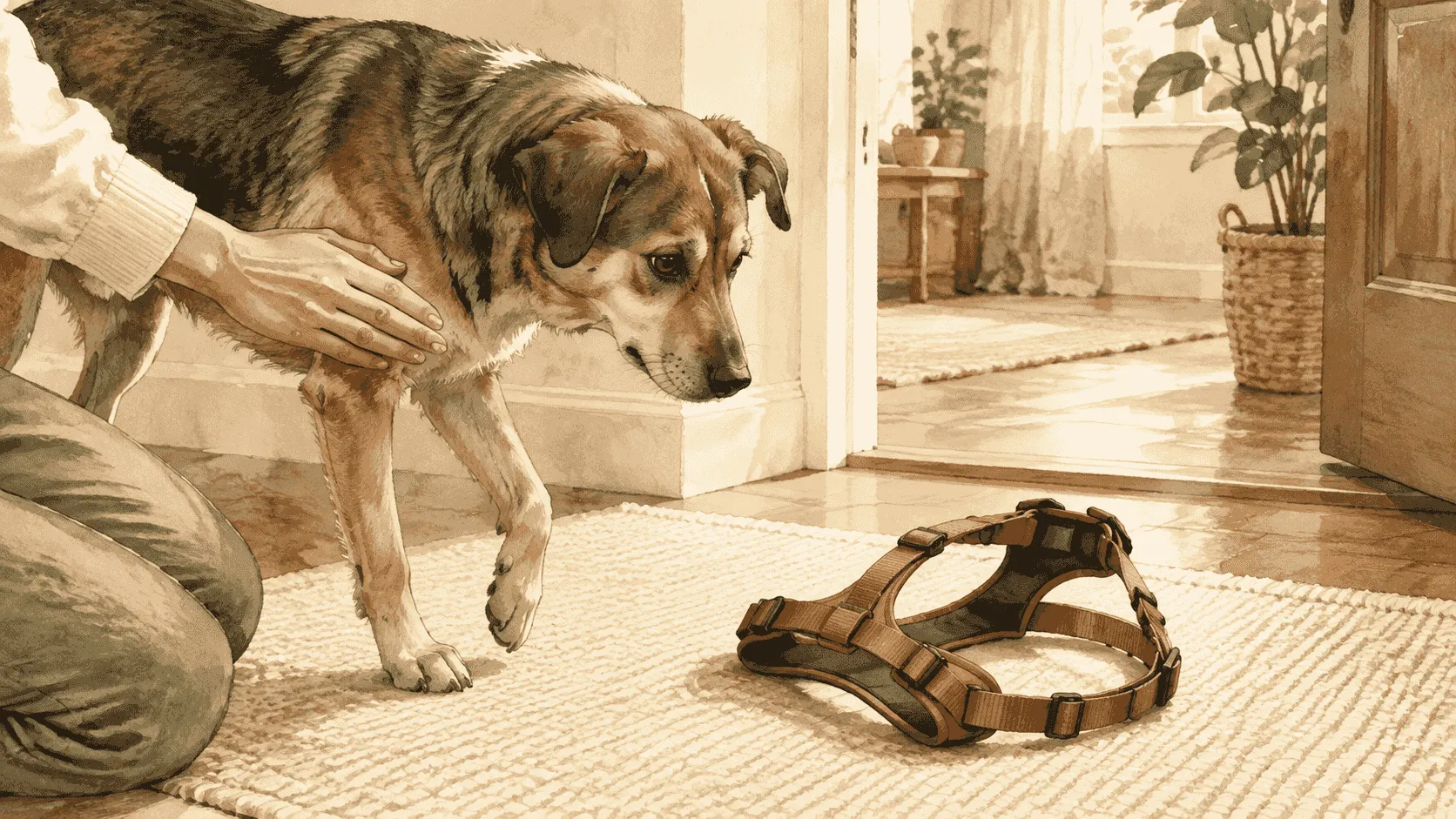
- Show the harness, then wait. Hold it low and to the side rather than moving it over the dog’s head. Let the dog look, sniff, or move away. Reward a calm glance or voluntary return if that is comfortable for the dog.
- Bring it closer in stages. Move the harness a little nearer, pause, then put it back down. If the dog stays relaxed, repeat. If the body becomes tense or the dog retreats, return to the earlier distance.
- Pair one brief contact with release. Touch an already comfortable area with the harness or your hand, move away, and reward. Do not use the harness to trap the dog against a wall or furniture.
- Add the opening or strap. Bring the part that belongs around the dog’s body into position only while the dog can remain balanced and choose to pause. Move slowly enough that you can stop before a struggle begins.
- Close one fastener, then check in. Buckle the intended fastening without rushing to attach the leash. Pause, reward, and watch the dog’s whole body. If the dog cannot settle, undo the step and return to a version that worked.
Do not aim to complete every part in one session. A dog who can calmly see the harness today may be ready for one strap tomorrow. That is progress when the routine remains voluntary and readable.
Check Fit Before You Leave
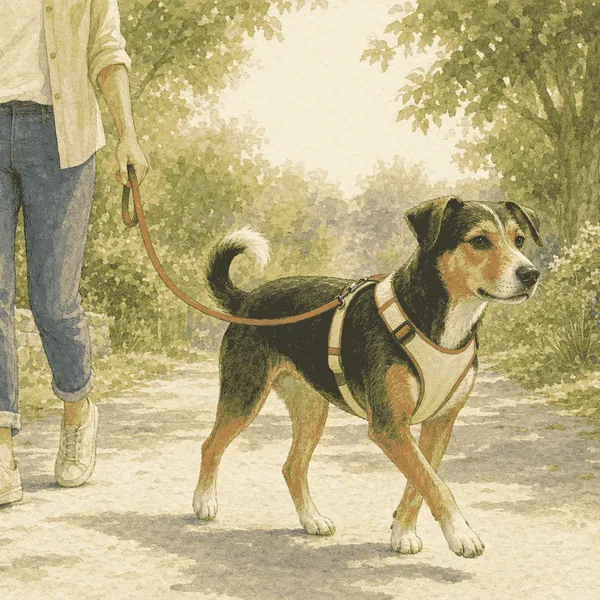
Putting the harness on is only half the decision. With it adjusted, check that it stays secure while the dog stands, turns, and walks. Straps should lie flat rather than twist or catch folds of coat, and contact points should not rub the skin. The dog should be able to use a normal posture and natural movement for that individual.
A 2026 review in Frontiers in Veterinary Science found that every harness type examined in published gait studies changed at least one measured aspect of movement. The size and direction of the changes varied among designs, dogs, tasks, and studies. That does not show that ordinary harness use causes pain or future injury, and it does not identify a universal best shape. It supports checking this dog’s fit and movement instead of trusting a label.
Recheck a puppy as it grows, and reassess after changes in coat, body shape, muscle, or mobility. For the wider choice between equipment and walking setting, see the dog harness fit and movement checklist. It covers intended use, security, rubbing, and the limits of “no-pull” promises.
Watch the Whole Dog, Not One Reaction
Dogs Trust advises reading the individual dog, the whole body, and the situation. A single lip lick, glance, pause, or head turn cannot tell you whether the harness is the problem. Look at the sequence: what happened before the harness appeared, what the rest of the body did, and whether the dog returns to ordinary movement after the harness is removed.
If the dog repeatedly avoids the harness, freezes, pants, cowers, tries to escape, or becomes aggressive, stop the current practice. Those observations do not diagnose one cause, but they do say that the step is too hard or that the dog needs a closer assessment. Sudden sensitivity, pain, skin injury, altered gait, breathing difficulty, or an established fear response belongs with a veterinarian and, when appropriate, a qualified behavior or rehabilitation professional.
A Short Harness Check for Today
Before the next walk, ask:
- Can the dog move away and return during the routine?
- Did you change only one part of the process at a time?
- Does the harness stay secure without rubbing or catching coat?
- Can the dog stand, turn, and walk in a familiar way?
- Did you stop while the dog was still able to stay relaxed?
If today’s answer is no, make the next session smaller. The dog leash guide can help with the separate decision about walk setting and manageable reach. The aim is not to finish quickly; it is to build equipment handling that remains safe, clear, and comfortable for the dog in front of you.
Sources
Petzette's claim cards for this article point to the following scientific, veterinary, or animal-welfare sources.
- Dog-Worn Equipment Health Review 2026: Peer-reviewed narrative review of physical risks and evidence gaps
Ridgway M. Health implications of dog-worn equipment: a review of known and alleged physical risks. Frontiers in Veterinary Science. 2026;13:1711781.
- Dogs Trust Gradual Handling Guidance: Animal-welfare cooperative handling guidance
- AVSAB Humane Dog Training 2021: Veterinary behavior society position statement
- Dogs Trust Body Language Context Guidance: Welfare organization dog body-language guidance