Nutrition01 October 2026
Is Coffee Toxic to Dogs? Save the Product Details Before You Call
Is coffee toxic to dogs? Learn why caffeine form and amount matter, what to record, and when to call a veterinarian or poison-control service.
TextPetzette Editorial
Read5 Min
Evidence status
Source-backed editorial
- Evidence record
- 1 claim card linked to 2 documented sources.
- Independent expert review
- Not commissioned. Petzette Editorial is responsible for the published wording.
- Source record checked
- 01 October 2026
- Scope
- General information, not an individual diagnosis or treatment plan.
Is coffee toxic to dogs? Coffee and other caffeine-containing products can be toxic to dogs, so they are not appropriate treats. The useful decision after possible access is not to calculate a home-safe amount or wait for a visible change. Keep the product details, note what may have happened, and contact your veterinarian or an animal-poison-control service promptly.
The form matters. A spilled mug, a bag of beans, used grounds, a coffee pod, an energy product, or a supplement can create different exposure questions. This guide helps you preserve the facts without turning a general warning into a dose chart or a home-treatment plan.
Start With the Exact Coffee Product
“Coffee” is not a complete exposure record. Before you interpret the incident, look at what your dog could actually reach:
- brewed coffee, whether hot, iced, black, or mixed with other ingredients;
- whole beans, ground coffee, or used grounds from a bin or compost;
- pods, concentrated shots, energy drinks, tea, or caffeinated supplements; or
- a dessert, drink, or product whose label lists coffee, caffeine, or another stimulant.
The ASPCA Animal Poison Control Center groups coffee and caffeine with methylxanthine-containing people foods that can be toxic to pets. Pet Poison Helpline also lists caffeine in drinks and more concentrated products such as beans, grounds, tea bags, and supplements. Those categories are a reason to identify the item, not a reason to assume every form has the same risk.
Keep the original package, pod, recipe label, or a clear photograph available. If the product was mixed with other ingredients, record that rather than reducing the event to the word “coffee.” If the amount is unknown, write “unknown.” False precision is less useful than an honest uncertainty.
Why a Symptom List Cannot Clear an Exposure
The absence of a visible change does not establish that a dog received a safe amount. A dog may look ordinary while the product, concentration, amount, timing, size, and individual health still need professional assessment. A new or concerning change is important to report, but it does not identify caffeine as the cause.
Do not use a symptom list as a waiting game. Do not decide that one lick, one bean, a large dog, or a diluted drink is automatically harmless. The approved evidence does not set a universal safe amount for every dog and every caffeine product.
If you are comparing this question with another household exposure, the borax label-and-call safety check for dogs shows the same evidence habit: identify the exact product before deciding what the next call should include.
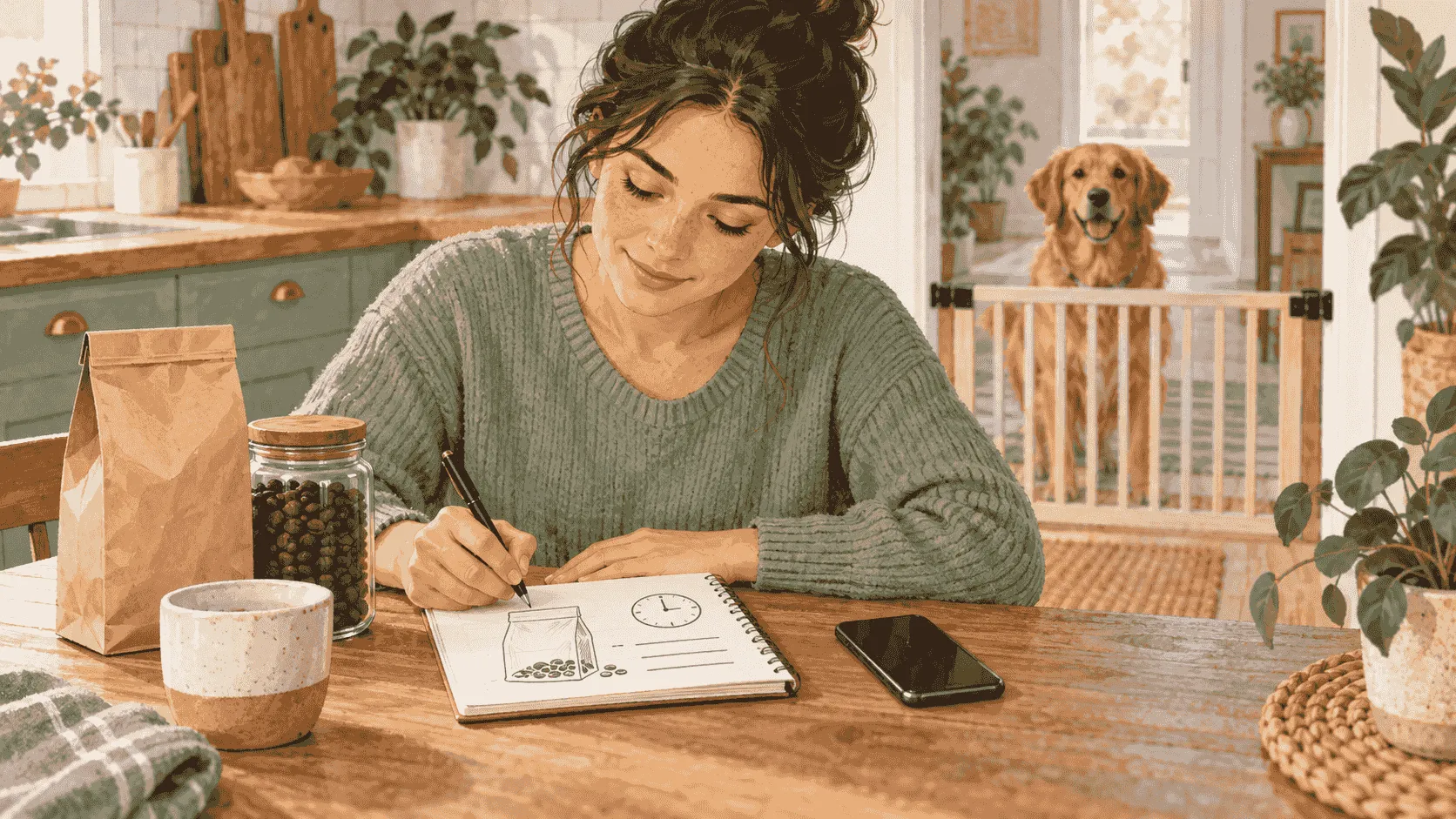
Make a Short Record Before You Call
Gather what you can without delaying professional contact:
- Product: Write the exact name, form, ingredient panel, and caffeine information if the label provides it.
- Possible amount: Describe what you saw or what appears to be missing. If you do not know, say so; do not turn a spill into a guessed dose.
- Timing: Note when access may have happened and when the product was last known to be intact.
- Dog details: Have your dog’s age, approximate weight, relevant health information, and current medicines ready.
- Current condition: Record what you actually see and when it began. A description supports the call; it cannot diagnose the cause or replace professional direction.
This note is a handoff, not a risk calculator. The product form and label can matter as much as the word “coffee,” especially when grounds, beans, pods, supplements, or a mixed recipe are involved. Keep the package beside you while speaking with your veterinarian or animal-poison-control service.
What to Do After Possible Access
First, prevent another opportunity if you can do so safely. Move the dog away from the spill, container, bin, or counter without chasing or creating another exposure. Keep children and other animals away from the area. Preserve the package or label; do not throw away the evidence before you have recorded it.
Then contact your veterinarian, an emergency veterinary service, or an animal-poison-control service promptly. Explain the exact form, possible amount, timing, your dog’s details, and any change you have noticed. If you are unsure whether the dog swallowed anything, report that uncertainty instead of using the dog’s current appearance as reassurance.
Do not induce vomiting, give medication, offer charcoal or milk, or try another household remedy unless the professional handling the case specifically directs it. Do not use an online calculator to decide that a possible exposure is safe. The product, concentration, amount, route, and individual dog can change what professional care recommends.
If your dog is already showing a concerning change, say that first when you call and follow the service’s urgent instructions. Do not delay contact while trying to identify a perfect symptom pattern. This article cannot diagnose poisoning, choose treatment, provide a dose, or set a waiting period.
For another food-exposure example that explains why a home threshold can mislead, see the onion safety guide for dogs. The shared action is to preserve the label and call—not to borrow a number from a different product.
Prevent the Next First-Year Coffee Scare
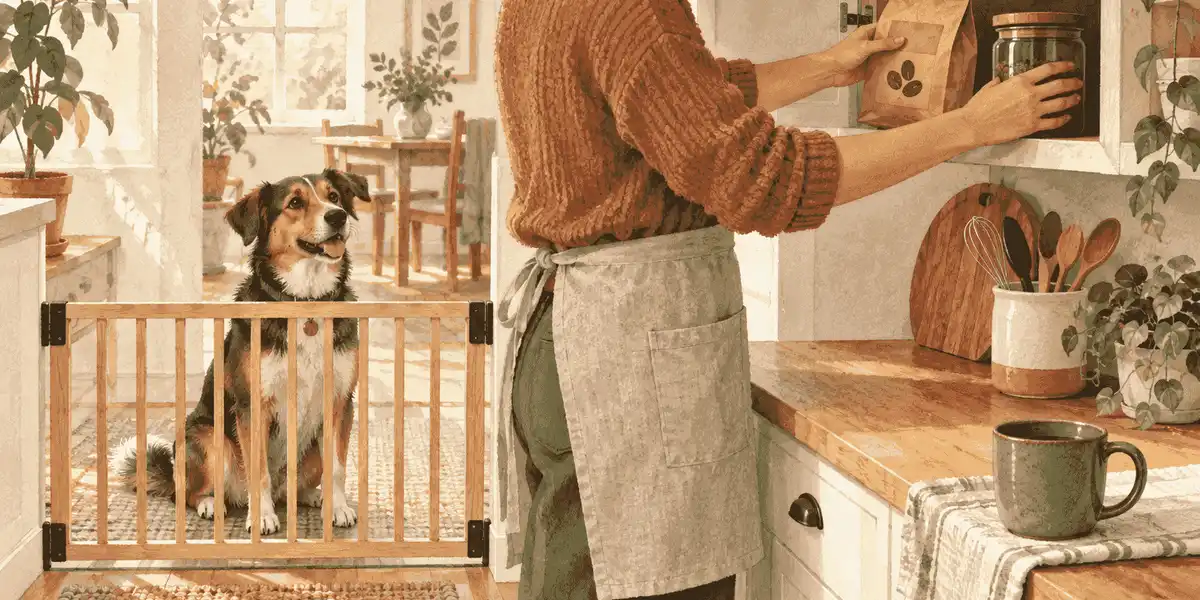
Coffee routines change when a new dog arrives. A mug is placed on a low table, beans are transferred to a grinder, grounds go into an open bin, or a guest assumes the dog can have a taste. Prevention works best when it follows the whole route from counter to trash:
- keep beans, grounds, pods, supplements, and caffeinated drinks in closed storage;
- use a lidded bin or remove grounds and pods promptly;
- keep cups and travel mugs out of reach, including while cleaning up a spill; and
- tell visitors that coffee and caffeine products are not dog treats.
Do not use coffee, grounds, or caffeine products as a training reward, enrichment ingredient, or home remedy. If a spill happens, keep the dog away while you identify what was spilled and clean it according to the product label. Store the label with other first-year household-safety information so a future call does not depend on memory.
Use a Three-Lane Coffee Check
- No access: Put the exact product behind a closed barrier and keep grounds, beans, pods, and supplements out of reach.
- Possible access, no clear change: Preserve the product and timing details, then contact your veterinarian or animal-poison-control service promptly rather than guessing.
- Concentrated or unknown product, or a concerning change: Treat the situation as urgent, keep the label ready, and follow professional direction. Do not attempt home treatment.
The useful first-year habit is not memorizing a single coffee verdict. It is learning to separate a brewed drink from concentrated or mixed products, keep the exposure record honest, and ask a veterinarian or poison-control professional to assess the individual dog. Coffee is for people; the next action after possible access belongs in a professional conversation.
Sources
Petzette's claim cards for this article point to the following scientific, veterinary, or animal-welfare sources.
- ASPCA People Foods: Coffee And Caffeine Pet Safety: Animal poison-control and pet-safety guidance
- Pet Poison Helpline Caffeine Exposure In Dogs And Cats: Animal poison-control toxicology guidance