Nutrition13 August 2026
How Much Onion Is Toxic to Dogs? Don't Use a Home Threshold
How much onion is toxic to dogs? Skip a home dose chart, save ingredient details, and get prompt veterinarian or poison-control advice.
TextPetzette Editorial
Read3 Min

Evidence status
Source-backed editorial
- Evidence record
- 2 claim cards linked to 2 documented sources.
- Independent expert review
- Not commissioned. Petzette Editorial is responsible for the published wording.
- Source record checked
- 01 August 2026
- Scope
- General information, not an individual diagnosis or treatment plan.
How much onion is toxic to dogs? It is tempting to turn a missing bite, a dropped onion ring, or a spoonful of sauce into a number. The safer next step is not a home dose chart. Onion, garlic, chives, and leeks belong to the Allium family, and the relevant details can vary with the preparation, the possible amount, repeated exposure, and the individual animal.
If your dog may have eaten an Allium ingredient, preserve the food or label, note what you can about the time and amount, and contact a veterinarian or animal poison-control service promptly. This guide helps you collect the right facts without trying to calculate a clearance at home.
Why a Home Dose Chart Cannot Answer This
A weight-based online number can look reassuring, but it cannot account for the whole exposure. A 2016 review in Frontiers in Veterinary Science and current MSD Veterinary Manual guidance describe Allium hazards across raw, cooked, dried, and processed foods. Their reported dose observations vary by species, preparation, repeated exposure, and individual susceptibility.
That uncertainty changes the decision. Do not use a body-weight calculation, a normal early appearance, or the idea that the food was cooked as a reason to wait. Keep the exact ingredient and recipe details beside you for the call instead. For a broader route through common food hazards, use our dog-food hazard checklist.
Onion Is Only One Allium Ingredient
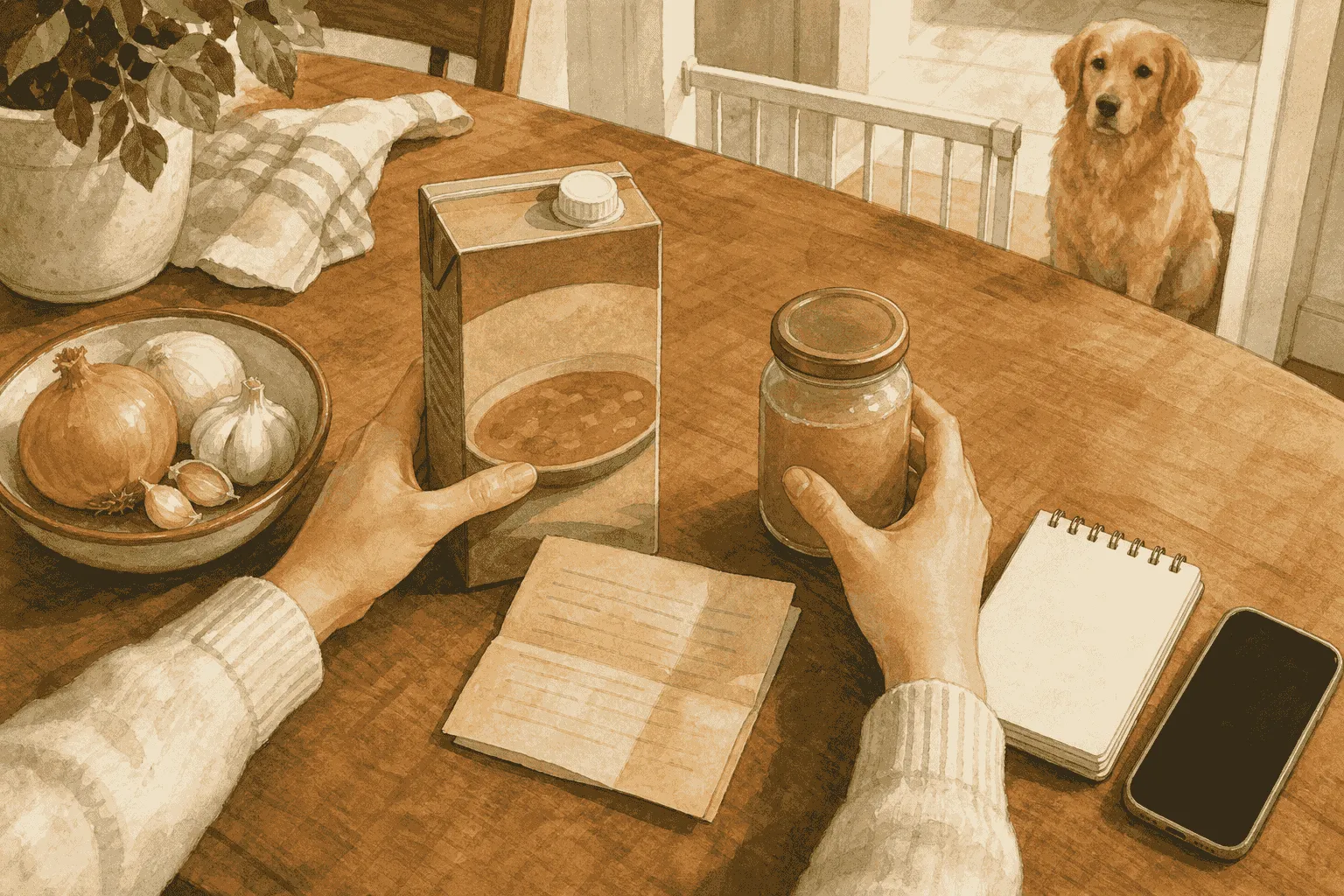
The useful label check is wider than the word “onion.” Onion, garlic, chives, and leeks may appear fresh, cooked, dried, powdered, or folded into a mixed dish. Think soups, sauces, gravies, stuffing, seasoning blends, leftovers, and packaged foods with an ingredient panel.
That does not mean a caregiver should diagnose a poisoning from a label or a behavior change. It means the label can make the professional call more useful. If you are deciding whether to offer a human food rather than responding to a possible exposure, keep the decision separate: a human-food safety check for cats shows why a plain-looking shared bite can still contain hidden ingredients.
What to Collect Before You Call
The American Veterinary Medical Association’s pet first-aid guidance emphasizes calling with the right information rather than improvising a treatment. Gather what you can without delaying contact:
- The food, package, ingredient list, or recipe.
- The form of the ingredient, such as fresh onion, powder, or a mixed dish.
- The possible amount and the time it may have been eaten.
- Your dog’s species, breed, age, weight, and any changes you have noticed.
Those details help a veterinarian or poison-control professional assess the individual case. They do not turn the caller into a toxicologist, and an uncertain amount is still useful to report honestly.
Why Waiting for Signs Is Not a Test
The Allium evidence base describes clinically important red-blood-cell effects that can be delayed. It also notes that signs such as vomiting, weakness, pale gums, faster breathing, or dark urine are not specific enough to identify an Allium problem at home.
So the absence of an immediate change is not a clearance signal, and a single sign cannot settle the cause. If the exposure may have happened, call promptly rather than watching for a particular symptom pattern. Do not induce vomiting, give medication, or try another home remedy unless the professional handling the case directs it.
Build a Safer Kitchen Routine
For prevention, keep onion, garlic, chives, and leeks out of food offered to dogs and cats. That includes seasoned leftovers, cooking scraps, powders, and mixed dishes—not only visible raw pieces. Store foods where pets cannot reach them and pause before sharing a plate whose full ingredient list you do not know.
If a possible exposure has already occurred, the useful next action is simpler than a dose calculator: keep the evidence, record the details you know, and ask a veterinarian or animal poison-control service for individual guidance. That gives your dog a case-specific response instead of a false home threshold.
Sources
Petzette's claim cards for this article point to the following scientific, veterinary, or animal-welfare sources.
- Allium Food Exposure In Dogs And Cats — Review And Guidance: Peer-reviewed veterinary toxicology review, peer-reviewed veterinary manual, and established animal poison-control guidance
Hayes C. Garlic and Onion (Allium spp) Toxicosis in Animals. MSD Veterinary Manual, full review September 2024; Cortinovis C, Caloni F. Household Food Items Toxic to Dogs and Cats. Front Vet Sci. 2016;3:26. doi:10.3389/fvets.2016.00026; ASPCA Animal Poison Control. People Foods to Avoid Feeding Your Pets.
- AVMA Pet First Aid: Poison Response Boundary: Veterinary-association first-aid brochure