New Owner Guide16 July 2026
How to Prepare for a New Puppy: Your First 48 Hours
Learn how to prepare for a new puppy with a calm home setup, flexible routine, food plan, toilet timing, and first-48-hour priorities.
TextPetzette Editorial
Read3 Min
Evidence status
Source-backed editorial
- Evidence record
- 7 claim cards linked to 9 documented sources.
- Independent expert review
- Not commissioned. Petzette Editorial is responsible for the published wording.
- Source record checked
- 16 July 2026
- Scope
- General guidance. Individual animals and circumstances can differ.
Learning how to prepare for a new puppy is mostly about making the first 48 hours readable. Set up one calm retreat, agree on a flexible routine, and decide how your household will handle food, toileting, rest, and short learning moments. The useful goal is not a flawless first day. It is a simple plan you can adjust after watching the puppy in front of you.
Prepare the people before the puppy arrives
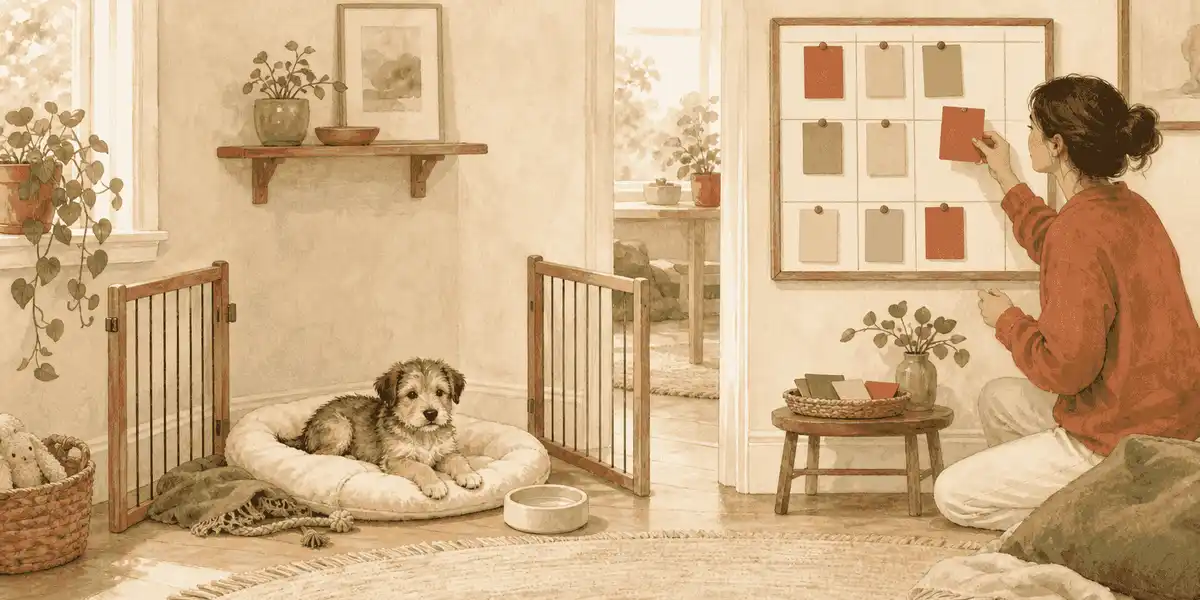
Start with the household calendar. Dogs Trust readiness guidance asks prospective owners to make room for companionship, daily activity, games, training, and gradual practice with being alone. Put names beside the first few days’ responsibilities: meals, toilet trips, quiet supervision, nighttime checks, and veterinary appointments. A shared plan reduces abrupt handoffs and competing rules.
Keep purchases tied to those jobs. The first-week puppy supplies guide separates useful basics from optional extras, so the room does not need to be filled with gear before you know the individual puppy. Ask everyone to use the same calm cue words and the same reward plan.
Build one dog-controlled quiet place
Choose a comfortable, low-traffic area where the puppy can rest without being followed. Dogs Trust guidance describes a safe space as somewhere a dog can enter and leave freely, never as punishment. Make a household rule that children, visitors, and adults leave the puppy alone there.
A bed in an open pen or a quiet nook can do this job. If you also plan to use a crate with a closed door, treat that as a separate, gradual training project; the gentle crate setup guide explains fit, voluntary exploration, and distress boundaries. A retreat is not a place to shut away fear, noise, or normal puppy needs.
Make food changes easy to monitor
Decide who measures meals and where they will be served before the puppy comes home. For an otherwise well dog making a routine food change, World Small Animal Veterinary Association guidance supports introducing the new diet gradually while monitoring acceptance and tolerance. Keep the wider feeding plan steady enough to notice appetite, stool, and energy changes.
That is a monitoring principle, not a fixed transition schedule. Follow a veterinarian-directed diet exactly as advised. Vomiting, repeated diarrhea, blood or black stool, appetite loss, pain, lethargy, or possible toxin or foreign-object exposure needs veterinary advice rather than another food experiment.
Bringing home a new puppy: leave blank space
Resist scheduling a parade of greetings. A useful routine has recognizable opportunities for food, toileting, activity, social contact, and undisturbed rest, according to Dogs Trust welfare guidance. The exact clock can flex. Protecting quiet time matters as much as planning play.
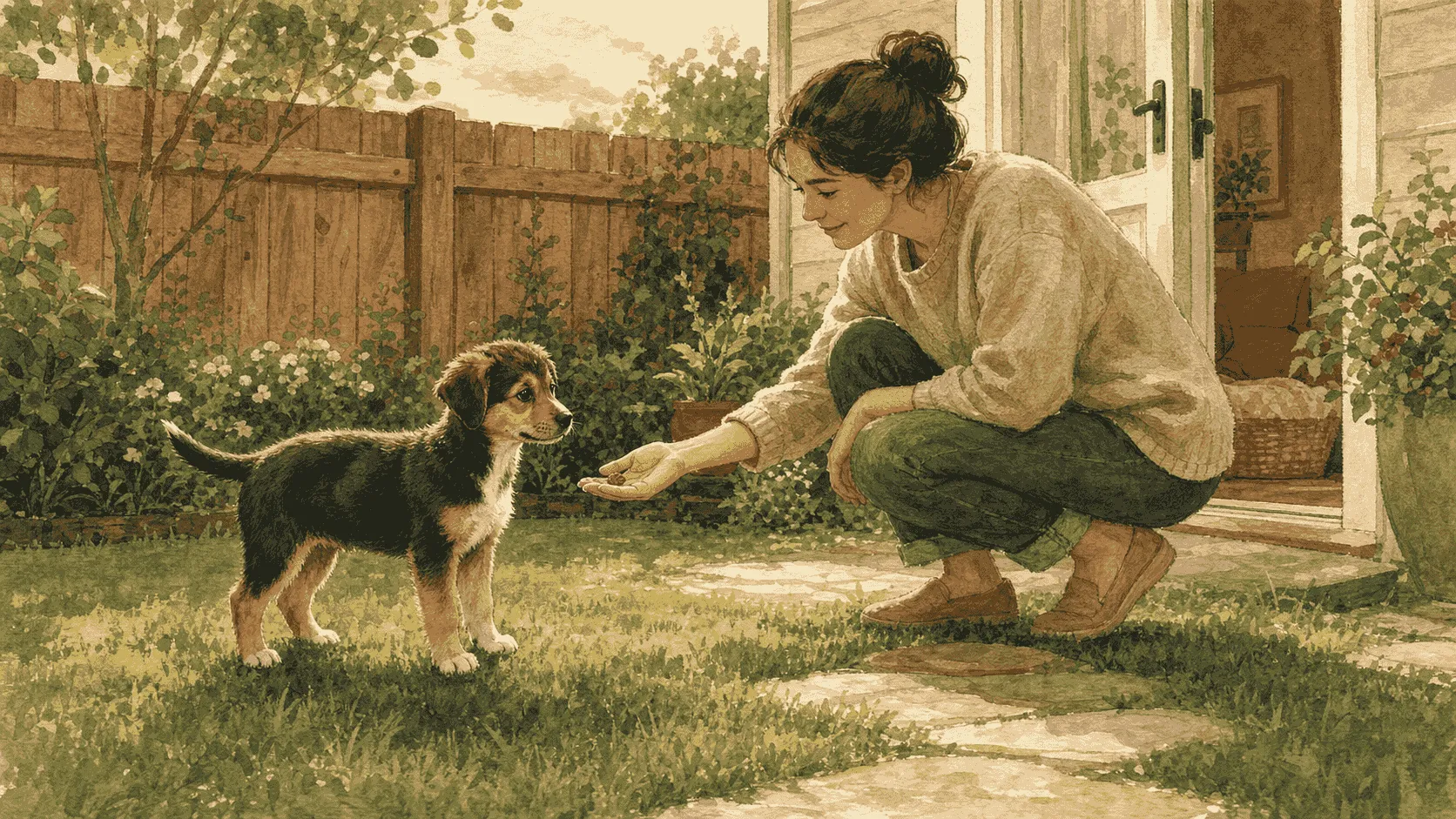
Take the puppy to the intended toilet place after waking, eating, play, and excitement. RSPCA guidance pairs those timely opportunities with an immediate reward in the right place. If an accident happens, clean it calmly. Punishment after the event can create fear or confusion without teaching the location you wanted.
Keep the first 48 hours gentle and observable
Teach one small behavior at a time: turning toward a name, following a step, or settling near you. The American Veterinary Society of Animal Behavior recommends reward-based methods that teach the wanted behavior without fear, pain, or intimidation. Structure can be clear without making the puppy afraid.
Early socialization matters, but it should not become a crowded first-week itinerary. AVSAB identifies the first three months as the primary socialization period and recommends safe exposure without overstimulation. Ask your veterinarian how local vaccination and disease risk should shape outings. A calm sound, a new surface at home, or watching the street from a safe distance can be more useful than forced contact or an unknown-dog crowd.
Write the plan, then let the puppy revise it
Before pickup day, write one page with care roles, meal notes, toilet transitions, the quiet-space rule, the veterinary contact, and two gentle experiences you can offer. Then use the first 48 hours to record what helps the puppy eat, toilet, rest, and engage comfortably. The first 30 days puppy checklist can guide the next stage once home begins to feel familiar.
Individual puppies settle at different speeds. Sudden restlessness, breathing changes, pain, inability to settle, digestive signs, or persistent fear should not be dismissed as a normal adjustment. Contact your veterinarian, and seek qualified behavior support when fear, aggression, separation distress, or bite risk makes the plan unsafe.
Sources
Petzette's claim cards for this article point to the following scientific, veterinary, or animal-welfare sources.
- Dogs Trust Dog Ready And Breed Fit: Animal welfare charity guidance / dog-readiness and breed-fit advice
- PDSA PetWise Choosing A Pet: Animal welfare charity guidance / pet-selection checklist
- Dogs Trust Safe Space For Dogs: Animal-welfare home-environment guidance
- Dogs Trust Predictable Routine And Rest: Animal-welfare routine guidance
- AVSAB Humane Dog Training 2021: Veterinary behavior society position statement
- AVSAB Puppy Socialization Position Statement: Veterinary behavior society position statement
- WSAVA Principles Of Wellness 2025: Global veterinary-association wellness guidance
- Cornell Dog Diarrhea Guidance: Veterinary-school clinical owner guidance
- RSPCA Puppy And Dog Toilet Training: Animal-welfare reward-based training guidance