Nutrition15 July 2026
Puppy Food for a Sensitive Stomach: Choose Safely
Choose puppy food for a sensitive stomach by separating routine food selection from digestive signs that need veterinary advice.
TextPetzette Editorial
Read3 Min

Evidence status
Source-backed editorial
- Evidence record
- 6 claim cards linked to 6 documented sources.
- Independent expert review
- Not commissioned. Petzette Editorial is responsible for the published wording.
- Source record checked
- 15 July 2026
- Scope
- General information, not an individual diagnosis or treatment plan.
If you are searching for puppy food for sensitive stomach problems, start with the puppy, not the promise on the bag. “Sensitive stomach” can describe a concern, but it does not identify why a puppy has soft stool, vomiting, gas, appetite changes, or discomfort. The safest decision is to separate a routine food choice from a health pattern that needs veterinary advice.
What “sensitive stomach puppy food” cannot tell you
Digestive signs overlap. The MSD Veterinary Manual explains that diarrhea can have dietary, infectious, parasitic, toxic, obstructive, inflammatory, and other causes. Age, diet, vaccination status, recent exposures, examination, and sometimes testing help a veterinarian narrow that field.
That uncertainty matters with puppies. A new food may coincide with a stool change, but timing alone does not establish the cause. A recently adopted puppy may also have encountered stress, rich extras, scavenged objects, parasites, or infection. Repeatedly changing foods can blur the history your veterinarian needs.
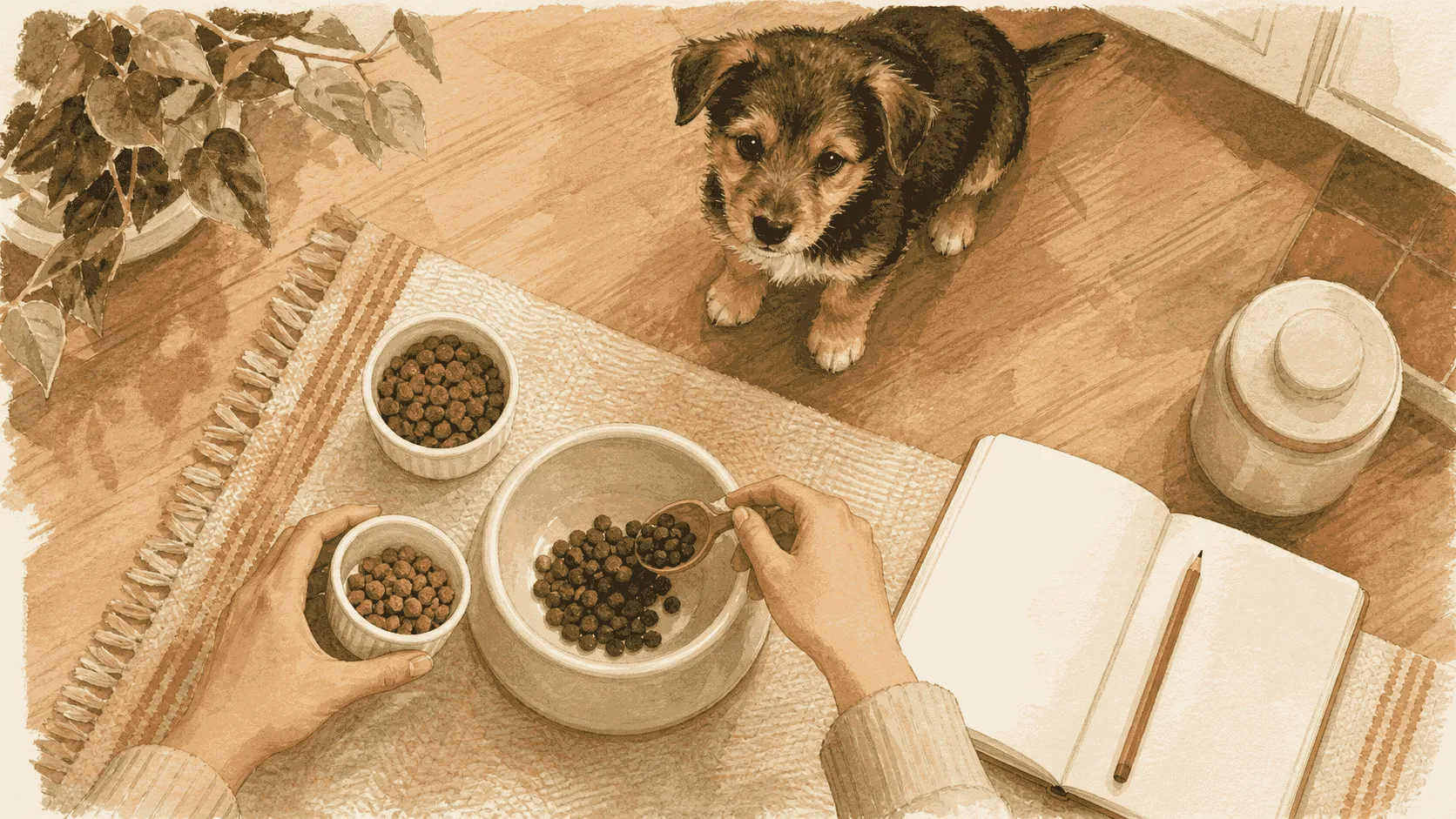
Instead, make a short factual record: what your puppy ate, including treats and chews; when the change began; what the stool or vomiting looked like; appetite and energy; and any possible access to rubbish, plants, toys, medication, or unfamiliar food. The record is useful. A guessed diagnosis is not.
Decide whether this is a food choice or a veterinary call
Before comparing foods, look at the whole puppy. Call your veterinarian promptly when vomiting or diarrhea repeats or is substantial, or when it comes with:
- fresh blood or black, tarry stool;
- reduced appetite, lethargy, weakness, or pain;
- dehydration concerns, rapid worsening, or unusual bloating;
- a possible toxin, medication, or swallowed object exposure.
Cornell University College of Veterinary Medicine guidance also treats accompanying vomiting, continued appetite loss, lethargy, and persistent diarrhea as reasons for veterinary attention. There is no fixed waiting period that fits every puppy. Tell the clinic your puppy’s age, size, vaccination status, current food, recent changes, and exposures so they can advise how quickly to be seen.
How to choose food when a routine switch is appropriate
If your veterinarian agrees that this is a routine food-selection decision, use quiet label facts before marketing language.
First, look for a complete and balanced food intended for dogs in the growth life stage. Puppies need growth-appropriate nutrition; a vague digestive-care phrase does not replace that foundation. Our puppy food label checklist explains how to find the intended-use statement without treating it as a product endorsement.
Next, ask what sits behind the finished food. World Small Animal Veterinary Association guidance focuses on formulation expertise, finished-product analysis, quality controls, research, and whether the manufacturer can answer detailed nutrient questions. “Premium,” “natural,” or a short ingredient list does not supply that information.
Ingredients still matter when your veterinarian is investigating a documented reaction or directing a food trial. But an ingredient list alone cannot show digestibility, bioavailability, nutrient balance, or overall performance. Do not eliminate proteins, grains, or other ingredients on a hunch while a growing puppy has unresolved signs.
Make one gradual, observable change
For an otherwise bright, stable puppy making a routine switch, change the feeding plan gradually and keep the surrounding routine steady. WSAVA’s 2025 Principles of Wellness recommends a gradual introduction so acceptance and tolerance can be monitored. That is a direction, not a universal calendar: the right pace may differ, and a veterinarian-directed therapeutic diet can have its own instructions.
During the transition, note appetite, stool consistency and frequency, vomiting, energy, and body weight or growth checks. Avoid adding a parade of new toppers, treats, or chews at the same time. If you also need to review portions, use the measure-and-recheck puppy feeding plan rather than copying a cup amount from a different food.
The useful next step
Write down the current food, every extra, the timing of signs, and your puppy’s overall condition. If signs repeat, intensify, or stack up, call your veterinarian before changing the menu again. If the puppy is otherwise well and your veterinarian considers a routine switch reasonable, choose a complete growth food with transparent formulation and quality controls, introduce it gradually, and monitor one clear plan.
The goal is not to find a bag that claims certainty. It is to make the puppy’s response easier to read—and to know when food shopping should pause for professional assessment.
Sources
Petzette's claim cards for this article point to the following scientific, veterinary, or animal-welfare sources.
- Cornell Dog Diarrhea Guidance: Veterinary-school clinical owner guidance
- MSD Dog Digestive Disorders: Veterinary manual / clinical owner guidance
- WSAVA Principles Of Wellness 2025: Global veterinary-association wellness guidance
- AAHA Nutrition And Weight Management Guidelines 2021: Peer-reviewed veterinary clinical guideline
Cline MG, Burns KM, Coe JB, et al. 2021 AAHA Nutrition and Weight Management Guidelines for Dogs and Cats. Journal of the American Animal Hospital Association. 2021;57:153-178.
- AAFCO Pet Food Labels And Nutritional Adequacy: US feed-control association consumer and regulatory guidance
- WSAVA Selecting Pet Food Toolkit 2021: Global veterinary nutrition toolkit / food-selection guidance