New Owner Guide22 July 2026
Senior Dog Rescue: A First-Year Adoption Fit Plan
A senior dog rescue search starts with individual needs. Check routine, home access, uncertainty, and veterinary support before adopting.
TextPetzette Editorial
Read4 Min

Evidence status
Source-backed editorial
- Evidence record
- 6 claim cards linked to 7 documented sources.
- Independent expert review
- Not commissioned. Petzette Editorial is responsible for the published wording.
- Source record checked
- 18 July 2026
- Scope
- General guidance. Individual animals and circumstances can differ.
A senior dog rescue search should begin with a fit decision, not an assumption that an older dog will be easy or difficult. Ask what is known about this individual, test those needs against an ordinary week, and prepare a home where rest and movement are easy to observe. Your useful next step is a written first-year support plan you can discuss with the rescue and a veterinarian before pickup.
Let the Rescue Introduce the Individual Dog
Start with the caregiver’s observations rather than a label such as “senior,” “quiet,” or “low maintenance.” Dogs Trust describes responsible adoption as a staged process: the organization learns about the household, considers a match, arranges one or more meetings when needed, and plans handover and follow-up. An online profile or one calm meeting cannot guarantee the first year.
Ask for the dog’s current routine and what remains unknown. Useful questions include:
- How does the dog get up, settle, walk, use stairs, and move across smooth floors?
- What exercise, rest, grooming, training, and time alone are familiar now?
- What health records, current care instructions, and follow-up appointments come with the dog?
- Which home layouts, handling routines, or situations have looked comfortable or difficult?
The wider dog-adoption process guide covers applications, organization-specific rules, meetings, and handover. Here, the narrower decision is whether you can turn the senior dog’s observed needs and unknowns into a workable first year.
Test the Week Before You Adopt a Senior Dog
Dogs Trust and PDSA guidance frame dog readiness around time, routine, walks, training, play, companionship, grooming, and gradual alone-time practice. Put those jobs on your real calendar, including workdays and backup-care days. Do not build the plan around the most flexible week you can imagine.
Then add the individual questions raised by the rescue. Can you provide the current exercise pattern while you learn what suits the dog? Is there time for veterinary visits and calm training? Can alone time be introduced or continued within the dog’s comfort instead of beginning with one long absence? The answer may be “yes, with support,” “not in this home,” or “not yet.” Each is more useful than choosing from age alone.
Walk the Home Routes Before Pickup
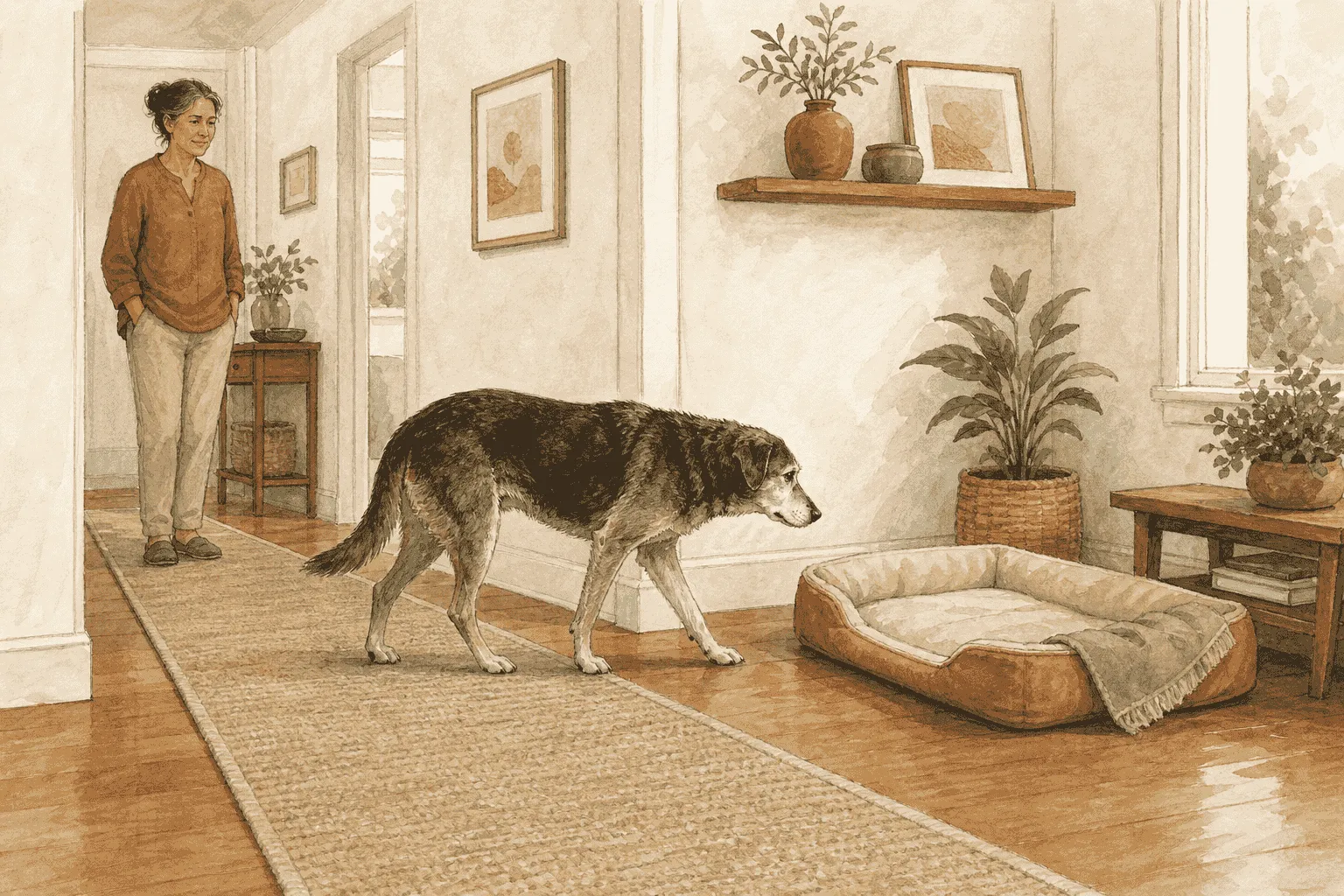
The 2023 AAHA Senior Care Guidelines include environmental modification as part of senior care. For some dogs, useful changes can include better traction, an easier route, or an accessible padded resting place. These adjustments should match the individual; a rug or ramp is not a diagnosis or treatment.
Walk the route from the entrance to the main resting area at dog height and pace. Look for slick flooring, tight turns, steep steps, and a bed that requires a jump. A short stable runner and a reachable resting place may remove an obstacle without redesigning the whole house. If you consider a ramp, it needs to be stable and appropriate for this dog.
The dog-bed setup guide can help with placement and access, while new movement changes still belong in a veterinary conversation.
Record Change Without Trying to Diagnose It
The same AAHA guidance recommends ordinary home photos or short videos as context for a veterinary team. A clinic visit may not show how the dog rises from the usual bed, turns in the kitchen, or approaches the familiar steps. Film one natural attempt from a safe distance; do not stage a difficult movement or repeat stairs to capture a better clip.
Keep a simple handover baseline during the first days: note how the dog gets up, walks, rests, eats, and responds to the planned routine. This record cannot explain a change, but it can make a professional conversation more precise.
VCA veterinary guidance lists new difficulty rising, reluctance to jump or use stairs, avoidance of slippery floors, changed posture, and restlessness among possible pain-related changes in aging dogs. None of those observations identifies a cause on its own. If hesitation or another movement or behavior change is new, worsening, sudden, or paired with distress, contact a veterinarian. Do not delay urgent care to collect footage or improvise treatment from an article.
Make the First-Year Fit Decision Visible
Before committing, put four things on one page: the rescue’s observed routine, the unknowns, your ordinary-week care plan, and the home routes you may need to adjust. Add the veterinary contact and the first questions you want assessed. Then ask the rescue which parts of the plan should remain familiar at handover.
What remains uncertain is how this individual dog will feel and function in a new setting over time. A careful senior dog rescue decision does not erase that uncertainty. It makes the next actions clear: match the real household, remove obvious access barriers, preserve useful observations, and bring changes to the appropriate professional.
Sources
Petzette's claim cards for this article point to the following scientific, veterinary, or animal-welfare sources.
- PDSA PetWise Choosing A Pet: Animal welfare charity guidance / pet-selection checklist
- Dogs Trust How To Adopt Process: National dog-welfare charity adoption process and policy guidance
- Dogs Trust Dog Ready And Breed Fit: Animal welfare charity guidance / dog-readiness and breed-fit advice
- MSD Veterinary Manual Selecting A Dog: Veterinary education / pet-owner guidance
- RSPCA Choosing The Right Puppy: Animal welfare charity guidance / puppy-selection advice
- AAHA Senior Care Guidelines 2023: Veterinary practice guideline
- VCA Pain Signals In Aging Dogs: Veterinary hospital owner education article