Nutrition01 August 2026
What Can Cats Eat? A Human-Food Safety Check
What can cats eat besides cat food? Use a plain-cooked food screen, keep extras small, and know when a household-food exposure needs a call.
TextPetzette Editorial
Read4 Min
Evidence status
Source-backed editorial
- Evidence record
- 7 claim cards linked to 5 documented sources.
- Independent expert review
- Not commissioned. Petzette Editorial is responsible for the published wording.
- Source record checked
- 01 August 2026
- Scope
- General information, not an individual diagnosis or treatment plan.
What can cats eat from the human kitchen? For a generally healthy cat, the useful answer is not a giant yes-or-no list. Keep complete cat food as the nutritional foundation, treat any suitable shared bite as an occasional extra, and screen the whole recipe—not just the ingredient your cat is watching.
That gives you a repeatable decision for a weeknight plate, a holiday table, or an unfamiliar snack. If you cannot identify every ingredient and preparation step, do not offer it.
What Can Cats Eat Besides Cat Food? Start With the Main Diet
The 2021 American Animal Hospital Association nutrition guidelines recommend that complete and balanced food provide at least 90 percent of total calories for generally healthy dogs and cats. Treats, toppers, and table bites belong in the remaining 10 percent or less.
That limit is a ceiling, not a guarantee. A small portion can still contain an unsuitable ingredient, conflict with a therapeutic diet, or crowd out the nutrition a growing kitten needs. If your cat is still growing, use a kitten-food label checklist for the main diet before thinking about extras.
For adult cats, the same foundation applies: species- and life-stage-appropriate complete food does the nutritional work. Human food is not a second dinner or a homemade substitute.
Which Human Foods Can Cats Eat? Use Four Checks
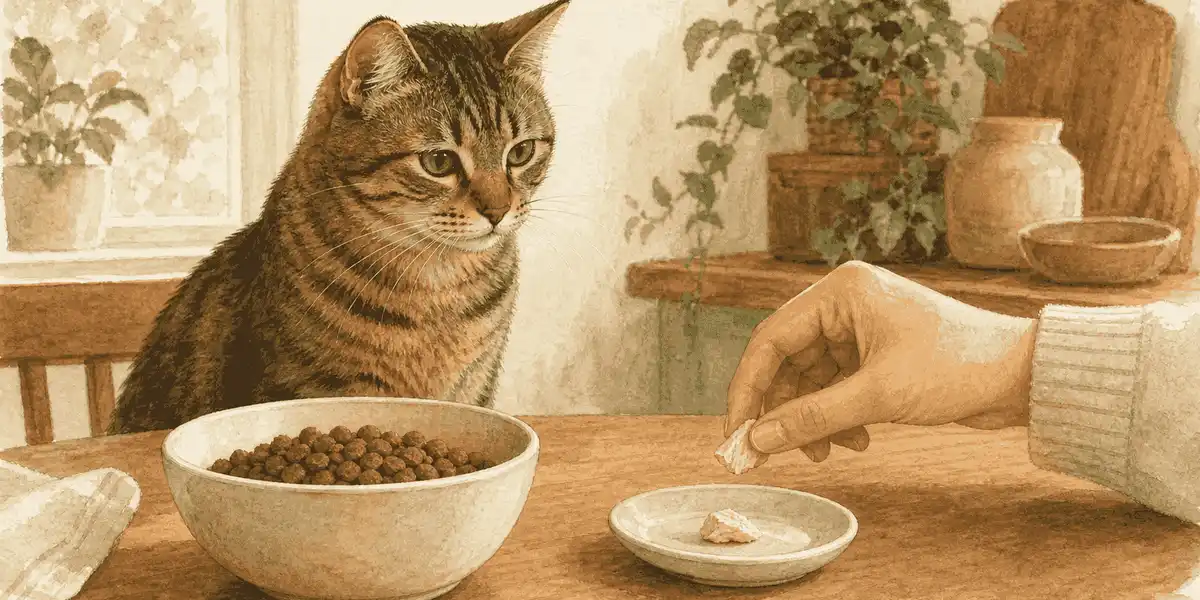
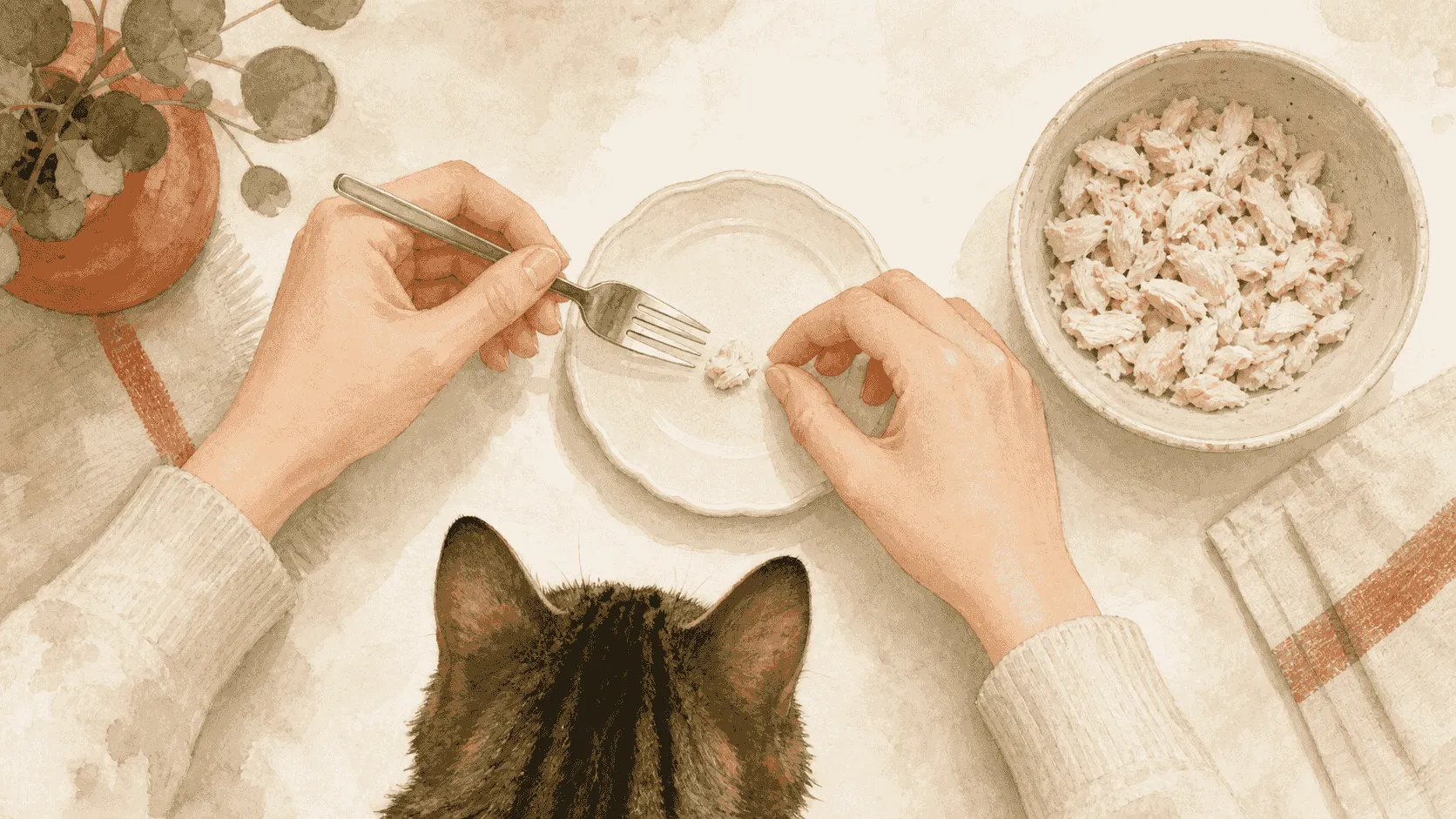
Cats Protection guidance allows a little plain, well-cooked chicken or fish as an occasional extra, with bones removed and the food counted within the day’s allowance. It also warns that feeding only chicken over time can leave nutritional gaps.
Before sharing a bite, use four checks:
- Plain: no sauce, glaze, marinade, seasoning mix, stuffing, or unknown co-ingredients.
- Cooked: no raw meat, fish, or egg intended for people.
- Boneless: remove bones rather than expecting a cat to manage them safely.
- Small and occasional: count the bite with treats, toppers, and food used for training.
This is a preparation screen, not a promise that chicken or fish suits a particular cat. Food reactions, digestive signs, appetite changes, and prescribed diets change the decision. When extras are appropriate, the everyday cat-treat guide can help you give them a clear job without losing track of the whole day.
What Foods Can Cats Not Eat? Check Hidden Ingredients
Mixed dishes are where an apparently simple answer often breaks down. Onion, garlic, chives, and leeks can appear fresh, cooked, dried, or powdered in sauces, soups, gravies, stuffing, seasoning blends, and leftovers. A 2016 review in Frontiers in Veterinary Science and current MSD Veterinary Manual guidance describe Allium foods as a toxic hazard for dogs and cats; important effects can be delayed.
Chocolate, coffee, and other caffeine-containing foods stay on the human side of the counter too. Cats Protection directs suspected chocolate exposure to prompt veterinary advice. Do not use the type of chocolate, a guessed amount, body weight, or a normal early appearance as a home safety test.
These examples are not a complete blacklist. The safer kitchen rule is simpler: if a food is seasoned, mixed, raw, caffeinated, chocolate-containing, or not fully identifiable, do not turn it into a cat treat.
Raw Human Food and Bones Fail the Screen
A cat’s prey-eating ancestry does not make raw supermarket meat a low-risk kitchen extra. Cats Protection notes that raw meat meant for people can carry bacteria that cooking is intended to kill. Its guidance also advises against raw fish, raw eggs, and raw bones because contamination, choking, and obstruction concerns can overlap.
Do not try to settle a commercial raw-diet or home-prepared-diet decision with this snack checklist. Those are whole-diet questions that need nutritional adequacy, food safety, the individual cat, and veterinary guidance considered together.
When a Shared Bite Becomes a Veterinary Call
If your cat may have eaten a harmful or unknown food, stop offering more and preserve the useful details: the package or recipe, ingredient list, possible amount, time, cat’s weight, and any changes you have noticed. Contact your veterinarian or an animal poison-control service promptly.
The American Veterinary Medical Association’s pet first-aid guidance says not to induce vomiting or give medication unless a veterinarian or poison-control professional directs it. Do not wait for visible illness to start a call, and do not improvise a home remedy.
For a food you are considering—not an exposure that has already happened—the next step is a quick four-part screen: plain, cooked, boneless, and small. If any part is uncertain, keep the complete cat food in the bowl and leave the shared bite off the menu.
Sources
Petzette's claim cards for this article point to the following scientific, veterinary, or animal-welfare sources.
- AAHA Nutrition And Weight Management Guidelines 2021: Peer-reviewed veterinary clinical guideline
Cline MG, Burns KM, Coe JB, et al. 2021 AAHA Nutrition and Weight Management Guidelines for Dogs and Cats. Journal of the American Animal Hospital Association. 2021;57:153-178.
- Cats Protection Cats And Human Foods Guidance: Current cat-welfare feeding and household-food safety guidance
- Allium Food Exposure In Dogs And Cats — Review And Guidance: Peer-reviewed veterinary toxicology review, peer-reviewed veterinary manual, and established animal poison-control guidance
Hayes C. Garlic and Onion (Allium spp) Toxicosis in Animals. MSD Veterinary Manual, full review September 2024; Cortinovis C, Caloni F. Household Food Items Toxic to Dogs and Cats. Front Vet Sci. 2016;3:26. doi:10.3389/fvets.2016.00026; ASPCA Animal Poison Control. People Foods to Avoid Feeding Your Pets.
- AAFCO Pet Food Labels And Nutritional Adequacy: US feed-control association consumer and regulatory guidance
- AVMA Pet First Aid: Poison Response Boundary: Veterinary-association first-aid brochure