Behavior02 October 2026
Why Do Dogs Lay on Your Feet? Read Proximity in Context
Why do dogs lay on your feet? Proximity can be comfortable or routine, but one position cannot prove a bond; read the whole dog and keep choice open.
TextPetzette Editorial
Read5 Min

Evidence status
Source-backed editorial
- Evidence record
- 4 claim cards linked to 4 documented sources.
- Independent expert review
- Not commissioned. Petzette Editorial is responsible for the published wording.
- Source record checked
- 23 July 2026
- Scope
- General guidance. Individual animals and circumstances can differ.
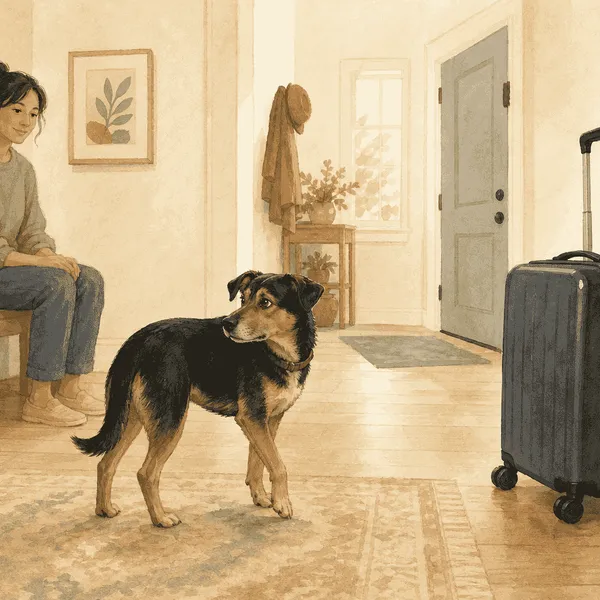
Why do dogs lay on your feet? The honest answer is that the position alone cannot tell you. A dog may choose close contact because it is familiar, available, or part of a comfortable routine, but those are possibilities—not a translation dictionary for one body position.
For a new dog owner, the useful question is less “What does this prove?” and more “What is the whole dog showing, and can they still choose what happens next?” That framing lets you enjoy a quiet moment without turning proximity into a test of love, anxiety, or ranking.
Feet Contact Is a Location, Not a Verdict
Start with what you can actually observe. Your dog is resting against or over your feet. That tells you where they chose to settle; it does not identify the exact reason.
The same location can appear in different situations. Your dog may settle there after a walk, during a quiet household moment, when visitors arrive, or simply because your feet are where a comfortable patch of floor happens to be. A change in the surrounding situation can change the meaning of the same contact. Dogs Trust body-language guidance recommends reading the individual dog, the whole body, and the moment because a single signal can mean different things in different contexts.
So notice the details without rushing to name an emotion:
- Is the dog’s body loose and settled, or does the posture look newly tense or difficult to interpret?
- Did the dog choose the position and remain free to leave?
- What happened immediately before the contact?
- Is this a familiar pattern, or a sudden change alongside other concerns?
Those questions produce better information than deciding that feet contact always means affection—or that moving away always means rejection.
Proximity Is Not a Relationship Score
It is tempting to read a dog lying on your feet as a vote for you. Research gives a reason to be cautious about that shortcut.
In a 2025 Animals study, “Familiar Dog or Familiar Person: Who Do Pet Dogs Best Synchronize with?”, 20 adult club dogs were observed in short familiar-dog and familiar-person walking setups. The dogs stayed closer to the familiar dog in that study, while gaze and body alignment did not show the same difference. The result is useful for one narrow lesson: one movement measure can differ without every social measure moving with it.
That study did not test dogs resting on feet, and it did not rank which companion mattered most. Proximity is one part of one setup, not a preference ballot. Your dog can choose to lie against you now, settle elsewhere later, and still have no relationship verdict for you to decode.
Separate Resting Contact From a Check-In
Dogs can also use a familiar owner as a secure base while exploring or solving a problem. A 2013 PLOS ONE study varied owner presence during a manipulative problem-solving task and found evidence that the owner’s presence affected how dogs engaged with the task. That supports a careful idea: in an uncertain situation, a dog may use a trusted person as a reference point.
It does not show that every dog on your feet is checking a secure base. Resting contact and a problem-solving task are different situations. Do not label a dog clingy, insecure, or unusually attached from this one behavior. If your dog is looking toward you around something unfamiliar, our guide to why dogs look to you when they are unsure covers that separate context.
Keep the Choice Easy to Leave
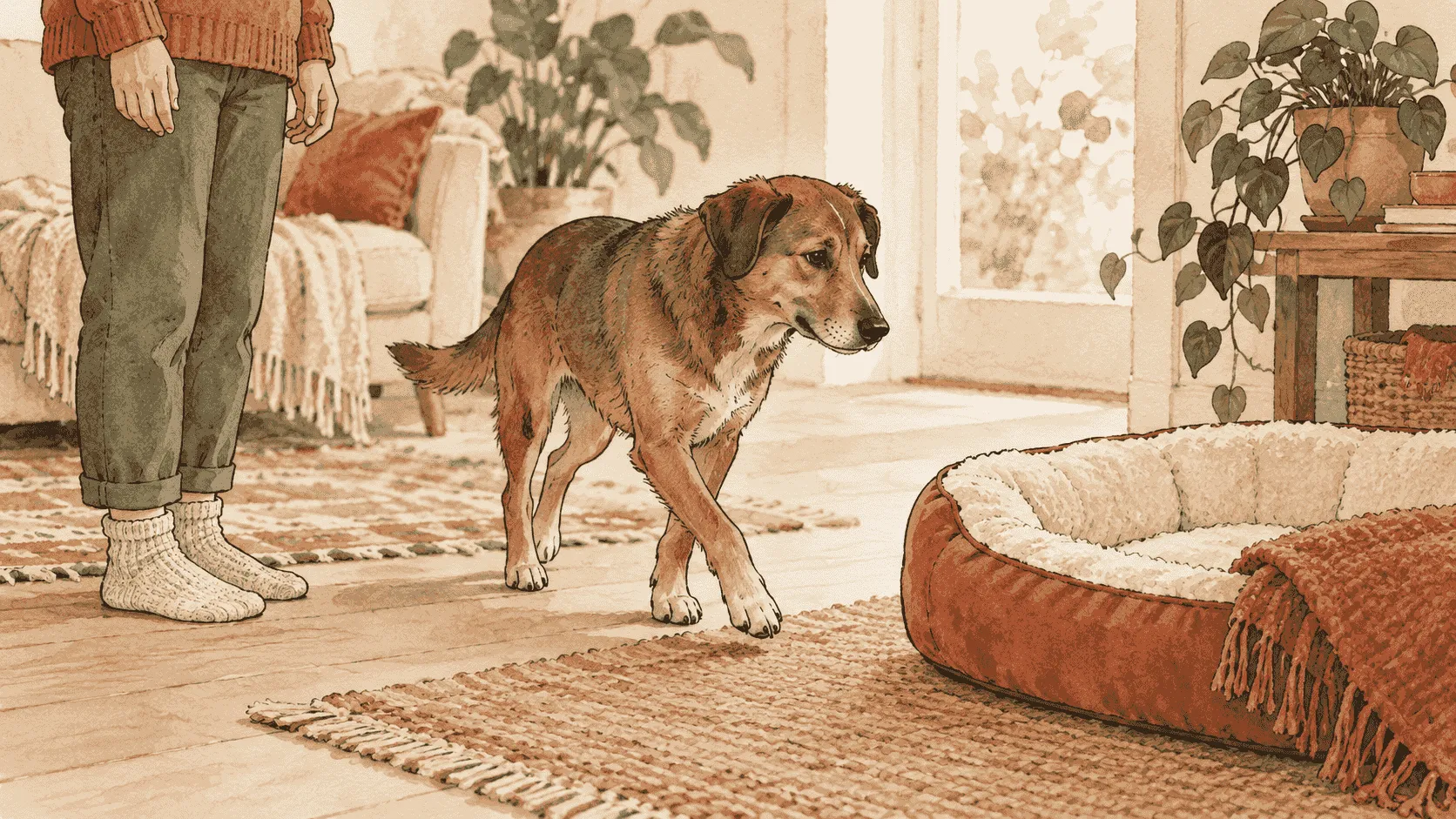
The safest response to voluntary closeness is to preserve the choice that made the observation useful. Avoid pinning your dog with your legs, holding them in place, or leaning over them to force a cuddle. If they stand up, turn away, or move to another spot, let that answer stand. If you want to reach down, use the low-pressure offer-and-pause approach in our belly-rub context check: brief contact, hand away, then observe what the dog chooses next.
Dogs Trust’s safe-space guidance adds a practical household boundary. A designated retreat is only useful when a dog can enter and leave freely and people do not follow them in, drag them out, or disturb them there. Your feet are not automatically a safe space, but the same choice principle applies: keep a clear route away and do not turn resting contact into a trap.
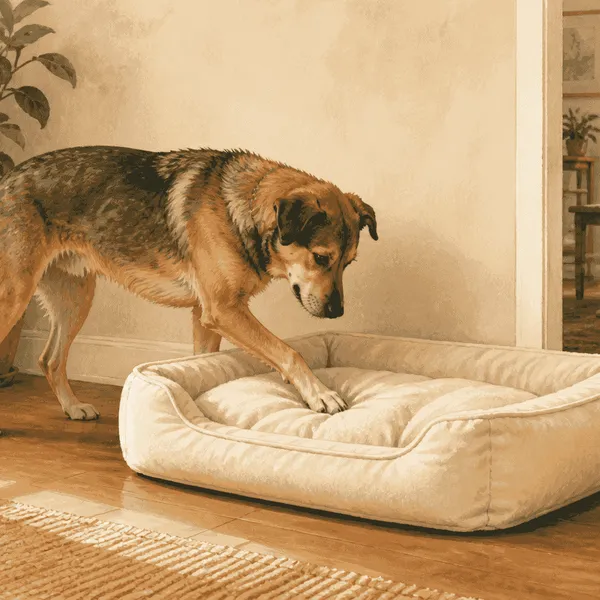
If your dog regularly settles near you, make another comfortable resting option easy to access too. That gives you more information about preference without asking the dog to prove anything. A dog who can move between places is easier to read than a dog who is being held in one.
Use a Four-Question Feet Check
When you notice the behavior, run this short check:
- What changed? Note the setting, time, recent activity, visitors, noise, or other event before the dog settled.
- What does the whole body show? Record visible posture and movement rather than assigning a feeling from the feet position.
- Can the dog leave? Keep the path open, avoid blocking the doorway or bed, and do not drag the dog away from a chosen retreat.
- Is the pattern familiar? Compare it with your dog’s normal routine. A new or escalating pattern is a reason to gather context, not to invent a motive.
This is especially useful during the first year, when a dog’s routines are still becoming familiar. Keep a simple note if the behavior changes: what happened first, where the dog settled, whether they moved freely, and what they did afterward. A short record helps you discuss a pattern without relying on a cute snapshot.
When Closeness Needs More Than Interpretation
Ask your veterinarian about a sudden change in closeness when it comes with apparent discomfort, a change in normal routines, or another health concern. The point is not that lying on your feet diagnoses anything; it is that a new behavior pattern should be considered alongside the dog’s wider condition.
If the situation includes fear, repeated tension, growling, snapping, conflict around handling, or a safety concern, create space and seek qualified, accredited behavior support. Do not test the dog by forcing more contact or punish them for leaving. A professional can assess the whole situation, and a veterinarian can help consider possible medical influence when the change is sudden or concerning.
The next time your dog lies on your feet, enjoy the proximity without turning it into a promise. Read the whole dog, keep an exit available, and let tomorrow’s choice be new information rather than a contradiction.
Sources
Petzette's claim cards for this article point to the following scientific, veterinary, or animal-welfare sources.
- Familiar Dog Versus Familiar Person Synchrony: Peer-reviewed within-subject observational experiment
Lamontagne A, Legou T, Brunel M, Bedossa T, Gaunet F. Familiar Dog or Familiar Person: Who Do Pet Dogs Best Synchronize with? *Animals*. 2025;15(4):505.
- Dogs Use Owners As A Secure Base: Peer-reviewed paper
- Dogs Trust Body Language Context Guidance: Welfare organization dog body-language guidance
- Dogs Trust Safe Space For Dogs: Animal-welfare home-environment guidance