Behavior29 August 2026
Why Do Dogs Sleep on Their Backs? Read the Whole Resting Dog
Why do dogs sleep on their backs? Read the whole resting dog, protect sleep, and know when a new posture or movement change needs your veterinarian.
TextPetzette Editorial
Read4 Min

Evidence status
Source-backed editorial
- Evidence record
- 5 claim cards linked to 6 documented sources.
- Independent expert review
- Not commissioned. Petzette Editorial is responsible for the published wording.
- Source record checked
- 23 August 2026
- Scope
- General guidance. Individual animals and circumstances can differ.
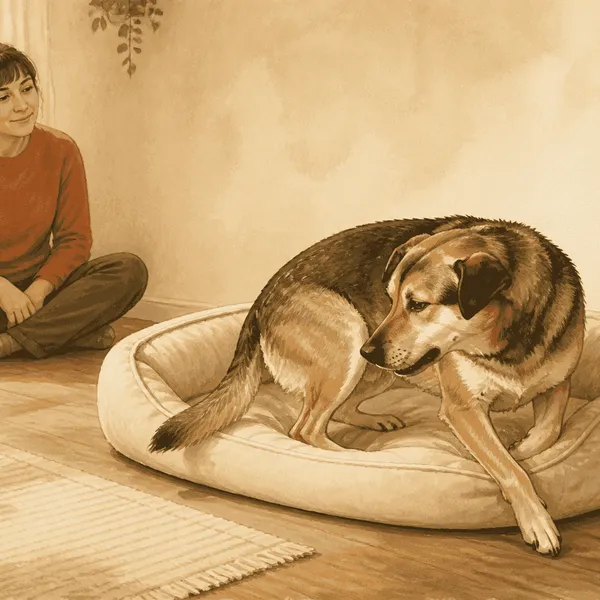
Why do dogs sleep on their backs? For a new dog owner, a belly-up nap can invite a quick story about comfort, trust, or a request for touch. The safer decision is smaller: is this dog’s body loose and able to rest, and should you leave the dog alone? Read the posture with the whole dog and the situation rather than treating one position as a permanent message.
Is Back Sleeping Loose or Braced?
Start by checking whether you are looking at sleep or an awake roll. A dog that has chosen a position and is resting is in a different scene from a dog that rolls over as a person approaches. Notice what happened just before the dog went onto its back, whether the body looks loose or tense, and whether the dog stays settled or tries to move away.
Dogs Trust’s body-language guidance recommends reading the individual dog, the whole body, and the moment. One body part is not a complete dictionary. A belly-up posture can be part of a comfortable rest position for one dog and a request for space in another moment. It cannot, by itself, tell you what the dog feels or whether touch is welcome.
Separate Sleep From an Awake Appeasement Roll
Dogs Trust distinguishes a loose dog returning for contact from an appeasement roll. An awake dog on its side or back with a tucked tail, ears back, tension, and weight shifted away may be asking for space rather than a belly rub. Those details are more informative together than the belly-up shape alone.
If that cluster appears, stop approaching or touching. Let the dog stand, turn away, or move elsewhere. A growl or snap is a safety warning, not a reason to punish the dog. The context-first belly-rub guide covers the separate decision about offering contact and pausing for the dog’s choice.
Do not recreate the moment to test your interpretation. A dog that was sleeping does not need to be woken so you can check its response, and an awake dog asking for distance does not need another hand reaching toward it.
Give a Sleeping Dog Room to Choose
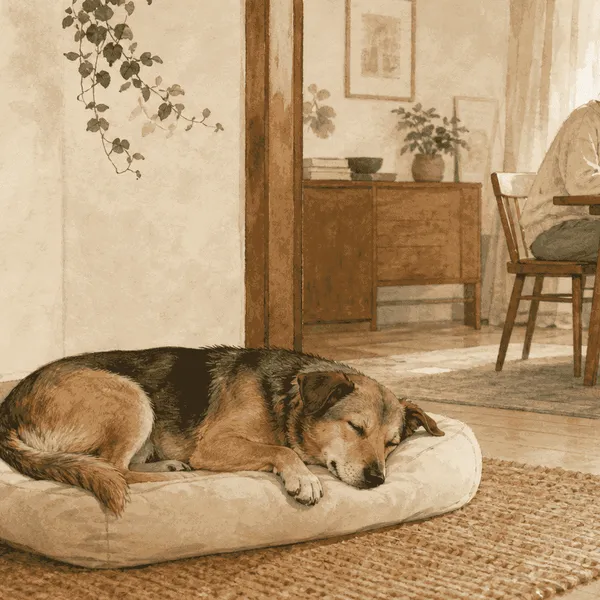
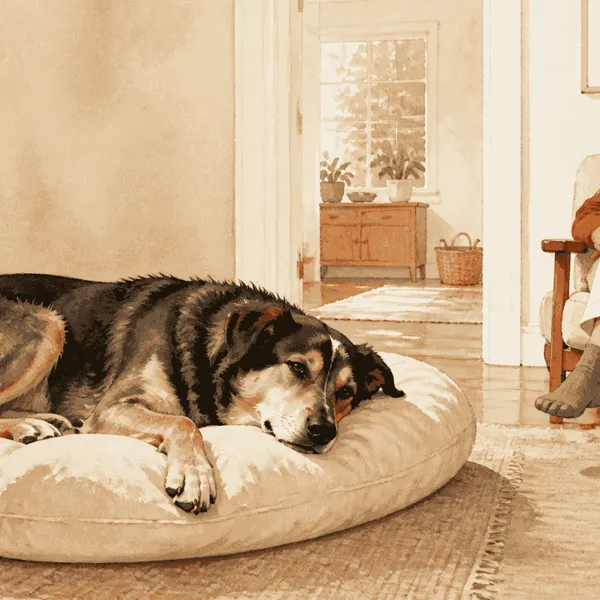
Blue Cross guidance treats sleeping and resting as times when dogs should be left alone. A bed or resting place should be an undisturbed retreat, not a play zone. Keep hands, hugs, noisy greetings, and repeated handling out of the dog’s sleep space; let the dog wake and choose what happens next.
If children and dogs share a room, active adult supervision matters. When the adult’s attention moves elsewhere, separate them positively rather than trusting a familiar dog or a relaxed-looking posture to manage the moment. A belly-up dog still needs a clear way to move and a person who notices when the body changes.
Put Back Sleeping in the Routine, Not a Test
Dogs Trust places rest alongside food, toileting, activity, and social time in a useful routine. A new dog may show a pattern that becomes easier to read as the household gains recognizable anchors, but no posture needs to become a training target or a score for bonding. More activity is not a substitute for undisturbed rest.
Protect one quiet block, then observe without prompting the dog into the position. If you are really trying to judge how much your dog sleeps or whether the daily pattern has changed, use the broader guide to sleep against an individual routine. This page’s narrower question is what to do with the posture in front of you.
When a New Resting Posture Needs a Veterinarian
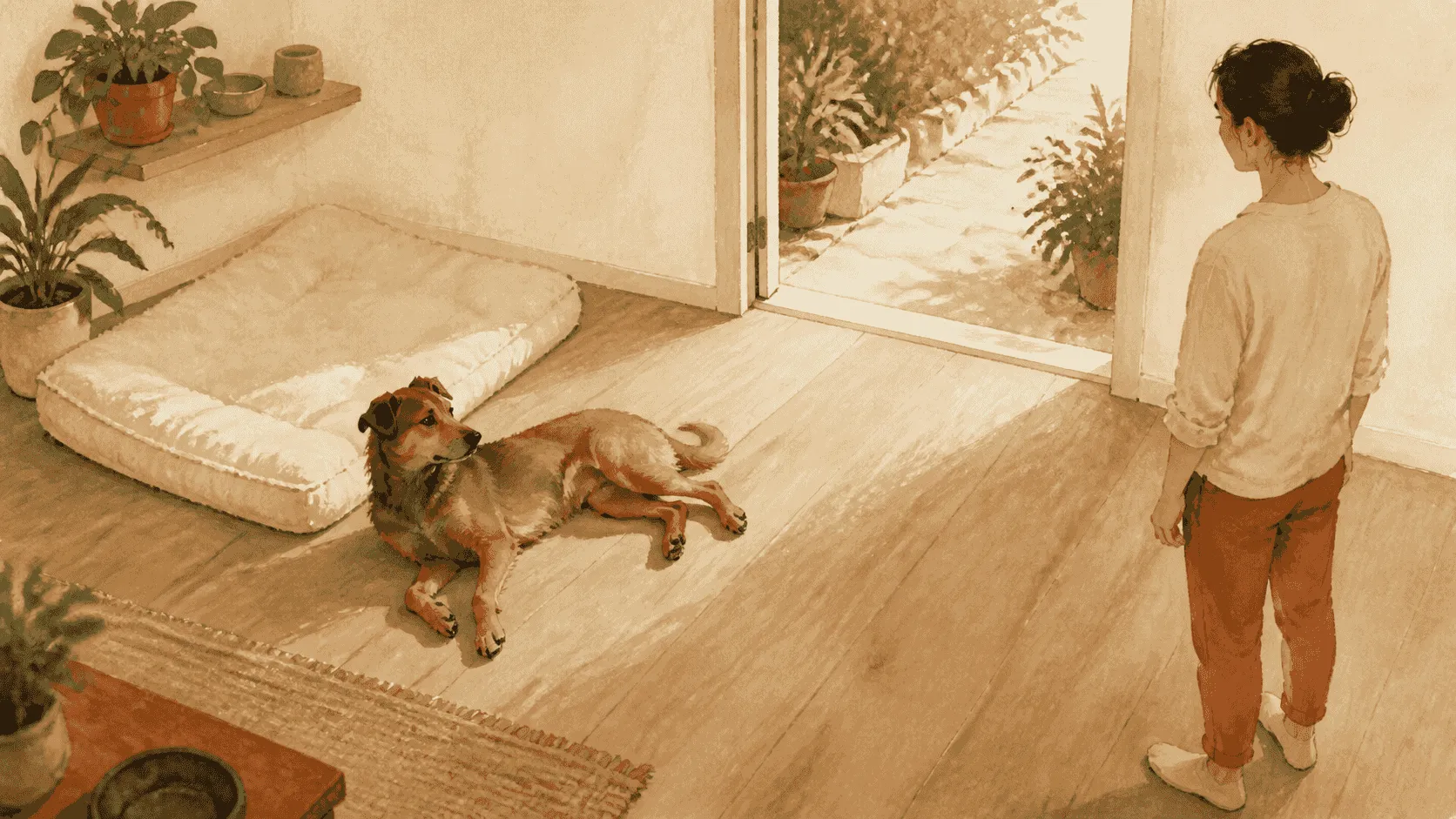
Back sleeping alone does not identify a health problem. Move from casual observation to a veterinary conversation when the wider pattern changes: your dog suddenly struggles to settle, begins to lie down and gets up repeatedly, seems unable to get comfortable, or shows a new or worsening movement, posture, rest, appetite, or behavior change.
Veterinary guidance from AAHA and Merck treats those changes as observations to discuss, not diagnoses to make at home. If the change is sudden, severe, worsening, or otherwise concerning, ask your veterinarian for prompt direction. Do not force a dog into a position, stretch the body, give a home pain remedy, or delay care while trying to explain the pose.
If it is safe and does not disturb the dog, write down when the change began and what happened around it. A short video of a natural settling attempt can help a veterinarian see the pattern, but a recording is never more important than getting help.
Use a Four-Question Back-Sleep Check
At the next natural belly-up nap, make one calm pass:
- Sleep or roll? Did the dog choose the position while settling, or roll when someone approached?
- Whole body? Does the dog look loose, or are tucked tail, ears back, tension, and weight moving away clustered together?
- Choice? Can the dog wake, change position, or leave without a hand, child, or visitor entering the space?
- Change? Is this familiar, or does it sit beside difficulty settling or another new movement, posture, rest, appetite, or behavior change?
If the dog is sleeping loosely, protect the quiet and let the dog rest. If an awake dog looks tense and moves away, pause and add space. If the wider pattern is new or concerning, record what you can without interference and call your veterinarian. The answer to “why do dogs sleep on their backs?” is not a single label; it is a safer next action based on the whole resting dog.
Sources
Petzette's claim cards for this article point to the following scientific, veterinary, or animal-welfare sources.
- Dogs Trust Appeasement-Roll Guidance: Animal-welfare body-language guidance
- Dogs Trust Body Language Context Guidance: Welfare organization dog body-language guidance
- Dogs Trust Predictable Routine And Rest: Animal-welfare routine guidance
- Blue Cross Children And Dogs Supervision: Animal welfare charity guidance / child-dog safety advice
- Blue Cross: Being Safe Around Dogs: Animal-welfare caregiver guidance
- Veterinary Guidance On Dog Circling Before Lying Down: Veterinary behavior and pain-observation guidance. This note supports a narrow owner decision: how to read a brief pre-settling circle and when a new, prolonged, or interrupted pattern belongs in a veterinary conversation. It does not diagnose pain, identify a neurologic disorder, set a normal circle count, or provide treatment.