Behavior23 August 2026
Why Do Dogs Circle Before They Lay Down? Read the Landing
Why do dogs circle before they lay down? Learn what a brief settling ritual can mean, what to record when it changes, and when to call your veterinarian.
TextPetzette Editorial
Read4 Min

Evidence status
Source-backed editorial
- Evidence record
- 4 claim cards linked to 3 documented sources.
- Independent expert review
- Not commissioned. Petzette Editorial is responsible for the published wording.
- Source record checked
- 23 August 2026
- Scope
- General guidance. Individual animals and circumstances can differ.
Why do dogs circle before they lay down? For many dogs, a few turns are part of getting settled. The more useful question is what happens after the circle: does your dog lie down easily, or keep restarting as though the resting position will not work?
This guide is about the brief pre-settling turn, not how many hours a dog sleeps. If your concern is a change in total rest, compare the whole daily pattern in this guide to why dogs sleep so much. The decision here is narrower: when should you simply observe the ritual, and when should a changed landing become a veterinarian question?
The Circle Has Several Plausible Jobs
Veterinary sources do not give one confirmed translation for a circle. Washington State University’s veterinary teaching hospital describes the behavior as common, while noting that we cannot ask an individual dog why it turns. The explanation offered there includes checking the space and finding a comfortable position. A VCA client guide similarly presents inherited and comfort-related explanations as possibilities.
That uncertainty matters. A dog may be arranging its body, checking the immediate resting place, or repeating a familiar settling routine. Those are reasonable ways to describe the scene; they are not proof that your dog is thinking about predators, feels safe, or has a particular mood. A few turns followed by an easy lie-down can stay in the ordinary-observation lane.
Watch the Landing, Not the Turn
Read the whole dog and the whole moment, as Dogs Trust recommends for body language. Before deciding that circling is “normal” or “a problem,” notice:
- whether the dog settles after a short sequence or gets up and starts again;
- whether the body looks loose and comfortable or tense, guarded, or unusually restless;
- whether the movement, posture, appetite, sleep, or willingness to take part in ordinary activities has changed;
- whether this is the dog’s familiar pattern or a new behavior on a new surface, after a different day, or across several resting attempts.
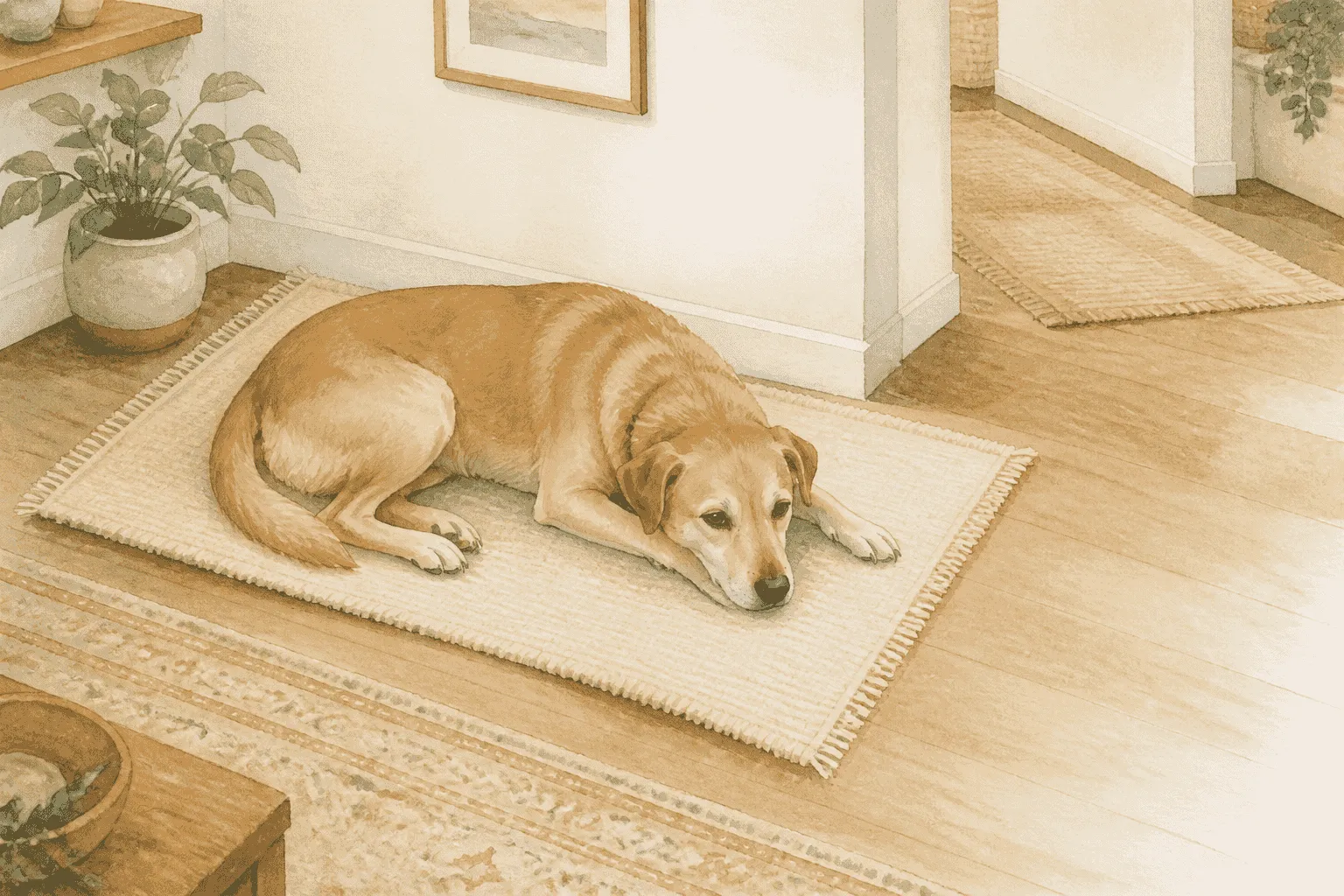
The circle itself is only one detail. A dog that turns once, lies down, and rests is showing a different scene from a dog that circles, begins to lower, rises again, and cannot find a position. You do not need to interpret the dog’s emotion to notice that difference.
Protect the Quiet Part of a New-Dog Routine
New owners sometimes respond to every unsettled moment by adding activity. Dogs Trust’s routine guidance makes a quieter point: a useful day includes recognisable opportunities for food, toileting, activity, social time, and undisturbed rest. More exercise is not a substitute for the quiet part of the calendar.
Give your dog a resting place with a clear route in and out, away from foot traffic and unwanted handling. The dog bed setup guide can help you inspect access and location without turning a product choice into a behavior diagnosis. Then watch the next few settling attempts without prompting, pulling, or repeatedly asking for a down.
The aim is not to remove every turn. It is to make the setting predictable enough that you can see the dog’s own pattern. Keep the household routine flexible, but protect one dependable quiet block and note whether settling becomes easier, unchanged, or harder.
When Circling Belongs in a Vet Call
AAHA’s pain-awareness guidance distinguishes ordinary circling from a more pronounced pattern with repeated “false starts”—a dog begins to lie down, then aborts the movement and circles again. Merck’s owner guidance also lists trouble getting comfortable, restlessness, and changes in movement or posture among observations that belong in a veterinary conversation.
Contact your veterinarian if the circling is new, prolonged, repeatedly interrupted, worsening, or paired with a clear change in movement, posture, rest, appetite, or behavior. If the change is sudden or severe, or your dog cannot get comfortable, ask for prompt direction. The pattern does not tell you whether the cause is pain, an orthopedic problem, a neurologic problem, or something else; that is the professional boundary.
Do not force the dog to lie down, stretch the joints, pry at the body, or give a home pain remedy. If it is safe, take a short video from a distance and keep the resting surface, time of day, recent activity, and other changes in your notes. A veterinarian can use that context more effectively than a confident label.
Use a Four-Line Settling Note
At the next episode, write:
- Before: what your dog was doing and where they chose to rest.
- During: how long the sequence lasted, whether it repeated, and whether there were false starts.
- After: whether your dog settled, changed position, slept, or left the area.
- Baseline: what is different from your dog’s usual movement, posture, appetite, rest, or behavior.
That note gives you a calm next step. If the pattern is brief and familiar, protect the rest space and keep observing. If the landing keeps failing or the wider picture has changed, share the record with your veterinarian. The safest answer to “why do dogs circle before they lay down?” is not one story—it is a small observation plan that can tell ordinary settling from a meaningful change.
Sources
Petzette's claim cards for this article point to the following scientific, veterinary, or animal-welfare sources.
- Veterinary Guidance On Dog Circling Before Lying Down: Veterinary behavior and pain-observation guidance. This note supports a narrow owner decision: how to read a brief pre-settling circle and when a new, prolonged, or interrupted pattern belongs in a veterinary conversation. It does not diagnose pain, identify a neurologic disorder, set a normal circle count, or provide treatment.
- Dogs Trust Predictable Routine And Rest: Animal-welfare routine guidance
- Dogs Trust Body Language Context Guidance: Welfare organization dog body-language guidance