Behavior08 August 2026
Why Do Dogs Like Belly Rubs? A Context Check Before You Reach
Why dogs like belly rubs varies by context. Use a gentle offer-pause-check that respects comfort, choice, and changing body language.
TextPetzette Editorial
Read4 Min
Evidence status
Source-backed editorial
- Evidence record
- 5 claim cards linked to 5 documented sources.
- Independent expert review
- Not commissioned. Petzette Editorial is responsible for the published wording.
- Source record checked
- 20 July 2026
- Scope
- General guidance. Individual animals and circumstances can differ.
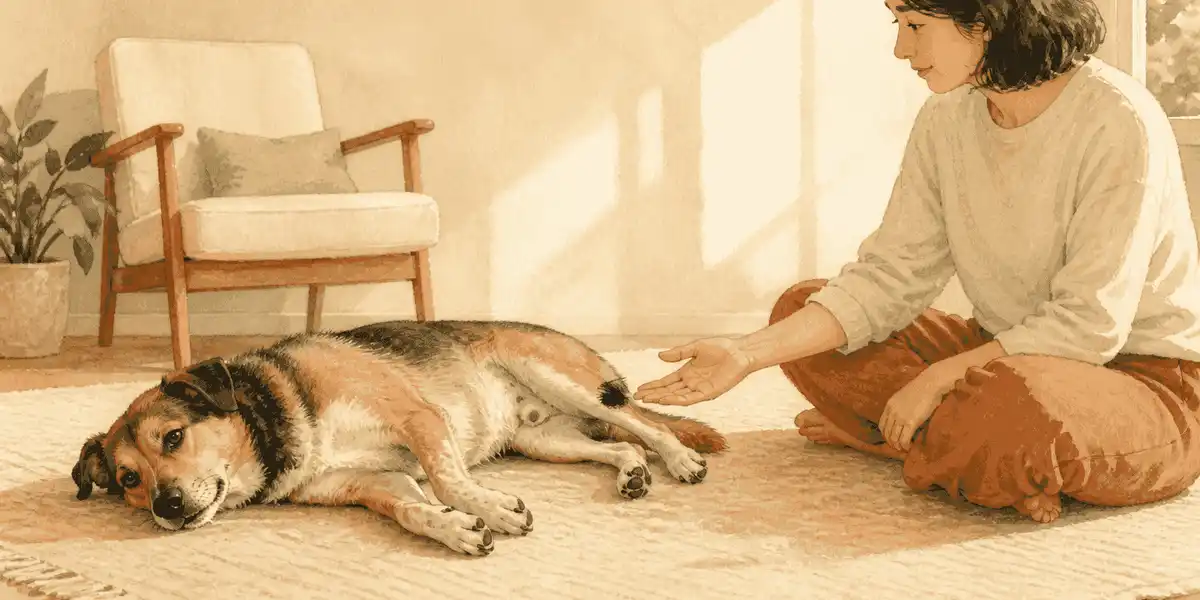
Why do dogs like belly rubs? Some dogs may choose relaxed touch in some moments, but a belly-up pose alone cannot answer that question. The safer next step is to offer brief, gentle contact, pause, and see what the individual dog chooses. That gives you more useful information than trying to translate one posture into a permanent yes.
Read the Belly-Up Pose Before You Reach
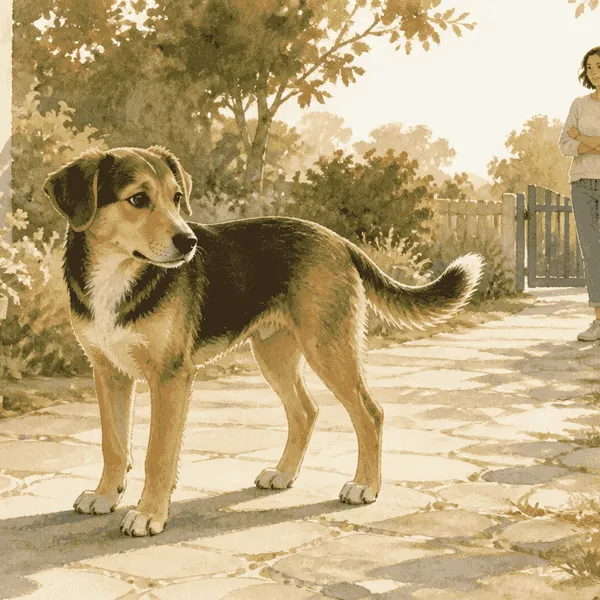
Dogs Trust distinguishes a relaxed dog returning for contact from an appeasement roll: a tense dog on its side or back with a tucked tail, ears back, and weight shifted away may need space rather than touch. The posture is only part of the picture. Notice whether the dog is loose or tense, whether they came toward you or moved away, what happened just before the roll, and whether they have a clear route to leave.
A tail wag does not settle the question. A 2007 study in Current Biology found that dogs’ tail-wagging responses could differ with emotional stimuli, but it did not create a home decoder for tail direction. A wag is one clue, not permission to reach in. For the broader scene check, use this whole-body dog-language pause map before naming a feeling from one movement.
When worry signs cluster, stop approaching or touching. Give the dog room to stand, turn away, or move elsewhere. That is not withholding affection; it is making the next interaction easier to read.
Use an Offer-Pause Check Instead of a Long Rub
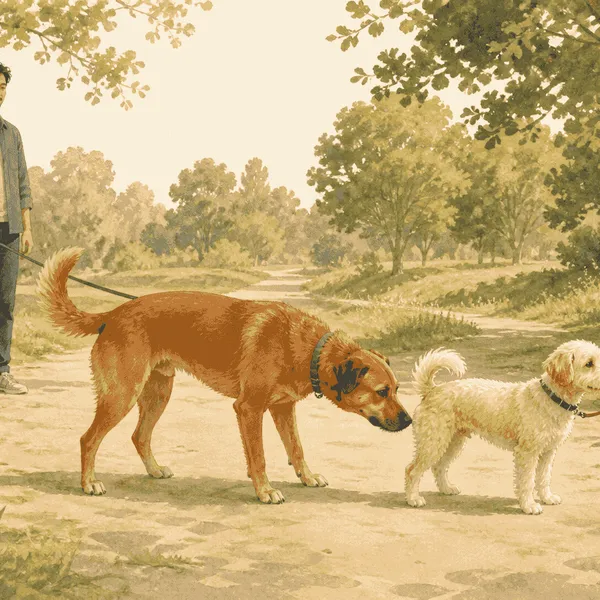
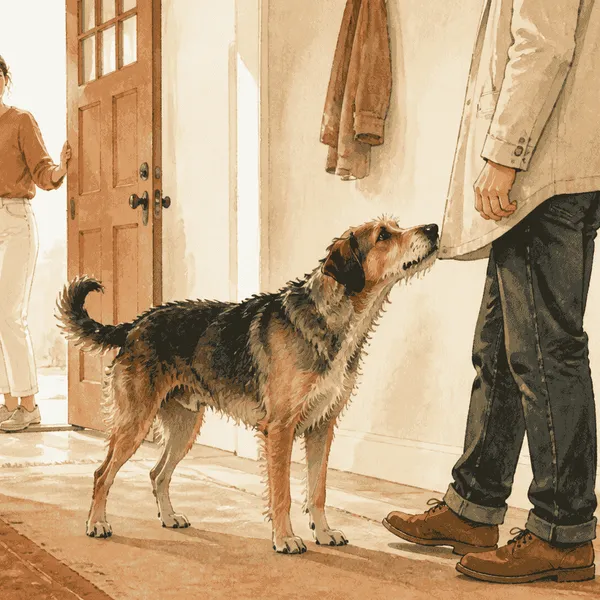
Blue Cross and Dogs Trust guidance offers a practical routine for greeting a dog you do not know: first ask the owner, then let the dog choose whether to approach. If the dog comes close and looks relaxed, give up to three gentle strokes on the nearest shoulder, remove your hand, and pause. The pause matters because it leaves the dog free to continue or leave.
The same idea can make everyday contact with your own dog clearer:
- Start where the dog is already comfortable, rather than reaching straight for the belly.
- Keep the first touch brief and light.
- Move your hand away and watch what the dog does next.
- Continue only if the dog stays loose and chooses to remain close or return.
Turning away, moving away, freezing, stiffening, or looking uncomfortable is useful information. Do not follow the dog, lean over them, or treat a wag as a reason to keep going. No three-stroke routine guarantees safety; it simply gives a dog a chance to answer with their movement.
Preference Is Not a Permanent Pass
A 2015 Behavioural Processes study compared petting with vocal praise in controlled choice procedures. The tested dogs spent more time near the person who provided petting, but the measure was sustained proximity in that setting—not a love test, a consent guarantee, or a rule that touch is the best reward for every dog.
Use the finding as a prompt to notice choice. A dog may seek contact after a walk, prefer a shoulder scratch over a belly rub, or choose distance when tired, busy eating, resting, or unsure. Their choice can change with the person, place, body area, and moment. A first approach is not the same as a request for more handling.
That distinction is especially helpful in a new home, where your dog is still learning the household routine. Offer calm contact without making it a test of bonding. The first 30 days with a new puppy can help you leave room for rest, predictable routines, and low-pressure learning alongside affection.
Practice Handling Outside the Belly-Rub Moment
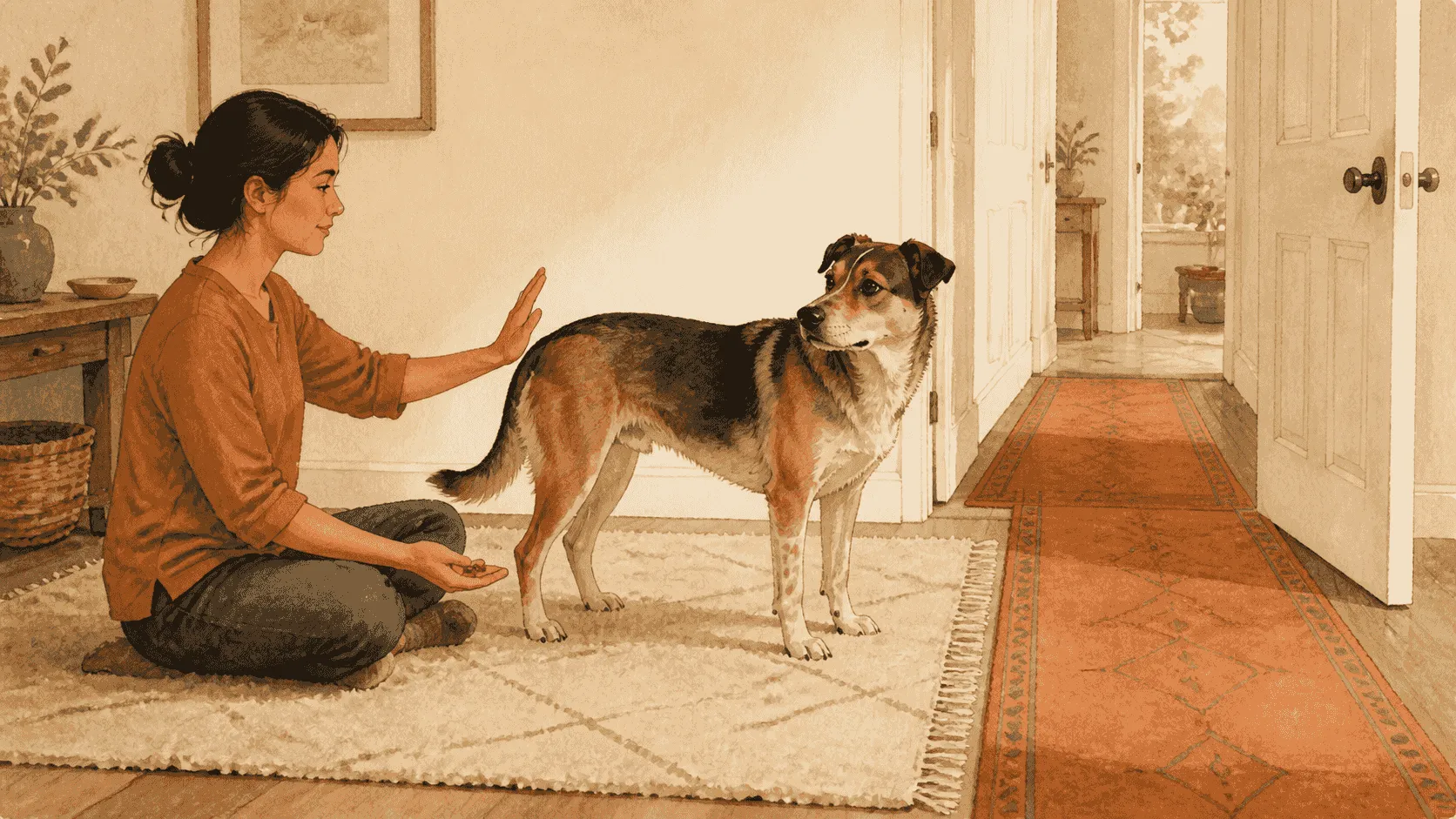
If you want your dog to become more comfortable with routine touch, build that skill in tiny, predictable steps rather than trying to hold them through a long belly rub. Dogs Trust handling guidance recommends beginning on an already comfortable body area, using a brief touch, taking the hand away, then rewarding. Progress only while the body stays relaxed.
Try one short session when your dog is settled and free to step away. A one-second shoulder touch, hand away, reward, and pause is enough to learn from. End while the interaction is still easy. Over time, this approach can make ordinary checks and grooming less surprising; our calm dog-grooming routine explains how to keep those sessions gradual too.
Know When to Stop and Get Individual Help
Do not train through sudden sensitivity, pain, established fear, aggression, or a pattern of discomfort around touch. A growl or snap is a safety warning, not a reason for punishment. Create distance, avoid testing the interaction again, and ask your veterinarian about a sudden or painful change. For ongoing fear, bite risk, or handling difficulty, seek qualified behavior support as well.
The useful belly-rub question is not whether dogs like them in the abstract. It is whether this dog is comfortable in this moment—and whether your next move leaves room for a different answer tomorrow.
Sources
Petzette's claim cards for this article point to the following scientific, veterinary, or animal-welfare sources.
- Dogs Trust Appeasement-Roll Guidance: Animal-welfare body-language guidance
- Dog Petting Versus Vocal Praise Choice Procedures: Peer-reviewed canine behaviour experiment
Feuerbacher EN, Wynne CDL. Shut up and pet me! Domestic dogs (Canis lupus familiaris) prefer petting to vocal praise in concurrent and single-alternative choice procedures. Behavioural Processes. 2015;110:47-59.
- Unfamiliar-Dog Greeting: Owner Permission And Dog Choice: Established UK animal-welfare guidance
- Dogs Trust Gradual Handling Guidance: Animal-welfare cooperative handling guidance
- Dog Tail Wag Direction And Emotional Stimuli: Peer-reviewed paper