Health Signals05 September 2026
Why Is My Cat Laying in the Litter Box? What to Check
Why is my cat laying in the litter box? Check urine, health, access, and safe retreat options, and know when to call your veterinarian.
TextPetzette Editorial
Read6 Min

Evidence status
Source-backed editorial
- Evidence record
- 6 claim cards linked to 7 documented sources.
- Independent expert review
- Not commissioned. Petzette Editorial is responsible for the published wording.
- Source record checked
- 30 August 2026
- Scope
- General information, not an individual diagnosis or treatment plan.
Why is my cat laying in the litter box? Start by separating a quiet, one-off pose from a repeated change in toileting behavior. Then check what is happening in the tray, how your cat is acting elsewhere, and whether the box is easier to reach than the rest of the room.
The pose alone cannot tell you whether your cat is resting, seeking a confined place, struggling to urinate, or reacting to a change in the litter-box setup. Treat it as an observation, not a diagnosis. If there is repeated straining, frequent tray visits, or little or no urine, move straight to an immediate veterinary call rather than trying to interpret the posture at home.
First, Check What Is Coming Out
Before deciding that your cat is simply sleeping in the box, look for the actual toileting pattern without disturbing them. Are they producing their usual urine and stool? Are they entering repeatedly, crouching for a long time, vocalizing, licking the genital area, or leaving only tiny amounts?
International Cat Care and Cornell Feline Health Center guidance treat repeated straining, frequent litter-tray visits, and little or no urine as possible signs of a urethral obstruction. The same signs can look like constipation or a behavior problem, but the cause cannot be identified safely from appearance. This is an immediate veterinary-assessment situation for any cat. Male cats have higher obstruction risk, but a female cat with urinary difficulty also needs professional assessment.
Do not press your cat’s abdomen, wait for a fixed number of hours, change the diet as an acute treatment, give medication, or attempt to unblock the cat at home. If breathing looks visibly difficult or your cat is open-mouth breathing, seek urgent veterinary direction as well.
Read the Whole Pattern, Not the Pose
If the cat is not showing the urinary warning pattern, compare this behavior with their own usual routine. A new, marked, persistent, or concerning change deserves a veterinary conversation even when the cat still eats or looks composed for part of the day.
Record a few concrete details:
- when the laying or sitting started and how often it happens;
- whether the cat is using the tray normally for urine and stool;
- appetite, drinking, vomiting, diarrhea, grooming, movement, and sleep;
- whether the cat is hiding more, withdrawing, vocalizing differently, or reluctant to jump; and
- what happened before and after each episode.
Cornell, Cats Protection, and Merck Veterinary Manual guidance all emphasize that illness or discomfort can appear as a change in a cat’s familiar pattern. None of those signs identifies a cause by itself. A cat can lie in a tray without that posture proving pain, stress, constipation, or a particular illness—and a normal-looking meal does not clear a new health change.
The sick-cat observation guide has a fuller record format. If it is safe, a short video of a naturally occurring episode can supplement your notes. Do not corner, wake, restrain, or provoke the cat to recreate the pose.
Check the Litter Box as a System
Once urgent signs are absent, inspect the box and its route. Cornell’s house-soiling guidance identifies box type, litter, location, cleanliness, access, conflict, and the number of boxes as possible parts of the picture. The tray can be clean to you and still feel difficult for this cat to reach or use.
Look at the route from the cat’s resting area to the box. Is a doorway noisy, blocked, or watched by another animal? Is the box beside food, water, or a busy walkway? Can the cat enter, turn, and leave without being cornered? In a multi-cat home, boxes placed together may offer less choice than the count suggests if one cat can watch or block the whole station.
Change one variable at a time. Keep a familiar option while you assess a new litter, box style, location, or cleaning routine. The broader cat litter-box setup guide covers those everyday design decisions; this page’s narrower question is what to do when the tray itself has become a resting place.
Do not punish the cat or assume the behavior is spite. A litter-box change can be a signal to check health, physical comfort, social access, and the environment together.
Offer a Separate Retreat
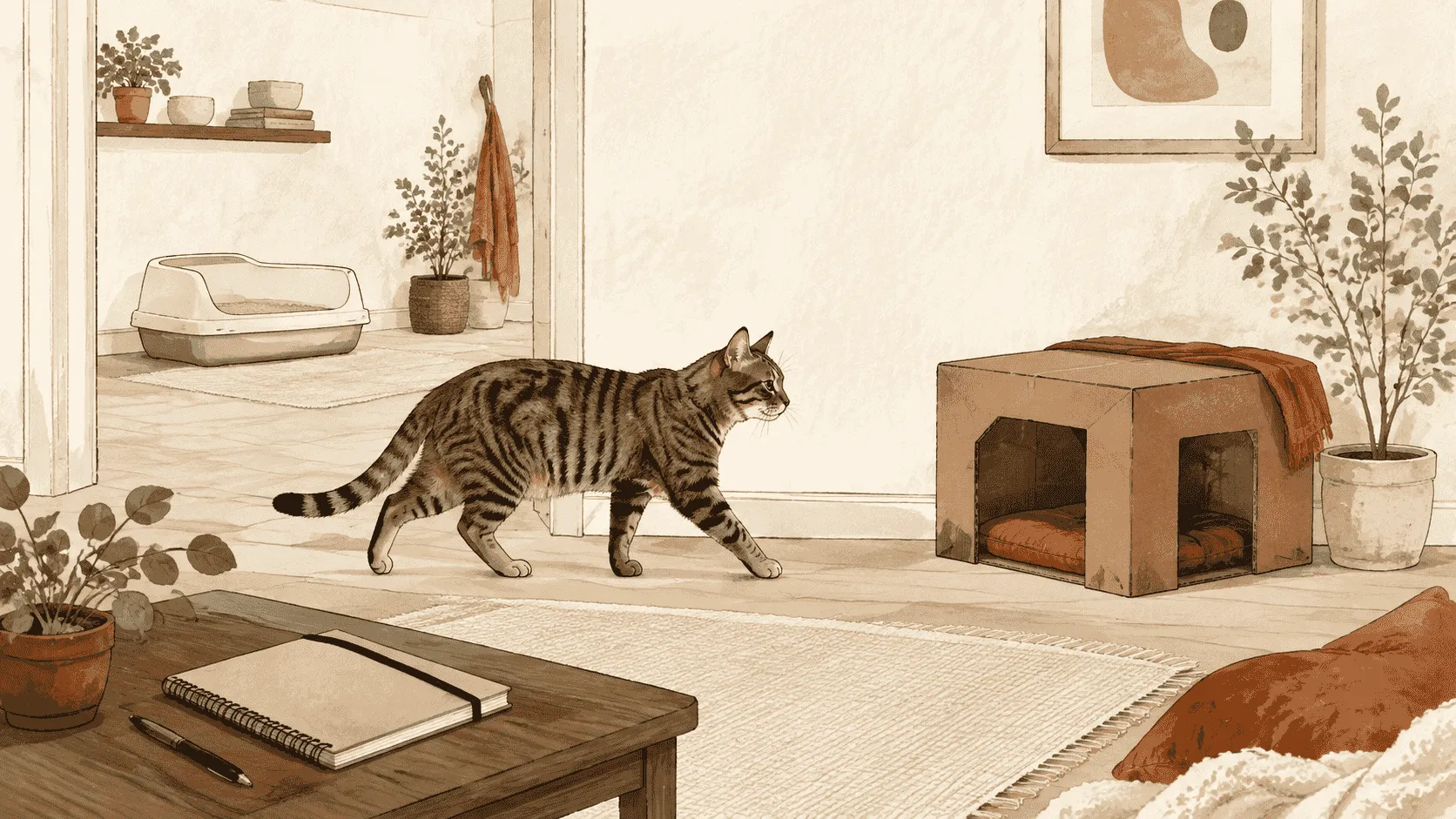
If your cat appears to be choosing the tray because it is a quiet, enclosed, or less exposed place, offer another option nearby without forcing the cat to use it. A stable cardboard box, open carrier, or raised resting place can function as a retreat when the cat can enter, leave, and avoid being cornered.
The feline environmental-needs guidance recommends safe places, separated key resources, and interaction the cat can control. Keep the retreat away from the litter, food, and water rather than turning one corner into a crowded station. Give the cat a clear route out, and leave the cat alone when they are resting or moving away. A separate refuge is a management option, not proof that stress is the cause and not a substitute for a veterinary check when the behavior is new or persistent.
The cat hiding guide explains how to make a refuge useful without making it a trap. The practical goal is more choice, not a test of whether your cat prefers a particular bed or box.
Know When the Tray Behavior Needs a Call
Use the level of change and the accompanying signs to choose the next step:
- Immediate: repeated straining, frequent attempts with little or no urine, or obvious urinary distress.
- Urgent: visibly difficult breathing, open-mouth breathing, or a cat that seems suddenly very unwell.
- Prompt veterinary advice: a new, marked, persistent, painful, bloody, or otherwise concerning change in tray behavior, especially with appetite, energy, grooming, movement, vomiting, diarrhea, or hiding changes.
- Brief and one-off: make a factual note if toileting and the rest of the routine are normal, then call if it recurs or any concern remains. A return to normal does not create a diagnosis or a universal waiting rule.
Do not use the color or size of one clump, a single quiet nap, or a photograph to clear the cat. If your uncertainty is the important fact—“I cannot tell whether urine was produced” or “this is not how my cat normally rests”—include that in the call.
Make a Five-Line Note Before You Call
Write the time the behavior began, how often it recurred, what you saw in the tray, and what happened around each episode. Add the cat’s usual food and water pattern, energy, grooming, movement, and any household change such as a new animal, moved box, different litter, or blocked route.
Keep the note factual. “Entered four times, strained, and produced no visible urine” is more useful than “seems constipated.” If you can safely capture a naturally occurring clip, keep it short and do not delay professional help to make a perfect record.
The safest answer to “why is my cat laying in the litter box?” is therefore a sequence: check output first, compare the whole pattern with the cat’s baseline, inspect access and cleanliness, offer a separate retreat, and call a veterinarian when the change or its companions cross the boundary. A litter box is part of a health-and-home system; one posture is not the whole explanation.
Sources
Petzette's claim cards for this article point to the following scientific, veterinary, or animal-welfare sources.
- Cat Urinary Obstruction — iCatCare And Cornell Guidance: International feline welfare and clinical education guide plus veterinary-school health guidance
International Cat Care. Understanding urinary tract diseases and how to help cats at home: a guide for caregivers. 2025; Cornell Feline Health Center. Feline Lower Urinary Tract Disease.
- Cornell New-Cat Health Signs And Kitten Responsiveness Guidance: Veterinary-school feline health guidance for evaluating a new cat or kitten
- Sick Cat Observation And Veterinary Escalation: Cross-source veterinary-school, veterinary-manual, and established animal-welfare guidance for observing possible illness in cats
- Cornell University College of Veterinary Medicine, Cornell Feline Health Center. *Choosing and Caring for Your New Cat.* The page says a sick cat may stop grooming and lists appetite loss, persistent vomiting, diarrhea, discharge, sneezing, weight loss, urinary changes, breathing changes, lethargy, and rapidly appearing or increasing swelling among signs that warrant veterinary contact. The page was directly reviewed and reports an update of May 2017.
- AAFP ISFM House Soiling Guidelines 2014: Veterinary guideline summary
- Cornell Cat House Soiling: Veterinary school owner education
- AAFP/ISFM Feline Environmental Needs Guidelines 2013: Peer-reviewed veterinary guidelines plus client-facing practice resource
- FelineVMA Environmental Needs: Safe Places And Choice: Current feline-veterinary caregiver guidance