Behavior & Training07 August 2026
Why Do Cats Loaf? Read a Tucked-Paw Resting Pose Safely
Why do cats loaf? Learn what a tucked-paw resting posture describes, how to observe the whole pattern, and when to ask a veterinarian.
TextPetzette Editorial
Read4 Min
Evidence status
Source-backed editorial
- Evidence record
- 5 claim cards linked to 6 documented sources.
- Independent expert review
- Not commissioned. Petzette Editorial is responsible for the published wording.
- Source record checked
- 07 August 2026
- Scope
- General guidance. Individual animals and circumstances can differ.
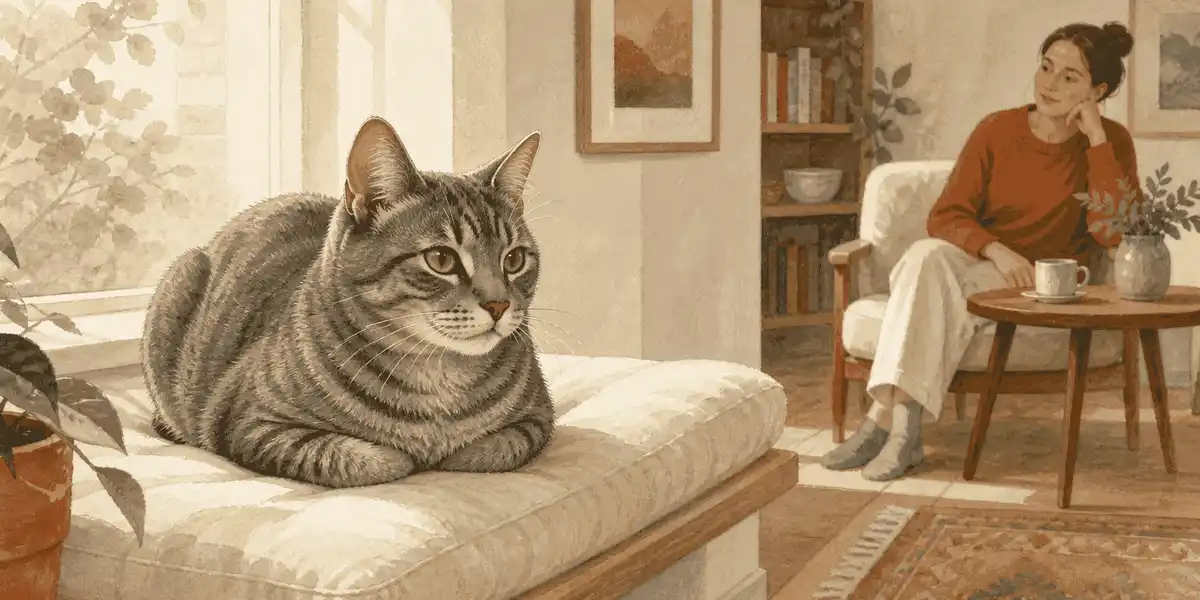
Why do cats loaf? If your cat is sitting with its paws tucked beneath its body, the useful first question is smaller than “What does this mean?” A 2024 study in the Journal of Feline Medicine and Surgery used “cat loaf” as a physical description: a cat sitting sternally with paws tucked underneath. It measured blood pressure, not the reason a cat chose that position. So the helpful decision is whether to let a familiar resting moment stay quiet, or to notice a meaningful change and ask for help.
What a Cat Loaf Actually Describes
“Cat loaf” is a handy visual label, not a diagnosis or a mood report. It describes where the paws are. It does not establish that a cat feels comfortable, happy, cold, worried, painful, or unwell.
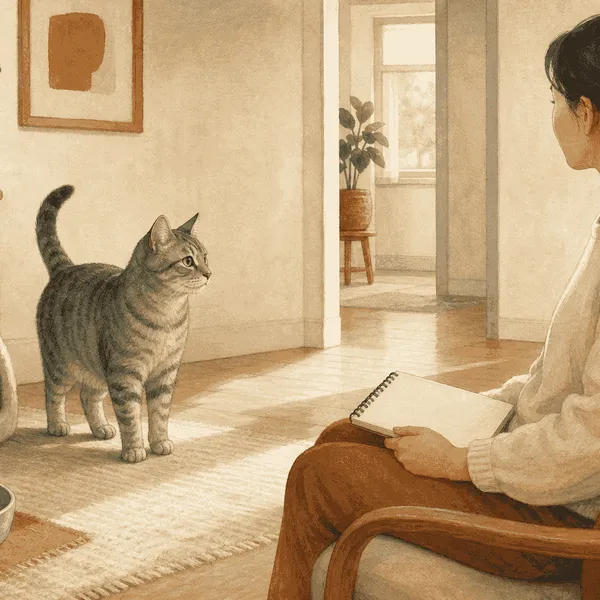
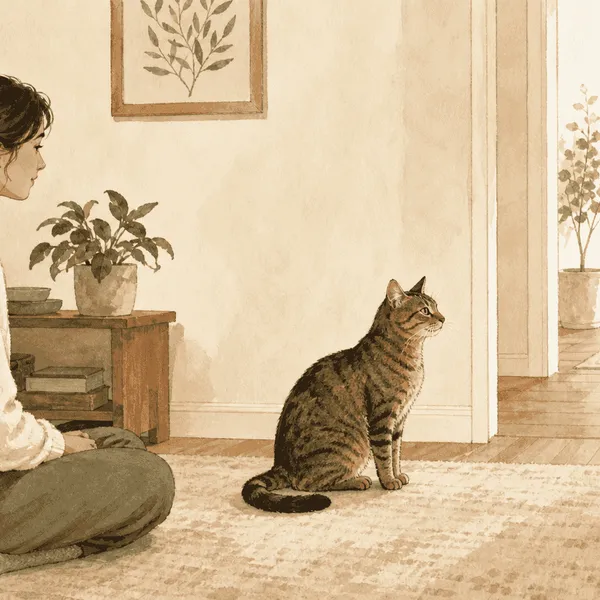
That boundary matters because an ordinary-looking still image leaves out most of the scene. A cat may be resting after play, watching a doorway, waiting near a familiar person, or doing something that has become part of its routine. The pose gives you one observation. It cannot fill in the rest of the story.
For the broader skill of reading a moment, use our whole-cat body-language guide. It covers face, movement, distance, and setting; this article stays with the narrower decision that begins when you spot a tucked-paw resting position.
Read the Whole Cat, Not Just the Paws
In a 2023 Behavioural Processes study of 53 cats in a cat-café setting, the combination of facial movements differed between affiliative and non-affiliative cat-cat interactions. That is useful evidence for restraint, not a home decoder. One feature—tucked paws, one ear, narrowed eyes, or a still tail—cannot reliably translate the moment by itself.
Pause long enough to add the missing context:
- What happened just before the cat settled there?
- Is the body loose or tense, and is the cat able to change position naturally?
- Is the room familiar, busy, warm, or close to a preferred resting spot?
- What happens next when you simply give the cat space?
You are not trying to pass a behavior test. You are deciding whether this looks like an ordinary rest within this cat’s usual day, or a change worth tracking.
Make Your Response Low Pressure
When the scene is familiar and your cat’s ordinary routine is otherwise intact, let rest be rest. Cats Protection guidance notes that adult cats commonly rest or sleep in intermittent bouts and benefit from comfortable, safe places where they are not disturbed. There is no need to lift, poke, or repeatedly call to a cat just to learn what a loaf means.
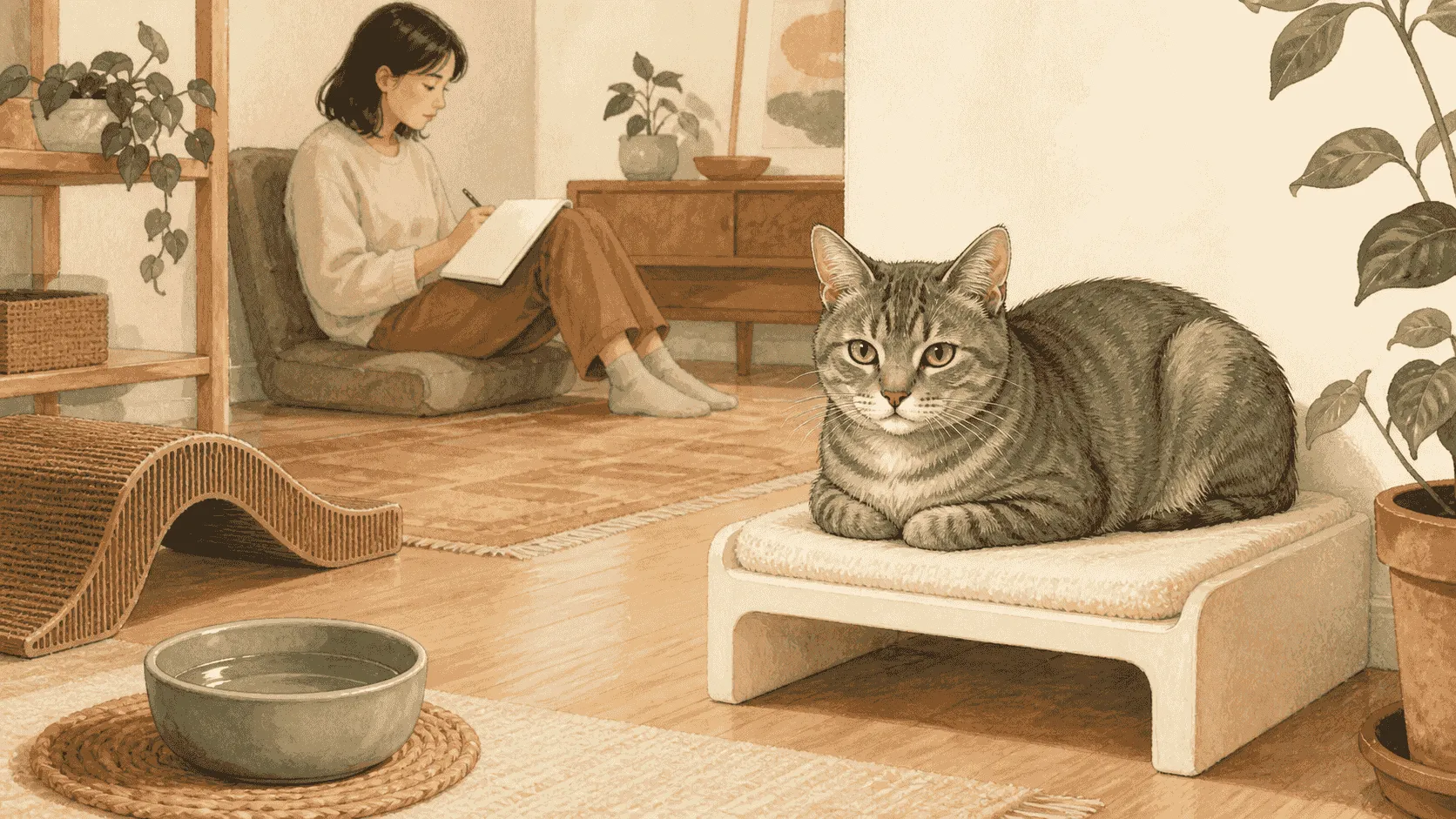
Instead, make the resting option easy: preserve a quiet place, keep an exit route clear, and avoid crowding food, water, litter, scratching, play, and resting resources into one corner. AAFP/ISFM environmental guidance frames those separate choices as part of a cat-friendly home. They are not a cure for a medical or behavior problem, but they let the cat control a routine resting moment.
Compare a Pattern, Not One Pose
The useful comparison is your cat’s own baseline. Over naturally awake moments, quietly notice movement, food and water use, litter habits, grooming, play, exploration, and social contact. A short note can be more useful than trying to remember whether the loaf looked slightly different yesterday.
Our cat sleep-pattern guide offers the same practical approach: protect rest, then look for a marked change in the cat’s normal waking and sleeping rhythm. Do not keep the cat awake or provoke a response to complete a checklist. A single comfortable-looking pose cannot rule out a concern, and a single quiet afternoon cannot identify one.
When a Cat Loaf Is a Veterinarian Question
Contact your veterinarian when the tucked-paw pose is part of a marked change: more sleeping or hiding than usual, reduced participation in ordinary activities, a new physical change, or behavior that concerns you. Include what came before the change and what else you have noticed, rather than naming a cause from posture alone.
A changed meow belongs in that fuller picture too. FelineVMA caregiver guidance recommends veterinary advice for a marked change in a cat’s usual meow tone or amount, especially when it appears alongside another health or behavior change. A short note about timing, setting, movement, appetite, and vocalization can support that conversation; it cannot replace an examination.
The next step is simple: let a familiar loaf be a quiet resting choice, notice the whole pattern when something changes, and involve your veterinarian when the change is marked or worrying. The pose is real; the one-word explanation is the part to leave open.
Sources
Petzette's claim cards for this article point to the following scientific, veterinary, or animal-welfare sources.
- Cat Loaf Is A Descriptive Posture In A 2024 JFMS Study: Peer-reviewed clinical study with narrow posture-definition relevance
- Cat Facial Signals In Social Interactions 2023: Peer-reviewed observational study
- Cornell Senior Cat Special Needs: Veterinary school feline health guidance
- Cats Protection Kitten Sleep And New-Home Rest Guidance: First-party animal-welfare guidance for kitten sleep and settling into a new home
- AAFP/ISFM Feline Environmental Needs Guidelines 2013: Peer-reviewed veterinary guidelines plus client-facing practice resource
- FelineVMA Cat Meowing Guidance: Feline veterinary-association caregiver guidance on meowing and vocalization