Gear Decisions24 July 2026
Cat Scratching Post: Choose, Place, and Test the Right Fit
Choose a cat scratching post by matching your cat's preferred angle, texture, stretch, and location, then test one change at a time.
TextPetzette Editorial
Read4 Min
Evidence status
Source-backed editorial
- Evidence record
- 3 claim cards linked to 4 documented sources.
- Independent expert review
- Not commissioned. Petzette Editorial is responsible for the published wording.
- Source record checked
- 14 July 2026
- Scope
- General guidance. Individual animals and circumstances can differ.
A cat scratching post is useful only when it fits the scratch your cat already wants to make. Before choosing a shape or placing it in a decorative corner, watch the current pattern: vertical or horizontal, firm or yielding, beside sleep or in the middle of activity. That short observation gives you a better starting point than assuming one post style suits every cat.
The decision is not “scratching or no scratching.” Scratching is normal behavior connected with marking, stretching and exercise, and claw maintenance. Your job is to offer an acceptable surface that is stable, reachable, and relevant enough to compete with the surface your cat chose first.
Read the Scratch Before You Choose a Cat Scratching Post
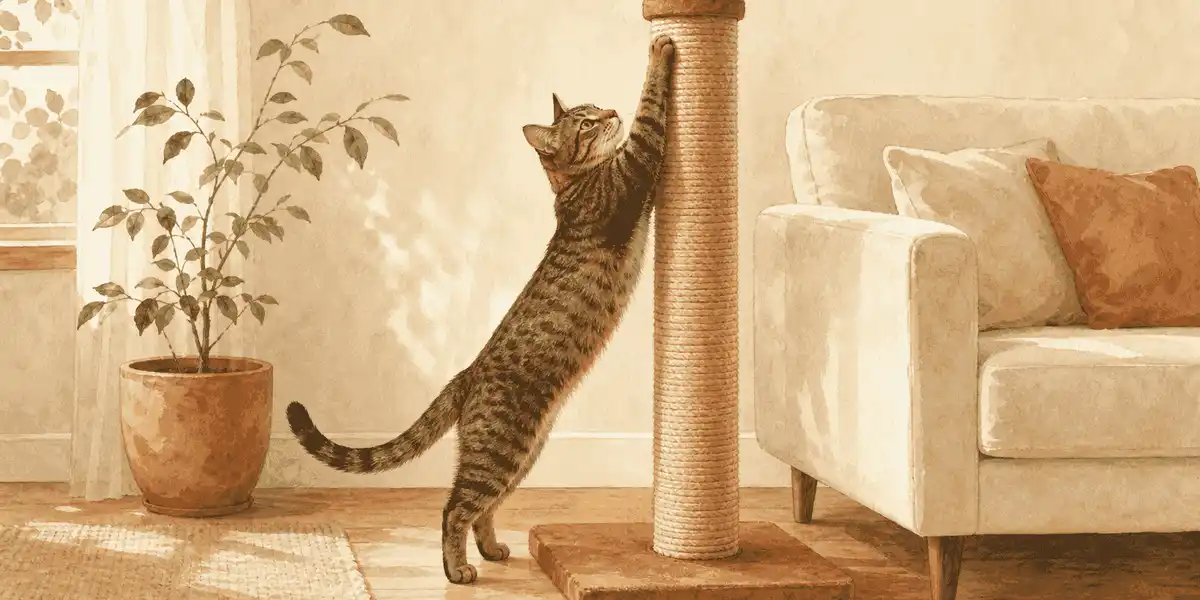
For two or three days, record the scratching you actually see. Note the surface, angle, location, and how far the cat stretches. A cat reaching upward along a sofa arm is giving you different setup information from one scratching a flat rug.
UC Davis School of Veterinary Medicine guidance describes material and orientation preferences that can include vertical posts, horizontal cardboard, carpet, sisal, or wood. That is not a shopping list or a universal ranking. It is a prompt to copy the useful features of the existing behavior without copying the household target.
Use four questions:
- Is the current scratch vertical, horizontal, or angled?
- Does the chosen surface feel firm, fibrous, smooth, or yielding?
- Can the cat make a full-body stretch there?
- Does the spot sit beside rest, a route through the room, or a socially active area?
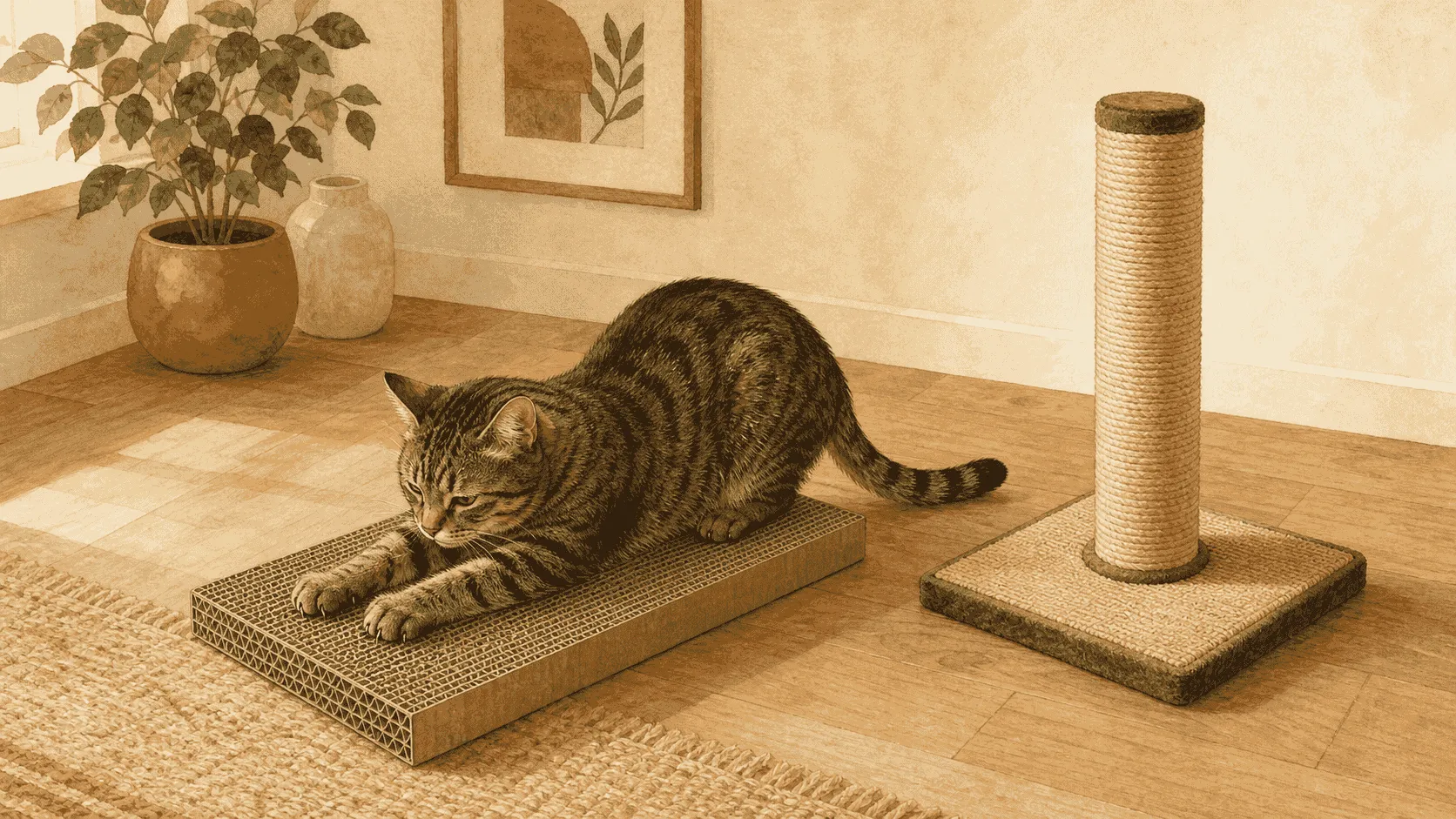
If you are preparing for a newcomer and have no pattern yet, begin with one stable vertical surface and one stable horizontal option. The new-kitten home-setup checklist shows how to place scratching among the other first-week resources without crowding them together.
Match Vertical Posts and Horizontal Scratching Pads
A vertical post should resist wobbling and be tall enough for the cat using it to stretch fully. A horizontal scratching pad or board should be long enough for the same comfortable reach and should not skid across the floor. Cats Protection guidance makes both orientation and full-stretch size part of the fit check.
Test stability on the actual floor. Press the upper part of a post from different directions and check whether the base lifts or slides. For a horizontal scratcher, apply pressure where the front paws would land. A surface that moves unexpectedly may be less useful than a firmly anchored sofa.
Material matters, but avoid treating one texture as the answer for the species. Cornell feline behavior guidance recommends identifying the cat’s preferred material and orientation, then offering a sturdy alternative. Start with the closest acceptable match to the current target. Change one variable at a time so you can tell whether angle, texture, size, stability, or location made the difference.
Put the Scratcher Where the Decision Happens
Place the new option beside the surface currently being scratched or near a sleeping place where the cat often stretches after waking. Cats Protection specifically supports these locations. Hiding the scratcher in a distant utility room may make the furniture the more obvious choice.
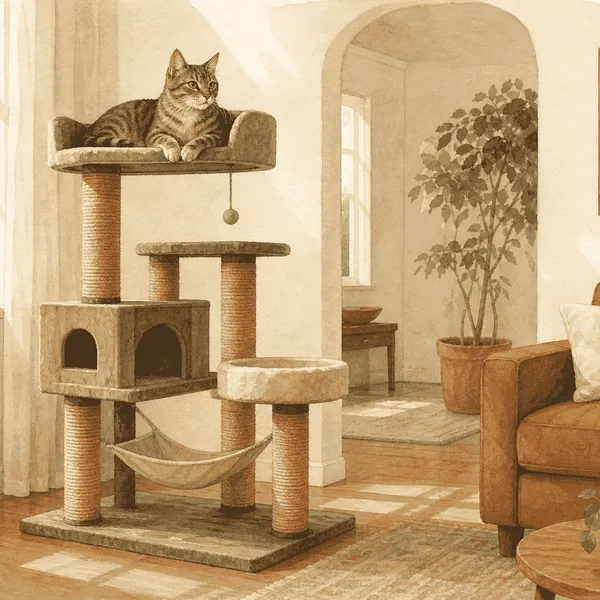
Once the cat is using the acceptable surface reliably, you can test a small location change if needed. Move it gradually and keep the route clear. If you also want climbing and rest space, the cat-tree setup guide covers that separate, multi-function decision; a tree does not have to carry every scratching job in the home.
How to Get a Cat to Use a Scratching Post
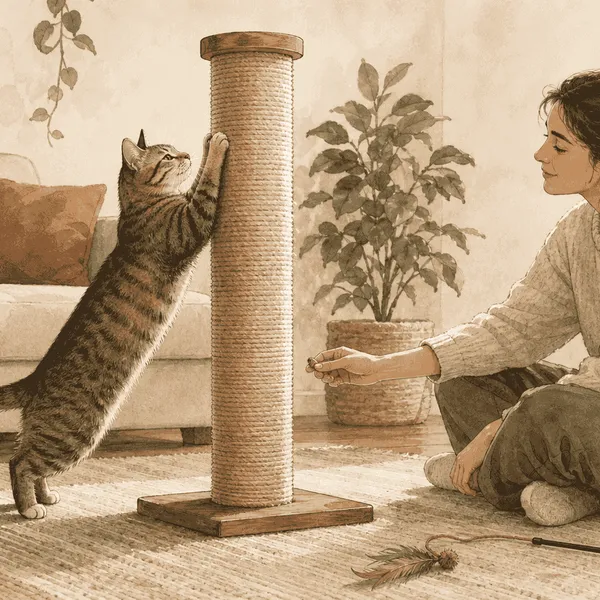
Begin by making the acceptable choice easy to discover. Put it next to the current target, keep it steady, and allow voluntary investigation. Do not place the cat’s paws on it, shout, spray water, or treat the marks as revenge. Punishment does not explain which surface is acceptable and can add stress to the room.
If the cat walks past, return to the four observations rather than repeating the same setup more forcefully. Try one calm adjustment:
- Rotate from vertical to horizontal, or add the missing orientation.
- Move the scratcher closer to the existing target.
- Increase usable stretch length or improve stability.
- Test a material closer to the surface the cat selected.
Then watch for several days. The broader cat behavior redirection plan can help when scratching is one part of a larger training question.
Know When a Post Is Not the Whole Answer
A scratcher is an environmental choice, not a diagnosis or a fix for every conflict. Widespread new scratching around doorways or tension points, a sudden marked change, overgrooming, house-soiling, reduced appetite, apparent pain, or other behavior changes need more context. Ask your veterinarian about sudden or concerning changes; a qualified cat behavior professional may also help with a household-specific plan.
Your next step is small: write down angle, texture, stretch, and location, then change the single weakest match. A useful cat scratching post is not the most elaborate one. It is the option that makes a normal behavior easier to direct to a suitable place.
Sources
Petzette's claim cards for this article point to the following scientific, veterinary, or animal-welfare sources.
- UC Davis Inappropriate Scratching In Cats: Veterinary school behavior guidance
- Cats Protection Scratching Setup Guidance: Cat-welfare behavior guidance
- Cornell Cat Destructive Behavior, Play, And Scratching: Veterinary school feline behavior guidance
- AAFP/ISFM Feline Environmental Needs Guidelines 2013: Peer-reviewed veterinary guidelines plus client-facing practice resource