BehaviorUpdated 28 July 2026
How to Correct Cat Behavior: Redirect, Reward, Recheck
How to correct cat behavior without punishment: identify the need, teach a safer alternative, choose a useful reward, and know when to call for help.
TextPetzette Editorial
Read4 Min

Evidence status
Source-backed editorial
- Evidence record
- 7 claim cards linked to 9 documented sources.
- Independent expert review
- Not commissioned. Petzette Editorial is responsible for the published wording.
- Source record checked
- 20 July 2026
- Scope
- General guidance. Individual animals and circumstances can differ.
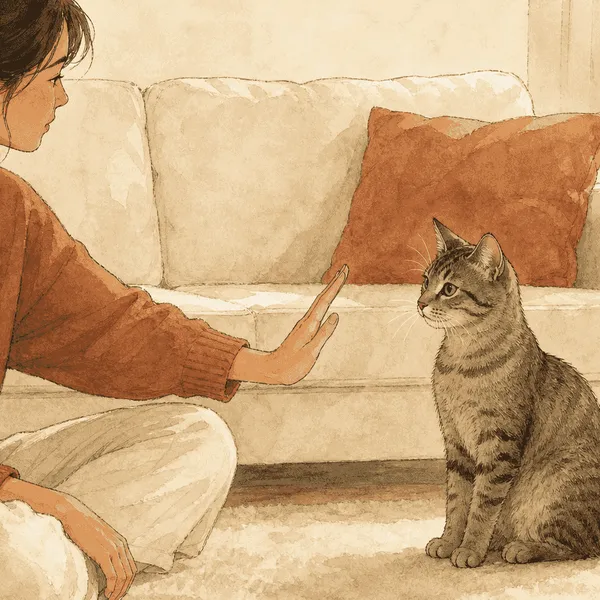
Learning how to correct cat behavior starts with understanding cat behavior in context, then asking a smaller question: what should your cat do instead? Punishment does not identify a safe scratching surface, make a hand into an appropriate toy, or explain a litter-box change. A more useful plan is to name the behavior, read the whole scene, prevent the next unwanted repetition, and reward one realistic alternative.
For a newly adopted cat or kitten, keep arrival stress and routine changes in view. The calm first-30-days cat guide covers that settling-in timeline. This guide is for the next decision: what to do when a specific everyday behavior needs a different outlet.
Start Cat Behavior Training With Three Lines
Before changing the room or reaching for a toy, write down three things:
- What happened: describe an observable action, such as scratching one sofa corner or pouncing on ankles.
- What came just before it: note the place, time, movement, nearby animals, and activity.
- What happened next: record whether the cat continued, left, hid, returned, or switched activities.
This is not a diagnosis. It is a way to find a repeatable moment you can redesign. Cornell Feline Health Center guidance, for example, recommends looking for patterns before suspected play aggression and considering medical causes before treating aggression as a behavior-only problem.
Understanding Cat Behavior Means Reading the Combination
Cat behavior explained by one ear, pupil, or whisker position is usually too neat to guide a real decision. A 2023 observational study in Behavioural Processes coded facial movements during interactions among 53 cat-cafe cats. Facial-movement combinations differed between affiliative and non-affiliative cat-cat interactions, but the study did not create a household decoder for exact emotions or intent.
Use that boundary as a practical check. Add ears, eyes, whiskers, mouth, body position, the other animal or person, and the situation. If you have only one feature, record it instead of naming a motive. Then ask whether the whole pattern is familiar for this cat, whether it changes when the situation changes, and whether approaching would be safe. The observation tells you which problem to solve; a guessed emotion does not.
How to Discipline a Kitten? Replace the Behavior’s Job
“Stop” is not a complete lesson. Match the alternative to the behavior in front of you:
- Scratching furniture: Scratching supports marking, stretching, exercise, and claw care. UC Davis and Cornell guidance recommend redirecting it to an acceptable surface. Observe whether the cat chooses vertical or horizontal material, place a sturdy option near the current target, and reward investigation. The cat-tree and scratching setup guide takes that fit check further.
- Pouncing on hands or ankles: Your skin is the wrong target. Move play to a toy at a distance, anticipate the usual ambush time, and end the interaction calmly if teeth or claws reach a person. Do not assume that every bite is play or punish the cat for an explanation you have not established.
- Eliminating outside the litter box: Treat this as a health-and-setup signal, not disobedience. The AAFP/ISFM house-soiling guidelines reject spite as an explanation. Check veterinary urgency, box access, litter, cleanliness, location, and household conflict instead of turning the event into a training contest.
The shared rule is simple: preserve the normal need where possible, then make the acceptable version easier to choose.
Choose a Reward This Cat Values
Cat behavior training works better when the consequence matters to the individual. A 2017 study in Behavioural Processes offered social interaction, food, toys, and scent to participating pet and shelter cats. The final group of 38 cats did not share one preference order; social interaction and food were not statistically different in the authors’ comparison.
Run a tiny, low-pressure choice check. Offer brief attention, a small food reward already allowed in the cat’s diet, or a favorite toy in separate moments. Notice which option the cat repeatedly approaches while relaxed. A single choice is not a permanent personality label, and withholding food is not a fair way to force engagement.
Teach One Small Alternative
Make the first success almost too easy. Feline Veterinary Medical Association guidance describes a rewarded nose target: present a safe, ordinary target such as a capped pen, reward one voluntary touch, then gradually move it a short distance. That skill can become a route to a mat, scale, or carrier without picking up or pushing the cat during the lesson.
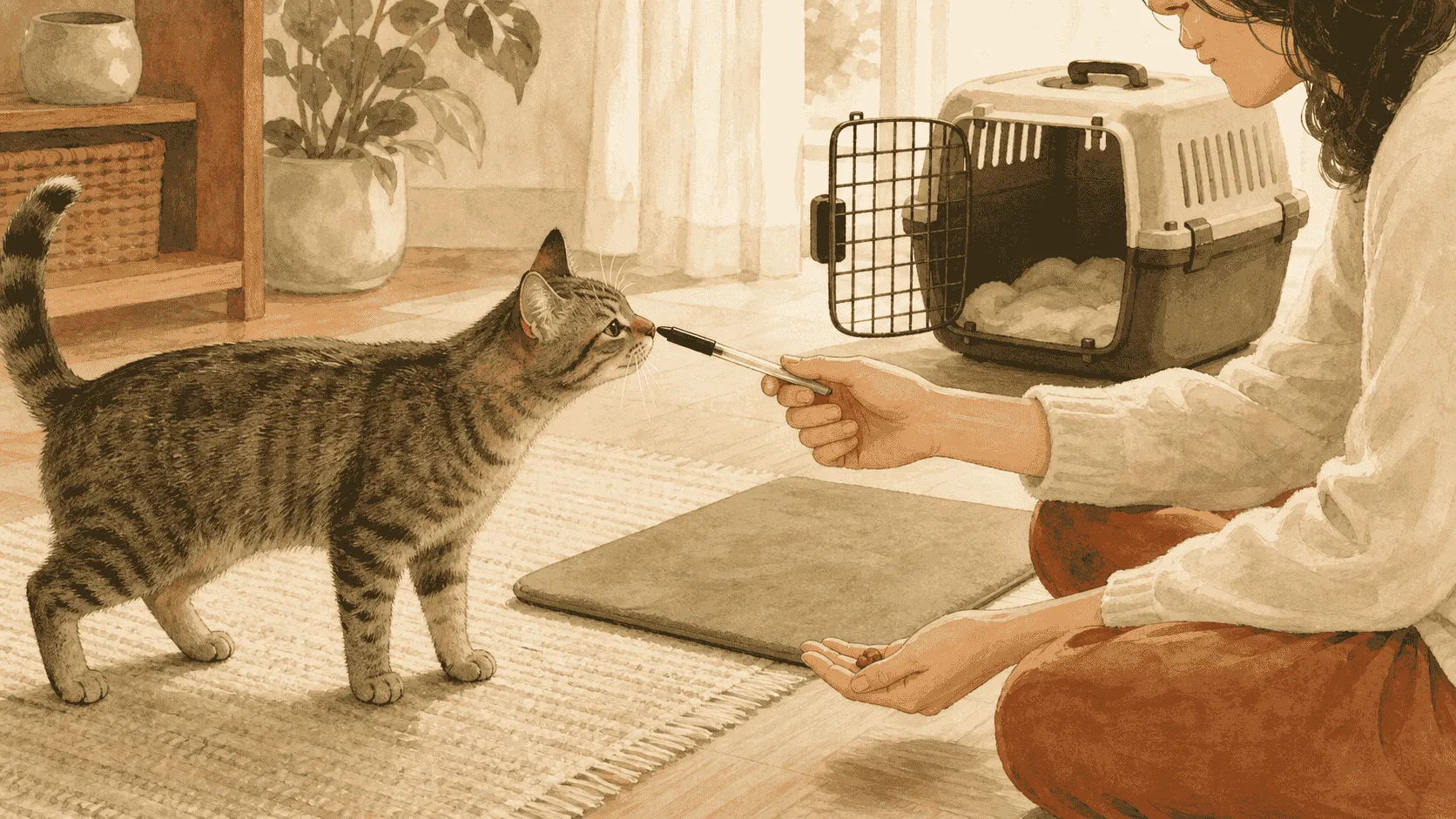
The same small-step logic applies elsewhere. Reward one approach to the scratcher, one pounce on the wand toy instead of a hand, or one calm movement toward the mat. Stop while the cat is still comfortable. Hiding, hissing, growling, pain, or loss of interest means the lesson should pause.
For kitten play, the first-year cat-toy guide explains supervision, catchable endings, storage, and the boundary between a toy decision and professional help.
Know When Not to Train Through It
A sudden or marked behavior change can have a health component even when the action looks familiar. Contact your veterinarian about new house-soiling, apparent pain, reduced appetite, unusual withdrawal, or aggression that is sudden, severe, or unlike this cat’s baseline. Urgent urinary difficulty, significant injury, or immediate safety risk needs prompt professional direction.
Do not keep rehearsing a situation in which someone could be bitten or scratched. Use distance and barriers without cornering the cat, then ask your veterinarian and a qualified cat behavior professional for an individual plan. An article cannot determine the cause from one incident.
Your useful next step is a three-line plan: write the observable behavior and its context, choose one acceptable alternative, and choose one reward your cat has calmly selected. Try one easy repetition, record what changed, and recheck before making the task harder.
Sources
Petzette's claim cards for this article point to the following scientific, veterinary, or animal-welfare sources.
- AAFP/ISFM Feline Environmental Needs Guidelines 2013: Peer-reviewed veterinary guidelines plus client-facing practice resource
- UC Davis Inappropriate Scratching In Cats: Veterinary school behavior guidance
- Cornell Cat Destructive Behavior, Play, And Scratching: Veterinary school feline behavior guidance
- AAFP ISFM House Soiling Guidelines 2014: Veterinary guideline summary
- Cornell Cat House Soiling: Veterinary school owner education
- Cornell Cat Play Aggression: Veterinary school feline behavior guidance
- Cat Stimulus Preference Assessment: Peer-reviewed feline behaviour experiment
Vitale Shreve KR, Mehrkam LR, Udell MAR. Social interaction, food, scent or toys? A formal assessment of domestic pet and shelter cat (Felis silvestris catus) preferences. Behavioural Processes. 2017;141(Pt 3):322-328.
- FelineVMA Cat Target Training: Feline veterinary-association caregiver guidance
- Cat Facial Signals In Social Interactions 2023: Peer-reviewed observational study