Nutrition13 September 2026
Are Jade Plants Toxic to Cats? Match the Label Before You Call
Are jade plants toxic to cats? Match the plant label, separate jade from lookalikes, and know what to record before calling a veterinarian.
TextPetzette Editorial
Read5 Min
Evidence status
Source-backed editorial
- Evidence record
- 5 claim cards linked to 4 documented sources.
- Independent expert review
- Not commissioned. Petzette Editorial is responsible for the published wording.
- Source record checked
- 13 September 2026
- Scope
- General information, not an individual diagnosis or treatment plan.
Are jade plants toxic to cats? The safest short answer is conditional: if the plant matches ASPCA’s named Jade Plant entry, ASPCA lists it as toxic to cats and dogs. That classification is a reason to keep the plant away and know how to make a professional call useful. It is not a photo-based diagnosis, a safe-amount chart, or a prediction of what will happen to one cat.
The first-year decision is therefore narrower than “Are all succulents safe?” Match the plant in front of you, preserve the details if a cat may have chewed it, and keep the home setup from turning an uncertain label into a preventable exposure.
Jade Is a Plant Name, Not a Succulent Answer
“Succulent” describes a broad plant category. Pet Poison Helpline names several non-toxic succulent examples while warning that Kalanchoe can be very toxic, so the store category does not settle a cat-safety question. The broader succulent guide explains why the exact variety matters; this page follows one named plant through the next decision.
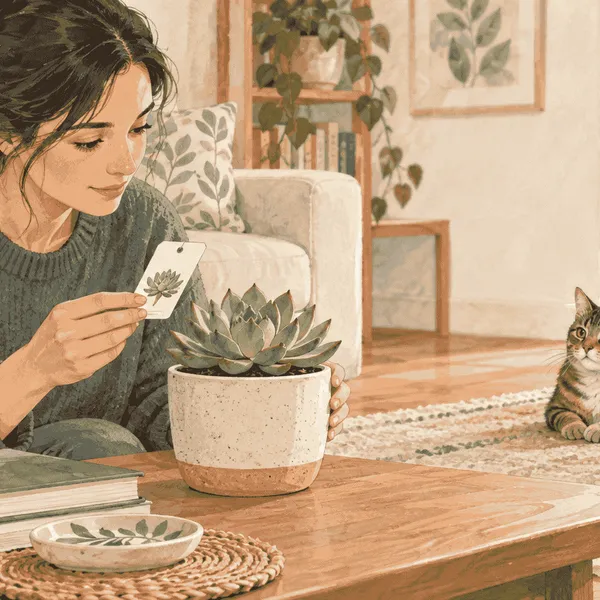
That distinction is useful even when the plant looks familiar. A jade-shaped leaf, a nursery sign that says only “succulent,” or a remembered houseplant list cannot establish which entry applies. Start with the tag, receipt, botanical name, or a clear photo of the label. If none is available, keep the plant inaccessible while you ask for help rather than filling the gap with a guess.
Read the Pot Label Before You Read the Risk
ASPCA’s Jade Plant entry names Baby Jade, Dwarf rubber plant, Jade tree, Chinese rubber plant, and Japanese rubber plant, and identifies Crassula argentea. Pet Poison Helpline uses Crassula sp. for its Jade Plant page and includes additional common names. That difference in taxonomic wording is a cue to preserve the label, not a reason to choose whichever answer sounds more reassuring.
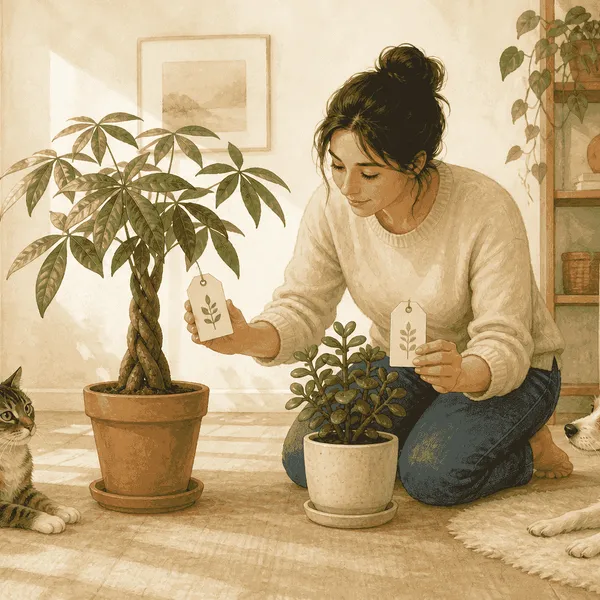
Common names create another trap. ASPCA’s Money Tree record concerns Pachira aquatica, while its safety guidance notes that jade can also be called a money tree or money plant. The money-tree identity check shows why the words on the front of a pot need a botanical check before you borrow a classification from a different plant.
For a new cat home, write the plant’s exact name into the same practical record you use for food, litter, and household hazards. A label is useful evidence when it stays attached to the plant instead of disappearing after repotting.
What the Named Sources Actually Say
ASPCA lists its named Jade Plant entry as toxic to cats and dogs. It lists the toxic principle as unknown and gives vomiting, depression, and incoordination as possible clinical signs. Those are signs to report, not a home test that can identify jade-plant poisoning.
Pet Poison Helpline describes jade-plant ingestion as typically causing no more than mild gastrointestinal distress. It also lists vomiting, diarrhea, reduced appetite, lethargy, and ataxia—a wobbly or unsteady movement—as signs to watch for, and recommends veterinary care when signs persist. Its page notes that individual factors affect risk.
Put those statements in their proper lane. “Typically mild” is not a promise for your cat, and “toxic” is not an individual prognosis. Neither source supplies a safe amount, a home-treatment protocol, or permission to wait through a concerning change. A cat’s size, health, amount, timing, and the actual plant may all matter, and this article cannot calculate their effect.
If Your Cat May Have Chewed Jade, Make the Call Useful
Move the plant and any loose material out of reach, then collect the facts without trying to make the event more dramatic or more reassuring. A short note can include:
- The name: copy the label and botanical name exactly; keep the pot, receipt, or label photo available.
- The event: record when the contact may have happened and which part of the plant was reachable.
- The amount: describe what is known without inventing a bite count or a safe threshold.
- The whole cat: note vomiting, diarrhea, reduced appetite, lethargy, depression, unsteady movement, or any other change compared with normal.
- The question: tell a veterinarian or animal-poison-control service what happened and ask what to do next.
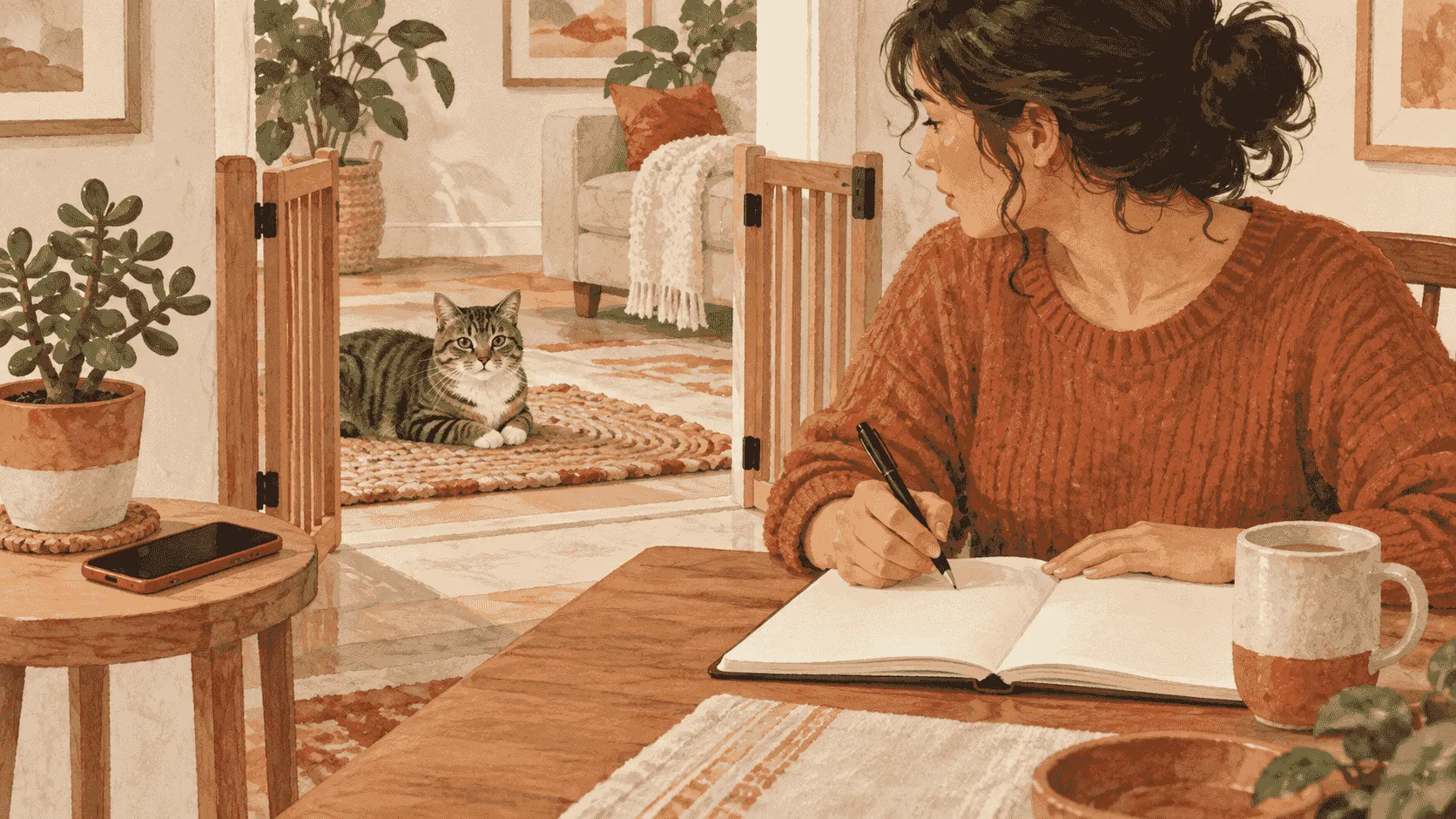
Do not induce vomiting, give medication, or use a household remedy unless a veterinarian or animal-poison-control professional specifically directs it. If a cat is already unwell, the call belongs ahead of a perfect plant identification. Keep the label or a photo beside the phone, and do not delay urgent care to stage a better image.
Do Not Borrow the Kalanchoe or Money-Tree Answer
Kalanchoe is another reason the word succulent cannot carry the whole answer. ASPCA lists Kalanchoe spp. as toxic to cats and dogs and describes possible vomiting, diarrhea, and rare abnormal heart rhythm. That is a named Kalanchoe boundary, not evidence that every succulent is Kalanchoe or that a jade plant has the same profile. The plant-safety checklist keeps category, named entry, and possible exposure as separate questions.
The same logic applies to money plants. If a label points to Pachira aquatica, do not substitute the jade answer; if it says jade or gives an uncertain overlapping common name, do not substitute the Money Tree answer. A different label means a different identification task.
Set Up the Room Before the Cat Arrives
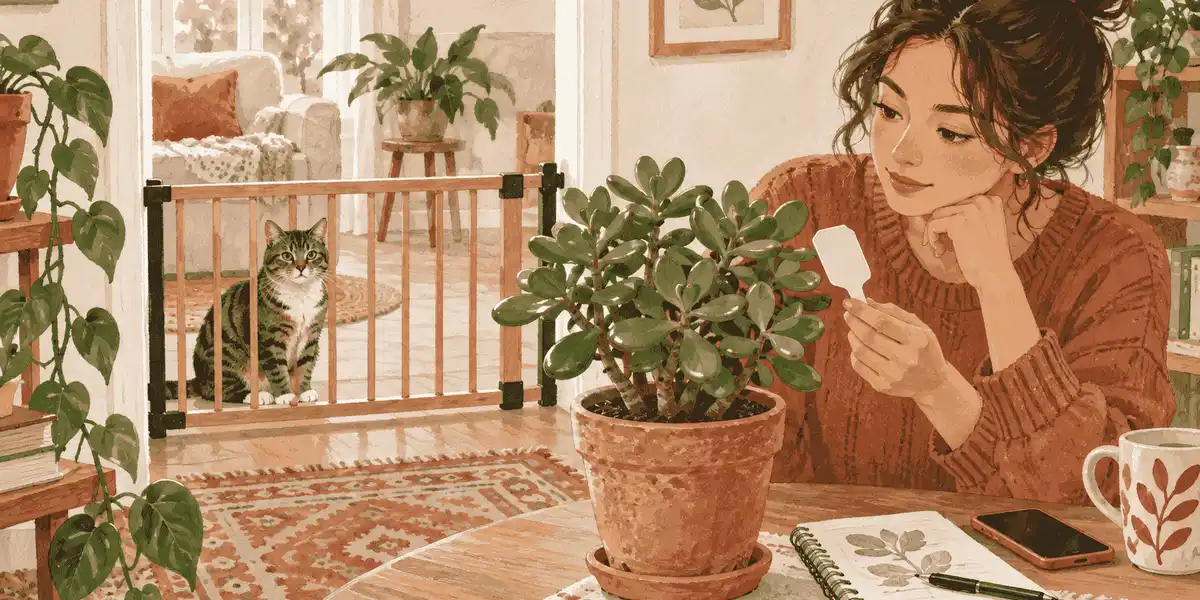
The easiest exposure record is the one you do not need. Keep jade and other uncertain plants behind a closed door, a stable barrier, or another arrangement your cat cannot reach. Keep fertilizers, pesticides, potting mix, cuttings, and plant-care products in their own closed storage; a plant classification does not classify those items.
Add a label photo to your new-cat home file before the first curious climb. If the plant is repotted, move the original name with it. Recheck the setup after furniture changes, new pets, or a cat who has learned a new route onto a shelf.
The practical answer is simple but not absolute: a jade plant that matches ASPCA’s named entry is listed as toxic to cats and dogs, while the exact name and the individual exposure still matter. Keep the plant out of reach, preserve what you know, and call a veterinarian or animal poison-control service before attempting any home treatment when contact may have occurred.
Sources
Petzette's claim cards for this article point to the following scientific, veterinary, or animal-welfare sources.
- Succulent Category Needs Exact Plant Identification: Animal poison-control guidance and named-plant database entries
- Jade Plant Named-Entry Safety Boundary: Animal poison-control guidance and named-plant database entries
- ASPCA Money Tree Identity And Plant Classification: Animal poison-control plant-database records and ASPCA veterinary safety guidance
ASPCA Animal Poison Control Center. *Toxic and Non-toxic Plants*: “Money Tree” (*Pachira aquatica*); ASPCA, “Are Succulents Safe to Have Around Pets?” Directly reviewed 2026-08-09.
- AVMA Pet First Aid: Poison Response Boundary: Veterinary-association first-aid brochure