Behavior23 July 2026
Why Does My Cat Bite Me While Purring? Pause and Read
Why does my cat bite me while purring? Learn when to pause petting, redirect play, read the whole interaction, and ask for professional help.
TextPetzette Editorial
Read4 Min
Evidence status
Source-backed editorial
- Evidence record
- 4 claim cards linked to 5 documented sources.
- Independent expert review
- Not commissioned. Petzette Editorial is responsible for the published wording.
- Source record checked
- 11 July 2026
- Scope
- General guidance. Individual animals and circumstances can differ.
Why does my cat bite me while purring? The sound and the teeth can feel contradictory, especially when you are still learning a new kitten’s patterns. But a purr is not standing permission for touch, and one bite cannot identify one motive. Your first move is simpler: stop your hands, give the cat space to leave, and replay the few seconds before contact.
That pause protects both of you while you decide whether the useful next step is shorter petting, a safer play outlet, or professional help for a sudden or serious change.
Purring Does Not Cancel a Bite
A 2009 study in Current Biology found that some cats could add a cry-like component to purrs used while soliciting food. Human listeners rated those solicitation purrs as more urgent and less pleasant than non-solicitation purrs. The specific result matters because it shows that purrs can vary with context; it does not provide a universal translation for hunger, comfort, pain, or affection.
So the purr cannot settle why teeth appeared. Our guide to reading cat purring in context owns the wider sound question. In this moment, treat the bite as an interaction boundary and widen the frame.
Why Do Cats Bite When You Pet Them?
ASPCA guidance describes petting-induced aggression as a pattern in which contact becomes irritating or unpleasant and a cat nips or bites. What feels sudden to the person may follow small changes that were easy to miss.
Use a three-frame check:
- Before: Where were you touching, how long had contact continued, and was the cat free to move away?
- During: Did the body become still, did the head turn toward your hand, or did the ears, tail, skin, or posture change?
- After: Did the cat leave, settle nearby, return for contact, stalk a moving hand, or stay tense?
Do not turn one ear, tail movement, or facial feature into a verdict. In a 2023 Behavioural Processes study of 53 cat-cafe cats, combinations of facial movements differed between affiliative and non-affiliative cat-cat interactions. The study does not create a household emotion decoder; it supports reading a combination, then adding the body and situation.
Separate a Petting Pattern From a Play Pattern
A bite during steady touch and a pounce on moving fingers can require different immediate responses. The distinction is a working observation, not a diagnosis.
- If contact had continued for a while: Stop petting and let the cat choose distance. On a later calm occasion, keep contact shorter and pause before the point where the earlier body changes appeared.
- If hands or feet had become moving targets: End skin-based play calmly. Cornell Feline Health Center guidance recommends toys at a distance from hands, identifying repeatable play patterns, and walking away or ending play rather than using physical punishment.
- If the sequence is unclear: Prevent another close interaction and record what happened before, during, and after. One incident may not reveal whether touch, play, discomfort, fear, or another factor mattered.
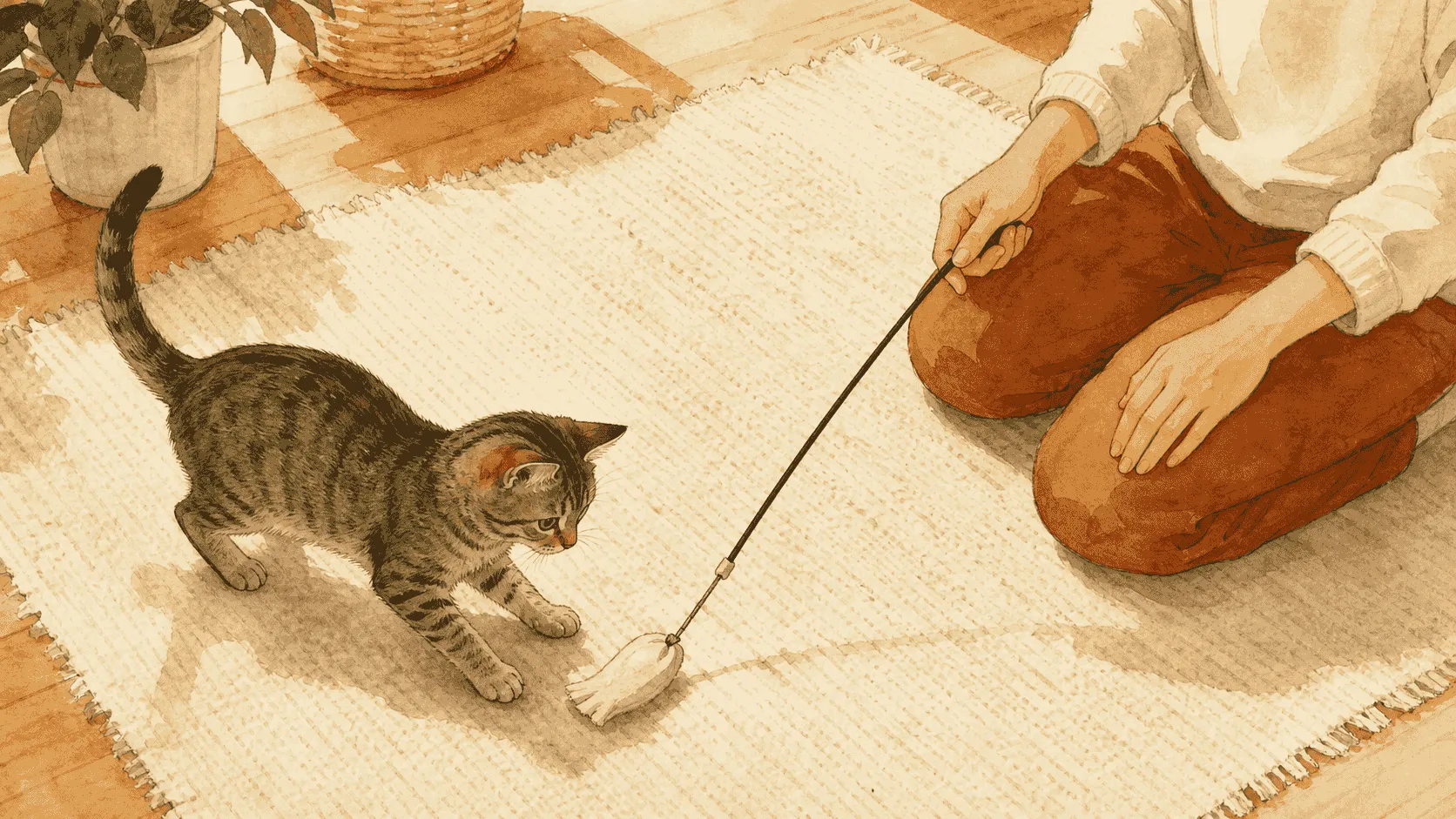
For likely play, the first-year kitten toy guide explains supervised chase, catchable endings, and storage. It should not be used to label every bite as play.
What to Do the Next Time
Do not hold the cat in place, keep petting to test a theory, or punish the bite. Instead:
- Make your hands still and allow an exit.
- Wait until the cat is calm before offering another interaction.
- Change one part of the setup: shorten touch, avoid the sensitive location, or move play to a suitable toy away from skin.
- Note whether the same sequence happens again.
If the pattern is repeatable and mild, stopping earlier may prevent another bite. If a play sequence is repeatable, offer the safer target before the usual pounce time. The broader guide to redirecting and rewarding cat behavior covers how to teach an acceptable alternative without punishment.
When a Bite Needs Professional Help
Contact your veterinarian when biting or aggression is sudden, severe, unusual for this cat, difficult to interrupt, or accompanied by apparent pain, reduced appetite, unusual withdrawal, or another health change. A hard or repeated bite, escalating tension, or a situation that makes anyone feel unsafe also calls for distance, practical safety management, and qualified cat-behavior help.
Do not keep recreating the interaction while waiting for certainty. A veterinarian can assess possible health contributors; a qualified behavior professional can observe the wider pattern. Neither purring nor one bite can diagnose the cause.
Your useful next step is a pause-and-read plan: stop contact, give space, write the three frames, and change one part of the next calm interaction. The goal is not to decode a contradiction. It is to respond safely to the whole cat in front of you.
Sources
Petzette's claim cards for this article point to the following scientific, veterinary, or animal-welfare sources.
- The Cry Embedded Within The Purr: Peer-reviewed paper
- Petting-Induced Aggression In Cats: Veterinary / animal welfare education article
- Cornell Cat Destructive Behavior, Play, And Scratching: Veterinary school feline behavior guidance
- Cornell Cat Play Aggression: Veterinary school feline behavior guidance
- Cat Facial Signals In Social Interactions 2023: Peer-reviewed observational study