Behavior & Training20 July 2026
Why Is My New Kitten Meowing So Much?
Why is my new kitten meowing so much? Use a calm needs-and-context check, record changes, and learn when to call your veterinarian.
TextPetzette Editorial
Read3 Min

Evidence status
Source-backed editorial
- Evidence record
- 6 claim cards linked to 5 documented sources.
- Independent expert review
- Not commissioned. Petzette Editorial is responsible for the published wording.
- Source record checked
- 20 July 2026
- Scope
- General guidance. Individual animals and circumstances can differ.
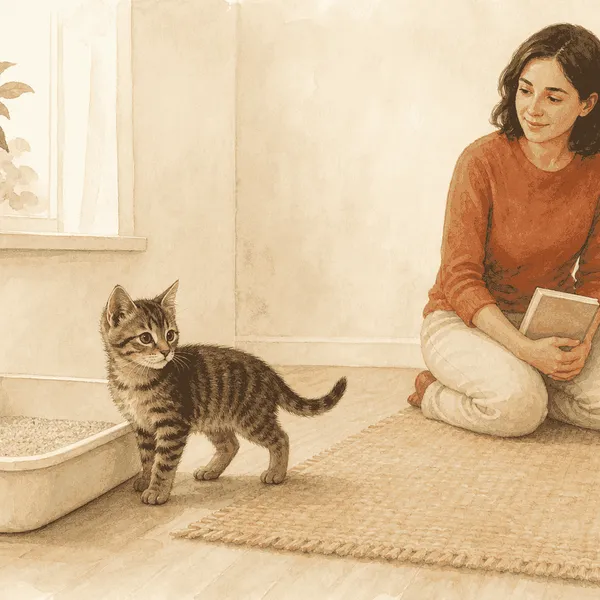
Why is my new kitten meowing so much? In the first hours at home, the safest answer is not a sound dictionary. A meow is a clue, but it cannot tell you by itself whether your kitten wants access to something, is seeking calm company, feels unsettled, or needs professional help. Start with a short needs-and-context check, then use the whole pattern to decide what comes next.
A New Kitten Meowing a Lot Needs Context
Cat Friendly Homes, created by the Feline Veterinary Medical Association, describes cat-caregiver meow patterns as individual rather than a universal language. Pitch alone is not a reliable shortcut. The useful information sits around the sound: where the kitten is, what happened just before it, what the body is doing, and what happens next.
Make a simple three-part note:
- Before: Did someone leave, did a door close, or was a meal offered?
- During: Where is the kitten, and can they move normally to their resources?
- After: Do they approach, eat, drink, toilet, settle, hide, or continue vocalizing?
That record is observation, not a diagnosis. It gives you a clearer baseline than trying to translate one meow as hunger, loneliness, fear, or pain.
First Check Reachable Essentials
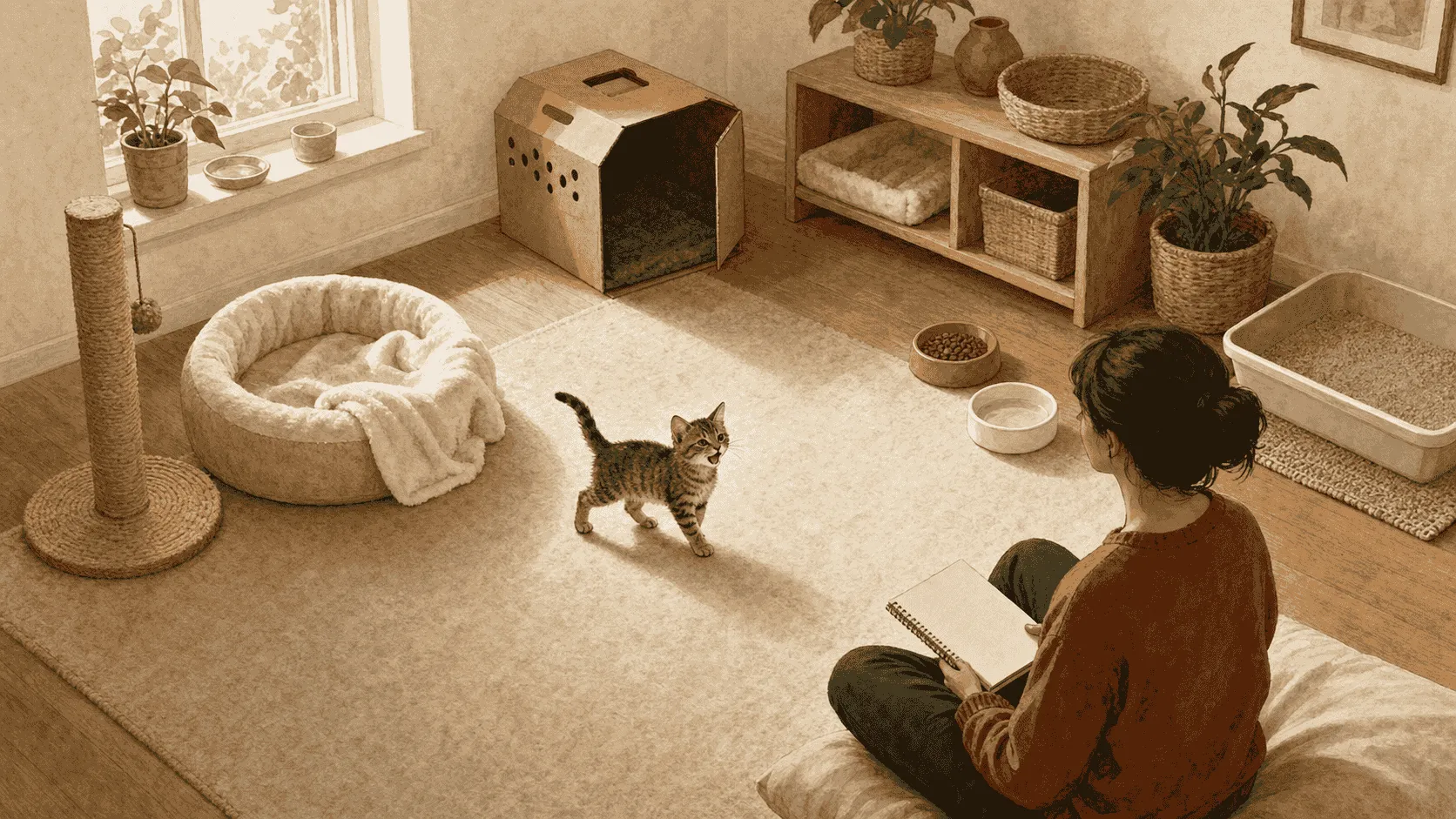
Begin in the kitten’s quiet base room. The AAFP/ISFM feline environmental-needs guidelines organize a cat-friendly space around safe places, separated resources, predictable interaction, and choice. Our new kitten first-week checklist shows the full setup; for this immediate check, confirm that your kitten can reach:
- familiar food in a clean, quiet spot
- fresh water, separated from food
- a litter tray away from food and water
- a covered resting or hiding place
- an open route between these areas
Sit quietly and let the kitten choose whether to approach. Do not pull them from a carrier or hiding place, and do not crowd the bowl. If calm company changes the pattern, note that; it still does not prove why the kitten was meowing. Finding a misplaced bowl or blocked route also does not rule out a health concern.
New Kitten Crying at Night: Keep the Room Predictable
Cats Protection’s first-night guidance recommends checking essential access, then observing whether calm company appears to help and whether the new environment fits the scene. Keep the night small and readable: the same base room, familiar-smelling bedding if available, an accessible carrier or hiding place, low household noise, and no forced tour of the home.
Some kittens may approach; others may keep their distance. Let that choice stand. A kitten under a chair is not a failed introduction, and a kitten that comes close is not asking to be held. If hiding is part of the picture, use the guide to safe hiding places and concerning changes rather than dragging the kitten into view.
Avoid turning the first night into an attention-training test. Advice for a settled adult cat that has learned a household routine is not a safe reason to ignore a new kitten before checking essential needs and wellbeing.
When a New Kitten Won’t Stop Meowing
Compare the pattern with what you have observed so far. FelineVMA guidance recommends a veterinary check when a cat’s meow tone or amount changes noticeably. For a newly arrived kitten with little home baseline, persistent vocalizing, a markedly different sound, or any accompanying health or behavior change deserves a call rather than a guessed explanation.
Call your veterinary clinic promptly if the kitten is not eating. Our new-kitten appetite guide explains what to record while you make that call. Seek urgent professional direction for weakness or collapse, breathing difficulty, repeated vomiting or diarrhea, obvious pain, possible toxin or swallowed-object exposure, or inability to keep food or water down.
A short audio or video clip plus notes about time, location, food, water, litter use, energy, breathing, vomiting, stool, urination, and mobility can support the history you give the clinic. It cannot identify the cause or replace an examination.
What to Do Next
Use one calm sequence: check reachable essentials, watch the whole kitten, simplify the room, record what changes, and call when the pattern is persistent or paired with another concern. The meaningful uncertainty is the point: a resource check can improve the setup, but it cannot prove that the kitten is healthy or explain every meow. Your next useful decision comes from context, baseline, and the veterinary boundary—not from a universal translation.
Sources
Petzette's claim cards for this article point to the following scientific, veterinary, or animal-welfare sources.
- FelineVMA Cat Meowing Guidance: Feline veterinary-association caregiver guidance on meowing and vocalization
- Cats Protection First Night Meowing Guidance: First-party cat-welfare guidance for a newly adopted cat's first night
- AAFP/ISFM Feline Environmental Needs Guidelines 2013: Peer-reviewed veterinary guidelines plus client-facing practice resource
- Cats Protection Moving Home Guidance: Cat-welfare home-transition guidance
- Cornell New-Cat Appetite And Feeding Guidance: Veterinary-school feline health and new-cat care guidance