New Owner Guide21 July 2026
New Kitten Vet Checklist: Prepare for the First Visit
Use this new kitten vet checklist to organize records, prepare the carrier, plan questions, and leave the first visit with clear next steps.
TextPetzette Editorial
Read4 Min

Evidence status
Source-backed editorial
- Evidence record
- 6 claim cards linked to 8 documented sources.
- Independent expert review
- Not commissioned. Petzette Editorial is responsible for the published wording.
- Source record checked
- 21 July 2026
- Scope
- General guidance. Individual animals and circumstances can differ.
A useful new kitten vet checklist turns a first appointment into a clear first-year plan. Arrange the visit early, collect every record you have, ask the practice what to bring, and write down what you want to discuss. The goal is not to predict the examination at home. It is to give the veterinary team a reliable starting point—and to leave knowing what happens next.
Call Early and Ask What the Practice Needs
American Animal Hospital Association guidance advises arranging a kitten’s first veterinary visit within the first week at home, or sooner when the kitten seems unwell. Treat that as a prompt to call, not a deadline to wait for. A known condition, the adoption organization’s care plan, local access, or the practice’s advice may change the timing.
When you book, tell the practice the kitten’s approximate age, arrival date, where they came from, and whether any health concern is already present. Ask whether the team wants a fecal sample and, if so, how it should be collected and stored. Do not assume that every kitten needs the same sample or test.
This article begins at the clinic door. For food, litter, hiding places, and the first room at home, use the separate new kitten setup checklist.
What to Bring to Your Kitten’s First Vet Visit
Make one paper or digital folder. Bring what you have and mark gaps honestly:
- Adoption, shelter, breeder, or previous veterinary records
- Vaccine, parasite-control, microchip, and procedure records
- The food name, amount offered, and usual meal pattern
- Notes on appetite, drinking, urine, stool, vomiting, sleep, play, and behavior since arrival
- A short list of questions about feeding, litter habits, socialization, handling, preventive care, and which changes should prompt a call
Unknown history is useful information. Do not fill a blank with a guess or treat an undated vaccine entry as proof of complete protection. If the kitten already has a microchip, ask how to confirm the linked database record and keep your contact details current. A microchip is identification, not live GPS, and registration rules differ by location.
Prepare the Carrier Before the Appointment
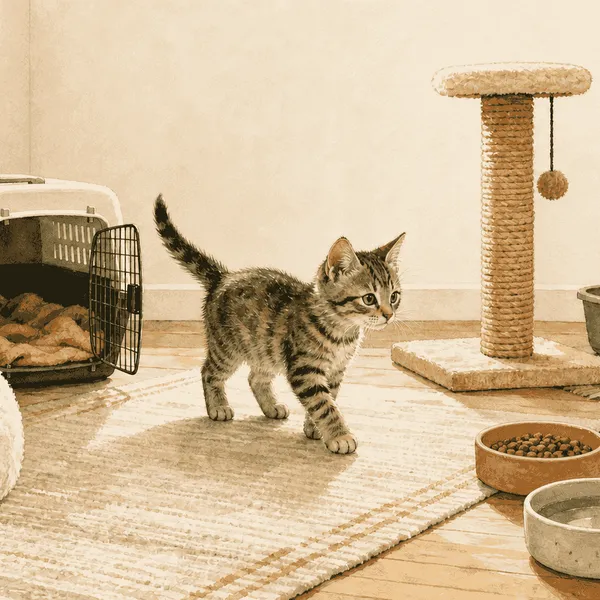
The carrier should live in the room before it carries the kitten. Leave it open with familiar bedding and let the kitten investigate at their own pace. Reward a glance, a step toward the entrance, or one paw inside; a short calm interaction can be the whole practice session.
AAHA carrier guidance recommends familiarity and voluntary exploration rather than forced entry. This can make transport easier, but it cannot promise a stress-free trip or solve pain, severe fear, or travel sickness. Tell the practice before the visit if loading or travel is already difficult so the team can help plan safely.
Use the Visit to Build a Kitten Wellness Plan
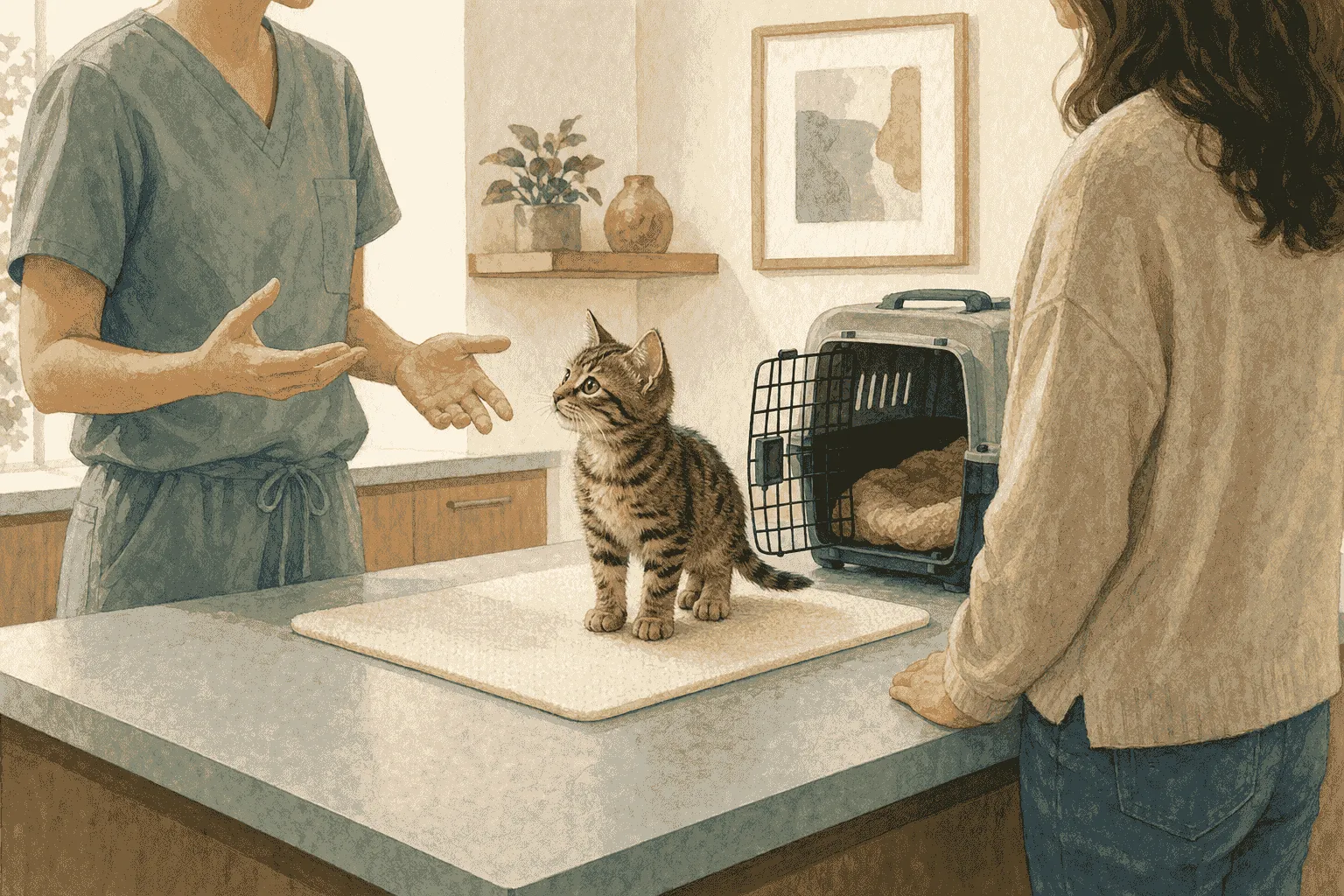
The 2021 AAHA/AAFP feline life-stage guidelines frame wellness care around the individual cat. History and physical examination inform discussions about nutrition and weight, behavior and environment, elimination, oral health, parasite risk, vaccination, and any appropriate diagnostics. Age matters, but so do the home, other animals, travel, health, and local disease risks.
That means a good first-visit checklist has blank spaces. Ask what the veterinarian found, what remains uncertain, and which observations are worth tracking at home. Gentle, reward-based handling can help kittens learn that a mat, scale, mouth check, or brief touch is manageable. If the kitten tenses, hides, growls, hisses, or appears painful, the veterinary team should decide how to proceed; cooperative care is not training through distress.
Leave With Vaccine and Follow-Up Dates in Writing
The 2024 World Small Animal Veterinary Association vaccination guideline describes kitten vaccination as a series with later follow-up, not a single finished event. Previous records, age, health, exposure to other cats, location, local law, and the vaccines available can all change the plan. That is why this guide does not provide a universal calendar.
Before leaving, confirm:
- Which care was completed today and what is still undecided
- The next appointment date or the point when you should book it
- Which records the practice has received and which are still missing
- What to monitor after the visit and whom to call with a concern
- How nutrition, parasite prevention, identification, and reproductive planning will be reviewed for this kitten
Do not wait for a routine slot if the kitten is not eating, has repeated vomiting or diarrhea, struggles to breathe, seems markedly weak or painful, or changes suddenly and severely. Contact a veterinarian promptly. If appetite is the immediate concern, the new-kitten not-eating guide explains what to observe while you seek professional direction.
Your next step is simple: call the practice, open the carrier at home, and start the records folder. The useful outcome is not a checked box. It is an individualized plan, clear follow-up dates, and a veterinary team that knows this kitten’s real starting point.
Sources
Petzette's claim cards for this article point to the following scientific, veterinary, or animal-welfare sources.
- 2021 AAHA AAFP Feline Life Stage Guidelines: Veterinary practice guideline / peer-reviewed consensus
Quimby J, Gowland S, Carney HC, DePorter T, Plummer P, Westropp J. 2021 AAHA/AAFP Feline Life Stage Guidelines. J Feline Med Surg. 2021;23(3):211-233. doi:10.1177/1098612X21993657. PMID:33627003.
- AAHA Kitten Health Care Guide: Veterinary association owner guidance
- 2024 WSAVA Guidelines For The Vaccination Of Dogs And Cats: Global veterinary consensus guideline / peer-reviewed practice guideline
Squires RA, Marcondes M, et al. 2024 guidelines for the vaccination of dogs and cats – compiled by the Vaccination Guidelines Group of the World Small Animal Veterinary Association. J Small Anim Pract. 2024. doi:10.1111/jsap.13718.
- 2022 AAFP ISFM Cat Friendly Veterinary Interaction Guidelines: Peer-reviewed veterinary clinical guideline
- Carrier Training Cats Reduces Transport Stress: Peer-reviewed randomized controlled carrier-training study
- AAHA Cat Vet-Visit And Carrier Preparation: Veterinary association expert guidance
- FelineVMA Positive Reinforcement And Cooperative Care: Feline veterinary association caregiver guidance
- GOV.UK: Get Your Dog Or Cat Microchipped: UK government legal and practical guidance