New Owner Guide21 July 2026
New Puppy Shot Schedule: Your First Vet Visit
A new puppy shot schedule starts with records and a veterinary visit. Learn what to bring, ask, track, and schedule for the first year.
TextPetzette Editorial
Read4 Min

Evidence status
Source-backed editorial
- Evidence record
- 7 claim cards linked to 8 documented sources.
- Independent expert review
- Not commissioned. Petzette Editorial is responsible for the published wording.
- Source record checked
- 21 July 2026
- Scope
- General guidance. Individual animals and circumstances can differ.
A new puppy shot schedule should begin with records and a veterinary conversation, not a calendar copied from the internet. Call early, collect the puppy’s health history, and arrive ready to describe what has changed since pickup. The useful result is an individualized first-year plan with the next dates written down.
This guide owns the clinic-preparation decision. For food, rest, toileting, and the first two days at home, use the separate new-puppy first-48-hours plan.
When to Take a New Puppy to the Vet
American Animal Hospital Association owner guidance recommends taking a new dog to a veterinarian within the first week after arrival. Treat that as a reason to call promptly, not a deadline to wait for. Handover instructions, a known condition, the practice’s advice, or a change in the puppy may make the timing earlier.
When booking, share the puppy’s approximate age, arrival date, where they came from, and any concern already present. Ask what records or samples the practice wants. Do not assume a generic first-visit checklist can decide which tests, vaccines, parasite plan, or procedures this puppy needs.
Build the New Puppy Vet Checklist Before You Go
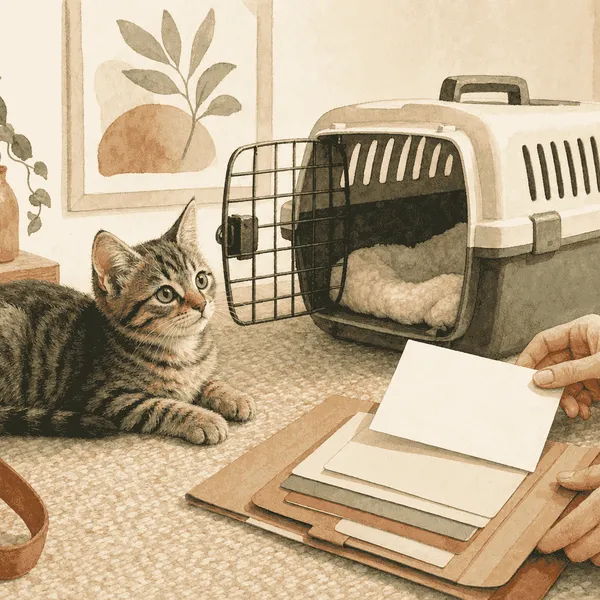
Make one paper or digital folder. Bring what you have, and mark missing information as unknown rather than filling gaps with guesses:
- Adoption, shelter, breeder, or previous veterinary records
- Every dated vaccination, parasite-control, microchip, and procedure record
- The food name, amount offered, and usual meal pattern
- Notes on appetite, drinking, urine, stool, vomiting, sleep, energy, movement, and behavior since arrival
- A short question list and a place to write the next appointments
If the puppy is already microchipped, ask how to confirm which database holds the record and whether your current contact details are attached. Rules differ by location, and a microchip is identification rather than live GPS.
Questions to Ask the Vet About New Puppy Care
The peer-reviewed 2019 AAHA Canine Life Stage Guidelines organize preventive care around the individual dog’s age, size, breed, lifestyle, health, history, and examination. That makes the best questions specific to your real week:
- What did the examination establish, and what remains uncertain?
- Which vaccination and follow-up dates should go on the calendar?
- How will parasite risk, nutrition and growth, dental care, behavior, and identification be reviewed?
- Which changes should prompt a routine call, a same-day call, or urgent care?
- Who should you contact between visits, and what details will help that conversation?
The broader first-30-days puppy checklist covers home routine, training, and socialization. The vet visit should connect those decisions to this puppy’s health and local risks, not replace the rest of the first-month plan.
Prepare for Handling Without Pushing Through Fear
Before the appointment, practice only handling the puppy already accepts comfortably. Dogs Trust guidance supports a tiny sequence: touch an easy area briefly, remove your hand, reward, then pause. One relaxed shoulder touch can be the entire session.
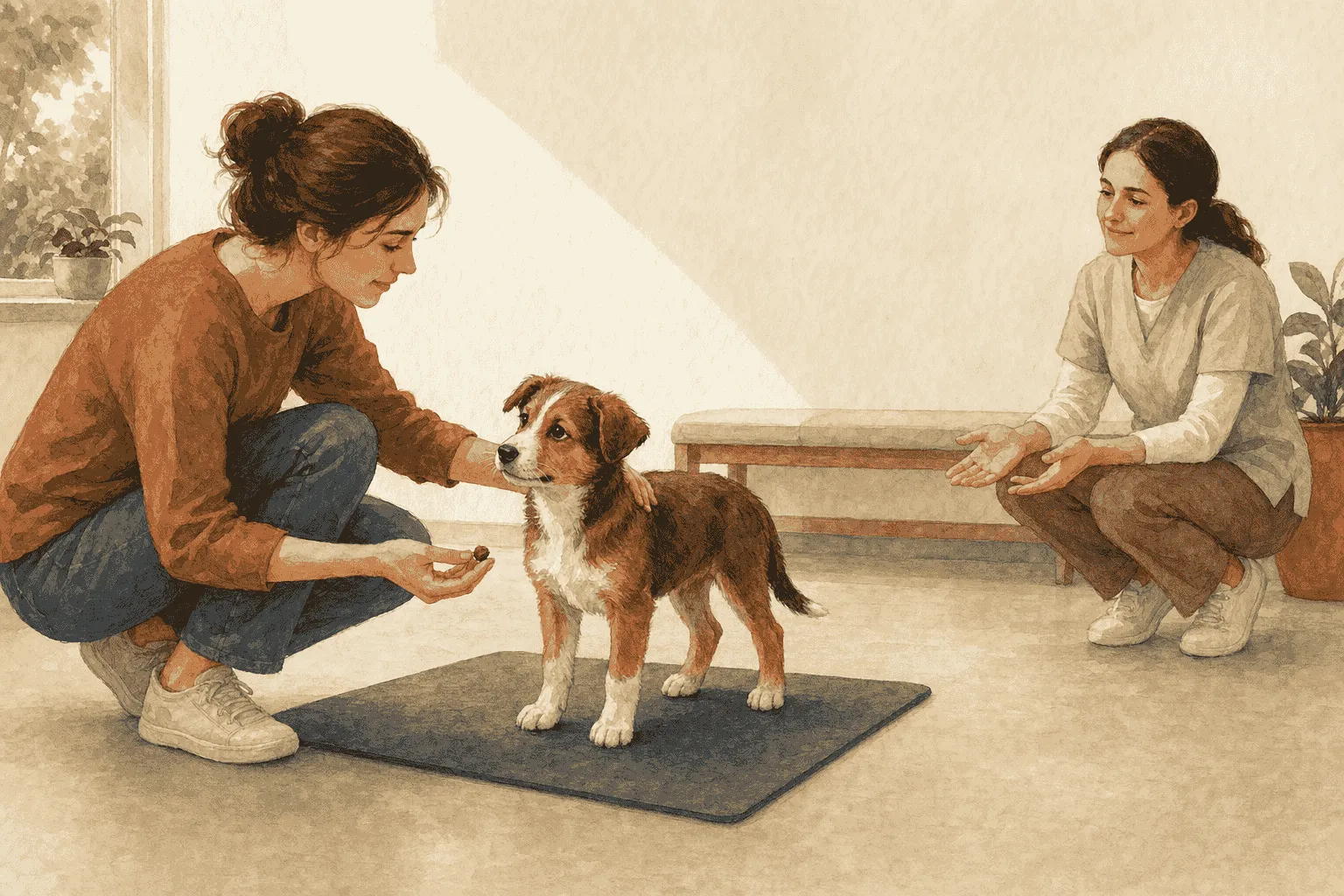
Do not rehearse by holding the puppy still through struggling or by repeatedly checking a painful area. Sudden sensitivity, established fear, or aggression needs veterinary and qualified behavior support. Tell the practice before arrival if handling or travel is already difficult so the team can decide how to proceed.
Leave With the Shot Schedule in Writing
The 2024 World Small Animal Veterinary Association guideline describes initial puppy vaccination as a series with later follow-up, not one finished event. Reliable previous records matter, while age, health, geography, lifestyle, exposure risk, local law, vaccine availability, and licensed directions can change the plan.
Before leaving, confirm what was completed, what is still unknown, and the date or decision point for the next visit. Ask which record will document the series and how to share missing paperwork if it arrives later. An entry on a card does not guarantee protection, and this article cannot safely publish one universal schedule for every puppy.
Know When Not to Wait for the Routine Visit
A puppy who is not eating needs prompt veterinary contact rather than an assumption that moving stress is the cause. Repeated vomiting or diarrhea, blood or black stool, weakness, breathing difficulty, pain or bloating, possible poisoning or a swallowed object, or rapid worsening also needs urgent professional direction. The new-puppy appetite guide explains what to record while you make that call.
Your next step is simple: call the practice, open a records folder, and write the three questions you most need answered. A useful first visit does not produce certainty about the whole year. It produces a veterinary team that knows the puppy’s starting point and a follow-up plan you can actually use.
Sources
Petzette's claim cards for this article point to the following scientific, veterinary, or animal-welfare sources.
- 2019 AAHA Canine Life Stage Guidelines: Peer-reviewed veterinary consensus guideline
Creevy KE, Grady J, Little SE, et al. 2019 AAHA Canine Life Stage Guidelines. J Am Anim Hosp Assoc. 2019;55(6):267-290. doi:10.5326/JAAHA-MS-6999.
- AAHA New Dog Checklist: Veterinary association owner guidance
- 2024 WSAVA Puppy Vaccination Guidance: Global veterinary consensus guideline / peer-reviewed practice guideline
Squires RA, Marcondes M, et al. 2024 guidelines for the vaccination of dogs and cats – compiled by the Vaccination Guidelines Group of the World Small Animal Veterinary Association. J Small Anim Pract. 2024. doi:10.1111/jsap.13718.
- Dogs Trust Gradual Handling Guidance: Animal-welfare cooperative handling guidance
- GOV.UK: Get Your Dog Or Cat Microchipped: UK government legal and practical guidance
- MSD Dog Digestive Disorders: Veterinary manual / clinical owner guidance
- PDSA And RSPCA New-Puppy Appetite And Feeding Guidance: Veterinary-welfare owner guidance for changed appetite and new-puppy feeding continuity
- Cornell Dog Diarrhea Guidance: Veterinary-school clinical owner guidance