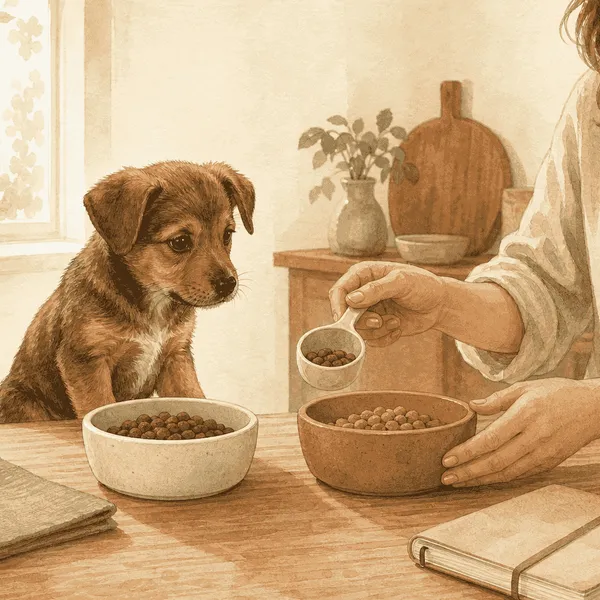
Health Signals20 July 2026
New Puppy Has Diarrhea: What to Do Next
A new puppy has diarrhea? Learn what to record, which accompanying changes need prompt veterinary advice, and why rapid food changes can wait.
TextPetzette Editorial
Read3 Min

Evidence status
Source-backed editorial
- Evidence record
- 5 claim cards linked to 4 documented sources.
- Independent expert review
- Not commissioned. Petzette Editorial is responsible for the published wording.
- Source record checked
- 20 July 2026
- Scope
- General information, not an individual diagnosis or treatment plan.
A new puppy has diarrhea, and the first decision is not which food to try next. Loose stool has many possible explanations, so check the whole puppy, record the pattern, and contact your veterinary clinic promptly when the change repeats or arrives with other concerning signs.
One stool cannot identify stress, infection, parasites, a food reaction, a swallowed object, or another cause. “Sensitive stomach” is a useful question, not a diagnosis. Your clearest next step is to collect the details that help a veterinarian judge urgency.
New Puppy Diarrhea: Check What Comes With It
Cornell University College of Veterinary Medicine advises looking beyond the stool itself. Call your veterinarian promptly when diarrhea is repeated or substantial, or when it comes with blood, black or tarry stool, vomiting, reduced appetite, lower energy, weakness, apparent pain, or dehydration concerns.
Possible access to a toxin or swallowable object also needs professional direction. Collapse, severe pain or bloating, or rapid worsening makes the situation more urgent. There is no fixed waiting period that is safe for every puppy, so do not use a clock or one temporarily brighter moment as permission to delay.
Tell the clinic the puppy’s age and vaccination status. Age, history, and the full group of signs can change the advice even when two puppies appear to have similar stool.
Make a Five-Part Digestive Record
The MSD Veterinary Manual describes dietary, infectious, parasitic, toxic, obstructive, inflammatory, congenital, and wider health possibilities behind overlapping digestive signs. That range is a reason to document—not a checklist for diagnosing the puppy at home.
Write down five groups of facts:
- Timing: when the diarrhea began and whether it has repeated or changed.
- Food: the usual puppy food, meal routine, treats, chews, table food, and any recent switch.
- Whole-puppy changes: appetite, energy, drinking, urination, vomiting, weakness, or pain-sensitive behavior.
- Possible exposures: rubbish, medication, chemicals, toxins, chewed objects, or missing pieces from a toy.
- Background: age, vaccination status, arrival date, and what food and routine were used before the move.
Keep observations literal. Stool appearance can help describe the event, but it cannot name the cause. If intake has dropped too, follow the new-puppy appetite call plan rather than attributing both changes to relocation.
Keep the First Feeding Setup Steady
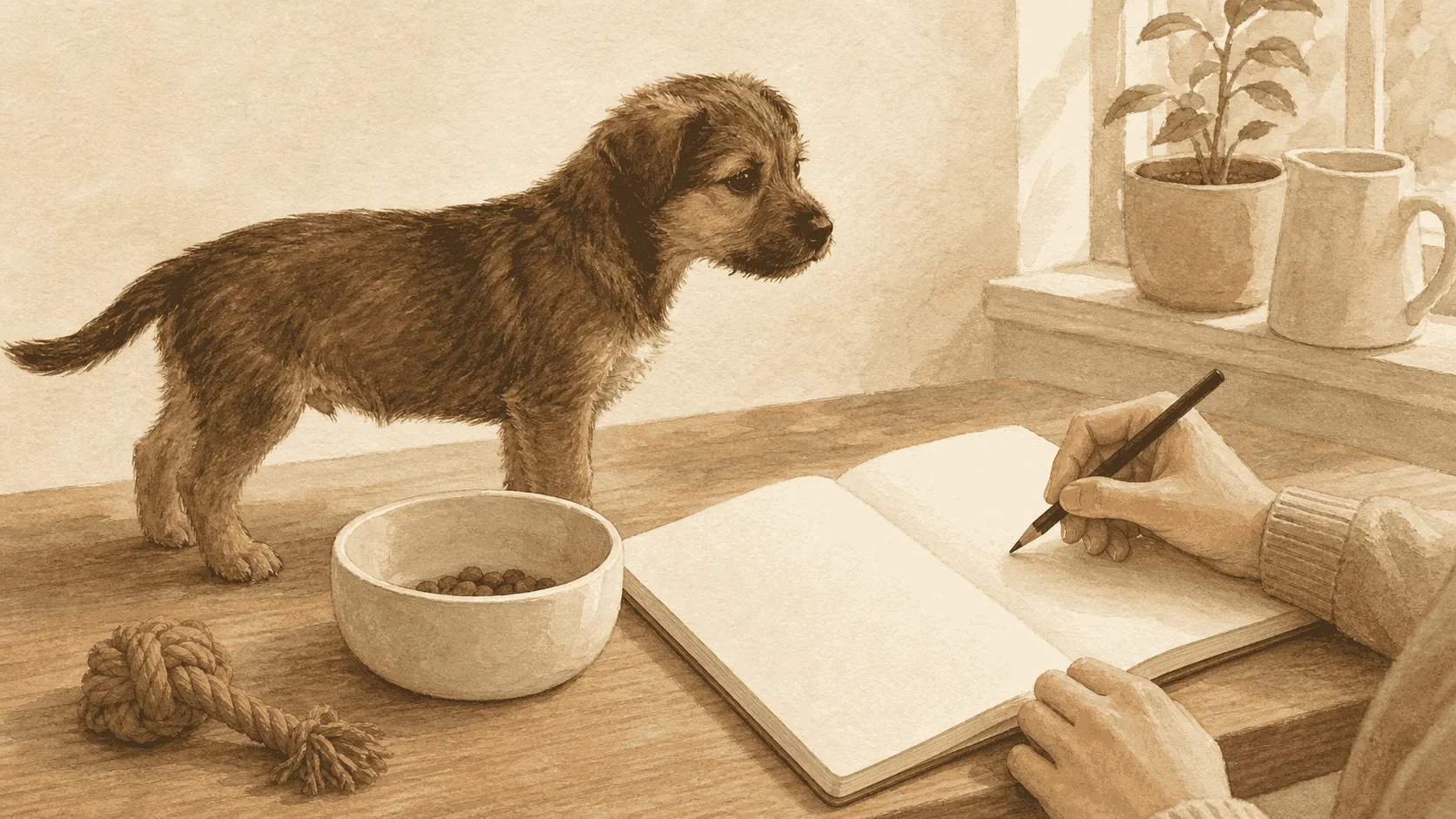
RSPCA puppy-care guidance recommends beginning with the same puppy food and small, regular meal routine used before arrival. A steady setup makes actual intake and stool easier to observe. It does not treat diarrhea or rule out illness.
Offer the familiar food on the familiar routine while following the veterinary team’s direction. Do not crowd the bowl, pressure the puppy to eat, substitute human food, or rotate through tempting alternatives. Our first-48-hours puppy plan explains how to keep the wider arrival routine quiet and readable.
If the puppy cannot keep food or water down, becomes weak, or refuses food, tell the clinic promptly. One accepted bite is not proof that the digestive concern has passed.
Do Not Turn Active Diarrhea Into a Food Trial
For an otherwise well dog making a routine diet change, World Small Animal Veterinary Association guidance supports moving gradually so acceptance, stool, and tolerance can be monitored. Active or repeated diarrhea is not a routine transition.
Do not keep switching foods until one seems to work, and do not give human anti-diarrheal medicine unless a veterinarian directs it. A rapid switch may overlap with loose stool, but timing alone does not establish the cause. If the veterinary team recommends a food change, follow its individual plan rather than a universal schedule.
The sensitive-stomach puppy food guide is for choosing a growth-appropriate food without pretending a label can diagnose symptoms. Health assessment comes first when signs persist, repeat, or stack up.
Let the Whole Puppy Set the Next Step
New puppy diarrhea is not one decision made from one stool. It is a short sequence: check for accompanying changes, call promptly when the pattern is repeated or concerning, give the clinic a clear history, and avoid guessing at treatment or ingredients.
What remains uncertain is the cause. A veterinarian may use the puppy’s age, diet, vaccination status, exposures, physical examination, and sometimes testing to narrow that question. Your job is not to solve it at home. It is to notice the whole puppy and make the next professional conversation more useful.
Sources
Petzette's claim cards for this article point to the following scientific, veterinary, or animal-welfare sources.
- Cornell Dog Diarrhea Guidance: Veterinary-school clinical owner guidance
- MSD Dog Digestive Disorders: Veterinary manual / clinical owner guidance
- PDSA And RSPCA New-Puppy Appetite And Feeding Guidance: Veterinary-welfare owner guidance for changed appetite and new-puppy feeding continuity
- WSAVA Principles Of Wellness 2025: Global veterinary-association wellness guidance