Health & Care20 July 2026
New Puppy Not Eating: What to Do Next
A new puppy not eating needs a prompt veterinary call. Learn what to record, how to keep meals familiar, and which changes add urgency.
TextPetzette Editorial
Read3 Min

Evidence status
Source-backed editorial
- Evidence record
- 4 claim cards linked to 4 documented sources.
- Independent expert review
- Not commissioned. Petzette Editorial is responsible for the published wording.
- Source record checked
- 20 July 2026
- Scope
- General information, not an individual diagnosis or treatment plan.
A new puppy not eating needs a prompt call to your veterinary clinic. A move can change routine and appetite, but it cannot tell you why food is being refused. The safer first decision is to ask the clinic how quickly this puppy should be assessed, then make the meal history easy to read.
Do not wait for the cause to become obvious at home. While the veterinary team triages the change, gather a short factual record and keep the feeding setup familiar rather than trying a succession of new foods.
Call Before You Explain Away the Appetite Change
PDSA guidance, written by veterinarians and veterinary nurses, says changed eating habits should be checked by a veterinarian. It lists several possible medical and non-medical explanations, including pain, mouth problems, digestive illness, infection, and stressful changes. That range is the point: arriving in a new home is part of the history, not a diagnosis.
Tell the clinic that the puppy is newly arrived and not eating. If the puppy ate a little rather than nothing, report that distinction. Let the veterinary team set the timeline; no fixed waiting period is safe for every puppy.
Build a Useful Puppy Appetite Note
The MSD Veterinary Manual emphasizes age, diet, signs of illness, and exposures when a veterinarian investigates digestive concerns. Put the following on one page or phone note:
- The puppy’s age, vaccination status, and known health history
- The name of the previous food and usual meal routine
- When and how much the puppy last ate
- What was offered, what remained, and whether treats or chews were eaten
- Energy, vomiting, stool, drinking, urination, breathing, and pain-sensitive behavior
- Any trouble picking up, chewing, or swallowing food
- Possible access to rubbish, plants, medication, chemicals, toys, or other swallowable objects
Describe what you saw rather than naming a cause. “Walked to the bowl, tried to chew, then dropped the food” gives the clinic more useful information than “being fussy.”
Keep the First Meal Familiar Enough to Read
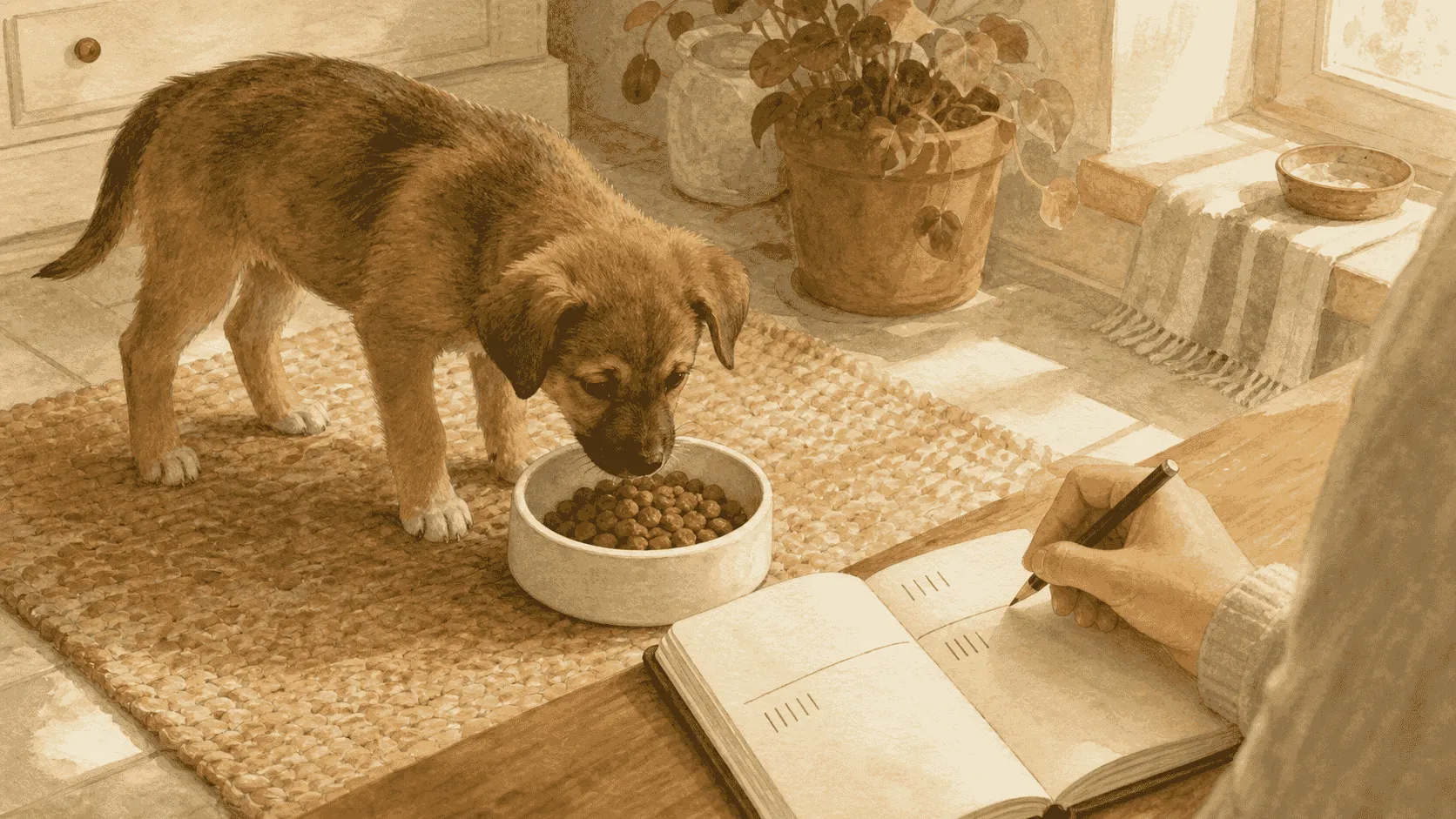
RSPCA puppy-care guidance recommends offering the same puppy food and small, regular meal routine used before the move. Ask the breeder, foster carer, rescue, or previous caregiver exactly what was fed and how it was served. Offer that familiar food on the familiar schedule, then record actual intake without hovering or pressuring the puppy.
This is an observation setup, not treatment. A quieter meal and familiar food cannot rule out illness, and they should not delay the veterinary call. The same calm, readable approach belongs in a new puppy’s first 48 hours: fewer simultaneous changes make the puppy’s response easier to notice.
Do Not Turn Food Switching Into the Test
For an otherwise well dog making a routine food change, veterinary guidance supports a gradual transition so acceptance, stool, and tolerance can be monitored. Appetite loss is not that routine situation. Replacing each untouched meal with a different food can blur the history and add digestive change to an already uncertain pattern.
Follow the clinic’s instructions about what to offer next. Do not substitute a generic transition calendar for an individual veterinary plan, especially if vomiting, diarrhea, pain, low energy, or a possible exposure is also present. The sensitive-stomach puppy guide explains why a food label cannot diagnose a digestive pattern.
Know Which Changes Add Urgency
Tell the clinic immediately if the puppy is weak, collapses, struggles to breathe, appears painful, or worsens rapidly. Repeated vomiting or diarrhea, blood or black tarry stool, unusual bloating, inability to keep food or water down, or possible access to a toxin or swallowed object also needs urgent professional direction.
One brighter moment does not erase the wider pattern. A puppy may still greet someone, play briefly, or accept a treat while eating less than expected. Report the amount and the other changes together so the veterinary team can assess the whole picture.
Let the Veterinary Plan Decide the Next Meal
The useful next step is concrete: call the clinic, send or bring the appetite note, and follow its plan for the next meal and examination. Keep the previous food details, adoption or breeder records, and vaccination information ready.
Once the puppy is eating and health concerns have been addressed, portion setting becomes a separate decision based on the food, growth, and the individual puppy. Today, the priority is simpler: make missing intake visible and get professional direction before guessing at the bowl.
Sources
Petzette's claim cards for this article point to the following scientific, veterinary, or animal-welfare sources.
- MSD Dog Digestive Disorders: Veterinary manual / clinical owner guidance
- PDSA And RSPCA New-Puppy Appetite And Feeding Guidance: Veterinary-welfare owner guidance for changed appetite and new-puppy feeding continuity
- WSAVA Principles Of Wellness 2025: Global veterinary-association wellness guidance
- Cornell Dog Diarrhea Guidance: Veterinary-school clinical owner guidance