New Owner Guide19 July 2026
Newborn Puppy Care: The First Safe Steps
Newborn puppy care starts with the mother and litter, protected warmth, close monitoring, and a veterinarian-guided feeding plan.
TextPetzette Editorial
Read3 Min

Evidence status
Source-backed editorial
- Evidence record
- 4 claim cards linked to 2 documented sources.
- Independent expert review
- Not commissioned. Petzette Editorial is responsible for the published wording.
- Source record checked
- 19 July 2026
- Scope
- General guidance. Individual animals and circumstances can differ.
Newborn puppy care begins with the whole litter, not a bottle. When the mother is safely nursing and caring for her puppies, keep that support intact, protect a quiet setup, and observe before intervening. A puppy that is cold, weak, isolated, not nursing normally, or breathing differently needs prompt veterinary direction. Your useful first move is to call with clear observations, not improvise heat or feeding.
Start with the mother and litter
VCA’s veterinarian-authored newborn-puppy guidance says the mother normally provides most early care. Watch whether each puppy stays with the litter, settles after nursing, and can reach the mother without repeatedly being pushed away. Also watch the mother: her comfort, appetite, behavior, milk production, and recovery affect the puppies’ care.
Arrange a prompt postpartum examination for the mother and litter, even when birth appeared uncomplicated. A veterinary check can assess the mother, nursing, and puppies in ways an online checklist cannot. Difficult birth, maternal illness, abnormal discharge, a painful or unusual mammary gland, or a puppy that seems unwell makes that contact more urgent.
Keep the nest clean, dry, sheltered, and calm. Avoid repeatedly separating one puppy just to get a closer look. One successful feed or one quiet nap does not establish that a puppy is healthy.
Warmth comes before a feeding attempt
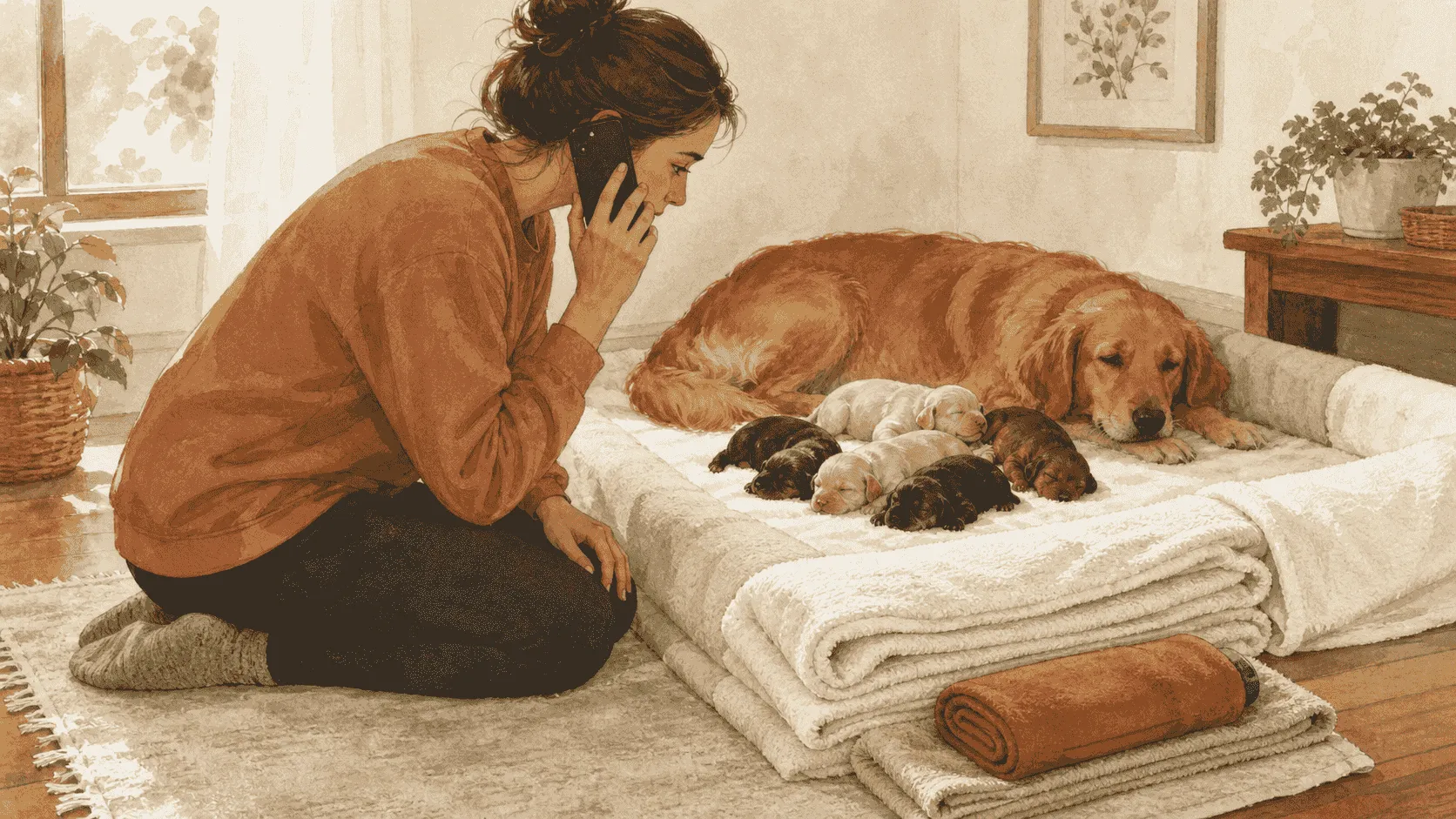
The Merck Veterinary Manual explains that newborn puppies have immature temperature regulation during roughly their first four weeks. Chilling can interfere with nursing and digestion. Excessive or direct heat can also burn or overheat a puppy that cannot move away easily.
Keep a newborn puppy dry and with the mother and litter when that is safe. If the puppy feels cold, seems weak, or cannot swallow normally, call a veterinarian promptly and follow the controlled, indirect warming plan they give you before attempting to feed. A household touch check cannot confirm a safe internal temperature.
Do not place a puppy directly on a heating pad, use intense heat, or treat warming as a substitute for assessment. Do not try home resuscitation steps from a general article.
Orphaned newborn puppies need an individual feeding plan
Maternal nursing is preferable when it is safely available. If the mother cannot nurse, is absent, or has a health problem, contact a veterinarian or experienced neonatal foster program before offering a substitute.
Merck’s neonatal guidance favors commercially manufactured, species-appropriate milk replacer over homemade formula when maternal milk is unavailable. The right product is only one part of the plan. Amount, interval, posture, equipment, and monitoring all depend on the individual puppy’s age, weight, condition, and ability to swallow.
Do not substitute cow’s milk or goat’s milk, mix a homemade formula, force-feed, or attempt tube feeding from written instructions. A chilled, weak, vomiting, poorly swallowing, or breathing-changed puppy needs professional direction rather than a trial feed.
Monitor each puppy and the whole scene
Merck recommends repeated evaluation of neonatal vigor, elimination, and weight along with checks of the mother. Use the observation and weighing plan your veterinarian provides, identify each puppy clearly, and record findings separately. Consistent notes are more useful than trying to remember which puppy seemed quiet yesterday.
Track the questions that affect the next decision:
- Is this puppy nursing and settling with the litter?
- Is the puppy warm and responsive compared with its own recent pattern?
- Has weight changed according to the veterinary monitoring plan?
- Is there vomiting, diarrhea, persistent distress, isolation, or altered breathing?
- Has the mother’s health, behavior, or ability to nurse changed?
These observations do not diagnose a cause. A puppy that is losing weight, failing to nurse, weak, cold, persistently distressed, vomiting, having diarrhea, or breathing differently deserves prompt veterinary assessment. Do not wait for several littermates to change before calling.
Your next step
Call your veterinarian with the birth history, the mother’s condition, and notes for each puppy. Ask for a postpartum examination and a written plan for warmth, nursing, weighing, and escalation. If maternal nursing is unavailable, get the individual milk-replacement plan before the first improvised feed.
The uncertainty that matters is not whether a newborn puppy looks cute or quiet. It is whether the mother and litter are stable, whether this puppy is nursing and maintaining warmth, and whether anything has changed. Once the puppy is older, weaned, and ready for ordinary home routines, move to the first-30-days puppy checklist and the growth-stage puppy food guide. Neonatal care needs its own professional plan first.
Sources
Petzette's claim cards for this article point to the following scientific, veterinary, or animal-welfare sources.
- Merck Management Of The Neonate In Dogs And Cats: Veterinary reference guidance on neonatal puppy and kitten husbandry, warmth, monitoring, and nutrition
- VCA Caring For Newborn Puppies: Veterinarian-authored client guidance on postpartum mother and newborn-puppy monitoring, warmth, nursing, and veterinary assessment