Behavior15 August 2026
Why Do Cats Get the Zoomies? A Calm First-Year Response
Why do cats get the zoomies? Learn how to read a burst, protect hands, offer low-pressure play, and know when a veterinarian should weigh in.
TextPetzette Editorial
Read4 Min
Evidence status
Source-backed editorial
- Evidence record
- 4 claim cards linked to 5 documented sources.
- Independent expert review
- Not commissioned. Petzette Editorial is responsible for the published wording.
- Source record checked
- 15 August 2026
- Scope
- General guidance. Individual animals and circumstances can differ.
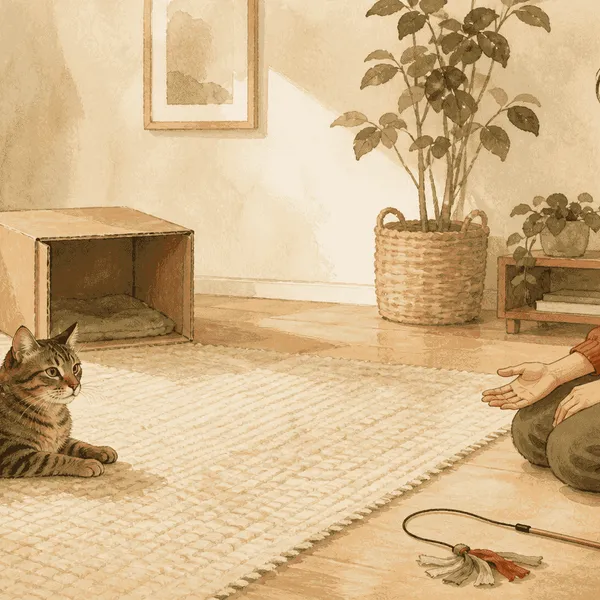
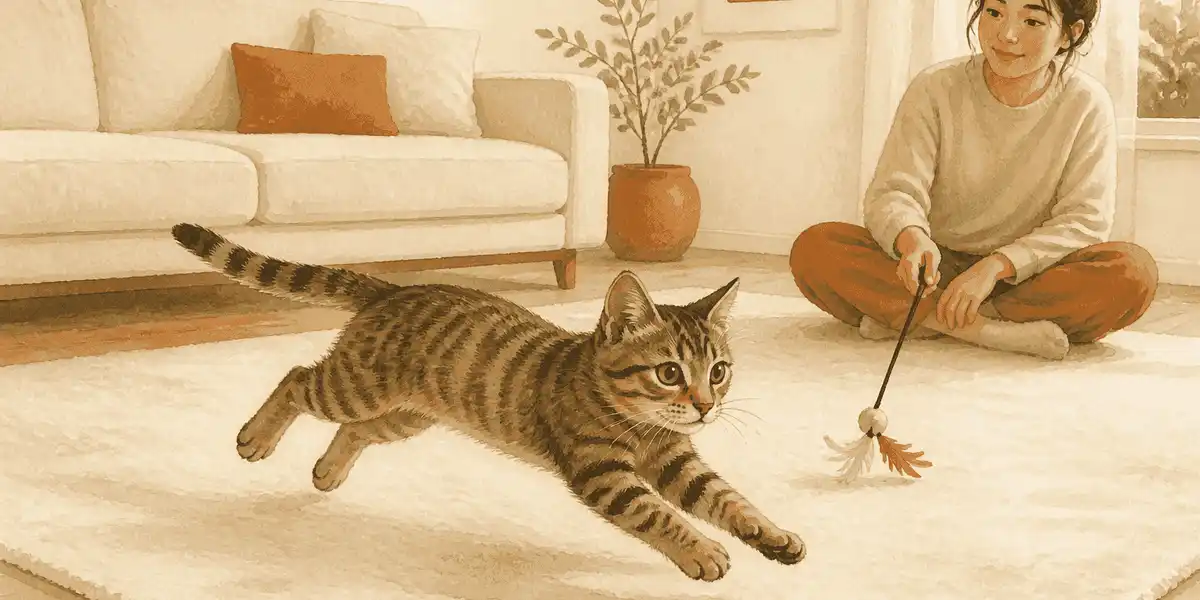
Why do cats get the zoomies? A quick run, pounce, or lap around the room can fit the everyday label “cat zoomies,” also called a frenetic random activity period. The useful first decision is not whether the burst means happiness, boredom, frustration, or too much energy. It is how to make the next moment low-pressure and whether the pattern is familiar enough to observe or concerning enough to discuss with a veterinarian.
A Zoomie Is a Description, Not a Diagnosis
Cats Protection describes occasional zoomies as natural behavior and notes that younger or indoor cats may show them more often. That context can be helpful, but it does not explain one cat’s sprint. The same guidance says daily episodes could be one possible sign of understimulation or frustration; it does not turn timing or frequency into a home diagnosis.
Make a short note after the cat has settled:
- Before: What was happening just before the burst?
- During: Was the cat running, pouncing on a toy, vocalizing, or directing attention toward people?
- After: Did the cat return to a familiar activity, seek distance, or show a new pattern?
That record gives you a scene, not a verdict. The same context-first habit is useful in the whole-cat body-language guide, where movement, distance, and the next moment matter more than one feature.
Offer a Game, but Keep Skin Out of It
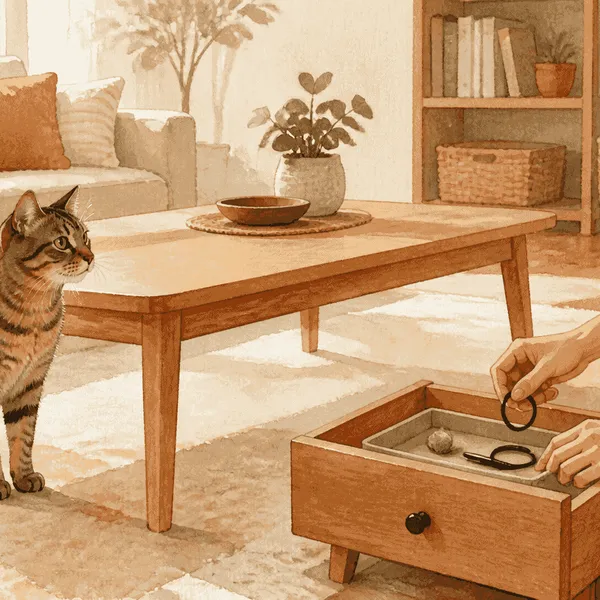
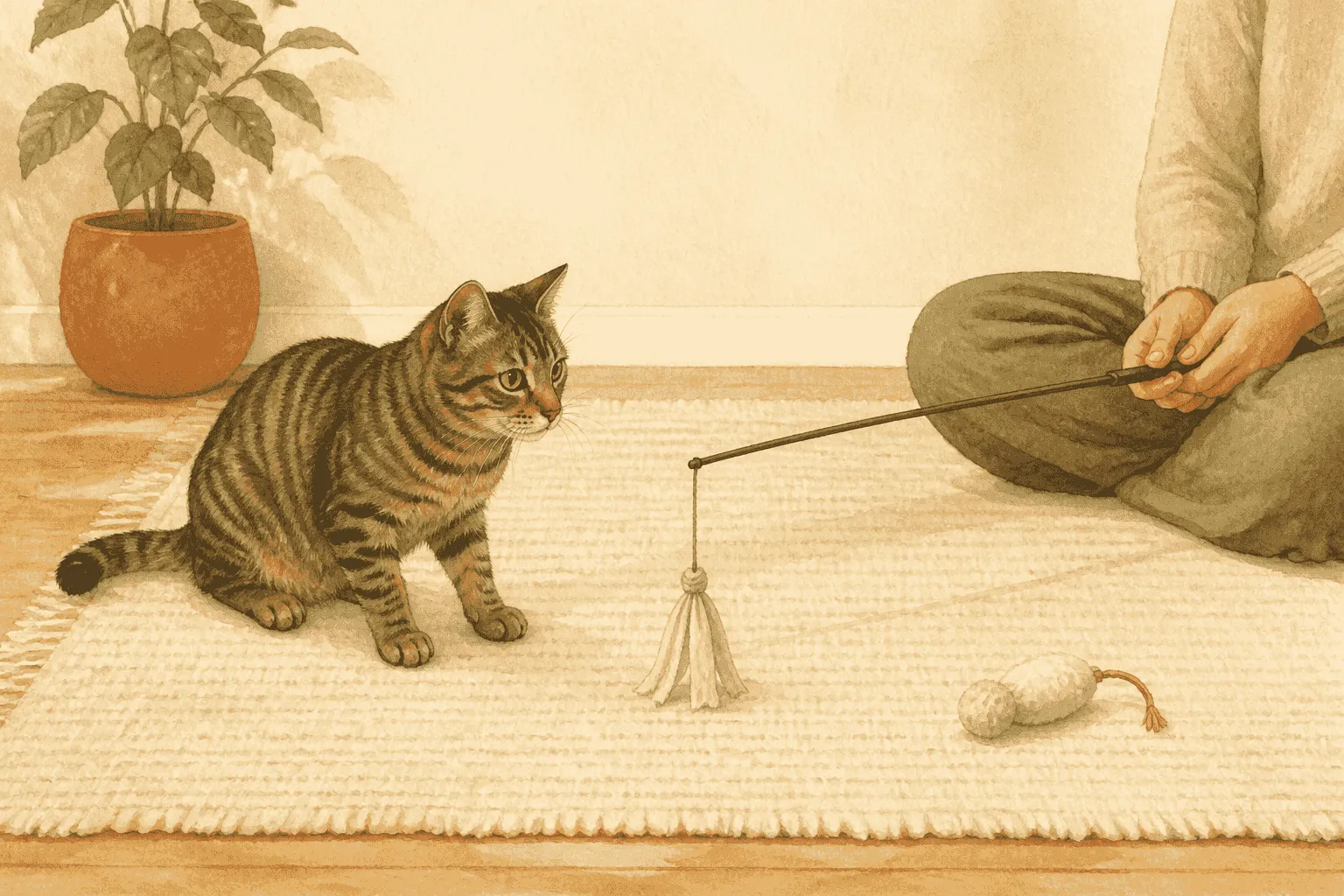
If the burst has settled and there is no immediate concern, offer a simple play option instead of chasing, grabbing, or adding your hands and feet to the action. Cornell University College of Veterinary Medicine advises keeping toy targets away from hands when pouncing or play biting is part of the picture. A wand or other intact toy can give the cat something to stalk and catch at a distance from skin.
Do not use a fast run as a reason to corner the cat, insist on interaction, or test whether the cat will pounce again. If the scene becomes ambiguous, make your response smaller: pause, lower your attention, and let the cat decide whether to re-engage. That leaves room for the cat’s choice and avoids treating a playful-looking moment as permission to handle them.
Try Variety, Not a Timer
A 2023 Animal Welfare survey of 1,591 cat guardians found that more reported game types and greater guardian-rated playfulness were associated with higher guardian-rated quality-of-life scores. It did not show that a certain number of games or minutes causes better welfare, prevents zoomies, or solves a behavior concern.
Use the finding as an invitation to observe preference. Across several calm opportunities, you might offer a chase game, a batting option, or another safe activity your cat can choose to join or leave. Keep the experiment small: change one game type, notice the response, and avoid turning the household into a fixed nightly exercise program.
For a new kitten, the first-week home setup can help you make play one part of a room that also protects food, litter, rest, and hiding space. The goal is a workable routine, not an exhausted cat.
Treat an Unclear Play Scene as a Pause Signal
The quiet moments can be harder to read than the obvious ones. In a 2025 Frontiers in Ethology online study, 368 adults were better at sorting overt cat-play clips than subtle negative ones. A short cue-training video did not solve that difficult subset.
That result does not mean caregivers cannot learn their cats. It is a good reason to resist confident labels in a fast scene. If you cannot tell whether the cat wants the game to continue, pause the toy and allow a cat-led restart. If the cat moves away, let that be the end of that round. A pause is a lower-pressure response, not proof of an emotion or a behavior diagnosis.
When Cat Zoomies Need Veterinary Context
Ask your veterinarian about a burst that is sudden, severe, unusual for this cat, injurious, or otherwise concerning. The same applies when the pattern feels unlike a familiar short activity episode. Cornell’s feline behavior guidance notes that medical causes should be considered before a caregiver treats a significant behavior change as a behavior or environmental problem.
Bring the short before-during-after note rather than a conclusion. Describe what changed, whether people or other animals became targets, and whether there was an injury or a marked change from the cat’s usual pattern. That information can support an individual assessment without asking a home observation to settle the cause.
Your next step can stay modest: describe the burst, keep hands out of the game, offer a safe toy after the cat settles, and pause whenever the scene is unclear. That is more useful than trying to decode a whole cat from one fast lap around the room.
Sources
Petzette's claim cards for this article point to the following scientific, veterinary, or animal-welfare sources.
- Cat Zoomies: Context, Play, and Veterinary Boundary: Cross-source note combining established feline-welfare guidance with veterinary-school feline behavior guidance. It supports a cautious response to brief high-activity episodes: observe the pattern, offer cat-appropriate play away from hands, and seek veterinary context for sudden, severe, or otherwise concerning change. It does not diagnose a cause or prescribe a fixed play schedule.
- Cats Protection, “Why your cat gets the ‘cat zoomies’ and what you can do about it,” published August 18, 2020. The original page was directly rendered and HTTP-200 verified on 2026-08-15. It describes the everyday label as frenetic random activity periods, calls occasional episodes natural behavior, and says younger or indoor cats may show them more often. Its comment that daily episodes could indicate understimulation or frustration is retained only as a possibility, not a diagnosis.
- Cornell Cat Destructive Behavior, Play, And Scratching: Veterinary school feline behavior guidance
- Cornell Cat Play Aggression: Veterinary school feline behavior guidance
- Cat Play And Guardian-Rated Welfare Associations: Peer-reviewed cross-sectional guardian survey
Henning J, Nielsen T, Fernandez E, Hazel S. Cats just want to have fun: Associations between play and welfare in domestic cats. *Animal Welfare*. 2023;32:e9.
- Human Recognition Of Cat Play Cues: Peer-reviewed feline-behaviour perception study and randomized educational intervention
Henning JSL, Nielsen T, Hazel S, Atkinson PJ. Do you speak cat? Assessing the impact of a training video on human recognition of cat emotions and behaviours during play interactions. *Frontiers in Ethology*. 2025;4:1675587.