Behavior18 August 2026
Why Do Cats Lick Each Other? Read the Whole Interaction
Why do cats lick each other? Use a whole-interaction check to decide when to observe, create space, or ask for help during introductions.
TextPetzette Editorial
Read4 Min
Evidence status
Source-backed editorial
- Evidence record
- 5 claim cards linked to 4 documented sources.
- Independent expert review
- Not commissioned. Petzette Editorial is responsible for the published wording.
- Source record checked
- 23 July 2026
- Scope
- General guidance. Individual animals and circumstances can differ.
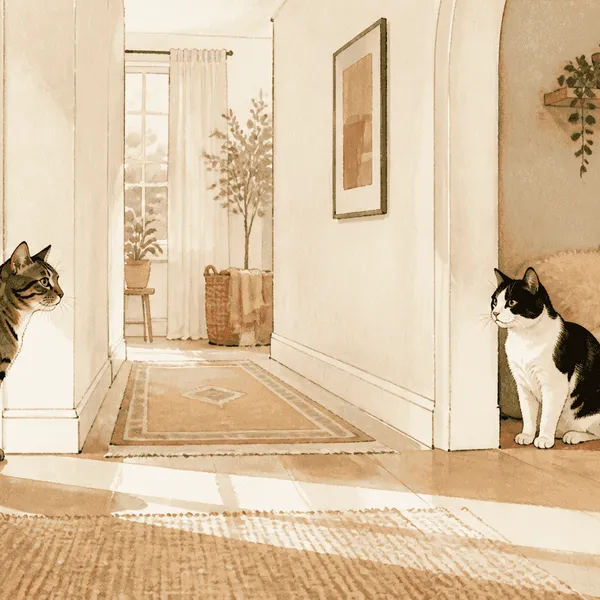
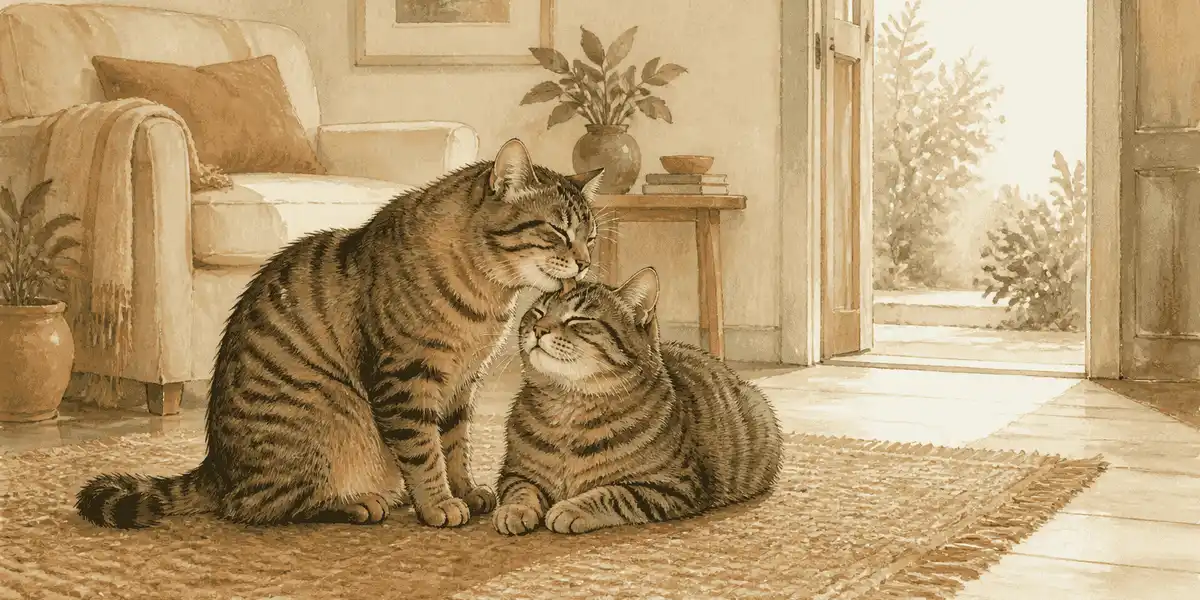
Why do cats lick each other? When two cats groom one another, it can look like a simple sign that an introduction is finished. It is more useful to treat the licking as one part of a longer interaction. Watch whether both cats can choose their distance, keep an open route away, and return to ordinary activity once the grooming stops.
That approach gives a new-cat household a clear decision: observe a relaxed, voluntary moment; create more space when the sequence tightens; and ask for help when the wider pattern is concerning. It also answers the related question of why cats groom each other without turning one photogenic lick into a verdict on a relationship.
A Grooming Bout Is Not a Friendship Certificate
A 2026 observational study in Applied Animal Behaviour Science examined selected home videos of 53 cat dyads. Allogrooming appeared in both affiliative-looking and tension-associated sequences. Mutual contact, matching posture, and later play appeared in some scenes; asymmetric posture, displacement, striking, escape, or greater distance appeared in others.
The study cannot tell us what either cat felt or why a specific pair groomed. Its useful lesson is narrower: the act of licking needs the scene before and after it. One grooming bout is not a friendship certificate, a dominance test, or a reason to rush the next introduction stage.
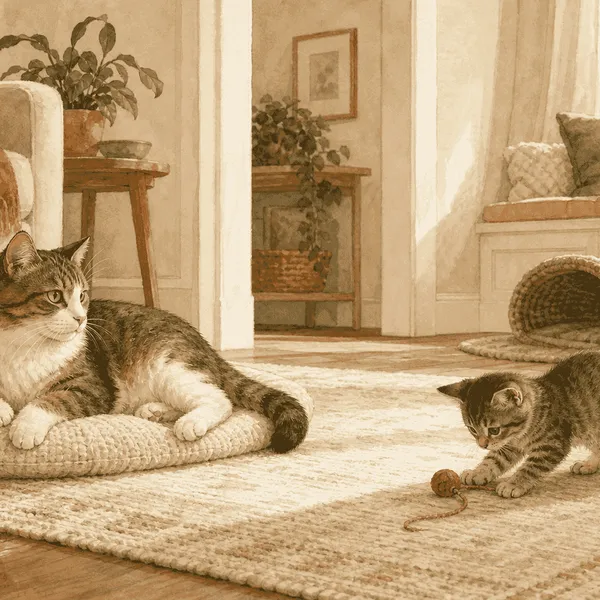
For a new kitten and resident cat, the acceptance-and-introduction guide covers the larger progress picture. This article focuses on the smaller, easy-to-misread grooming moment.
Use a Five-Detail Check
Instead of asking whether the grooming is “good” or “bad,” pause at five observable details:
- Choice: Did both cats approach or settle voluntarily, and can either one move away without being followed or held in place?
- Position: Are their bodies loose and similarly placed, or is one cat leaning over, freezing, crouching, or edging away?
- Whole interaction: Add ears, movement, distance, and the setting. A purr, hiss, or lick alone is not the whole signal.
- Route and resources: Can each cat still reach a doorway, resting place, food, water, and litter area without hesitation?
- What follows: Do the cats settle, separate calmly, or return to ordinary activity? Or does the moment turn into staring, blocking, chasing, striking, hiding, or increased distance?
That list is an observation tool, not an emotion decoder. A small 2026 home-based experiment in PeerJ found that cats’ responses to other cats’ visual displays depended on more than a brief isolated sound. In a real home, smell, history, layout, and individual experience add still more context.
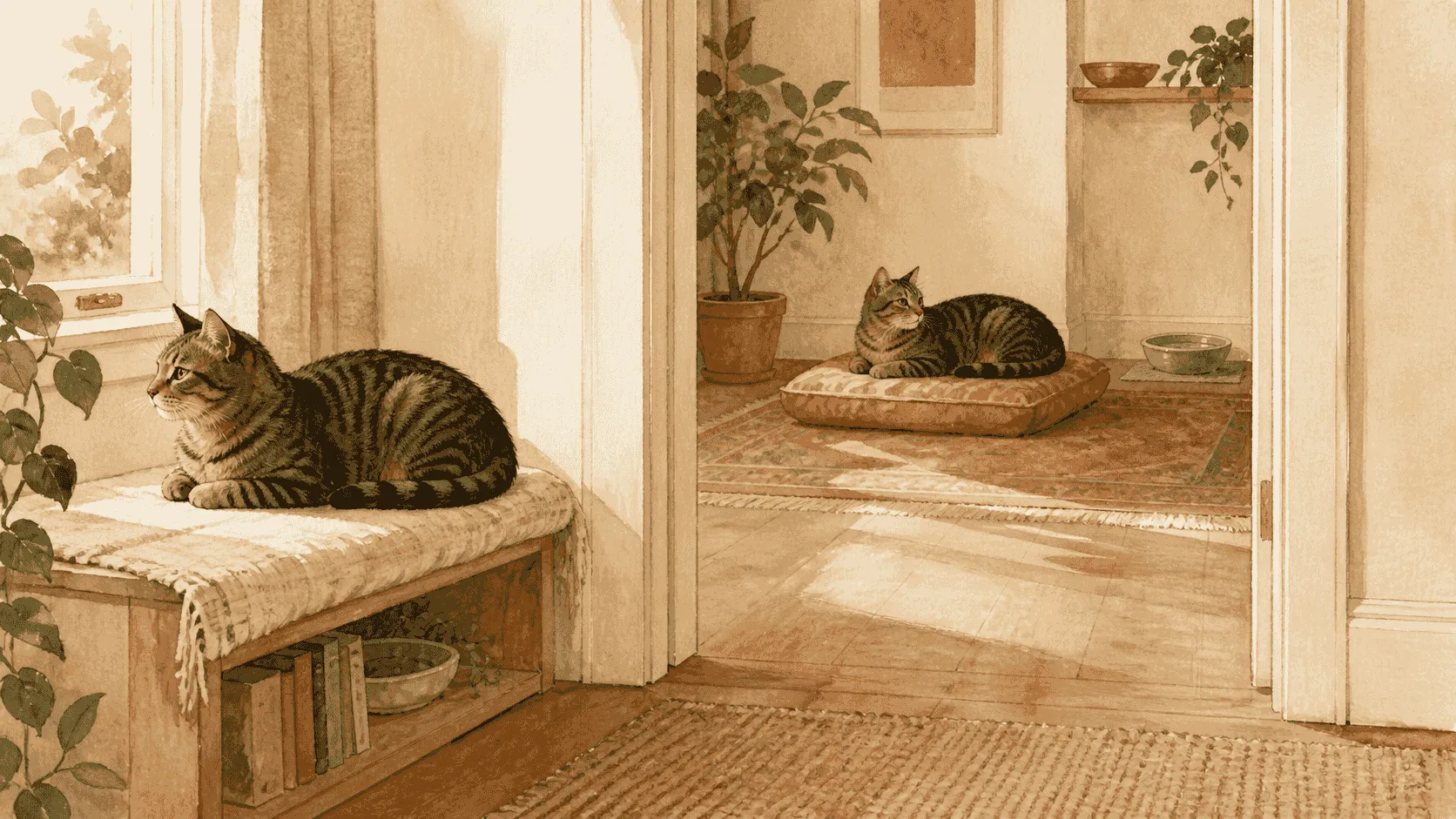
Let the Next Action Set Your Response
If both cats stay loose, have clear exits, and move on normally, let the interaction end without testing it. Keep the room predictable and continue to notice the pattern over several days. A quiet shared space can be a workable outcome even when the cats do not choose close friendship.
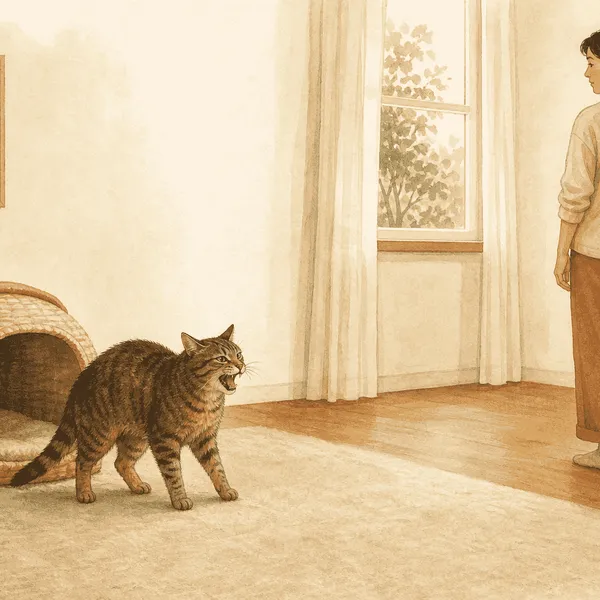
If one cat hesitates, retreats, hisses, or is unable to leave, reduce pressure rather than trying to make the grooming continue. End the close setup calmly, give each cat an open route and separate places to settle, then return to an earlier introduction stage if needed. Cats Protection guidance supports moving from separate space and scent exchange to visual barriers and then brief supervised proximity at the cats’ pace.
Resource layout matters here. Three bowls side by side are still one feeding station if one cat can block the whole row. Spread key resources across different, visually separated locations so you can see whether either cat is changing routes or skipping ordinary needs.
When Grooming Points to a Bigger Pattern
One tense-looking moment does not diagnose a relationship problem. Repeated staring, blocking, stalking, fleeing, hiding, or reduced normal activity deserves closer attention because the 2024 AAFP/FelineVMA guideline lists them as possible signs of intercat tension. Track the time, location, route, and what happened before and after; a short note is more useful than assigning a motive from memory.
Do not force nose-to-nose contact, restrain a cat so the other can approach, or use bare hands to separate an escalating conflict. If behavior changes suddenly, either cat seems painful or unwell, there is injury, access to food or litter is being restricted, or tension keeps escalating, contact your veterinarian and a qualified cat behavior professional. They can assess health contributors and the individual household pattern.
The next time the licking begins, read the exit after the last lick. Notice choice, posture, route, and the next action; then make the home easier for both cats to move through. That is a safer first-year measure of progress than trying to translate a single grooming bout.
Sources
Petzette's claim cards for this article point to the following scientific, veterinary, or animal-welfare sources.
- Context Around Allogrooming In Domestic Cat Dyads: Peer-reviewed video-based observational study
Van Belle MJR, Moons CPH, Mills DS, Broeckx BJG, Tuyttens FAM, Gajdoš Kmecová N. Unravelling feline social dynamics - A video-based observational study on allogrooming in domestic cats. *Applied Animal Behaviour Science*. 2026;301:107038.
- 2024 AAFP Intercat Tension Guideline Brief: Veterinary consensus-guideline brief
- Cats Protection Gradual Cat Introductions: Animal-welfare behavior guidance
- Cats Respond To Visual And Auditory Cues From Other Cats: Peer-reviewed home-based cat social-cognition experiment
Spoelstra KE, Vonk J, van Berlo E, Kok J, Kret ME. Purr-ceiving feelings: domestic cats respond to intraspecific cues of emotion. *PeerJ*. 2026;14:e21292.