Behavior & Training03 August 2026
Why Do Cats Meow? A Context Check Before You Guess
Why do cats meow? Use a calm context check to note the scene, whole body, routine, and changes that need a veterinarian.
TextPetzette Editorial
Read4 Min

Evidence status
Source-backed editorial
- Evidence record
- 4 claim cards linked to 4 documented sources.
- Independent expert review
- Not commissioned. Petzette Editorial is responsible for the published wording.
- Source record checked
- 22 July 2026
- Scope
- General guidance. Individual animals and circumstances can differ.
Why do cats meow? For a new cat owner, the useful first-year answer is not a sound dictionary. A meow can put a moment on your radar, but the cat’s body, location, routine, and what follows help you choose a sensible next step. Start with a short observation, then separate a familiar routine from a change that needs professional help.
Why Do Cats Meow? Start With the Scene
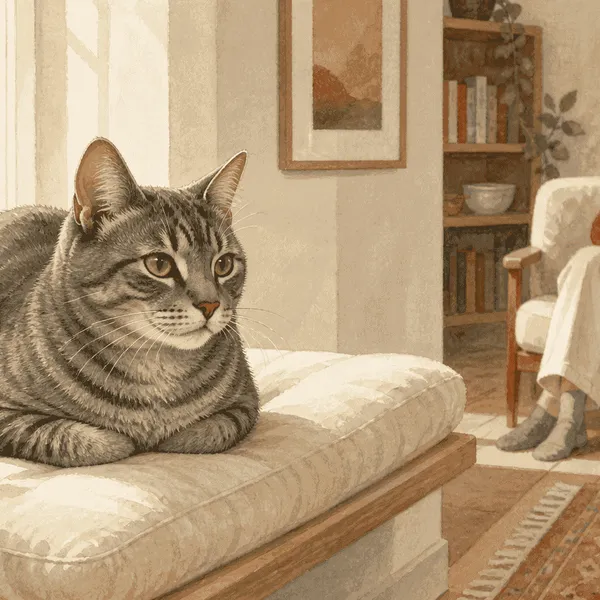
Cat Friendly Homes, created by the Feline Veterinary Medical Association, describes cat-caregiver meow patterns as individual rather than a universal language. The question is not whether one sound translates to “food,” “attention,” or “pain.” It is what was happening around this cat at this time.
Make a brief note before you try to fix anything:
- Before: What changed just before the meow—your arrival, a closed door, a meal, another animal, or a new sound?
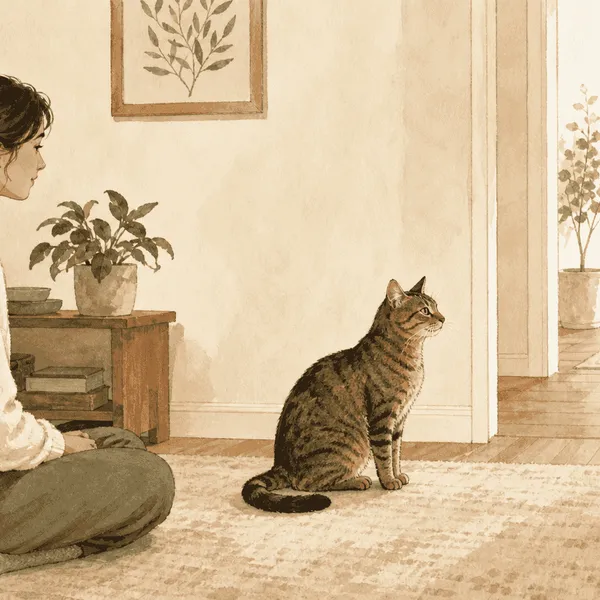
- During: Where is your cat, what are the ears, eyes, body, and route doing, and can the cat move away or approach by choice?
- After: Does the cat eat, drink, use the litter box, settle, hide, approach, or keep vocalizing?
This is not a way to diagnose a need from a checklist. It is a way to replace a guess with a baseline. Avoid repeatedly calling, withholding a usual resource, or crowding the cat to test a theory. A quieter response after one change may be useful to note, but it does not establish why the cat meowed.
Read the Whole Cat, Not the Volume
Sound is only one part of the scene. In a small 2026 PeerJ experiment of 24 adult cats, responses to brief isolated cat vocalizations were less clear than responses to the visual displays. That study does not create a home emotion test, but it supports a practical rule: restore movement, distance, posture, partner, and setting before deciding what may be going on.
A 2023 Behavioural Processes observational study makes a similar boundary for facial cues: cat facial signals are combinations, not emoji-like translations. Look beyond the mouth. Add the ears, eyes, whiskers, body, route, and the other individual in the room. If a meow comes with hissing, backing away, or a blocked route, pause the interaction and use this cat-hissing context check rather than treating the sound as a request for more contact.
Cats also benefit from choices: safe resting places and separated resources such as food, water, toileting, scratching, play, and rest. Check access without turning a home adjustment into a cure. The context-first guide to cat purring explores the same series-level rule: sound belongs beside the body, setting, and routine rather than a universal dictionary.
Why Do Cats Meow at Night? Keep the Check the Same
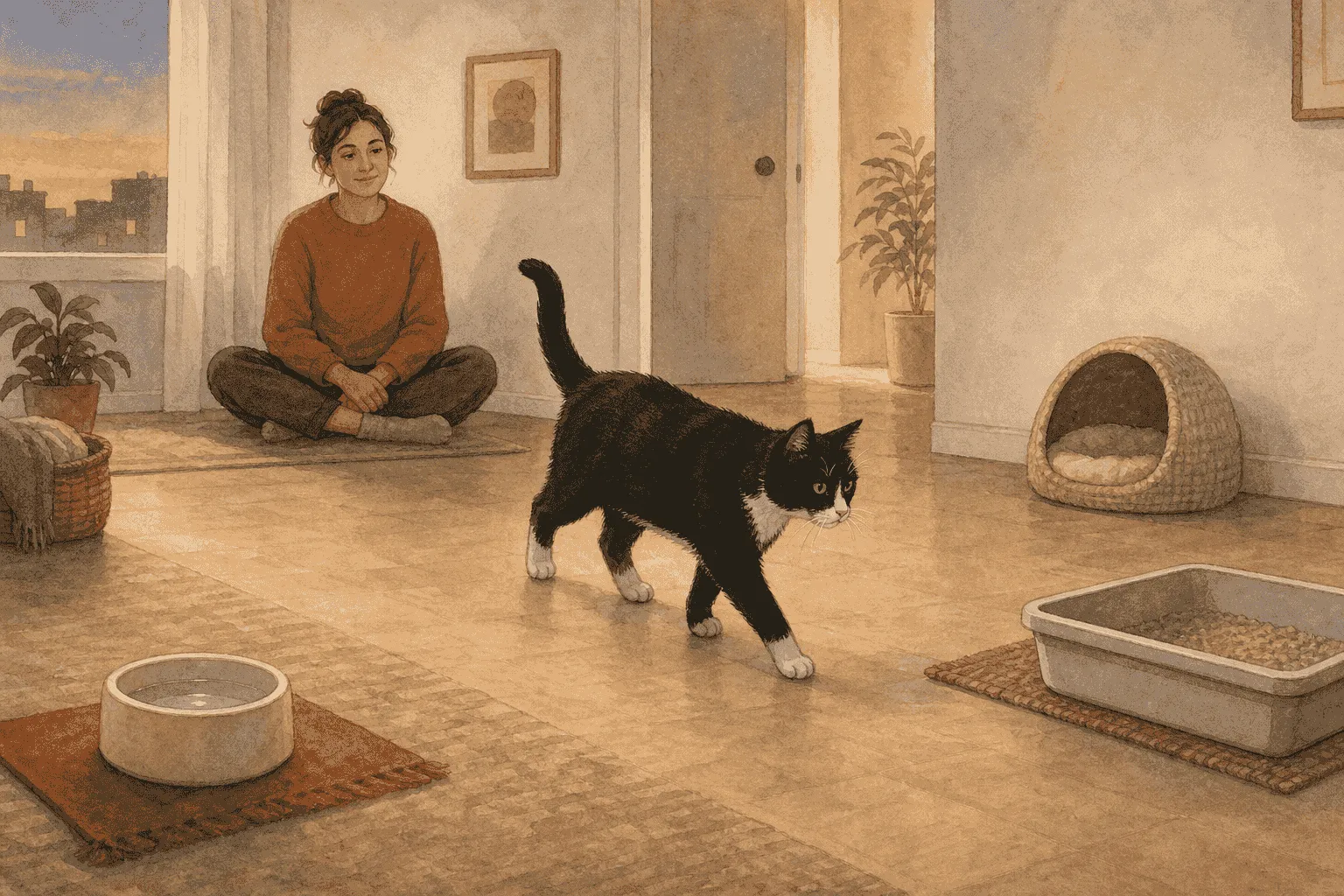
Nighttime is a time and setting, not a complete explanation. Start by asking whether this is a familiar pattern for this cat or a marked change. Then use the same before-during-after note: what happened in the room, where the cat can go, what the whole body is doing, and what changes after the sound.
Keep the environment easy to read. Confirm access to usual water, food, litter, rest, and a clear route, then avoid making a string of changes that leaves you unable to tell what shifted. Do not assume that a night meow is only learned attention-seeking, and do not use a generic sound chart to decide that it is medical. If the cat has only just arrived, the new-kitten meowing guide covers the different first-arrival check: a quiet base room, reachable essentials, and a smaller baseline.
When a Meow Needs a Veterinary Call
Compare the pattern with this individual cat’s usual voice and routine. Cat Friendly Homes advises a veterinary check for a marked change in meow tone or a noticeable increase or decrease in vocalization. Ask your veterinarian rather than guessing if the sound is suddenly different, markedly more or less frequent, persistent, or paired with another health or behavior change.
Write down the time, setting, sound, and accompanying changes before you call. That history can make the conversation clearer, but it cannot identify the cause or replace an examination. Do not keep testing a cat by touching, cornering, or waiting out a concerning change.
Your Next Useful Step
For the next few meows, make the same small record: scene, whole body, access, and what happened after. Use it to spot a pattern, not to assign a personality or diagnosis. If the pattern is familiar and the cat is otherwise comfortable, keep observing. If it is new, persistent, or accompanied by another change, contact your veterinarian with the clearest history you can give.
Sources
Petzette's claim cards for this article point to the following scientific, veterinary, or animal-welfare sources.
- FelineVMA Cat Meowing Guidance: Feline veterinary-association caregiver guidance on meowing and vocalization
- Cats Respond To Visual And Auditory Cues From Other Cats: Peer-reviewed home-based cat social-cognition experiment
Spoelstra KE, Vonk J, van Berlo E, Kok J, Kret ME. Purr-ceiving feelings: domestic cats respond to intraspecific cues of emotion. *PeerJ*. 2026;14:e21292.
- Cat Facial Signals In Social Interactions 2023: Peer-reviewed observational study
- AAFP/ISFM Feline Environmental Needs Guidelines 2013: Peer-reviewed veterinary guidelines plus client-facing practice resource