Behavior & Training30 July 2026
Why Do Cats Sleep So Much? Check the Whole Pattern
Why do cats sleep so much? Read your adult cat's usual rest pattern, protect good sleep, and know when to call a veterinarian.
TextPetzette Editorial
Read4 Min

Evidence status
Source-backed editorial
- Evidence record
- 2 claim cards linked to 2 documented sources.
- Independent expert review
- Not commissioned. Petzette Editorial is responsible for the published wording.
- Source record checked
- 22 July 2026
- Scope
- General guidance. Individual animals and circumstances can differ.
Why do cats sleep so much? For an adult cat, long stretches of rest can be part of an ordinary day. The useful decision is not whether today’s total matches one number online. It is whether this cat’s sleep-and-awake pattern is familiar, whether restful choices are available, and whether anything has changed enough to call a veterinarian.
That distinction matters during the first year together. A newly adopted adult cat may not show you a clear baseline immediately. Instead of grading one quiet afternoon, watch several naturally awake moments and record what the cat actually does.
Why Do Cats Sleep So Much? Start With the Pattern
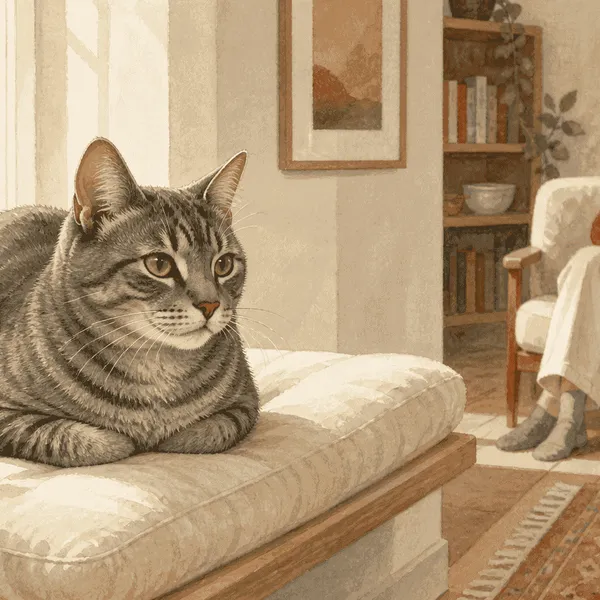
Cats Protection describes cats as resting or sleeping intermittently throughout the day. Adult cats often choose warm, comfortable, elevated, or sheltered places, then wake for shorter periods of movement, food, grooming, exploration, play, or contact.
That stop-and-start rhythm can look like “sleeping all day” when you mainly notice the naps. It does not create a universal schedule. Age, the individual, and the household scene can all shape what you see.
Start with two questions:
- Is this close to the cat’s emerging usual pattern?
- When awake naturally, is the cat participating in ordinary life in its own way?
The context-first guide to cat purring uses the same discipline: one familiar behavior cannot translate the whole animal. Sleep needs the surrounding sequence too.
Run a Three-Moment Awake Check
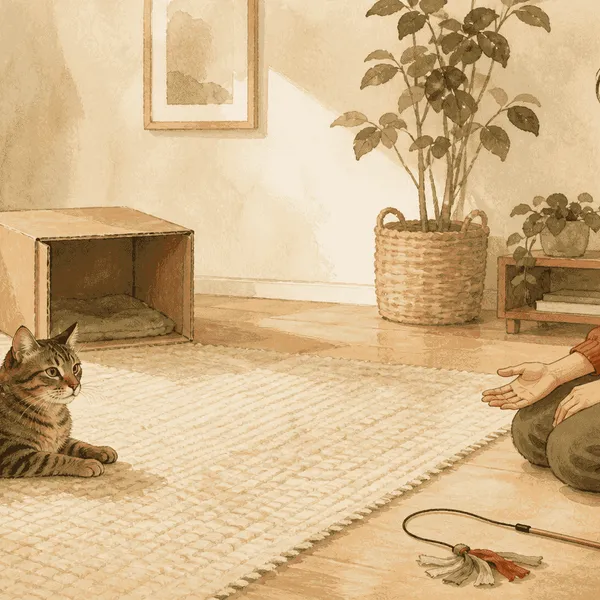
Choose three moments when the cat wakes without prompting—perhaps around a meal, a litter-box visit, and an evening activity period. For each one, make a short note:
- Move: Does the cat get up and travel comfortably to a chosen resource?
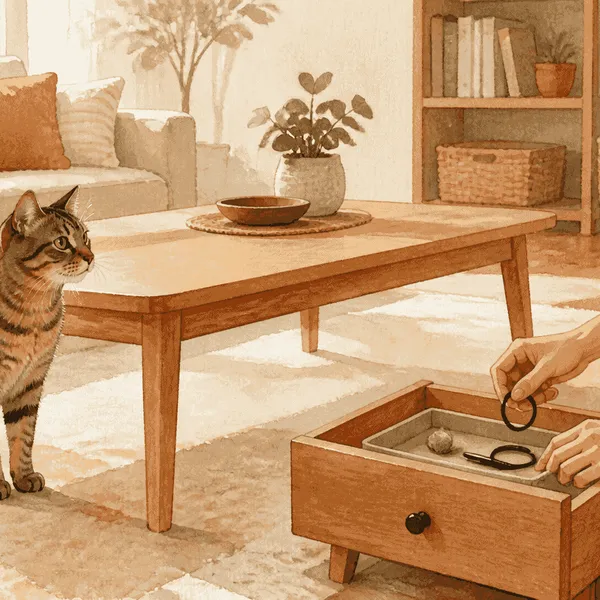
- Participate: Does it eat, drink, use the litter box, groom, explore, play, or seek social contact in a recognizable pattern?
- Resettle: Does it choose another comfortable resting place without appearing trapped or disturbed?
This is an observation aid, not a home examination. One playful dash cannot rule out illness, and one missed play invitation cannot identify a problem. The value is the sequence across time: stable, changing, or unclear.
If the cat is new to your home, include the date and time. A small record can help you build a baseline without repeatedly waking the cat to “test” it.
Protect Rest Without Forcing a Schedule
Offer more than one safe resting option: perhaps a quiet elevated perch, a covered retreat, and a soft open surface. Keep at least one choice away from foot traffic, children, visitors, and other animals. Let the cat enter and leave freely.
Do not keep a cat awake during the day in hopes of manufacturing nighttime sleep. Cats Protection advises leaving sleeping cats undisturbed; a startled, disoriented cat may react defensively when touched.
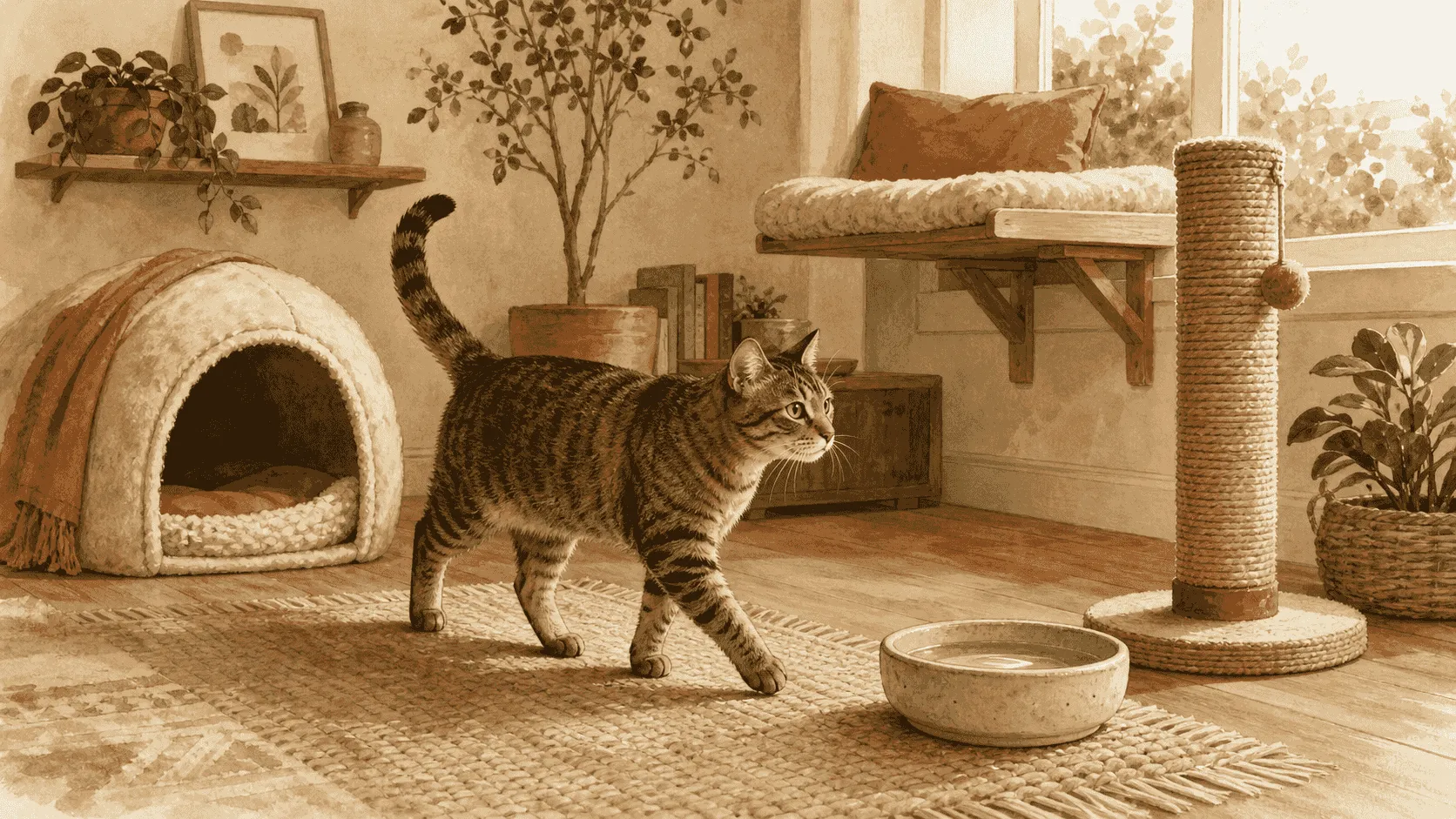
Changing sleep locations can also be ordinary. The important setup question is whether the cat has genuine choice, not whether it uses the bed you expected.
Let Life Stage Change the Comparison
Kittens and senior cats may sleep more than an average adult, but life stage is context rather than a diagnosis. For a young cat, use the separate new-kitten sleep and awake-pattern check; it covers developmental rest and kitten-specific escalation.
For an older cat, Cornell’s Feline Health Center cautions against dismissing a new behavior or physical change as “just old age.” More rest may sit alongside reduced jumping, grooming, appetite, litter-box use, or social participation. Record the cluster and discuss it with a veterinarian rather than assuming age explains it.
Know When to Call a Veterinarian
Contact your veterinarian when an adult cat is sleeping markedly more than its usual pattern, hiding more, taking part less while awake, or showing another new behavior or physical change. A sleep log can make the call more precise, but concern is enough reason to call before the log is complete.
Do not diagnose boredom, pain, illness, or stress from sleep duration or position. Do not repeatedly wake the cat, force activity, or use one energetic moment as medical clearance.
If hiding is part of the change, the guide to cat hiding and safe retreat choices can help you observe the setting without treating the box as proof that everything is fine.
Your Useful Next Step
Today, protect two undisturbed resting choices and record three naturally awake moments. Compare the sequence with what is usual for this cat, not with a universal hour target. If the pattern is newly different, the cat is participating less, or you remain uneasy, call your veterinarian with the timeline and associated changes.
Sources
Petzette's claim cards for this article point to the following scientific, veterinary, or animal-welfare sources.
- Cornell Senior Cat Special Needs: Veterinary school feline health guidance
- Cats Protection Kitten Sleep And New-Home Rest Guidance: First-party animal-welfare guidance for kitten sleep and settling into a new home