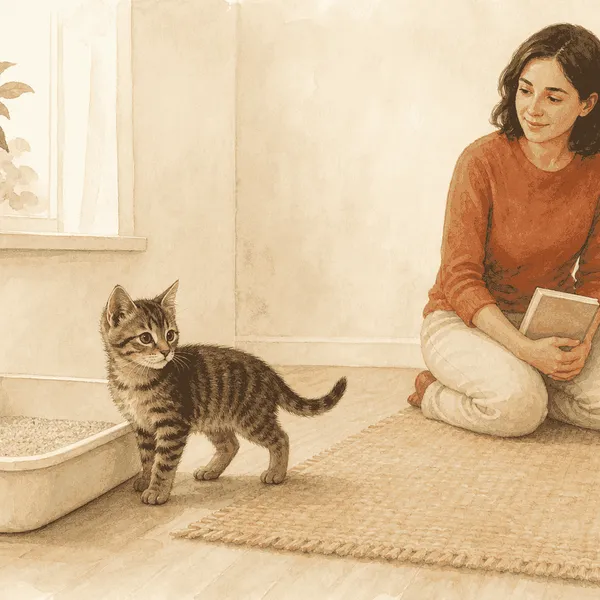
Health & Care22 July 2026
New Kitten Sleeping a Lot? Check the Whole Pattern
New kitten sleeping a lot? Check the awake pattern, protect quiet rest, and learn when a change in sleep needs veterinary help.
TextPetzette Editorial
Read3 Min

Evidence status
Source-backed editorial
- Evidence record
- 3 claim cards linked to 4 documented sources.
- Independent expert review
- Not commissioned. Petzette Editorial is responsible for the published wording.
- Source record checked
- 22 July 2026
- Scope
- General information, not an individual diagnosis or treatment plan.
Is your new kitten sleeping a lot? The useful decision is not whether one day’s total matches an online number. It is whether the kitten has protected rest, shows a responsive awake pattern, and has any changes that need veterinary help. Kittens can sleep often, but sleep alone cannot tell you whether this kitten is well.
Use naturally awake moments to build a small baseline. Do not repeatedly wake, handle, feed, or provoke play to test the kitten.
Do Kittens Sleep a Lot? Read the Awake Pattern
Cats Protection guidance says kittens need plentiful sleep for development and may switch from intense play to sleep quite suddenly. It recommends quiet, comfortable places where a kitten can rest without interruption. That makes frequent naps compatible with ordinary kitten life; it does not make every sleepy pattern harmless.
Cornell University’s Feline Health Center describes a physically sound kitten as bright, responsive, active, and interested in play while awake. Treat those words as observation prompts, not a pass-fail home examination. Individual kittens differ, and a newly arrived kitten may not yet show you a stable routine.
When the kitten wakes on its own, notice a short sequence:
- Does the kitten orient to the room and move comfortably?
- Does it approach food, water, litter, play, or gentle contact in its own pattern?
- Is there some interest in exploring or grooming?
- Does the kitten settle back to sleep in a comfortable place?
One lively minute cannot clear a kitten medically. The sequence simply gives your veterinarian better context than “sleeping all day.”
Make a Two-Column Kitten Sleep Log
For the next few natural sleep-and-wake cycles, divide a page into resting and awake. Under resting, note where the kitten chose to sleep and whether breathing looked comfortable from a distance. Under awake, record actual food intake, drinking, urine, stool, movement, grooming, play, sneezing, discharge, vomiting, and anything markedly different from the previous cycle.
Record when a change began. Avoid turning the page into a minute-by-minute surveillance project or delaying a call until it looks complete. The aim is an emerging baseline: what this kitten usually does when awake, not a universal kitten sleep schedule.
If intake is part of the concern, use the separate guide for a new kitten that is not eating. Appetite loss needs its own prompt veterinary boundary; relocation should not be used to explain it away.
Make Quiet Rest Easy to Observe
A useful sleep setup is simple: one quiet, comfortable bed or covered retreat, away from household traffic, with food, water, and litter reachable in separated locations. The kitten should be able to leave the resting place without being pulled out, followed, or cornered.
The broader new-kitten first-week setup shows how to arrange a small base room around safe places and separated resources. Keep children and visitors away from the sleeping area. Do not keep the kitten awake during the day in hopes of changing the night schedule.
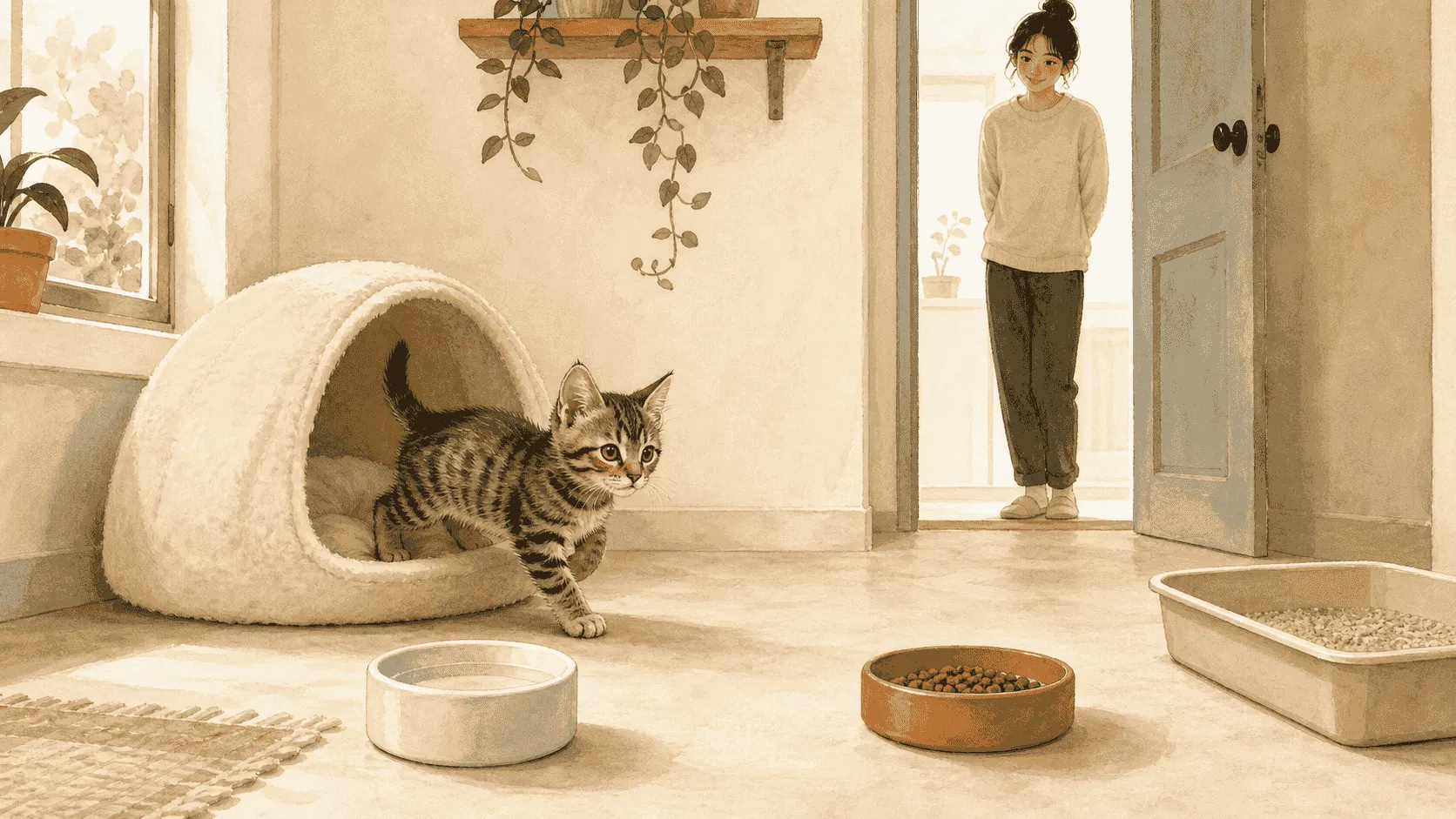
This setup makes ordinary needs easier to reach and observe. It is not a treatment for lethargy, pain, illness, or distress.
When Is a Kitten Sleeping Too Much?
Contact your veterinarian if the kitten is sleeping markedly more than its emerging usual pattern, seems lethargic while awake, or stops joining its normal meals, movement, or activity. Cornell guidance also places appetite loss, persistent vomiting or diarrhea, nasal or eye discharge, sneezing, urinary changes, weight loss, and difficult or rapid breathing among signs that need veterinary attention.
Seek emergency veterinary care if the kitten is difficult to wake or cannot get up or walk when prompted. Follow the clinic’s urgency instructions. Do not force food or water, give medication, or try to stimulate the kitten into appearing normal.
Your Useful Next Step
Today, protect one undisturbed sleep place and write down what happens across the next naturally awake moments. If the pattern concerns you, call with the kitten’s age, arrival date, when the change began, and the associated observations you have—not a guessed diagnosis.
Arrange a health check soon after arrival even when the kitten appears well; the new-kitten first-vet-visit checklist can help you organize records and questions. What remains uncertain is the kitten’s true baseline in a new home. A short log can clarify the pattern, but concern, a marked change, or reduced responsiveness is enough reason to contact a veterinarian before the page is finished.
Sources
Petzette's claim cards for this article point to the following scientific, veterinary, or animal-welfare sources.
- Cats Protection Kitten Sleep And New-Home Rest Guidance: First-party animal-welfare guidance for kitten sleep and settling into a new home
- Cornell New-Cat Health Signs And Kitten Responsiveness Guidance: Veterinary-school feline health guidance for evaluating a new cat or kitten
- VCA Lethargy Escalation Guidance: Veterinary-hospital urgent-care guidance for changed energy and responsiveness
- AAFP/ISFM Feline Environmental Needs Guidelines 2013: Peer-reviewed veterinary guidelines plus client-facing practice resource