Behavior & Training12 August 2026
Why Do Female Dogs Hump? Pause, Separate, and Check the Pattern
Why do female dogs hump? Learn how to create space, observe the context, redirect calmly, and know when to ask your veterinarian for help.
TextPetzette Editorial
Read4 Min
Evidence status
Source-backed editorial
- Evidence record
- 4 claim cards linked to 3 documented sources.
- Independent expert review
- Not commissioned. Petzette Editorial is responsible for the published wording.
- Source record checked
- 12 August 2026
- Scope
- General guidance. Individual animals and circumstances can differ.
Why do female dogs hump? When a dog mounts a person, another dog, or an object, it can feel awkward and urgent. The useful first decision is not to name the reason. Create space, lower the pressure in the moment, and notice what happened just before the behavior. That gives you a safer next step than treating one episode as a dominance verdict.
Female dogs can mount. VCA Animal Hospitals’ veterinary guidance describes several possible contexts in young dogs: sexual behavior, high-arousal play, and responses to excitement or stress. Those possibilities are a reason to look wider, not a way to identify one motive from the movement alone.
Why Do Dogs Hump? Start With Context
Female or male, a dog’s mounting does not translate itself. A dog may begin after a burst of play, a visitor arriving, an unfamiliar dog getting close, or a change in the room. The same behavior can look different when the rest of the dog is loose and able to disengage than when the dog is tense, crowding another animal, or becoming harder to interrupt.
VCA guidance says dominance is not considered a common explanation for a dog mounting people or pets. That does not replace observation with another label. It means the more useful questions are concrete: What changed? Who was nearby? Was this a familiar play partner, a person, or an object? What did the dog do after the interruption?
For a wider method of noticing posture, space, and sequence, use the dog body-language pause map. This guide stays focused on the mounting moment and the choice that follows it.
First, Protect the Other Dog or Person
If the dog is mounting someone or another dog, calmly create room before you try to interpret the scene. Move the people apart, end the play interaction, or guide your dog toward an open area if that can happen without pulling, yelling, or cornering either dog. A familiar dog can still object to mounting, and an unfamiliar dog may not welcome it at all.
Avoid waiting to see whether another dog will “sort it out.” A short break lets both dogs show what they choose next. If the other dog leaves, freezes, hides behind their handler, or does not return voluntarily, let the break be the ending rather than restarting the interaction.
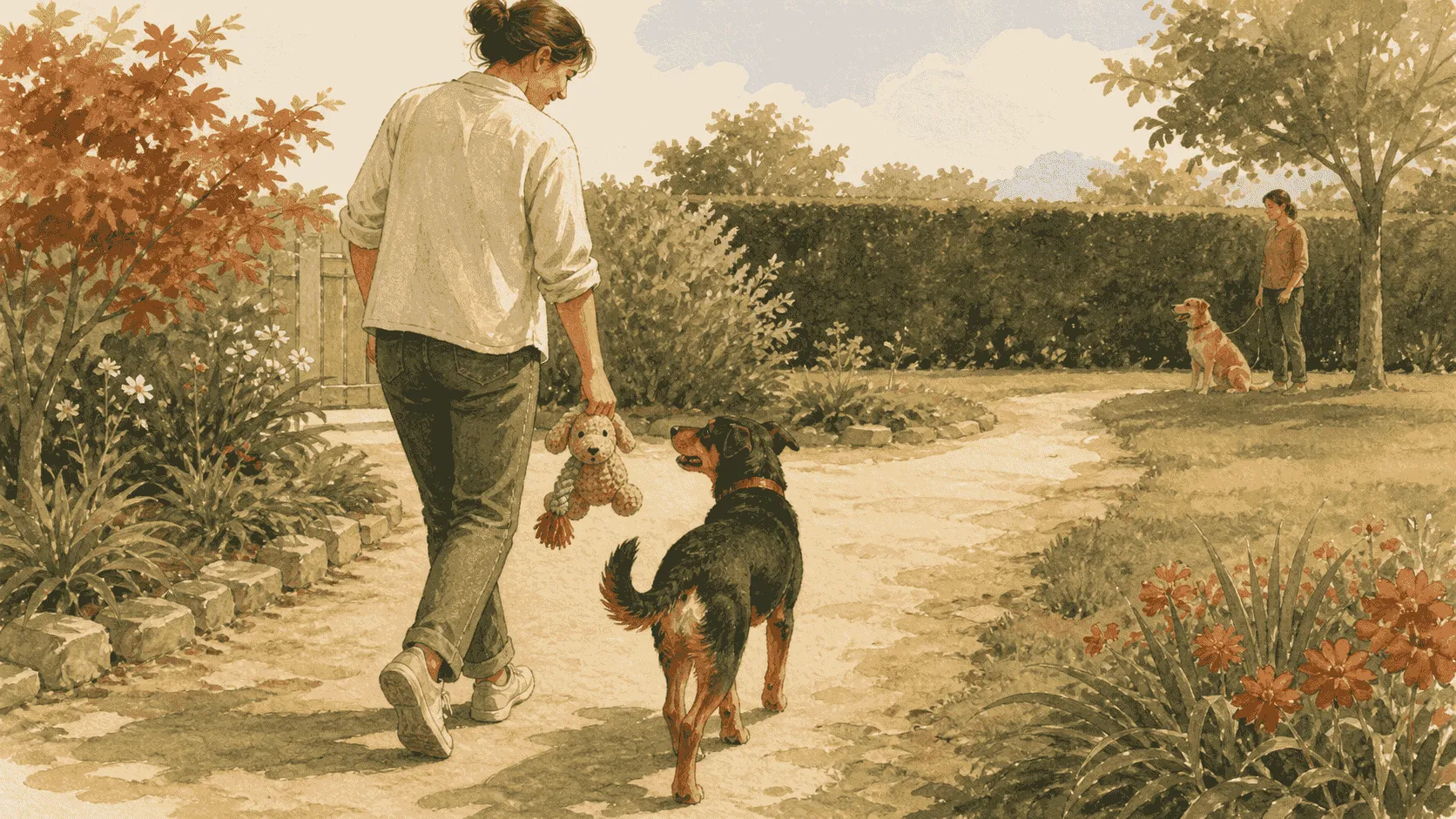
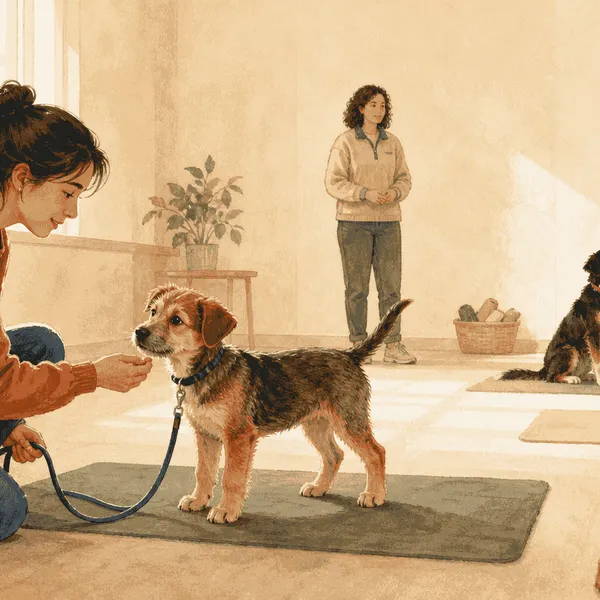
In a puppy class or a meeting with a resident dog, build those pauses into the plan. The safe dog-socialization checklist and this new-puppy introduction plan explain how space and brief breaks can protect a new relationship.
Make a Four-Line Mounting Note
One clear record is more useful than replaying a difficult moment to get an answer. After everyone is settled, write four short facts:
- Before: What changed in the minute before mounting—play, arrival, handling, noise, food, or another dog?
- Target: Was the dog mounting a person, a familiar dog, an unfamiliar dog, or an object?
- Whole body: Was the dog able to turn away and respond, or did the body look tense, fixed, or difficult to interrupt?
- After: What happened once you made space? Did either dog leave, recover, re-engage, or show ongoing concern?
The note cannot diagnose anxiety, pain, sexual motivation, or a compulsive behavior. It can help your veterinarian or a qualified behavior professional see the pattern without asking you to provoke another episode.
Redirect to a Familiar Next Behavior
Once space is available, redirect to something your dog already understands: moving with you, finding a toy, settling on a mat, or another simple cue practiced in low-pressure settings. The aim is to give the dog a workable next action, not to make a claim about why the mounting started.
The American Veterinary Society of Animal Behavior recommends reward-based methods that teach the behavior you want repeated instead of relying on fear, pain, or intimidation. Rewarding the turn away, the return to you, or a calm pause gives structure without escalating a crowded interaction. It is not a promise that one redirect resolves the underlying pattern.
When a Veterinarian or Behavior Professional Should Help
Ask your veterinarian for guidance if mounting is sudden, repeated, excessive, hard to interrupt, or paired with a meaningful change in your dog’s usual behavior. VCA also advises veterinary contact for inappropriate or excessive humping and notes that some patterns may need behavior intervention.
Get help sooner if the behavior is creating conflict, injury risk, persistent distress, or pressure on another dog or person. Bring the four-line note and, only if it can be gathered without following or provoking the dog, a brief record of the setting. A professional can assess the individual dog; an article cannot decide the cause from one behavior.
The next useful step is modest: make space, observe the whole moment, and teach a calm alternative. That protects everyone while you learn whether the pattern needs more support.
Sources
Petzette's claim cards for this article point to the following scientific, veterinary, or animal-welfare sources.
- VCA Guidance on Dog Mounting and Humping in Context: Current veterinary-hospital behavior guidance
- Dogs Trust Play Breaks And Body-Language Check: Animal-welfare behavior guidance
- AVSAB Humane Dog Training 2021: Veterinary behavior society position statement