New Owner Guide19 July 2026
How to Introduce a New Puppy to Your Dog
Learn how to introduce a new puppy to your dog with a calm first meeting, separate resources, supervised breaks, and clear help boundaries.
TextPetzette Editorial
Read4 Min
Evidence status
Source-backed editorial
- Evidence record
- 5 claim cards linked to 4 documented sources.
- Independent expert review
- Not commissioned. Petzette Editorial is responsible for the published wording.
- Source record checked
- 19 July 2026
- Scope
- General guidance. Individual animals and circumstances can differ.
How to introduce a new puppy to your dog is less about arranging one perfect greeting than building a first week with room to pause. Start with distance, let both dogs move away, and keep early contact short enough that neither has to demand a break. A calm meeting can be useful, but it cannot guarantee that the pair will become friends.
Prepare Two Dog Zones Before the Meeting
Set up separate places for eating, drinking, and resting before the puppy arrives. Each dog should be able to use those basics without passing through the other’s space. Choose a secure way to separate them when you cannot supervise directly, such as different rooms or a suitable barrier. The separation is part of the plan, not a punishment.
Also check the health side of the meeting. The safest location depends on the puppy’s vaccination progress and local disease risk, so ask your veterinarian if you are unsure where the puppy can walk. Dogs Trust guidance advises checking vaccination status before the dogs meet.
If the resident dog has a history of biting, serious guarding, or distress around other dogs, do not use the arrival day as an experiment. Ask a veterinarian and a qualified behavior professional to help plan the introduction first.
How to Introduce Your Dog to a New Puppy
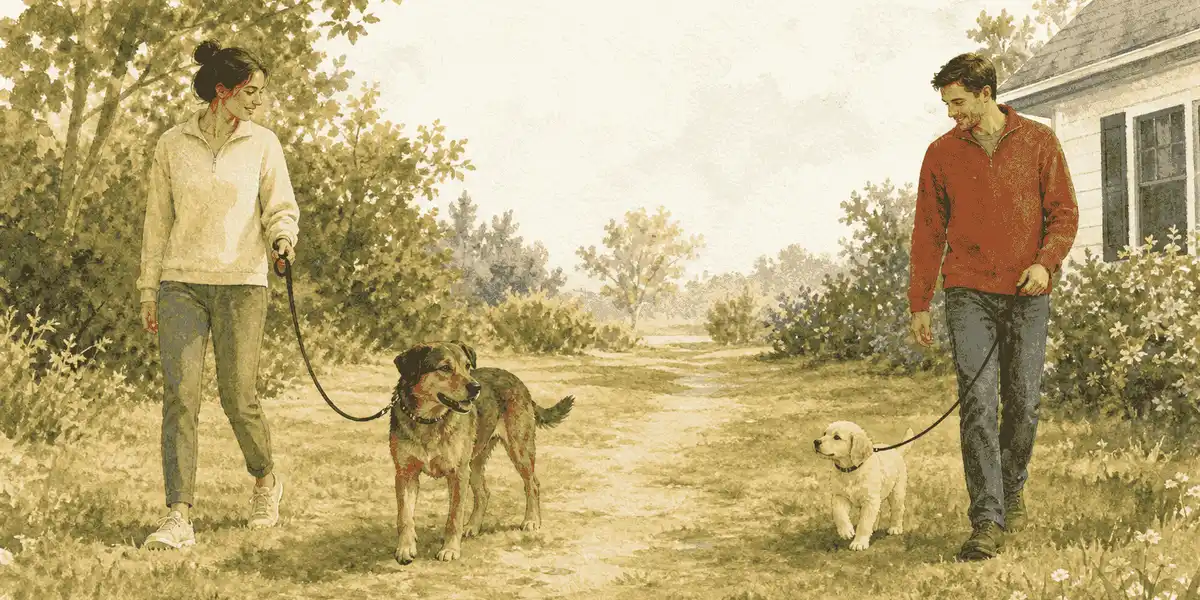
When practical, choose a quiet, low-traffic outdoor place with room to move. Recruit a second calm adult so each dog has one handler. Begin far enough apart that both dogs can explore and respond to their person without being pulled toward the other dog.
Dogs Trust recommends closing the distance gradually and allowing a brief greeting only while both dogs remain comfortable. Keep moving after the sniff instead of holding them face to face. If either dog becomes worried or too excited to settle, add distance and try a shorter contact later. Distance is a useful adjustment, not evidence that the pairing has failed.
Reward the calm behaviors you want repeated: checking in with the handler, walking on a loose lead, or settling away from the other dog. The American Veterinary Society of Animal Behavior recommends reward-based teaching rather than fear, pain, or intimidation. Clear guidance does not require forcing contact.
For a broader arrival routine beyond the meeting itself, use the first-48-hours puppy plan.
Bring the New Puppy Home With Breaks Built In
Once home, continue in an area with space and easy exit routes. Supervise the first days and weeks. When you cannot watch both dogs directly, separate them securely and make sure each still has access to water and a comfortable resting place.
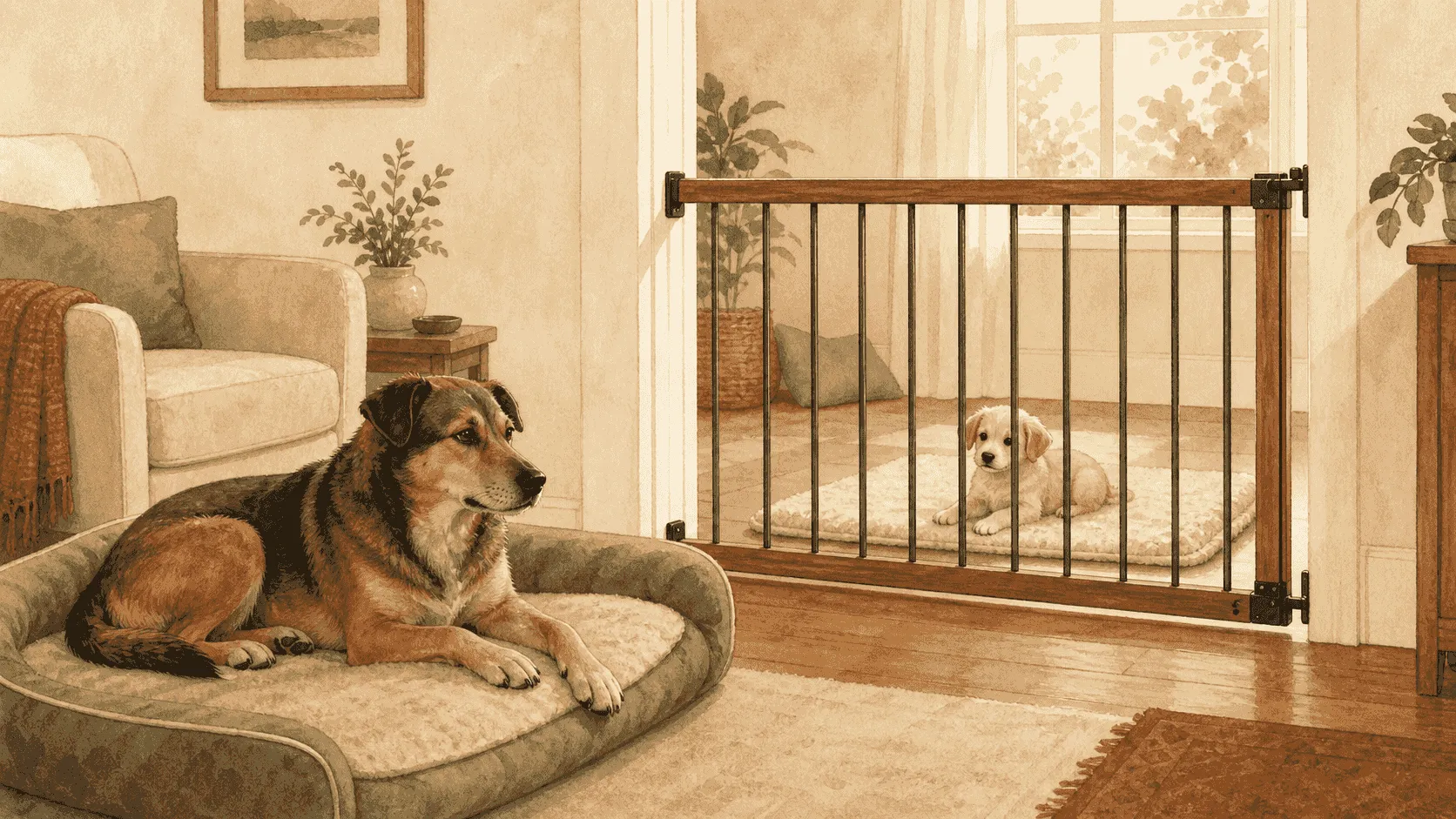
Plan regular time apart even when the interaction looks peaceful. Puppies are still learning how to respond to other dogs, while the resident dog may need uninterrupted rest. Separate feeding and sleeping areas reduce avoidable pressure; they do not diagnose or treat conflict.
Keep the wider day quiet enough for recovery. The new puppy first-30-days checklist can help balance introductions with sleep, feeding, training, and gradual new experiences.
Read Both Dogs, Not One Signal
One wag, yawn, bark, or play bow cannot tell you whether an interaction is comfortable. Dogs Trust body-language guidance advises reading the individual dog, the whole body, and the situation. Notice changes from each dog’s usual posture and movement, whether either dog keeps trying to leave, and whether more distance helps both settle.
Use short pauses during play. If both dogs remain loose and voluntarily return, the interaction may continue. If one dog uses the pause to move away, let that be the ending or extend the break. Do not grab between dogs if tension is escalating, and do not ask them to “sort it out.”
The same approach that makes dog socialization classes safer applies here: choice, short sessions, and enough distance to learn.
Know When to Stop the Introduction
Separate the dogs if either cannot disengage or the interaction is becoming more intense. Significant barking, lunging, snapping, guarding, injury, or persistent concern needs professional help before another introduction. Seek veterinary advice promptly for an injury, and ask a veterinarian about sudden behavior changes or possible pain. A qualified behavior professional can then help shape a safer reintroduction plan.
Some pairs become close; others may prefer more space. The useful goal is not an immediate cuddle. It is a home where both dogs can eat, rest, move, and disengage without repeated pressure.
Your next step is concrete: choose the meeting area, recruit a second handler, set up two feeding and resting zones, and decide how the dogs will be separated before pickup day. That preparation gives both dogs something more valuable than a rushed hello—room to adjust.
Sources
Petzette's claim cards for this article point to the following scientific, veterinary, or animal-welfare sources.
- Dogs Trust New Dog And Puppy Introductions: Current first-party dog-welfare behavior guidance
- Dogs Trust Body Language Context Guidance: Welfare organization dog body-language guidance
- Dogs Trust Play Breaks And Body-Language Check: Animal-welfare behavior guidance
- AVSAB Humane Dog Training 2021: Veterinary behavior society position statement