Behavior & Training17 July 2026
Dog Socialization Classes: A Safe First-Year Checklist
Dog socialization classes can help when they are calm, reward-based, and matched to your new dog's comfort, health plan, and learning pace.
TextPetzette Editorial
Read4 Min
Evidence status
Source-backed editorial
- Evidence record
- 6 claim cards linked to 6 documented sources.
- Independent expert review
- Not commissioned. Petzette Editorial is responsible for the published wording.
- Source record checked
- 15 July 2026
- Scope
- General guidance. Individual animals and circumstances can differ.
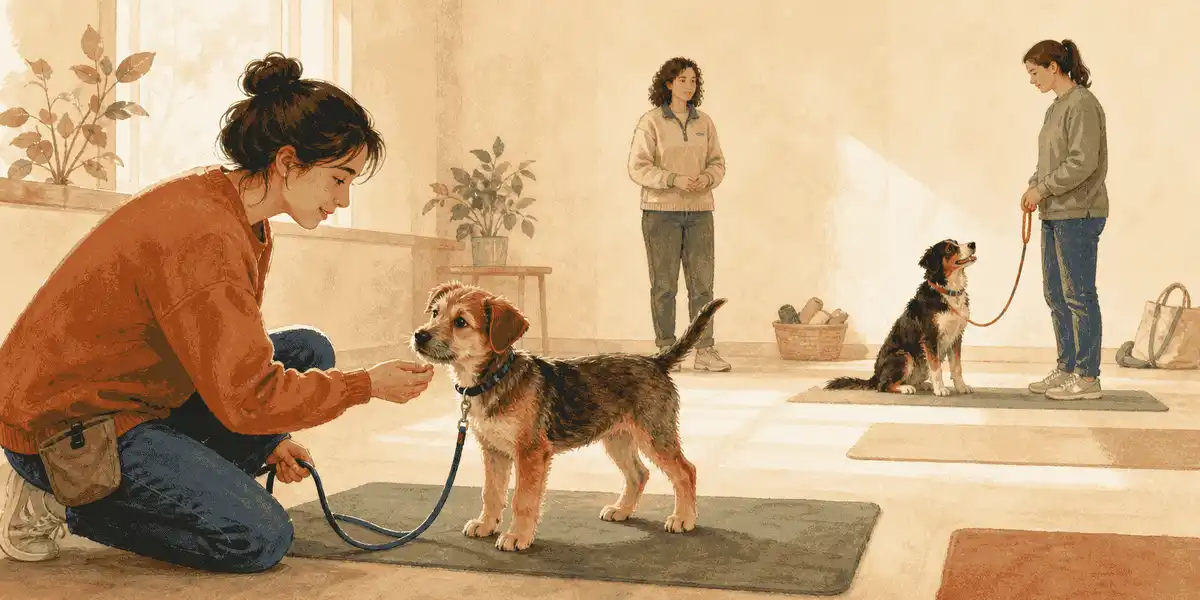
Dog socialization classes can give a new puppy or recently adopted dog a calm place to learn around people, sounds, surfaces, and other dogs. The decision is not simply whether to book a class. It is whether the setup protects choice, uses rewards, and lets your dog practice at a comfortable distance. A useful class should make the world more readable, not prove that your dog can endure a busy room.
What dog socialization classes should actually do
The American Veterinary Society of Animal Behavior identifies the first three months as the primary puppy socialization period. Its guidance supports safe exposure before full vaccination when veterinary precautions are in place. That does not make every public space or dog gathering suitable. Local disease risk, vaccination progress, and the individual puppy still matter.
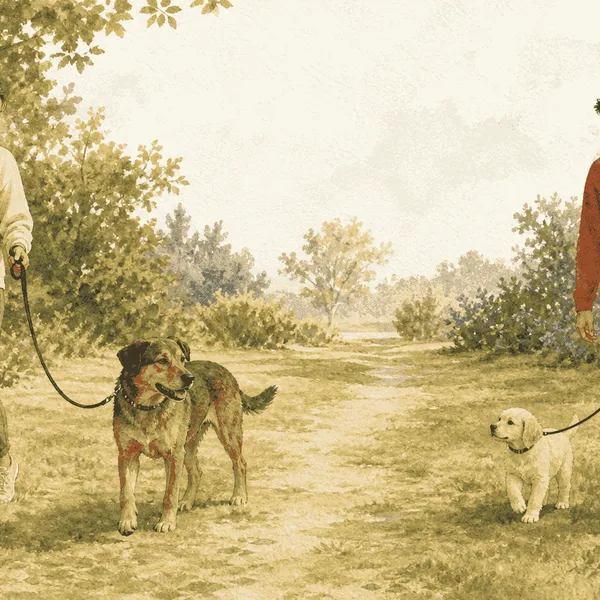
Socialization is broader than dog-to-dog play. A puppy can learn from walking on a different surface, hearing an unfamiliar sound at low intensity, watching a person from a distance, or settling while another dog is present. Blue Cross guidance similarly separates gentle mental and social experiences from long walks, unknown-dog crowds, and overexercise.
For a newly adopted adult dog, a class is not a way to redo puppyhood or force a quick transformation. It can be one controlled place to teach useful skills and observe what helps the dog stay comfortable. Missing an early window does not mean a dog is ruined.
Choose reward-based teaching, not forced contact
AVSAB recommends reward-based methods for everyday training and behavior work. Clear boundaries still belong in that approach: the handler marks and rewards the behavior they want repeated, while the lesson is made easier when the dog cannot cope. Fear, pain, intimidation, and discomfort are not necessary teaching tools.
Before enrolling, ask how the class handles these ordinary moments:
- Can a dog watch from farther away instead of being led into a greeting?
- Are wanted behaviors taught and rewarded rather than mistakes punished?
- Are dog-to-dog interactions optional, brief, and actively supervised?
- Does the instructor pause or reduce intensity when a dog looks worried?
- Do the health requirements match your veterinarian’s local advice?
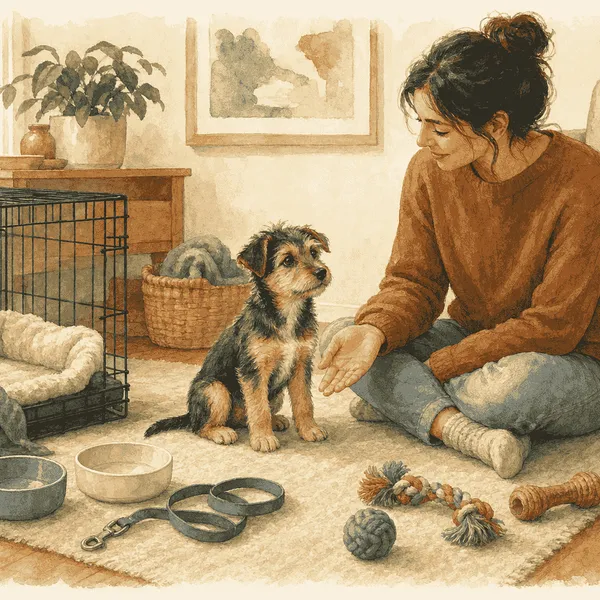
A class that cannot give a dog space is a poor match, even if the schedule is convenient. If you are still arranging home routines, the first-48-hours puppy plan can help you avoid stacking a class on top of too many new experiences.
Read the whole dog in the room
Dogs Trust advises reading the individual dog, the whole body, and the situation. A yawn, lip lick, lifted paw, turned head, lowered posture, or tucked tail can contribute to a picture of worry, but one signal alone is not a diagnosis. Look for combinations, changes from that dog’s baseline, and what happens when more distance is offered.
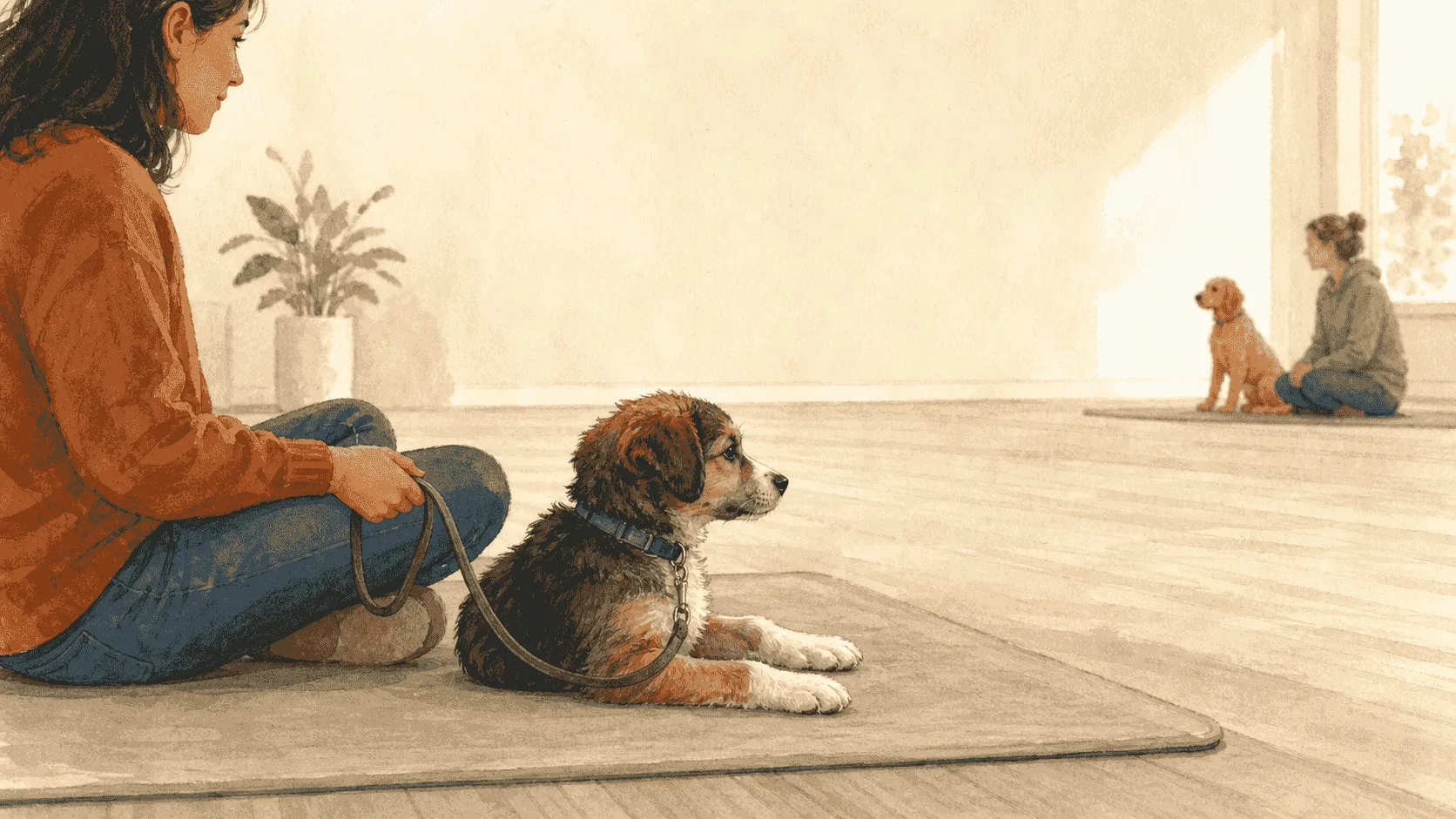
Play also needs observation rather than assumptions. Dogs Trust guidance supports short breaks so both dogs can choose what happens next. Loose bodies and two voluntary returns may support continuing. If one dog uses the pause to leave, let the break become the ending. A wag, growl, or play bow by itself does not settle the question.
That same whole-scene reading matters when a dog checks back with you. The guide to why dogs look to you when unsure explains how calm distance and a steady response can help during unfamiliar moments.
Keep socialization going outside class
One weekly lesson cannot carry the whole plan. Between sessions, repeat small experiences the dog handled well: a quiet visitor, a new household sound, a clean surface, or calm observation from a safe distance. Keep sessions short enough that the dog can recover and rest.
Change one variable at a time. A puppy who can watch one calm dog across a room is not automatically ready for a crowded pavement or dog park. The new puppy first-30-days checklist offers a wider routine for balancing socialization with sleep, training, gradual alone-time work, and veterinary care.
When to pause and get professional help
Stop the exercise and create space if worry is building, play becomes one-sided, or the dog repeatedly tries to leave. Do not grab between escalating dogs or ask them to “sort it out.” Injury, significant aggression, guarding, persistent fear, separation distress, or bite risk needs veterinary and qualified behavior support.
Your next step is practical: observe a class or speak with the instructor before paying, compare its methods with the checklist above, and ask your veterinarian how local vaccination and disease risk should shape attendance. The right dog socialization class is not the busiest one. It is the one that helps this dog learn safely, a little at a time.
Sources
Petzette's claim cards for this article point to the following scientific, veterinary, or animal-welfare sources.
- AVSAB Puppy Socialization Position Statement: Veterinary behavior society position statement
- Blue Cross Puppy Exercise And Socialisation: Animal welfare charity guidance / puppy exercise and socialisation advice
- AVSAB Humane Dog Training 2021: Veterinary behavior society position statement
- Dogs Trust Body Language Context Guidance: Welfare organization dog body-language guidance
- Dogs Trust Play Breaks And Body-Language Check: Animal-welfare behavior guidance
- RSPCA Dog Body Language: Animal-welfare behavior guidance