Behavior12 October 2026
Why Do Cats Suck on Blankets? Separate Fabric Sucking From Swallowing
Why do cats suck on blankets? Separate fabric sucking from possible swallowing, make the room safer, and know when a veterinarian should help.
TextPetzette Editorial
Read5 Min
Evidence status
Source-backed editorial
- Evidence record
- 6 claim cards linked to 3 documented sources.
- Independent expert review
- Not commissioned. Petzette Editorial is responsible for the published wording.
- Source record checked
- 12 October 2026
- Scope
- General guidance. Individual animals and circumstances can differ.
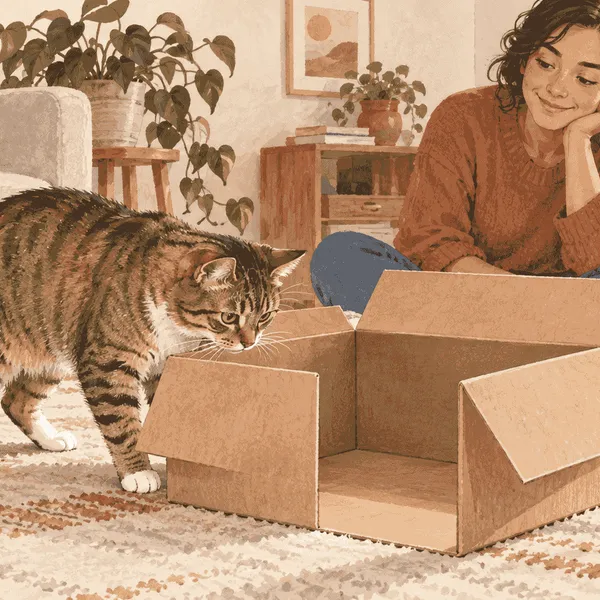
Why do cats suck on blankets? The useful first answer is not a single motive. A cat may suck, lick, or gently mouth fabric without swallowing it, while chewing through a thread or leaving a piece missing creates a different safety question. The behavior can look cozy and harmless, but a blanket is still a non-food material.
Your first-year decision is therefore practical: identify what you actually saw, reduce access to loose fabric when you cannot supervise, offer safe ways to settle and play, and involve a veterinarian if swallowing may have happened or the pattern changes.
Start by naming the behavior
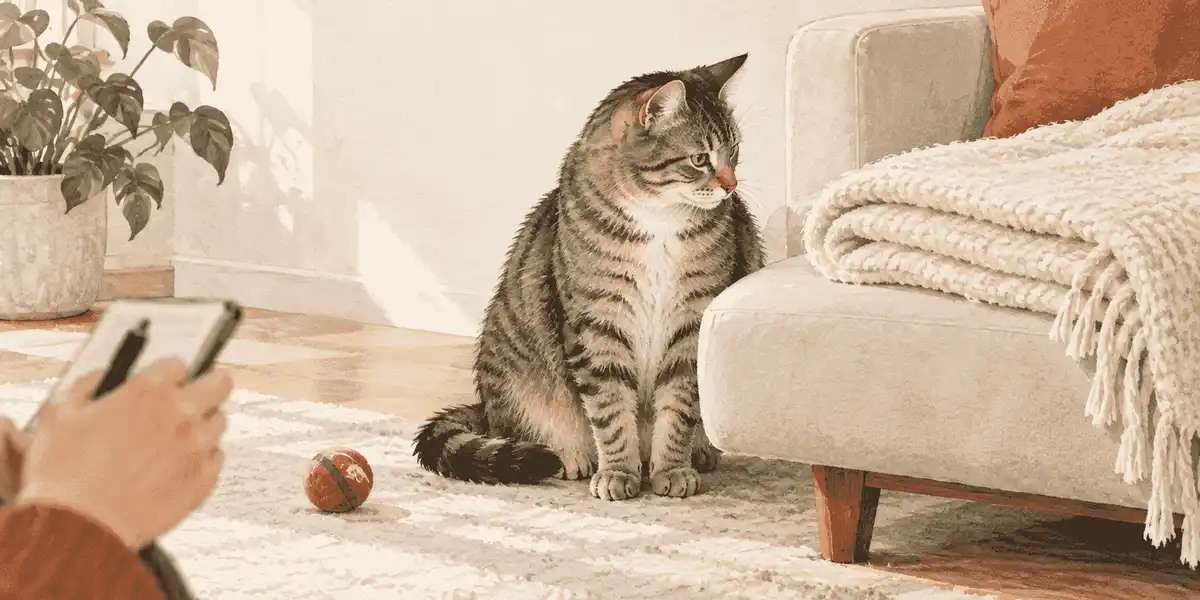
Watch from a respectful distance if you can do so safely. Do not offer the blanket again as a test. Note which description fits best:
- Sucking or licking: the cat holds, licks, or mouths the fabric, but you do not see tearing or swallowing.
- Chewing or pulling: the cat bites, tugs, or leaves tooth marks, but you cannot tell whether any fibers went down.
- Possible ingestion: you saw a piece disappear, a section is missing, or the cat became unwell after contact.
Write down the fabric, location, time, what happened just before it, and what the cat did afterward. A photo of the blanket and the size of any missing area may be useful. If the scene was really alternating front paws pressing into a soft surface, rather than the mouth taking hold of fabric, compare it with the different question of why cats knead. Kneading and blanket sucking can happen on the same surface, but they are not the same observation.
The distinction is worth making before you explain the cat to yourself. The MSD Veterinary Manual groups sucking, licking, chewing, and ingesting non-food materials within overlapping oral repetitive behaviors. VCA’s cat behavior guidance also discusses fabric or wool sucking alongside more dangerous chewing. These sources support careful observation and access management; they do not let a blanket video prove early weaning, boredom, anxiety, hunger, a nutrient problem, or a compulsive disorder.
Treat the fabric as a safety variable
If a cat repeatedly seeks one blanket, remove it from the cat’s unsupervised space or store it where loose threads and corners cannot be reached. Check nearby throws, bath mats, clothing, string, and soft toys for pulled fibers. You do not need to stage a confrontation. A calm interruption, followed by moving the fabric out of reach, is more useful than shouting, chasing, spraying, or startling the cat.
Give the cat choices that do not depend on swallowing household materials. The feline environmental-needs guidance behind Petzette’s enrichment claims treats play and predatory behavior as real needs: a short interactive session can offer a chance to stalk, chase, catch, and reset. Use a cat-appropriate toy rather than hands, and let the cat disengage. The safer first-year kitten play guide can help you build a small rotation without turning every object into a chew test.
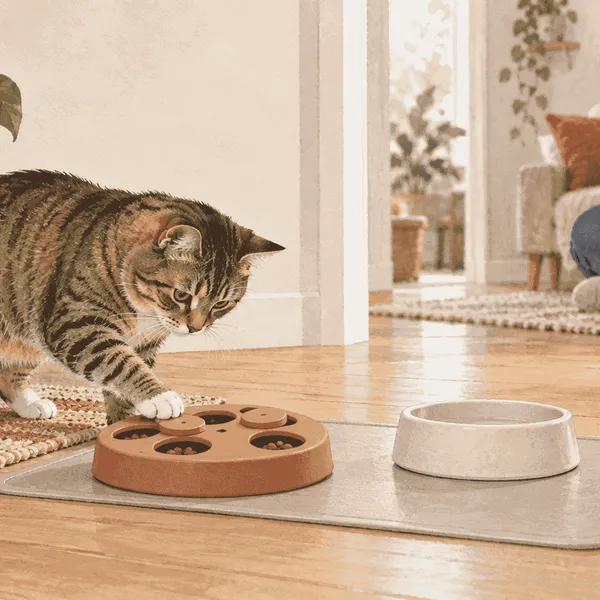
Food puzzles can also support foraging enrichment, but start with an easy route to food and preserve the familiar feeding option if the change unsettles your cat. The goal is choice and a successful first interaction, not making a cat work harder for every meal. Do not use enrichment as a substitute for professional help if the behavior changes suddenly or comes with illness signs.
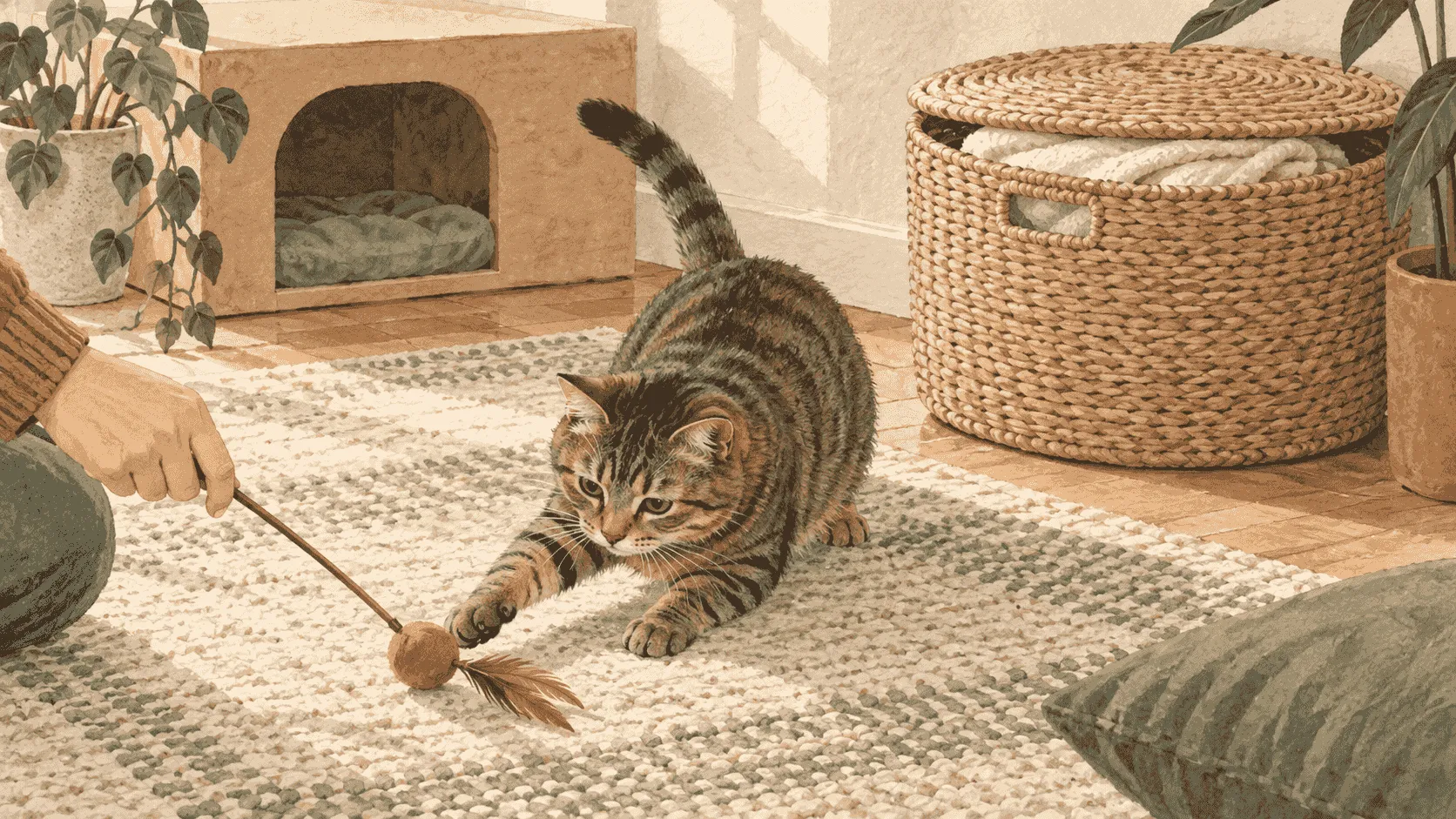
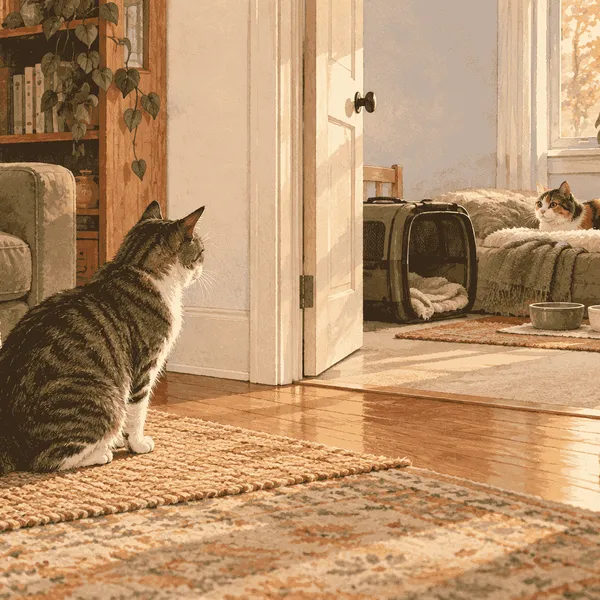
Keep the wider room usable too: a quiet retreat, separated key resources, predictable interaction, and play give the cat more than one place to settle. A blanket can be part of a comfortable routine without becoming the only available comfort. If the cat cannot leave, is repeatedly interrupted by people, or competes for food and resting space, the context is harder to read.
Know when the question becomes possible ingestion
If you saw swallowing, a meaningful piece is missing, or you cannot rule out ingestion, stop treating this as a blanket-preference puzzle. Keep the matching fabric or a clear photo if that is safe, record when contact happened, and contact your veterinarian for advice. Share whether the cat has vomited, eaten less, had diarrhea, seemed lethargic or uncomfortable, or shown a meaningful change in behavior.
VCA’s guidance on pica describes fabric among non-food materials that cats may ingest and explains why a veterinary history and examination matter. The cat plastic-chewing guide covers the same important boundary with a different material: licking or chewing is not automatically swallowing, but a missing piece should not be dismissed. Material, shape, amount, timing, and the cat’s condition all matter.
Do not induce vomiting, give a medication or laxative, force food, pull at anything caught in the mouth, or set a fixed “wait and see” period based on a symptom search. The absence of an immediate sign does not prove that a missing fiber is harmless, and a symptom list cannot diagnose an obstruction at home. A veterinarian can decide how urgent the next step is from the object details and the cat’s condition.
Use a three-lane plan
Sucking or licking, with no torn or missing fabric: put the blanket away when you cannot watch, record when the behavior returns, and offer a calm alternative such as play or an easy enrichment choice. If it becomes frequent, intense, difficult to interrupt, or unlike your cat’s usual pattern, share the record with a veterinarian.
Chewing, pulling, or visible fibers: remove access immediately and inspect the fabric for a missing piece. Do not keep presenting it to see whether the cat repeats the behavior. If swallowing is possible, contact a veterinarian with the item details.
Possible ingestion plus vomiting, reduced appetite, diarrhea, lethargy, discomfort, or marked behavior change: make this a prompt professional-assessment question. Call a veterinarian and explain what may have been swallowed, when, and what has changed. Do not try to identify or treat a foreign body at home.
The honest uncertainty is useful: veterinary sources describe a class of oral behaviors and the safety boundaries around them, not one universal reason every cat chooses fabric. Your next step is to separate mouth behavior from swallowing, make the blanket unavailable when supervision ends, and escalate the pattern when the fabric or the cat’s health has changed.
Sources
Petzette's claim cards for this article point to the following scientific, veterinary, or animal-welfare sources.
- Cat Fabric Sucking And Ingestion Boundary: Veterinary behavior and foreign-body guidance for cat fabric sucking, chewing, and possible ingestion
- AAFP/ISFM Feline Environmental Needs Guidelines 2013: Peer-reviewed veterinary guidelines plus client-facing practice resource
- Cat Food Puzzles JFMS 2016: Peer-reviewed clinical review