Health Signals08 October 2026
Cat Stopped Using the Litter Box? Check Health First
If your cat stopped using the litter box, check for urgent urinary signs, record the pattern, simplify setup, and call your veterinarian.
TextPetzette Editorial
Read5 Min
Evidence status
Source-backed editorial
- Evidence record
- 4 claim cards linked to 4 documented sources.
- Independent expert review
- Not commissioned. Petzette Editorial is responsible for the published wording.
- Source record checked
- 06 August 2026
- Scope
- General information, not an individual diagnosis or treatment plan.
If your cat stopped using the litter box, start with the change itself rather than assuming the cat is being difficult. A cat may be eliminating somewhere else, visiting the tray without producing much, or avoiding it because health, access, cleanliness, conflict, or another part of the setup has changed. Those possibilities need different next steps.
The first decision is health-first: confirm what you can, look for urinary warning signs, and call your veterinarian when the change is sudden, repeated, painful, bloody, unusually frequent, or urgent. A litter-box problem is not a character flaw or a reason to punish the cat.
Define What “Stopped Using” Means
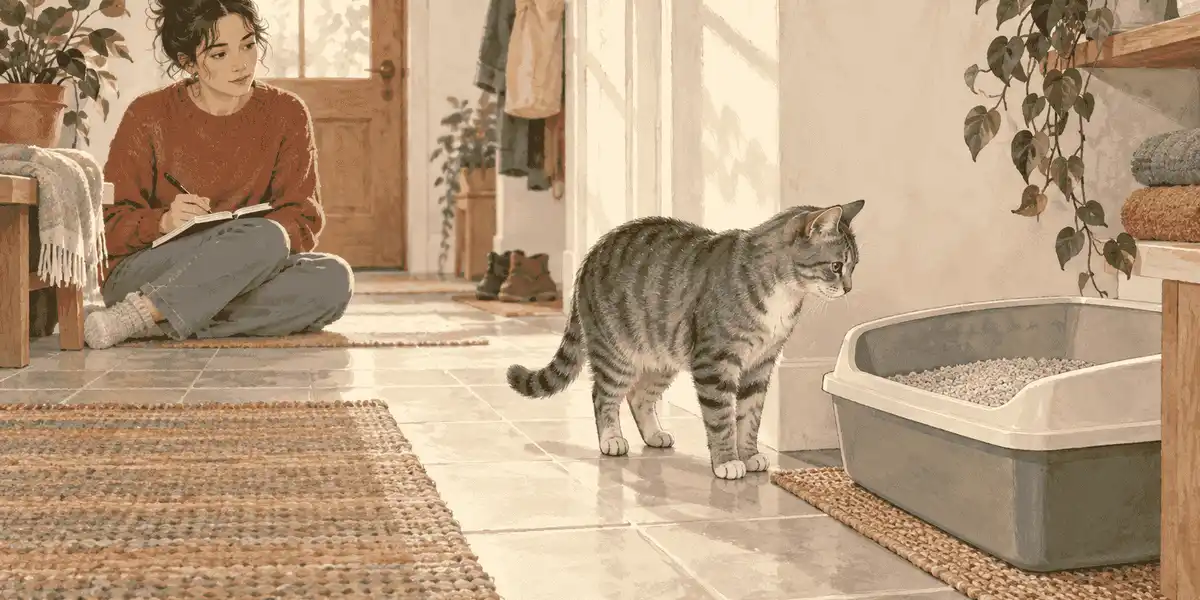
Begin with a literal record. Look at the litter area and the nearby rooms without chasing or cornering your cat. Note:
- the last time you definitely saw urine and stool;
- whether there is urine or stool outside the box;
- whether the cat approaches, enters, digs, strains, vocalizes, or leaves;
- how often the cat is returning to the tray; and
- any change in appetite, drinking, energy, hiding, movement, grooming, or social behavior.
This distinction matters. “I have not seen the cat use the box” is not the same as “the cat has produced no urine,” and neither observation identifies the cause. Cornell Feline Health Center guidance describes house-soiling as a problem with several possible medical, physical, social, and environmental contributors. A 2014 AAFP/ISFM house-soiling guideline summary also emphasizes that a litter-box miss is not spite or anger.
Keep the record neutral. “Two visits to the tray, no visible clump, then hiding under the bed” gives a veterinary team useful information. “The cat is refusing to cooperate” adds a motive that you cannot observe.
Treat Little or No Urine as an Emergency
Repeated straining, frequent litter-tray visits, or little or no urine needs immediate veterinary assessment. International Cat Care and Cornell both describe this pattern as a possible urinary obstruction concern that can deteriorate rapidly. The signs can overlap with other lower urinary tract problems and can even look like constipation, so do not try to diagnose the cause at home.
Call your veterinarian or the appropriate emergency service promptly if your cat is straining, crying while trying to urinate, producing only tiny amounts, showing blood, repeatedly returning to the tray, or becoming weak or distressed. A male cat may have a higher obstruction risk because of anatomy, but urinary difficulty is not safe to dismiss in any cat.
Do not press the abdomen, wait for a fixed number of hours, give medication, change the diet as an acute treatment, or attempt to unblock the cat. These signs require a professional assessment, not a home test. If you are unsure whether urine has been produced, say that plainly when you call.
Record the Whole Toileting Pattern
If you find urine or stool outside the box, record the location and appearance without turning it into a diagnosis. A short note can include:
- What was produced: urine, stool, both, or uncertain.
- Where it happened: beside the box, on a soft item, in a quiet corner, or somewhere else.
- What happened before: a household change, blocked route, new animal, different litter, cleaning change, or visible distress.
- What your cat did next: returned to the box, hid, ate, drank, groomed, rested, or showed another change.
Cornell notes that box type, litter, location, cleanliness, access, conflict, site preference, pain, and mobility can all be relevant. The list is a set of questions, not a checklist that proves one explanation. A cat can have a health problem and a setup problem at the same time.
Do not punish, shout, spray, or carry the cat to the tray. The AAFP/ISFM guidance frames house-soiling as a possible needs signal, not an act of revenge. Scolding can make the room harder to read and may add pressure around toileting.
Make the Box Easier to Use While You Call
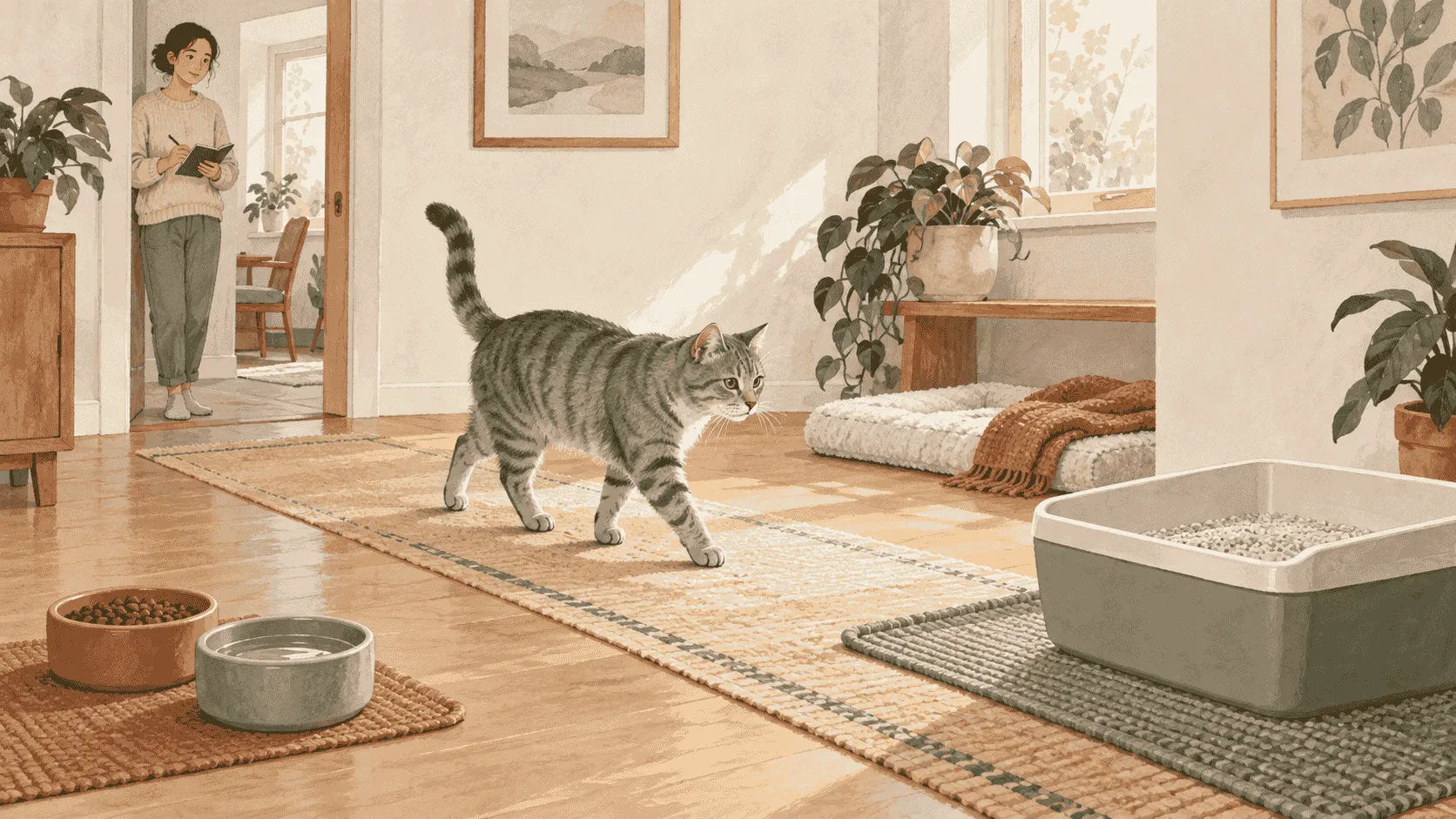
If your cat is otherwise comfortable and your veterinarian advises observation, make the immediate setup simple. Keep an open, clean, reachable box on an easy route. Separate it from food, water, and the main resting place, and prevent another pet from watching, blocking, or chasing the cat near the entrance.
Change one variable at a time. Replacing the box, litter, location, and cleaning routine together may leave you unable to tell what affected repeated use. The broader cat litter-box setup guide covers access, separated resources, multi-cat traffic, and format choices; this page stays with the narrower decision that begins after a recent change.
Cleanliness is one reasonable place to check, but cleaning is not a diagnosis. Cats Protection guidance recommends removing urine and feces from the tray twice daily, with more frequent attention for some cats, and fully emptying and washing the tray at least weekly. A covered tray may need more frequent cleaning because odors can collect inside. Use that as a starting routine, then watch the individual cat’s repeated use.
Do not keep making household changes to delay a veterinary call. If the cat is straining, painful, bloody, unusually frequent, or unable to pass urine, the setup experiment ends and professional care takes priority.
Know Which Existing Advice Fits Your Cat
Life stage changes the context. A newly arrived kitten may need a small base room, a reachable tray, and a record of the last confirmed output; the new kitten litter-box guide focuses on that first-arrival situation. An adult cat that used the box reliably and then stopped needs the temporal change taken seriously, even if the box still looks familiar.
For a routine cleaning question, the calm litter-box cleaning guide can help you build a manageable household rhythm. Neither routine advice nor a clean tray rules out illness when toileting changes suddenly. The useful boundary is to keep routine care and health assessment in the same picture without confusing one for the other.
Your Next Step
Check what you can confirm now: last urine, last stool, any output outside the box, and any straining or repeated visits. If little or no urine is being produced, call for immediate veterinary assessment. If the change is sudden, repeated, painful, bloody, or paired with another behavior or appetite change, contact your veterinarian even when the cat seems quiet.
Bring your notes, a photo of the setup if useful, the litter and box details, and the timing of any household change. Do not press the abdomen or try a home treatment while you wait for direction. Your job is to protect the cat, keep the observations accurate, and make the professional call easier—not to force a quick explanation from one missed tray.
Sources
Petzette's claim cards for this article point to the following scientific, veterinary, or animal-welfare sources.
- AAFP ISFM House Soiling Guidelines 2014: Veterinary guideline summary
- Cornell Cat House Soiling: Veterinary school owner education
- Cat Urinary Obstruction — iCatCare And Cornell Guidance: International feline welfare and clinical education guide plus veterinary-school health guidance
International Cat Care. Understanding urinary tract diseases and how to help cats at home: a guide for caregivers. 2025; Cornell Feline Health Center. Feline Lower Urinary Tract Disease.
- Cats Protection Litter-Tray Cleaning Guidance: Animal-welfare cat toileting guidance