Health Signals31 August 2026
Is Basil Toxic to Cats? Check the Plant Label
Is basil toxic to cats? Match the plant label, separate added products, and know when an exposure needs a veterinarian call.
TextPetzette Editorial
Read4 Min
Evidence status
Source-backed editorial
- Evidence record
- 3 claim cards linked to 3 documented sources.
- Independent expert review
- Not commissioned. Petzette Editorial is responsible for the published wording.
- Source record checked
- 31 August 2026
- Scope
- General information, not an individual diagnosis or treatment plan.
Is basil toxic to cats? If the label identifies Ocimum basilicum, the ASPCA Animal Poison Control Center lists that named plant as non-toxic to cats and dogs. The useful answer still has limits: “basil” may be an uncertain plant, part of a mixed container, or a word on a prepared food or garden product. Those are different questions.
This guide owns the named-plant and possible-exposure decision. For an unknown bouquet, several plants, or a wider list of household hazards, start with the plants toxic to cats and dogs owner checklist. It does not turn a basil classification into an edible label, an amount threshold, or a substitute for veterinary advice.
The Basil Answer Starts With the Botanical Name
The ASPCA entry headed “Basil” identifies Ocimum basilicum. It also lists Saint Joseph’s Wort, Thai Basil, and Sweet Basil as additional common names, and records the plant as non-toxic to cats and dogs. That is the answer for the plant the entry names—not for anything that happens to look similar.
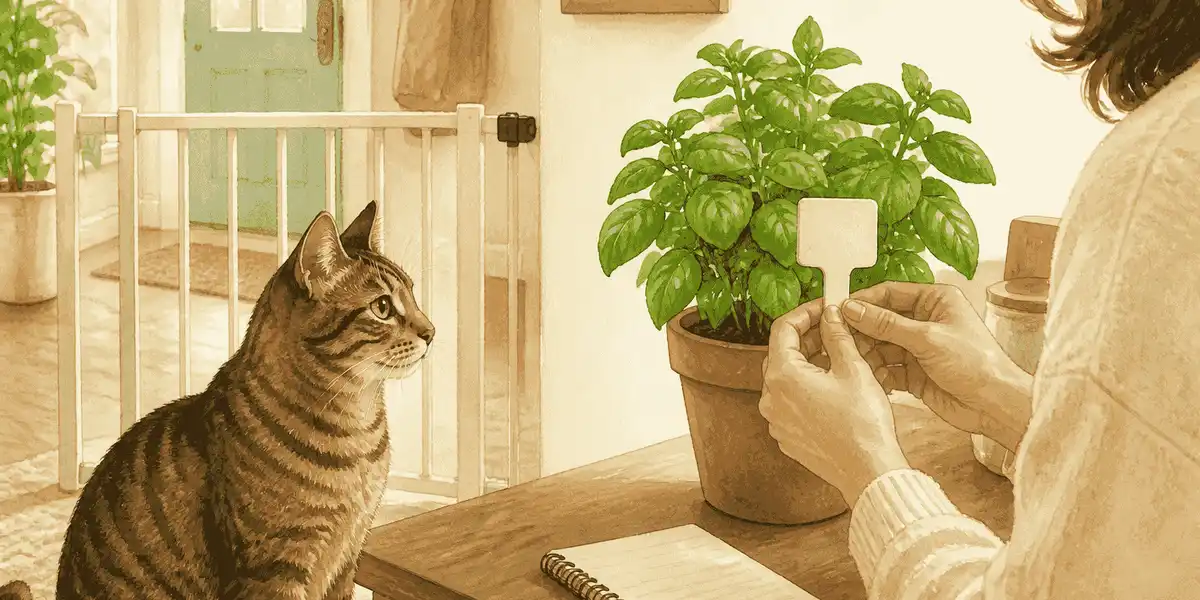
Check the nursery tag, pot label, seed packet, or another reliable record. A photograph can help a professional understand what you found, but a photo-only match does not establish the botanical identity. If the label is missing, write down that uncertainty rather than borrowing the answer from a familiar herb.
The distinction matters in a new-cat home because plants often arrive with other materials. A pot may have fertilizer, pesticide, soil treatment, or another plant nearby. A bouquet or arrangement may contain several species. Keep the basil classification separate from those additions when you decide what information to save and who to call.
Is Basil Toxic to Dogs, Too?
For the confirmed Ocimum basilicum entry, ASPCA lists basil as non-toxic to dogs as well as cats. The species difference therefore does not change the named-plant classification. It can still change the exposure record: note whether the cat or dog reached the plant, what part was disturbed, and what else was within reach.
“Non-toxic” is a poison-control category, not permission to offer plant material as a snack. ASPCA’s plant-database overview notes that eating plant material can be associated with vomiting or gastrointestinal upset in cats and dogs. If an animal becomes unwell, the classification does not explain the cause or tell you to wait.
Separate Fresh Basil From Oils and Dishes
Before you interpret the word basil, sort the material into the thing that was actually accessible:
- Named plant: a potted or garden plant that can be matched to Ocimum basilicum.
- Prepared food: pesto, sauce, seasoning, leftovers, or another dish with basil among its ingredients.
- Added product: fertilizer, pesticide, potting material, flower food, or a cleaning product used around the plant.
- Concentrated or manufactured item: an oil, extract, supplement, or product that uses “basil” in its name.
The ASPCA basil entry does not classify those other materials. Do not assume that a reassuring plant listing answers a question about a mixed dish or concentrated product. If you are unsure what was swallowed, keep the package, ingredient panel, or plant label available and describe the uncertainty when you call. The cat food and human-food safety guide covers the separate decision about sharing household food.
Make a Five-Part Basil Exposure Record
If your cat or dog may have chewed basil, make one short note before details disappear:
- Identity: record “basil,” Ocimum basilicum, any alternate name, and what remains uncertain.
- Material: say whether it was a leaf, stem, potted plant, prepared food, oil, or another product.
- What happened: note chewing, swallowing, contact, or an unknown route; include the plant part and possible amount without inventing precision.
- Time: write down when it happened or the best estimate.
- The animal now: include species, age, approximate weight, current signs, and relevant health information.

This record keeps the named-plant answer from swallowing the rest of the exposure. “Unknown” is useful information for a veterinarian or animal poison-control professional; a confident guess can point the call in the wrong direction.
When a Basil Exposure Needs a Veterinarian
Contact your veterinarian or an animal poison-control service when the plant identity is uncertain, another product may be involved, the possible exposure is more than you can describe confidently, or your cat or dog is unwell. Do not wait for a perfect label photograph or a complete timeline if the animal is changing.
The American Veterinary Medical Association’s pet first-aid guidance says to keep the product information and not induce vomiting or give medication unless a veterinarian or poison-control professional directs it. This article cannot choose a home treatment, give a safe amount, or predict what will happen to one animal.
If the plant is confidently matched to Ocimum basilicum, no other material is involved, and the pet remains comfortable, remove access, keep the label, and observe the whole animal. That is a bounded use of the classification—not a promise that eating plant material will cause no stomach upset.
Keep the Kitchen Question Narrow
Before a new cat arrives, save a photo of the basil label with the household plant list and keep garden or kitchen products identifiable in their original packaging. The goal is not to memorize a universal plant list. It is to make the next decision clearer: confirm the named plant, separate added materials, record what happened, and ask a veterinarian when the identity or the animal leaves doubt.
For confirmed Ocimum basilicum, the ASPCA answer is reassuring for cats and dogs. The safer owner habit is still precise rather than casual: let the label answer only the plant question, and let a veterinary professional assess an uncertain exposure or an unwell pet.
Sources
Petzette's claim cards for this article point to the following scientific, veterinary, or animal-welfare sources.
- ASPCA Basil Plant Classification: Animal poison-control plant database and public safety guidance
- Spider Plant Poison-Control Classification And Name Check: Animal poison-control databases and veterinary manual guidance
- AVMA Pet First Aid: Poison Response Boundary: Veterinary-association first-aid brochure