Health Signals13 September 2026
Is Eucalyptus Toxic to Cats? Check the Plant and Product
Is eucalyptus toxic to cats? Learn what ASPCA's named Eucalyptus entry says, how to separate plants from oils, and when to call a veterinarian.
TextPetzette Editorial
Read5 Min

Evidence status
Source-backed editorial
- Evidence record
- 2 claim cards linked to 2 documented sources.
- Independent expert review
- Not commissioned. Petzette Editorial is responsible for the published wording.
- Source record checked
- 13 September 2026
- Scope
- General information, not an individual diagnosis or treatment plan.
Is eucalyptus toxic to cats? For the named plant record, ASPCA lists Eucalyptus species as toxic to cats and dogs. Its entry identifies essential oils, including eucalyptol, as the toxic principle and lists salivation, vomiting, diarrhea, depression, and weakness among possible clinical signs. That gives you a useful starting point, but it does not diagnose what happened to one cat or tell you how much exposure is safe.
The practical decision is to identify the thing your cat may have reached, note what changed, and contact a veterinarian or animal poison-control service for individual direction if exposure is possible. A plant name, an essential-oil bottle, and a scented household product can look like one question while requiring different details on a call.
Start With the Plant Name, Not the Scent
“Eucalyptus” is the name used in ASPCA’s plant entry, which gives the scientific grouping Eucalyptus species and places it in the Myrtaceae family. If you are looking at a potted plant, start with the nursery tag, delivery record, or other label attached to that specimen. The smell alone cannot identify a plant, and a photograph of a leaf may not settle the question when several plants or cut stems are nearby.
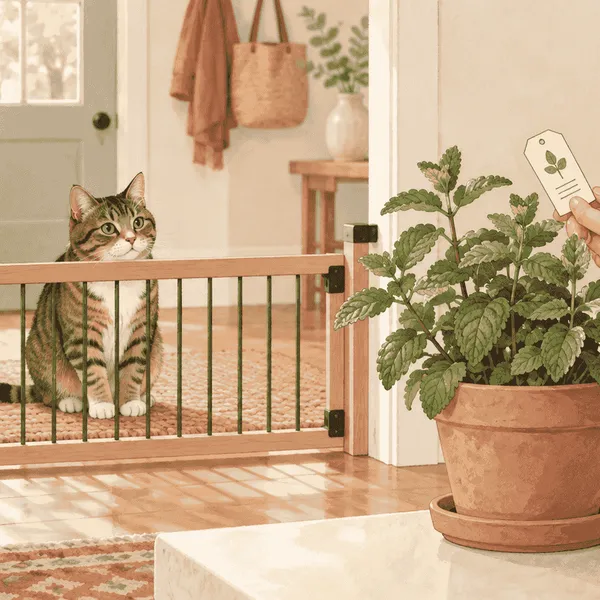
Take a clear picture of the whole plant, its pot, and its label. Keep a note of whether it was a live plant, a cut branch, dried material, or something sold with a decorative or scented purpose. If the label is missing, write “plant identity unknown” rather than filling the gap with a guess. The plant-exposure owner checklist can help you collect those details without turning an uncertain name into a confident answer.
Keep the Plant and the Bottle in Separate Lanes
ASPCA’s Eucalyptus record names essential oils, including eucalyptol, in its toxic-principle information. That is a reason to keep the plant question and the product question side by side, not to treat them as interchangeable. A cat near a potted plant, a diffuser, a concentrated oil, a room spray, and a cleaning product may have had different kinds of access.
Read the product label and keep the container or a photo of its ingredients. Record whether the bottle was open, whether liquid may have reached fur or paws, and whether a diffuser or spray was operating. Do not use a plant webpage as a substitute for product-specific guidance. If the item is a blend or the word eucalyptus appears only in marketing copy, the veterinarian or poison-control professional needs the actual packaging and the cat’s route of access.
This is also why a general “pet-safe plant” list cannot clear an unknown product in the same room. The mint plant identity guide uses the same naming habit: match the safety question to the exact plant or item in front of you.
Read the Clinical-Sign List as a Reason to Call
The ASPCA entry lists salivation, vomiting, diarrhea, depression, and weakness as clinical signs associated with eucalyptus exposure. Those words are a prompt to describe what you see, not a diagnosis. Drooling or vomiting can have more than one cause, and an apparently quiet cat does not establish that an uncertain exposure is harmless.
Write down the time you noticed access, the form of the material, and any change in appetite, movement, breathing, alertness, or toileting. Use plain observations: “drool on the chin,” “vomited once,” or “sleepier than usual,” rather than trying to name the cause. If signs are sudden, concerning, or progressing, contact your veterinarian promptly. If your regular clinic is unavailable, an animal poison-control service can help route the exposure information.
Do not wait for a perfect plant identification before asking what to do when a cat may have swallowed plant material or contacted a concentrated product. The useful question for a professional is not only “Is eucalyptus toxic?” but also “What exactly was it, how could the cat reach it, and what am I seeing now?”
If Your Cat May Have Reached Eucalyptus
Move the cat away from the plant or product calmly and keep other pets out of the area. Preserve the pot label, product packaging, or a clear photo. Do not throw away chewed material if it can be kept safely for identification, but avoid handling a leaking or concentrated product with bare hands.
During the call, share:
- the exact plant or product name, including a botanical name if the label provides one;
- the form of the material, such as live plant, cut stem, dried arrangement, oil, spray, or diffuser liquid;
- whether the cat chewed, swallowed, touched, inhaled nearby, or may have had material on its fur or paws;
- the approximate time you noticed access and what appears to be missing, without inventing an amount; and
- the cat’s age, relevant health context, current signs, and whether anything has already been offered or applied.
If you cannot answer one of those points, say that it is unknown. Unknown is useful information when a professional is deciding what detail to ask for next.
Choose the Call Before the Home Fix
Avoid inducing vomiting, giving medication, or applying a home remedy unless a veterinarian or animal poison-control professional specifically directs it. A home intervention can add another exposure or make later assessment harder. Keep the cat in a quiet, observable space while you seek advice, and follow the instructions given for that individual situation.
Seek urgent veterinary help for a cat that is struggling to breathe, collapsing, having a seizure, or showing a rapidly worsening condition. Those observations matter more than trying to prove the plant identity from memory. If the cat seems normal but you know or reasonably suspect access to eucalyptus or a concentrated eucalyptus product, still make the call promptly so the professional can use the timing and packaging details.

Make Eucalyptus Less Reachable Before the Cat Arrives
Place live eucalyptus, cut stems, dried arrangements, and related products where a curious cat cannot pull them down or brush against them. Keep oils, diffusers, sprays, and cleaning products closed and stored separately from plant-care supplies. A high shelf is not a dependable plan if the cat can climb to it, so check the route as well as the final position.
Before bringing a new plant into a cat’s rooms, photograph the tag and save the product or delivery information. If the plant is shared with a household, tell everyone which item has been identified and which one is still uncertain. This small record can turn a stressful late-night question into a clearer conversation with a veterinarian.
The Bounded Answer
ASPCA lists Eucalyptus species as toxic to cats and dogs and names essential oils, including eucalyptol, among the toxic principles. Its clinical-sign list includes salivation, vomiting, diarrhea, depression, and weakness. The responsible next step is not to diagnose from that list or search for a home treatment: identify the plant or product, preserve the label, describe the cat’s access and current condition, and contact a veterinarian or animal poison-control service when exposure is possible.
Sources
Petzette's claim cards for this article point to the following scientific, veterinary, or animal-welfare sources.
- ASPCA Eucalyptus Plant Classification: Animal poison-control plant database and public safety guidance
- AVMA Pet First Aid: Poison Response Boundary: Veterinary-association first-aid brochure