Health Signals16 September 2026
Are Daffodils Toxic to Cats? Check the Bulb and Label
Are daffodils toxic to cats? Match Narcissus to the label, record the plant part and timing, and call a veterinarian before home treatment.
TextPetzette Editorial
Read4 Min
Evidence status
Source-backed editorial
- Evidence record
- 2 claim cards linked to 2 documented sources.
- Independent expert review
- Not commissioned. Petzette Editorial is responsible for the published wording.
- Source record checked
- 16 September 2026
- Scope
- General information, not an individual diagnosis or treatment plan.
Are daffodils toxic to cats? For the named Daffodil entry, the ASPCA Animal Poison Control Center says yes: it lists Narcissus spp. as toxic to cats and dogs. The useful first-year decision is not to turn that listing into a home dose calculation. Match the plant, note what may have happened, and call a veterinarian or animal poison-control service after a possible exposure.
This is a narrow named-plant guide. For a wider home scan, start with the plants toxic to cats and dogs owner’s checklist. It helps keep one plant classification from being applied to every spring bulb, mixed arrangement, or garden product.
Daffodil Is a Name to Match, Not a Guess
ASPCA’s entry identifies Daffodil as Narcissus spp. in the Amaryllidaceae family. It also lists Narcissus, Jonquil, and Paper White as additional common names. Those names are useful clues, but a familiar word or a quick photograph is not a complete identification for an unknown plant.
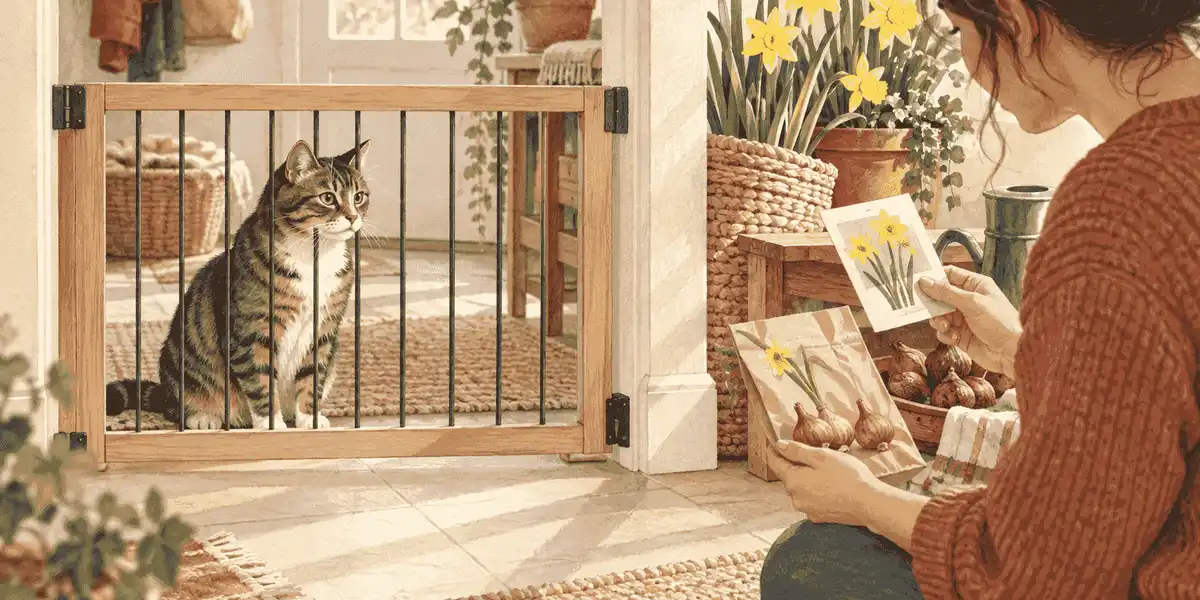
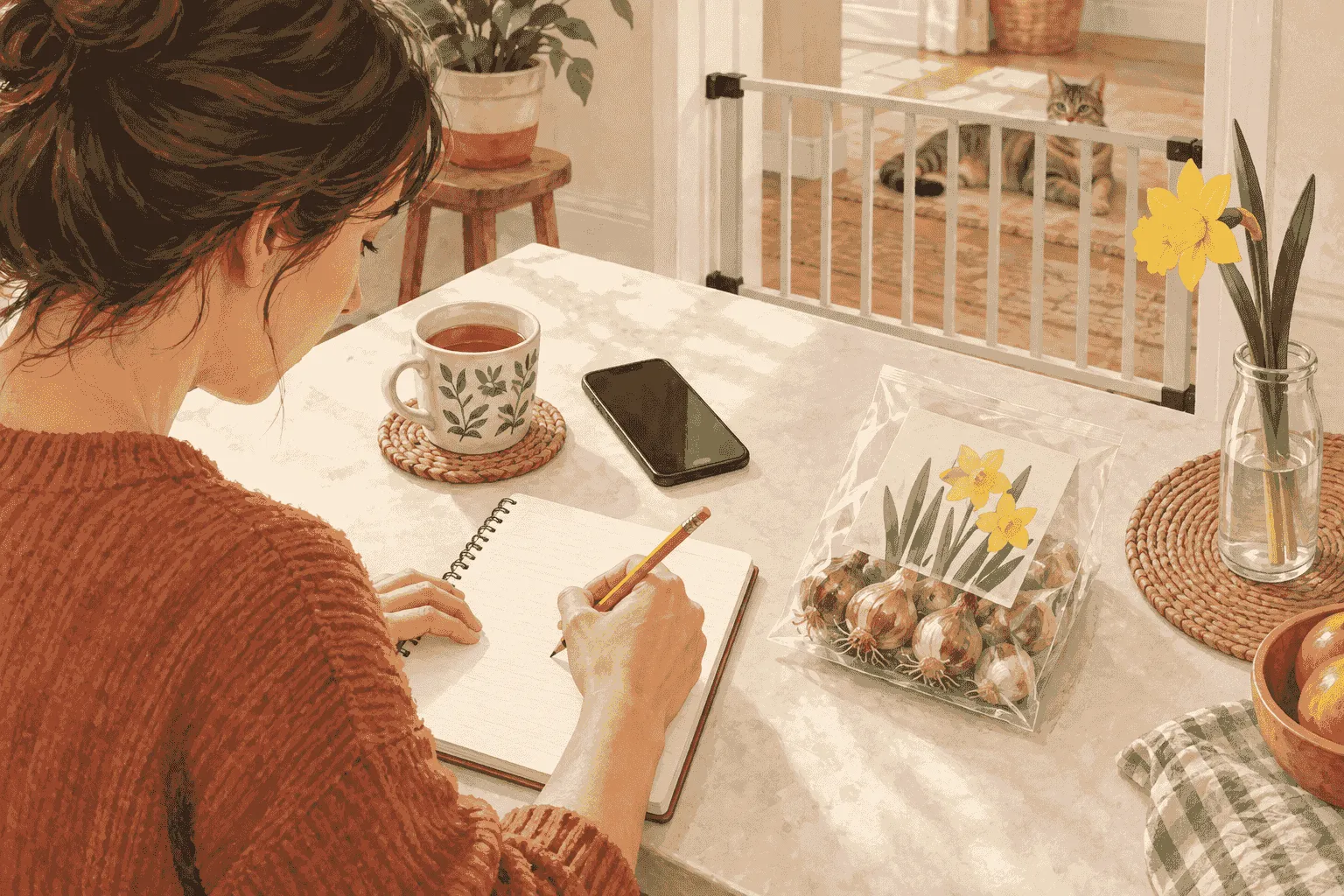
Look for a nursery label, bulb packet, florist sleeve, or purchase record. Save the label rather than relying on memory. A mixed planter or bouquet may contain another plant, flower food, fertilizer, pesticide, or decorative material, so the daffodil entry does not automatically classify everything that was within reach.
The exact-name step is also why this page does not treat “spring flower” as a safety category. The tulip exposure guide covers a different named bulb and shows how the plant part can change the call note.
Why the Bulb Changes the Exposure Record
The ASPCA Daffodil entry names lycorine and other alkaloids as toxic principles and notes that bulbs are the most poisonous part. That detail makes a loose bulb, planting bag, or freshly dug garden patch important history for a professional. It does not create a safe amount for the flower, leaf, stem, or bulb, and it does not predict what will happen to one cat.
The entry lists vomiting, salivation, and diarrhea among possible clinical signs. It also notes that large ingestions can involve more serious signs such as convulsions, low blood pressure, tremors, or cardiac arrhythmias. A sign list cannot prove that a daffodil caused a change, tell you how much was swallowed, or provide a waiting rule. If your cat seems unwell after a possible exposure, include that change in the call rather than trying to interpret it at home.
Keep the Exposure Note Factual
If your cat may have chewed or swallowed a daffodil, write down what you know without delaying professional advice:
- the name on the label, or that the plant is unknown;
- the plant part involved, such as bulb, flower, leaf, or an uncertain mixture;
- what may be missing and when the exposure may have happened;
- whether fertilizer, pesticide, vase water, or another plant was nearby; and
- your cat’s current appetite, energy, behavior, breathing, and digestive changes.
Use “unknown” when the amount or timing is unclear. A short record is more useful than a confident estimate made from a missing piece of bulb or a photograph. Keep the packet, label, packaging, and a clear picture available for the veterinarian or poison-control professional.
Choose the Call Before the Home Remedy
Move the remaining plant and loose pieces out of reach if you can do so safely. Then contact your veterinarian or an animal poison-control service promptly after a possible ingestion. A cat that looks normal does not turn an uncertain plant, amount, or timing into a confirmed safe exposure.
The American Veterinary Medical Association’s pet first-aid guidance supports keeping the product information available and not inducing vomiting or giving medication unless a veterinarian or poison-control professional directs it. Do not give milk, use a household remedy, or borrow advice from another plant’s page. This article cannot choose treatment for the individual cat.
Seek urgent veterinary help if your cat is having trouble breathing, is not staying responsive, or is showing a severe or rapidly worsening change. The job at home is to preserve the facts and reduce further access; the veterinary team decides how the exposure should be assessed.
Put Spring-Bulb Labels on the New-Cat Checklist
Before a new cat arrives, walk through windowsills, counters, balconies, storage areas, and garden doors. Keep bulbs in a closed, inaccessible container, store garden products in their original labeled packaging, and do not leave a cut arrangement where a cat can pull it down. Photograph plant labels while they are easy to read and save your veterinarian’s and local poison-control contact details.
That small preparation does not make a future exposure predictable. It shortens the path from “something was chewed” to a professional who can interpret the exact plant, part, timing, amount, and current condition together.
The practical answer to “are daffodils toxic to cats?” is precise: ASPCA lists confirmed Daffodil, Narcissus spp., as toxic to cats and dogs, with bulbs the most poisonous part. Match the label, record the exposure, and call before trying to treat at home.
Sources
Petzette's claim cards for this article point to the following scientific, veterinary, or animal-welfare sources.
- AVMA Pet First Aid: Poison Response Boundary: Veterinary-association first-aid brochure
- ASPCA Daffodil Plant Classification: Animal poison-control plant-database record and public exposure guidance
ASPCA Animal Poison Control Center. *Toxic and Non-toxic Plants*: “Daffodil” (*Narcissus* spp.). Accessed 2026-09-16.