Health Signals12 September 2026
Are Succulents Toxic to Cats? Check the Exact Variety
Are succulents toxic to cats? Learn why the category is not one answer, how to check the plant label, and when to call your veterinarian.
TextPetzette Editorial
Read5 Min
Evidence status
Source-backed editorial
- Evidence record
- 4 claim cards linked to 3 documented sources.
- Independent expert review
- Not commissioned. Petzette Editorial is responsible for the published wording.
- Source record checked
- 12 September 2026
- Scope
- General information, not an individual diagnosis or treatment plan.
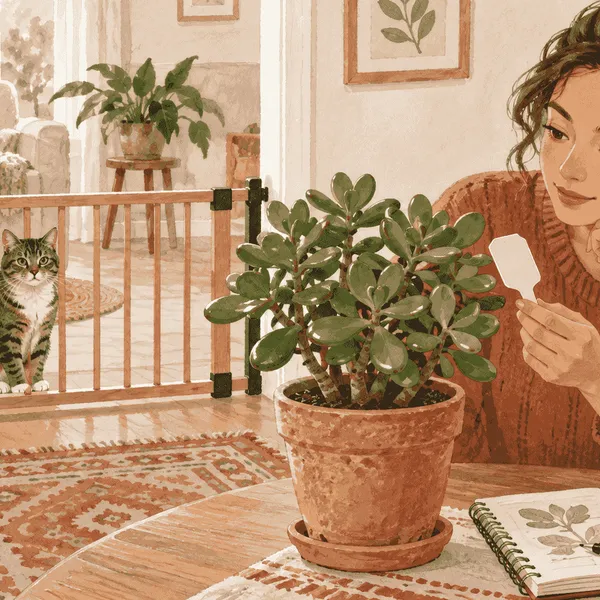
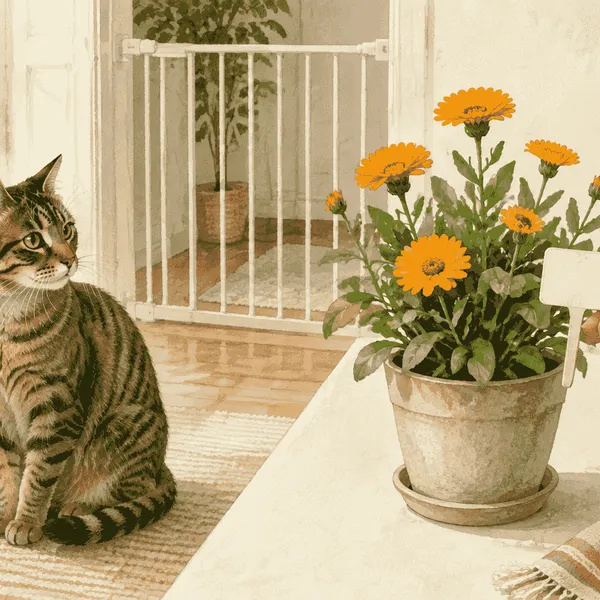
Are succulents toxic to cats? Sometimes, but “succulent” is not one plant and does not produce one safety answer. Pet Poison Helpline names Haworthia, Peperomia, and Burro’s tail among non-toxic succulent examples while warning that Kalanchoe can be very toxic. The practical decision is therefore not to trust the shape of a fleshy leaf. It is to identify the exact plant, separate it from added products, and make a professional call if chewing or swallowing may have happened.
If you are deciding whether to bring one home, keep the nursery label, receipt, or botanical name before the pot reaches a cat’s room. If a plant has already been disturbed, the plant-exposure owner checklist gives you a broader record to make before you call.
“Succulent” Is a Category, Not a Classification
Succulent describes a broad group of plants with water-storing features. It does not identify a single species, genus, or poison-control entry. That is why two plants sold beside each other as succulents can lead to different decisions for a cat.
Pet Poison Helpline’s plant guidance makes this distinction directly: some succulent examples, including Haworthia, Peperomia, and Burro’s tail, are described as non-toxic to pets, while Kalanchoe is identified as a plant that can be very toxic. The guidance recommends thorough research and identification before bringing a succulent into a home with animals.
Treat a shop category, social-media label, or photo match as a clue rather than proof. A common name can cover more than one plant, and a mixed planter may contain a second species that the front label does not describe. The word “succulent” is not enough information to decide that a pot can stay within reach.
Read the Nursery Label as Evidence
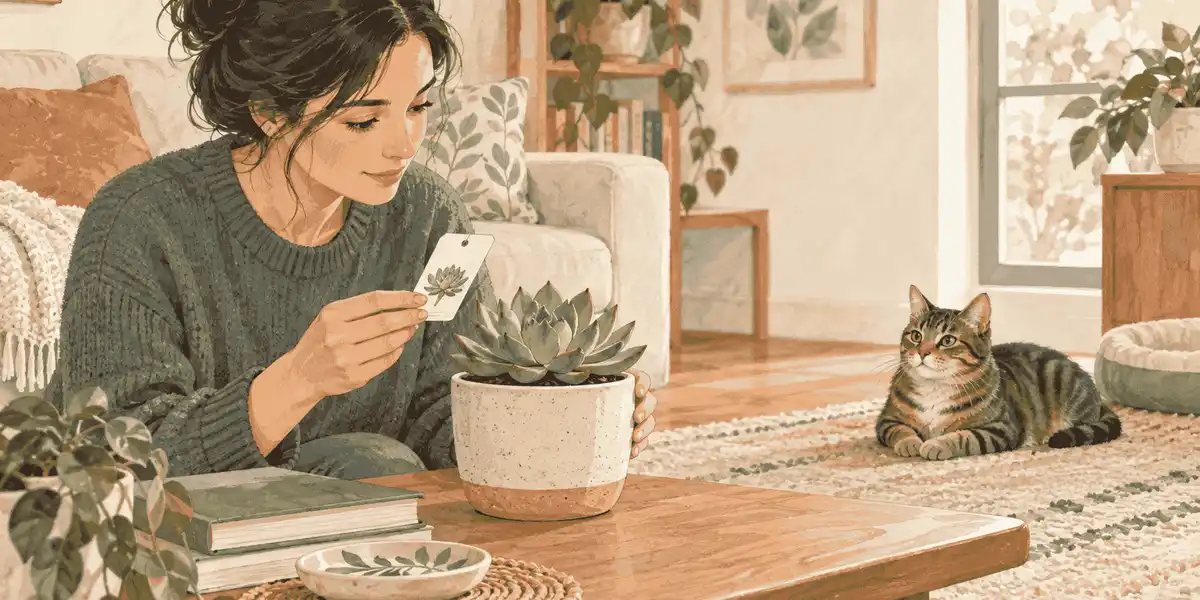
Start with the most specific record you have: botanical name, nursery tag, delivery listing, receipt, or the name from the person who gave you the plant. Save a photo of the whole plant and its label together. If the label is missing, keep the photo but tell a veterinarian or animal poison-control professional that the identity is uncertain.
An exact name can connect the plant to a named database entry. For example, ASPCA’s Little Zebra Plant entry identifies Haworthia subfasciata and lists that named plant as non-toxic to cats and dogs. That is useful information about the entry it names; it is not permission to extend the result to every striped, spiky, or fleshy plant that looks similar.
The same discipline applies to what surrounds the plant. A classification for the plant does not identify fertilizer, pesticide, potting mix, decorative stones, a mixed container, or an essential-oil product. Move those details into the exposure record rather than blending them into a guessed answer.
Why Kalanchoe Changes the Decision
If the plant can be matched to ASPCA’s Kalanchoe spp. entry, ASPCA lists the named plant as toxic to cats and dogs. It identifies bufodienolides as the toxic principle and lists vomiting, diarrhea, and abnormal heart rhythm among possible clinical signs, describing abnormal heart rhythm as rare.
That information changes the next step, but it does not diagnose an individual cat. A sign on a database page is not proof that the plant caused the sign, and the absence of a sign does not identify the plant or establish a safe amount. Do not borrow the Kalanchoe result for an unknown succulent, and do not assume every plant in the Crassulaceae family has the same public-facing answer without matching the relevant entry.
If you are unsure whether the plant is Kalanchoe, say exactly that. Keep the pot, label, packaging, and a clear photo available. The uncertainty is part of the history a professional needs.
When a Non-Toxic Listing Still Needs Context
A named non-toxic listing can be reassuring about that plant’s poison-control classification, but it is not an edible label. The existing ASPCA and veterinary guidance in this series notes that eating plant material can still coincide with vomiting or gastrointestinal upset. A cat can also encounter a product in the pot, another plant in the container, or a physical hazard that the plant database does not assess.
So the useful question is not “Can my cat eat this succulent?” It is “What is this exact plant, what might my cat have contacted, and how is my cat now?” Even a plant listed as non-toxic should be moved out of reach if the cat keeps chewing it. Do not use the classification to dismiss current changes, promise that any amount is safe, or plan to offer the plant as enrichment.
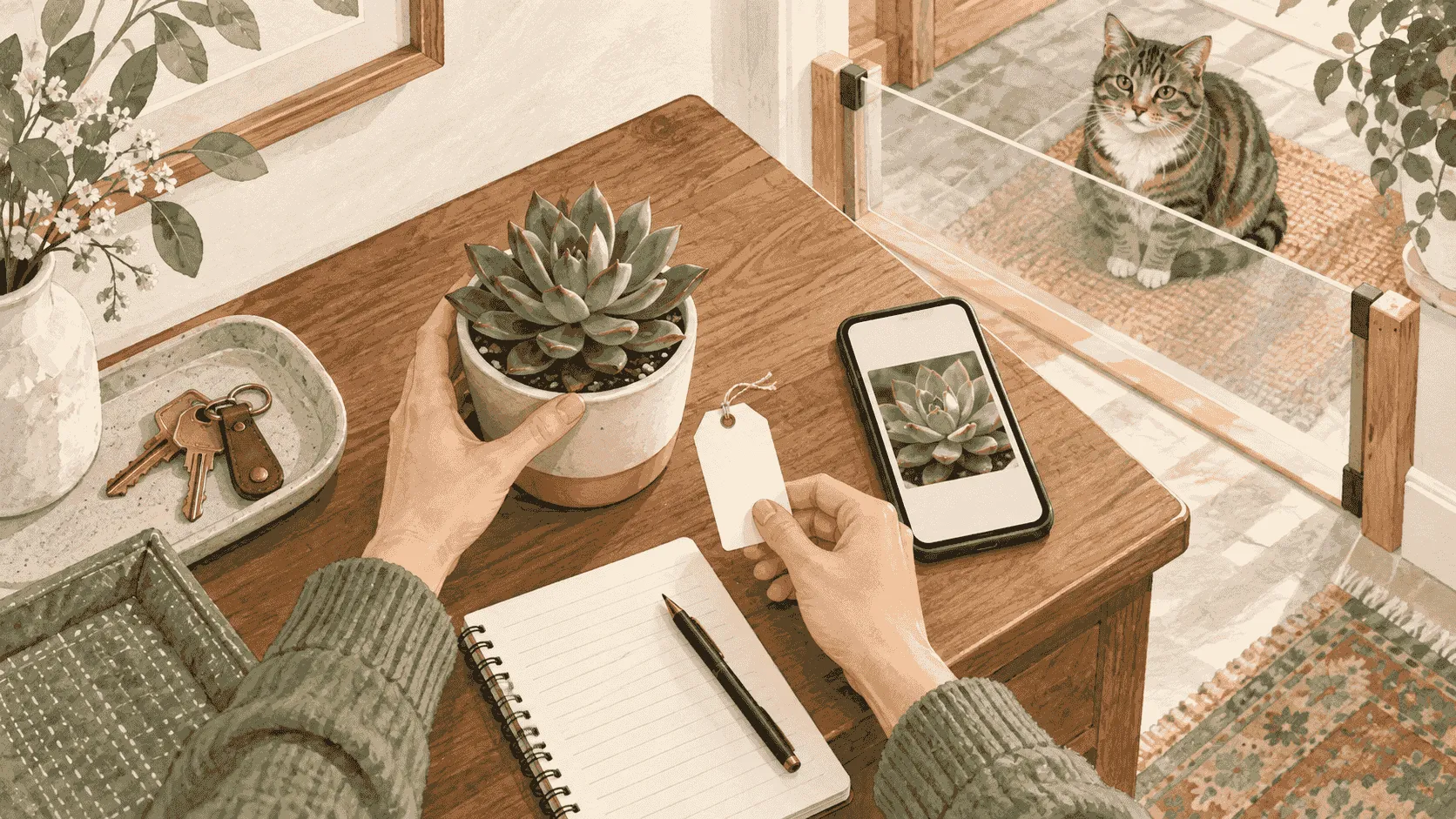
Build a Cat-Succulent Exposure Note
If the pot has been pulled down or a leaf is missing, write a short factual note before memory fills in the gaps:
- the exact plant name, if known, plus the label or a photo;
- whether the cat chewed, swallowed, brushed against, or only approached the plant;
- which part may be missing and the possible time of access;
- any current change you have noticed; and
- the plant, pot, packaging, and any products used nearby.
Do not invent an exact amount from a torn leaf or a brief glimpse. “Unknown” is more useful than false precision. If another person owns the plant, ask them for the receipt, delivery page, or original label rather than relying on a shared common name.
Call Before You Try a Home Fix
After a possible exposure, contact your veterinarian or an animal poison-control service with the plant identity, amount and timing as far as you know, and your cat’s current condition. Call promptly when the plant is unknown, a toxic named plant may be involved, the material or amount is uncertain, or your cat is unwell.
American Veterinary Medical Association first-aid guidance advises against inducing vomiting or giving medication unless a veterinarian or animal poison-control professional directs it. Do not use an online dose, household remedy, milk, oil, or another plant’s advice as a substitute for individual direction. A general succulent list cannot decide whether your cat needs monitoring, an examination, or treatment.
Set Up the Room Before the Cat Arrives
Prevention is easier when identification happens before curiosity does. Photograph each plant with its label, save botanical names in one household note, and place pots where climbing, pulling, and fallen leaves are outside the cat’s reach. Keep plant-care products in closed storage and do not let a mixed planter inherit the safety classification of only one labeled species.
If a cat tree or window perch makes a plant newly reachable, review the room again; the cat-tree setup guide can help with placement and stable access. The money-tree name check shows the same core lesson from another plant: a familiar common name can hide a different botanical answer.
The bottom line: some succulents are listed non-toxic and others, such as named Kalanchoe spp., are listed toxic. “Succulent” alone is not enough. Check the exact variety, keep non-toxic from becoming “edible,” and call a veterinarian or poison-control professional before trying a home treatment when exposure or identity is uncertain.
Sources
Petzette's claim cards for this article point to the following scientific, veterinary, or animal-welfare sources.
- Succulent Category Needs Exact Plant Identification: Animal poison-control guidance and named-plant database entries
- Spider Plant Poison-Control Classification And Name Check: Animal poison-control databases and veterinary manual guidance
- AVMA Pet First Aid: Poison Response Boundary: Veterinary-association first-aid brochure