Behavior21 July 2026
New Kitten Hissing at Your Dog? Reset the Introduction
New kitten hissing at your dog? Learn when to add distance, reset the introduction, prevent chasing, and seek qualified behavior help.
TextPetzette Editorial
Read3 Min
Evidence status
Source-backed editorial
- Evidence record
- 4 claim cards linked to 1 documented source.
- Independent expert review
- Not commissioned. Petzette Editorial is responsible for the published wording.
- Source record checked
- 21 July 2026
- Scope
- General guidance. Individual animals and circumstances can differ.
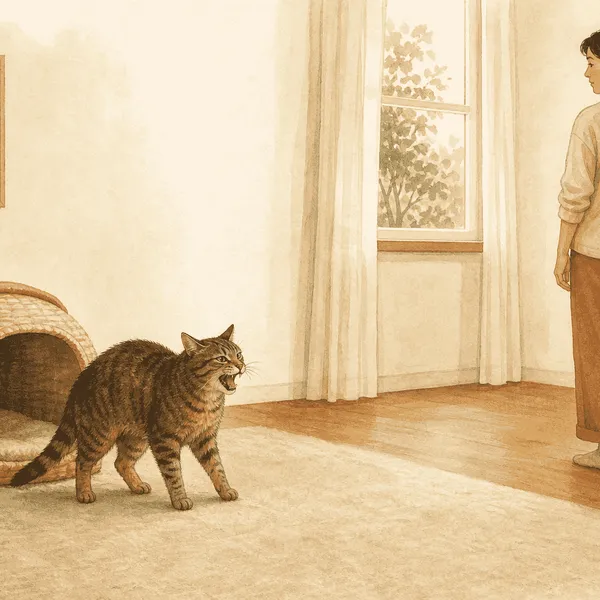
A new kitten hissing at your dog is giving you useful information: this meeting is too close, too fast, or too difficult right now. It does not prove that the kitten hates the dog or that they can never share a home. Your next decision is simpler—add distance and return to the last introduction stage where both animals were comfortable.
New Kitten Hissing at Dog: Treat It as a Pause
Cats Protection lists hissing among signs that a kitten may be unhappy. In a dog introduction, that makes the hiss a practical cue to pause, not a behavior to punish or ignore.
Do not hold the kitten closer for another sniff. Do not let the dog follow if the kitten tries to leave. Calmly guide the dog away, restore the barrier or closed door, and give the kitten access to their dog-free room. Hissing alone cannot tell you whether the kitten is frightened, in pain, or likely to accept this dog later. Read it in the immediate setup: the distance, the dog’s movement, and whether the kitten had a real exit.
If the hissing is sudden outside this introduction context, or comes with another health or behavior change, ask your veterinarian rather than assuming the dog explains it.
Reset the Introduction in Four Stages
Cats Protection and Blue Cross guidance both favor gradual, controlled introductions. Use this sequence as a decision ladder rather than a calendar:
- Separate spaces: Give the kitten a quiet room the dog cannot enter, with the kitten’s essentials and places to hide or get up high. The broader first-week kitten home setup can help you make that base room usable.
- Scent first: Exchange bedding or soft cloths carrying each animal’s scent. They can investigate—or ignore—the new smell without sharing space.
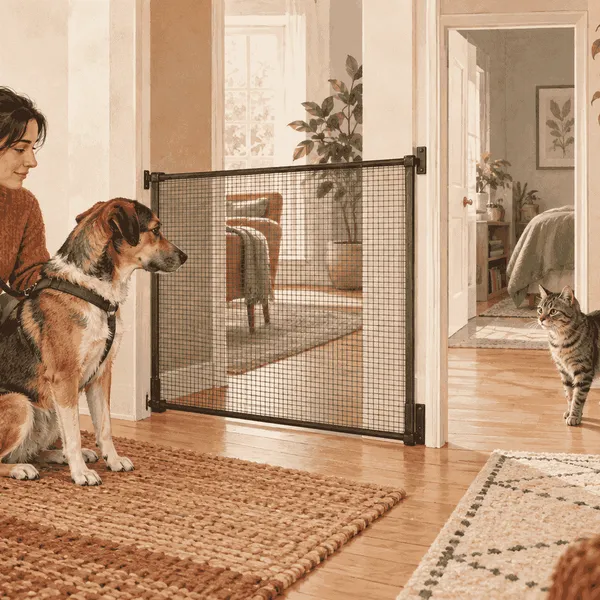
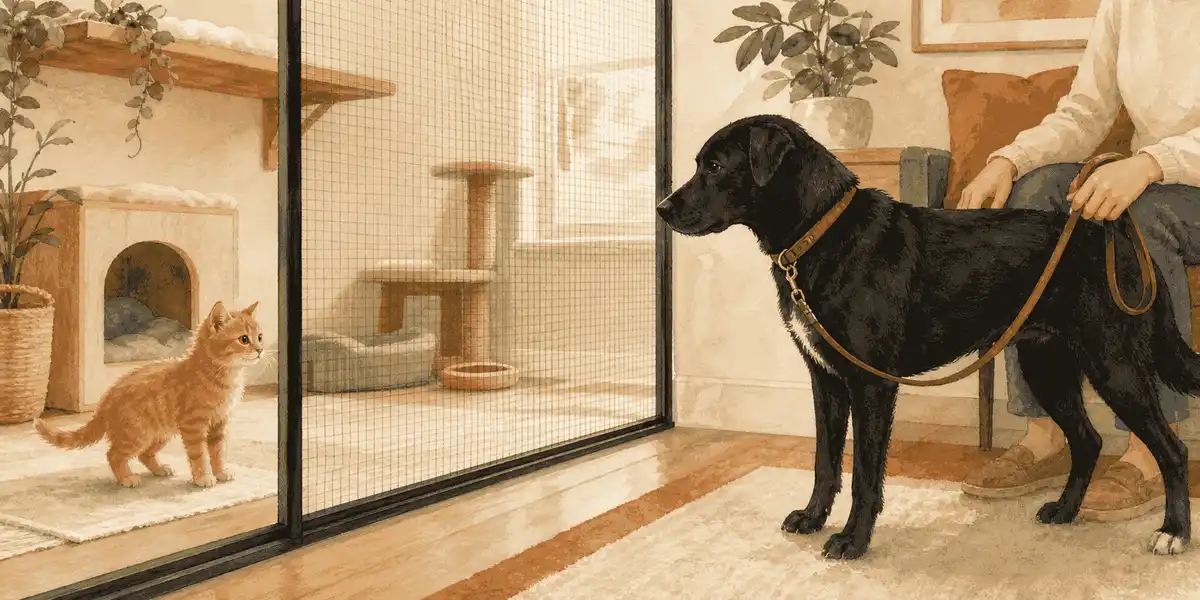
- Secure visual contact: Let them see one another through a setup that truly contains this kitten and this dog. Ordinary gate gaps may be wide enough for a small kitten, so test the barrier before the animals meet.
- Brief closer contact: Only move closer while the dog can remain calmly controlled and the kitten can choose to leave. End while the scene is still uneventful.
There is no universal number of days for any stage. A hiss means you move back; it does not mean you repeat the same difficult meeting until the kitten stops objecting.
Give the Kitten an Exit and the Dog a Boundary
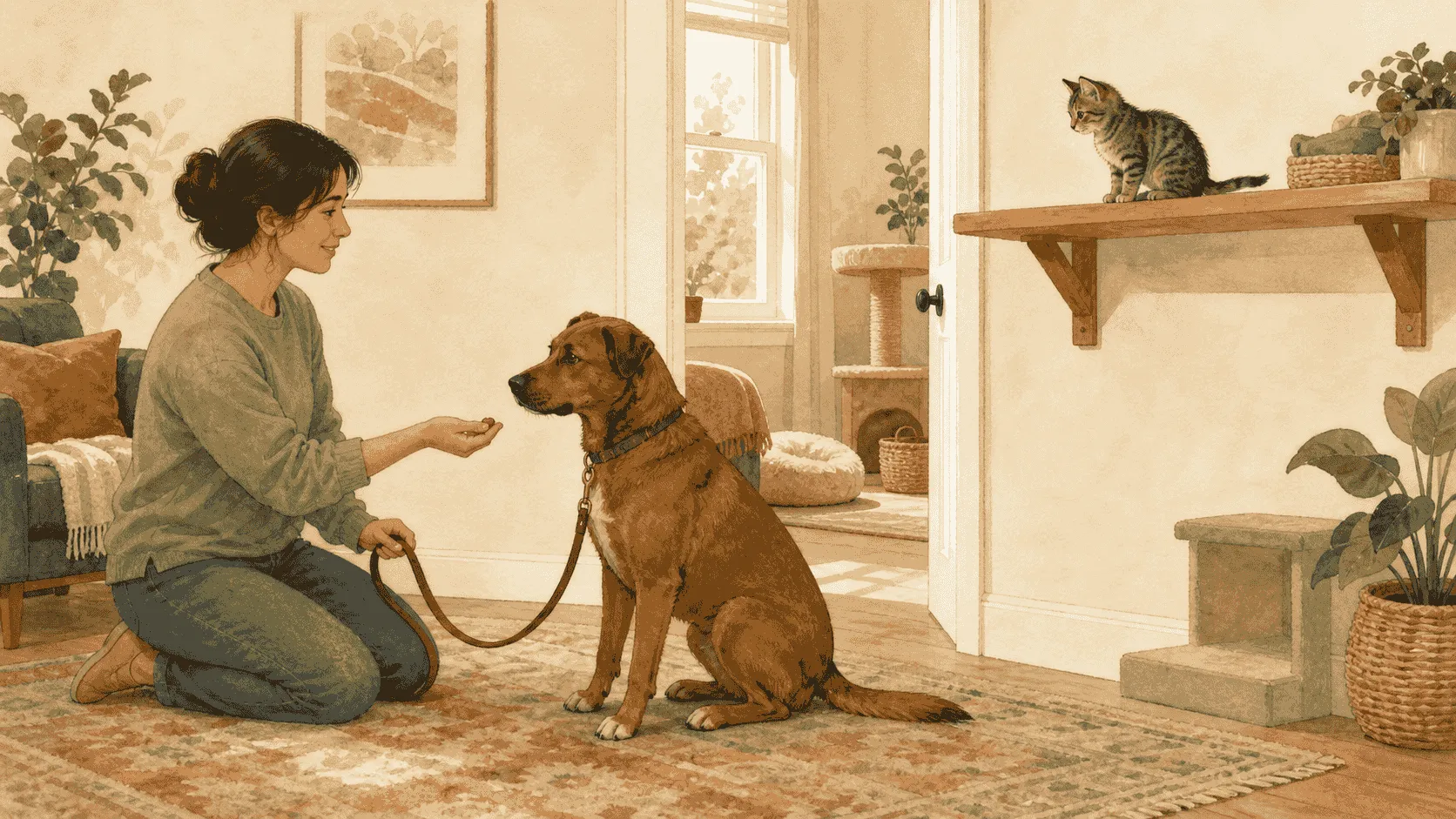
For an early meeting, the useful goal is not nose-to-nose contact. It is a short look in which nothing has to chase, flee, or be restrained.
Keep the dog with a calm handler and prevent chasing from the start. The kitten should have a clear route back to the dog-free room or to a secure high place the dog cannot reach. Let the kitten decide whether to watch, approach, or leave. A lead or barrier can help you manage distance, but neither guarantees safety; direct supervision still matters.
Kittens need extra care because their small size and quick movement can excite a dog. Do not interpret a dog’s quiet moment as permission to leave the pair together. Continue controlled meetings until you have strong, repeated evidence that both animals remain comfortable, and keep them separated whenever you cannot supervise.
If the resident animal is another cat rather than a dog, use the separate cat-to-cat introduction plan; that decision involves different resource and relationship pressures.
Know When Not to Try Again Alone
Keep full separation in place if the dog repeatedly attempts to chase, fear does not ease when you increase distance, or you cannot make the setup physically secure. Those are not problems to solve by forcing a longer session.
Contact a qualified behavior professional for an individual plan when progress stays stalled or either animal’s safety is in doubt. If either pet may be unwell, injured, or showing a sudden behavior change, involve your veterinarian too. An online sequence cannot assess the dog’s chase risk, the kitten’s health, or the weak point in a household barrier.
The useful next step after a hiss is small and concrete: close the distance by opening it up. Separate, record which stage became difficult, and resume only from a calmer step. Peaceful coexistence may be possible, but friendship is not a deadline—and safety is the decision that comes first.
Sources
Petzette's claim cards for this article point to the following scientific, veterinary, or animal-welfare sources.
- Cat And Dog Introductions: Staging, Choice, And Safety: Established UK animal-welfare guidance