Health SignalsUpdated 22 August 2026
Why Do Cats Sneeze? A New Cat or Kitten Record-and-Call Plan
Why do cats sneeze? For a newly adopted cat or kitten, record the whole pattern, avoid a home diagnosis, and know when to call your veterinarian.
TextPetzette Editorial
Read4 Min

Evidence status
Source-backed editorial
- Evidence record
- 3 claim cards linked to 3 documented sources.
- Independent expert review
- Not commissioned. Petzette Editorial is responsible for the published wording.
- Source record checked
- 22 July 2026
- Scope
- General information, not an individual diagnosis or treatment plan.
Why do cats sneeze? With a new kitten or newly adopted adult cat, the practical first answer is not a guessed cause. A single sneeze cannot identify infection, irritation, a foreign object, or another cause. Instead, note what happens around it, check the eyes, nose, appetite, awake energy, and breathing, and contact your veterinarian with that whole pattern.
That plan is deliberately conservative. One normal meal, a bright moment, moving stress, or vaccination history does not clear a cat. Young kittens can also become more seriously affected by respiratory illness than healthy adults, so the article keeps a specifically cautious boundary for kittens while giving newly adopted adults the same useful record-and-call decision.
Read the Whole New Cat, Not One Sneeze
Start with what you can actually see. VCA’s kitten guidance and Cats Protection’s cat-health guidance place sneezing in a wider group that can include eye or nose discharge, squinting, reduced appetite, increased sleep or lethargy, and breathing changes. This does not mean a sneezing cat has an upper respiratory infection. It means those accompanying changes make a more useful veterinary history.
Observe without repeatedly waking, handling, or provoking the cat. During normal awake periods, notice:
- whether sneezing repeats or changes;
- material around the eyes or nose;
- squinting or a changed appearance around the eyes;
- appetite or awake-energy changes;
- a change in sleep or usual behavior;
- whether breathing looks comfortable or different from the cat’s recent pattern.
If sleep is the part confusing the picture for a kitten, use the resting-versus-awake check for a new kitten. It helps you describe responsiveness without treating sleep hours as a home health test.
Make a Short Sneezing Record Before You Call
Open a note on your phone and record the time, place, what happened immediately before the sneeze, and what you saw afterward. Give each observation a simple heading—eyes, nose, appetite, awake energy, and breathing—so the pattern is easy to describe without translating it into a diagnosis.
For a kitten, the new-kitten first-visit checklist can help you gather handover records and questions for the veterinary conversation. Vaccination history is useful context, but it cannot clear a kitten who now has respiratory signs.
Do not start antibiotics, eye or nose drops, supplements, steam, or another home treatment from an online list. The possible causes are not interchangeable, and treatment belongs to the veterinarian assessing the individual cat.
A Newly Adopted Adult Cat Needs the Same Record-and-Call Plan
Cats Protection lists sneezing alongside runny eyes or nose, appetite loss, increased sleep, coughing, and other changes that warrant veterinary contact. Cornell’s new-cat guidance also includes sneezing, discharge, appetite, lethargy, and breathing changes among the details worth taking to a veterinarian.
For a newly adopted adult cat, write down the whole pattern and call rather than deciding that a sneeze is cat flu, irritation, or moving stress. This page does not offer a cause chart for every cat; it answers the first-year decision of what to notice and how to make the call more useful. Keep the kitten-specific vulnerability boundary in view: young kittens can be more seriously affected, but a normal-looking adult still does not get an all-clear from one bright moment or meal.
Pause Kitten Introductions and Shared Cat Resources
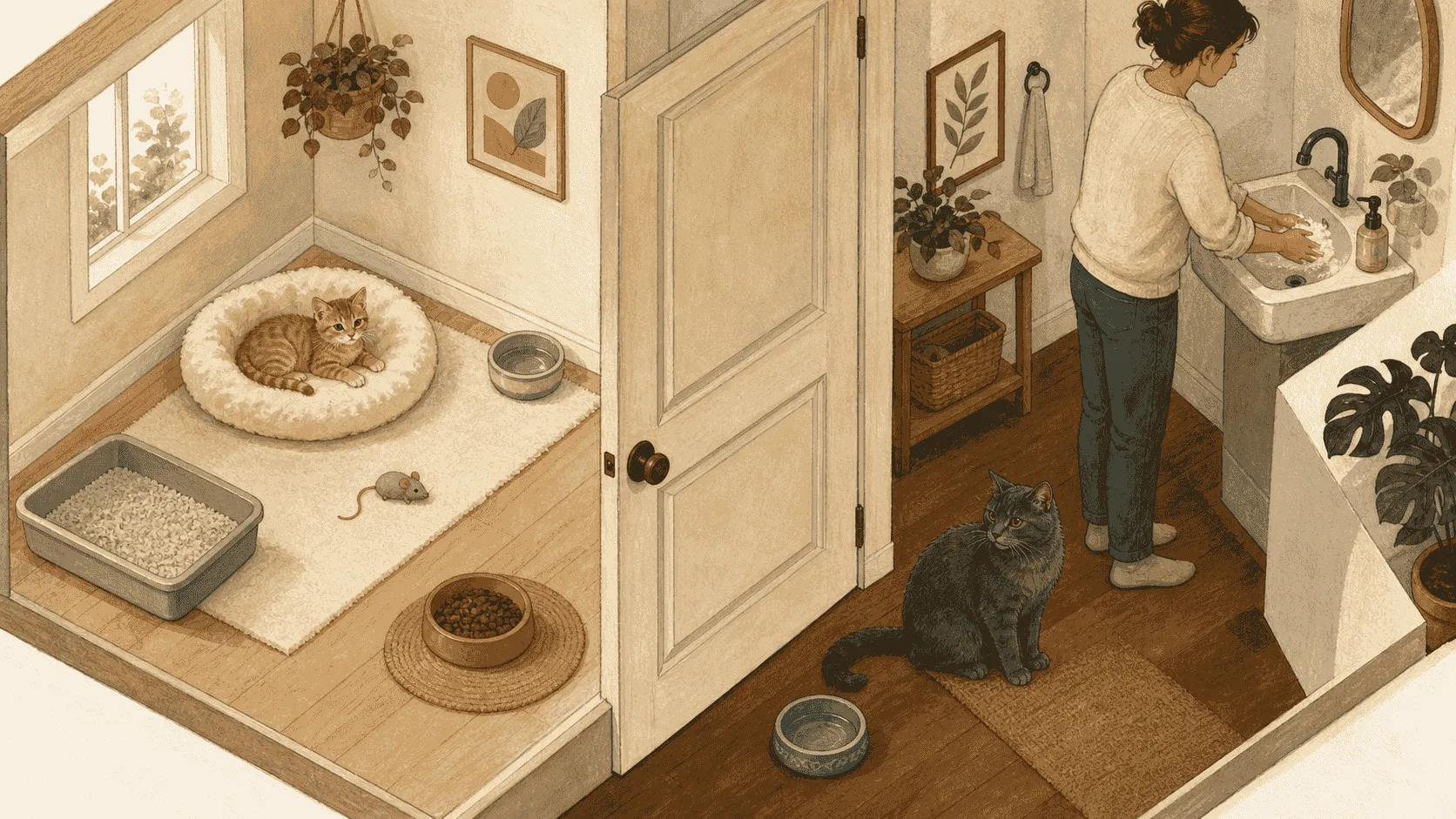
If the sneezing cat is a new kitten living with resident cats, contagious respiratory illness is one possible explanation, though it is not the only one. VCA guidance recommends separating a kitten with possible upper respiratory signs from other cats and not sharing bowls or toys. Cats Protection also advises cleaning bowls and bedding when feline respiratory illness is present.
Use the kitten’s prepared base room while veterinary advice is pending. Keep bowls, litter tools, toys, and bedding separate, and wash your hands between cats. Pause face-to-face introductions rather than testing whether the sneeze spreads. Separation reduces avoidable exposure; it does not diagnose or treat the kitten.
Ask the clinic when and how to resume introductions. Do not rely on a fixed online countdown, and do not assume a vaccinated resident cat has no risk. For a newly adopted adult cat, ask the clinic whether similar temporary household precautions fit your cat’s individual situation rather than treating the kitten plan as a diagnosis.
Know When a Kitten Call Needs Urgent Direction
Contact your veterinarian about the sneezing and give them the record you made. Cats Protection guidance includes sneezing and runny eyes or nose among signs that warrant veterinary contact, and it notes that young kittens can be more vulnerable.
Seek urgent professional direction if the kitten has difficulty breathing, refuses food, becomes markedly weak or lethargic, has bloody discharge, or worsens quickly. If appetite has changed, the new-kitten not-eating guide explains what to record while you make the call; it does not replace that call.
Your useful next step is small and immediate: write down the whole pattern and phone the clinic. If the cat is a kitten, also move other cats and shared items out of the kitten’s room while you wait for advice. Let the veterinarian set the next step from the individual cat—not from a guessed label or a waiting rule.
Sources
Petzette's claim cards for this article point to the following scientific, veterinary, or animal-welfare sources.
- Cats Protection Cat Flu Guidance: Established animal-welfare guidance on feline upper respiratory signs and kitten risk
- Cornell New-Cat Health Signs And Kitten Responsiveness Guidance: Veterinary-school feline health guidance for evaluating a new cat or kitten
- VCA Kitten Upper Respiratory Infection Guidance: Veterinary hospital owner guidance focused on upper respiratory signs in kittens