Behavior08 August 2026
Why Do Cats Like Catnip? An Optional Enrichment Check
Why do cats like catnip? Learn how to offer it as an optional scent choice, read a response safely, and choose another activity when needed.
TextPetzette Editorial
Read3 Min
Evidence status
Source-backed editorial
- Evidence record
- 6 claim cards linked to 7 documented sources.
- Independent expert review
- Not commissioned. Petzette Editorial is responsible for the published wording.
- Source record checked
- 08 August 2026
- Scope
- General guidance. Individual animals and circumstances can differ.
Why do cats like catnip? Catnip can be an optional scent choice, but it is not a universal preference or a shortcut to knowing what a cat feels. The useful first-year decision is smaller: can this cat approach it by choice, use it without pressure, and leave it when they are done? If not, another kind of play or enrichment may be the better next step.
Catnip Is a Scent Cue, Not a Mood Score
A 2017 study in BMC Veterinary Research offered catnip and other plant materials to 100 domestic cats. Sixty-eight percent of the participating cats responded to catnip, which also means some showed no interest in that study. That is useful evidence against treating catnip as a universal cat preference or a test a cat can fail.
Researchers found the volatile compound nepetalactone at its highest level in the catnip material they tested. A 2021 study in Science Advances also described responding cats rubbing their faces or heads and rolling around catnip or related plant scents. Those are observable scent responses. They do not establish that a cat is happy, calm, healthy, anxious, or free from stress.
The exact benefit for an individual household cat remains uncertain. Research can describe what participating cats did around a scent; it cannot turn one sniff, rub, or walk-away into a personality report.
How to Offer Catnip as an Optional Choice
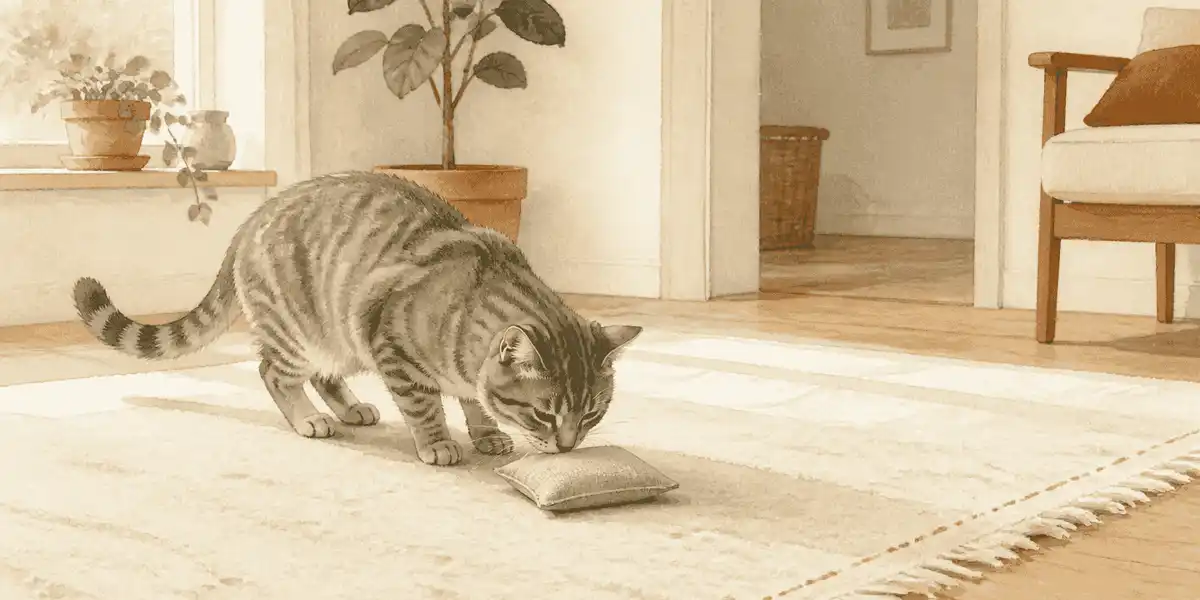
Make the first try low pressure. Put one plain, labeled catnip option on a clear, familiar surface, then give your cat room to approach, sniff, rub, or leave. The point is not to create a reaction. It is to see whether this particular cat chooses the activity.
The AAFP/ISFM feline environmental guidelines place play and predatory opportunities alongside safe places, separated key resources, predictable interaction, and respect for scent. Catnip can fit into that wider environment, but it cannot replace it. Keep the route open, avoid following your cat with the item, and let ordinary resting, food, litter, scratching, and play areas remain useful.
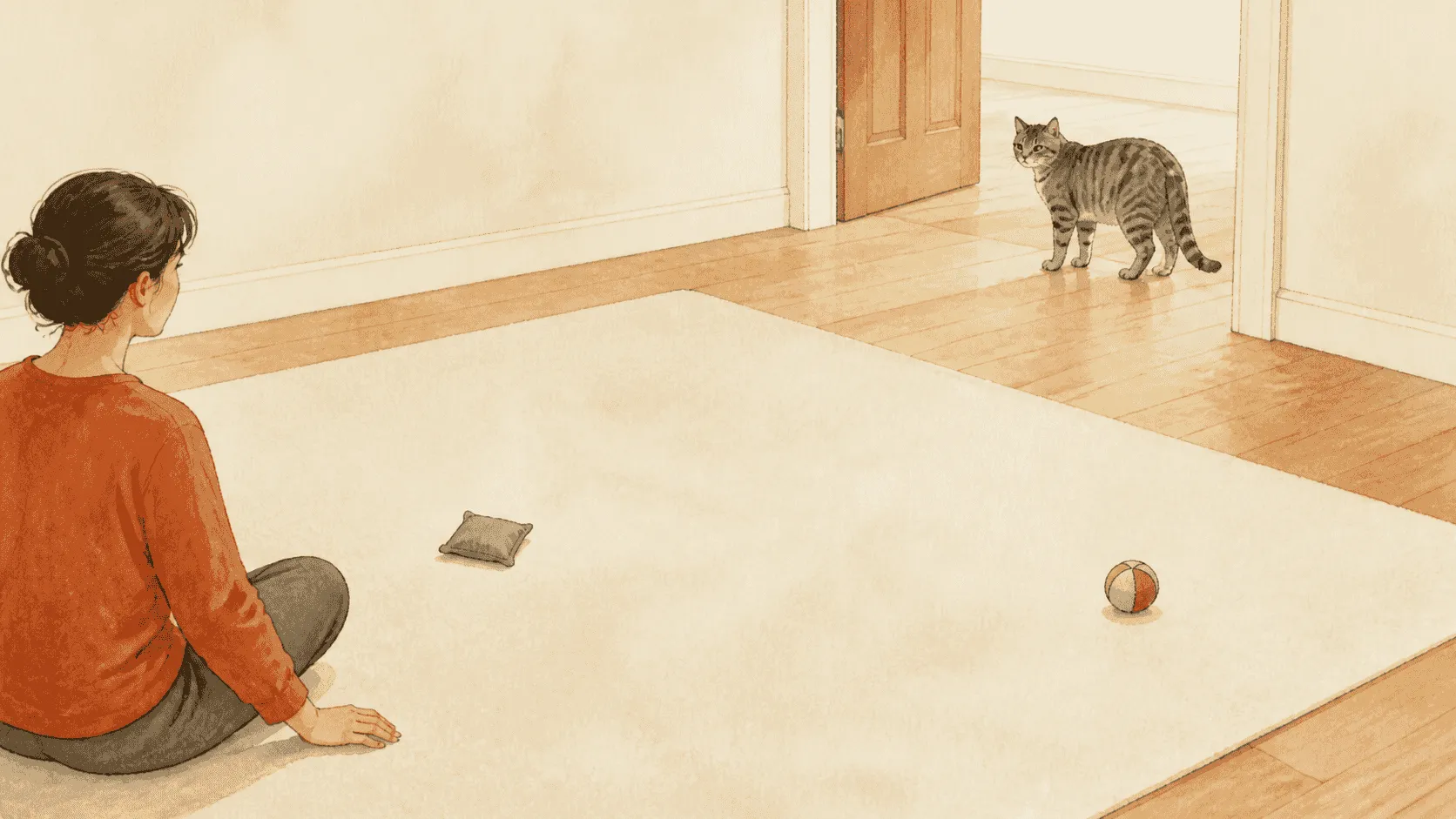
Use the cat’s next action as your guide. If they investigate and later walk away, let that exit end this round. Cat Friendly Homes guidance makes the same point for play: walking away is a practical stop signal, not an invitation to follow or persuade.
What if Your Cat Does Not Like Catnip?
Do not escalate the scent or keep changing products until you get a response. A lack of interest is information, not a problem to correct. The 2017 catnip study found individual variation, and a separate 2017 Behavioural Processes preference study found that participating cats did not share one reward order across social interaction, food, toys, and scent.
Instead, offer a different safe choice in another moment: a brief chase-and-catch game, a food puzzle already suitable for the cat’s diet, a scratching outlet, or quiet social contact if the cat seeks it. For a kitten, our first-year cat-toy guide covers supervised play, inspection, storage, and catchable endings. The goal is not to find one magical item; it is to notice which option this cat repeatedly chooses.
Keep Catnip in Its Own Lane
Catnip is not an anxiety test or a treatment plan. The studies above observed scent responses; they did not test whether catnip treats anxiety, resolves aggression, or explains hiding, hissing, appetite change, or a sudden shift in behavior. A response can be interesting without being a diagnosis.
If your cat becomes suddenly aggressive, unusually withdrawn, painful to touch, or less interested in eating or normal activity, contact your veterinarian rather than adding more enrichment. Cornell Feline Health Center guidance also recommends a medical check when aggression is sudden, severe, or unusual. For the wider interaction picture, use our whole-cat body-language context check instead of assigning one meaning to a roll or rub.
A Three-Question Catnip Check
Before offering catnip again, ask:
- Did my cat choose to approach and have room to leave? Choice matters more than making the scent interesting.
- Am I reading one behavior modestly? Sniffing, rubbing, rolling, or walking away can describe this moment; none settles the cat’s mood or health.
- What is the next low-pressure option? Continue with a chosen activity, or offer a different safe play, food, rest, or scratching choice later.
That is enough for a useful catnip decision. Offer it as one voluntary enrichment option, let your cat’s interest set the pace, and keep broader behavior or health questions in their proper lane.
Sources
Petzette's claim cards for this article point to the following scientific, veterinary, or animal-welfare sources.
- Catnip And Alternative Plant Responses In Domestic Cats (2017): Peer-reviewed feline enrichment study
- Catnip Scent Response In Domestic Cats (2021): Peer-reviewed laboratory behavioral and chemical study
- AAFP/ISFM Feline Environmental Needs Guidelines 2013: Peer-reviewed veterinary guidelines plus client-facing practice resource
- Cat Stimulus Preference Assessment: Peer-reviewed feline behaviour experiment
Vitale Shreve KR, Mehrkam LR, Udell MAR. Social interaction, food, scent or toys? A formal assessment of domestic pet and shelter cat (Felis silvestris catus) preferences. Behavioural Processes. 2017;141(Pt 3):322-328.
- Cat Friendly Homes: Play Ends With The Cat's Choice: Veterinary-association caregiver guidance
- Cornell Cat Destructive Behavior, Play, And Scratching: Veterinary school feline behavior guidance
- Cornell Cat Play Aggression: Veterinary school feline behavior guidance