Health Signals05 October 2026
Are Acorns Toxic to Dogs? What to Do After Possible Exposure
If your dog may have swallowed an oak acorn, learn why a fixed safe count fails and what to ask a veterinarian or animal-poison service.
TextPetzette Editorial
Read5 Min
Evidence status
Source-backed editorial
- Evidence record
- 1 claim card linked to 1 documented source.
- Independent expert review
- Not commissioned. Petzette Editorial is responsible for the published wording.
- Source record checked
- Invalid Date
- Scope
- General information, not an individual diagnosis or treatment plan.
Part of the plant safety checklist
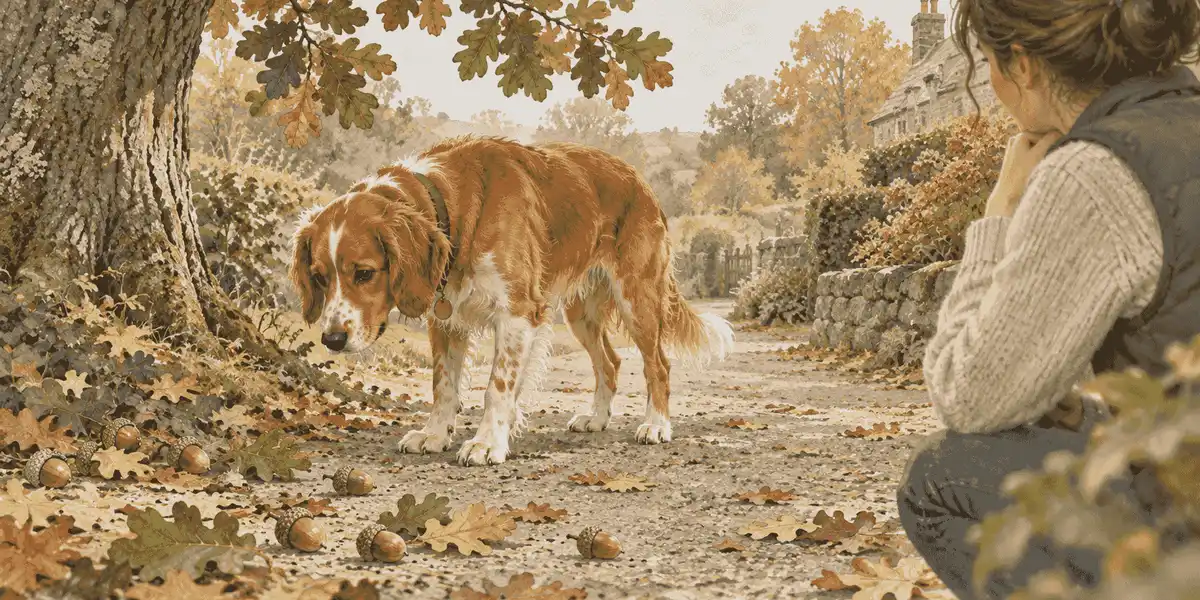
Are acorns toxic to dogs? The safest answer is not a universal yes-or-no rule. Oak acorns are not ordinary dog treats, and a possible swallowed-acorn exposure deserves case-specific direction from a veterinarian or animal-poison service—especially when the acorn may have been swallowed whole or in a large piece.
That boundary matters because two different concerns can overlap. Oak-acorn access may involve gastrointestinal irritation or signs, and a whole or large piece can create a physical gastrointestinal-obstruction concern. Sparse suspected dog cases have also reported serious kidney or liver injury. Those reports do not tell you what will happen to the dog in front of you, and they do not create an online safe number.
Start with the object, not a safe-count search
An acorn from an oak is a Quercus fruit. It is not the same object as a horse-chestnut conker, and information about conkers should not be folded into an oak-acorn decision. The same caution applies to the difference between a routine food question and a possible environmental exposure.
If your dog may have swallowed an acorn, write down what you actually know before you call: whether the object was identified as an oak acorn, whether it may have gone down whole or as a large piece, and when you noticed the access. If you are not sure what the dog swallowed, keep that uncertainty in the note. It is more useful than converting a guess about size or number into a home rule.
Do not use an online “safe count” based on the dog’s size, the acorn’s appearance, or whether it was chewed. The available dog evidence does not establish a dog-specific toxic dose or an outcome forecast. A small-looking exposure is not a clearance, and a possible exposure is not proof that poisoning or obstruction has occurred.
Why the evidence cannot answer the whole case
The Merck Veterinary Manual’s oak-toxicosis review is a current professional toxicology source, but much of its detailed risk discussion is about grazing animals rather than a dog dose or a dog-specific prognosis. It can help explain why oak exposure is a real veterinary topic; it cannot turn livestock information into home math for a pet dog.
The Veterinary Poisons Information Service’s oak and acorns guidance discusses dog-access cases, while the 2021 canine case report and 2026 canine case report describe individual suspected exposures. These are useful for showing the range of concerns that can enter a veterinary assessment. They are not controlled studies that can tell you a safe amount, how likely a complication is, or how long an individual dog can safely wait.
That is why the absence of an established dog-specific threshold is itself part of the answer. The evidence supports professional assessment of a possible swallowed-acorn exposure, not a plant-identification shortcut, symptom-based diagnosis, treatment protocol, or prediction from one detail.
Read the case reports with their limits
The published dog cases are important, but they are not a measuring device. The 2021 report concerns one suspected exposure, and alternative toxins could not be fully ruled out. The 2026 report also involved an unknown exposure amount, and its acorn-toxin causality was not confirmed by measuring the ingested material. Those limitations do not make the reports irrelevant; they explain why their details cannot be turned into a promise about another dog.
In other words, the evidence supports a narrow statement: an oak acorn may matter enough to warrant professional assessment, while the available dog literature is too sparse to estimate frequency, susceptibility, a safe dose, or a likely outcome. It is possible to take the exposure seriously without claiming that poisoning, obstruction, kidney injury, or liver injury is inevitable.
This is also why a photograph, a rough count, or the statement “it was only a small one” cannot finish the decision. Those details may be useful to the professional handling the case, but they do not replace that case-specific assessment.
What to do while you arrange individual direction
Contact your veterinarian or an animal-poison service and describe the possible oak-acorn exposure plainly. Say what you observed, what remains uncertain, and whether the piece may have been whole or large. If the object was not confirmed as an oak acorn, say that too; this guide cannot identify a plant or object from a photo or memory.
Do not induce vomiting. Do not give salt water, food, milk, oil, charcoal, supplements, or medication as a home response. The RSPCA’s dog-poisoning guidance supports getting professional direction rather than trying a household treatment, but it does not supply an acorn dose or decide an individual dog’s urgency.
If a professional asks for more detail, answer from your observations rather than from a guessed amount. You can also keep other animals away from the oak area while you work out how the access happened. Prevention is useful, but it does not replace the call after a possible swallowing event.
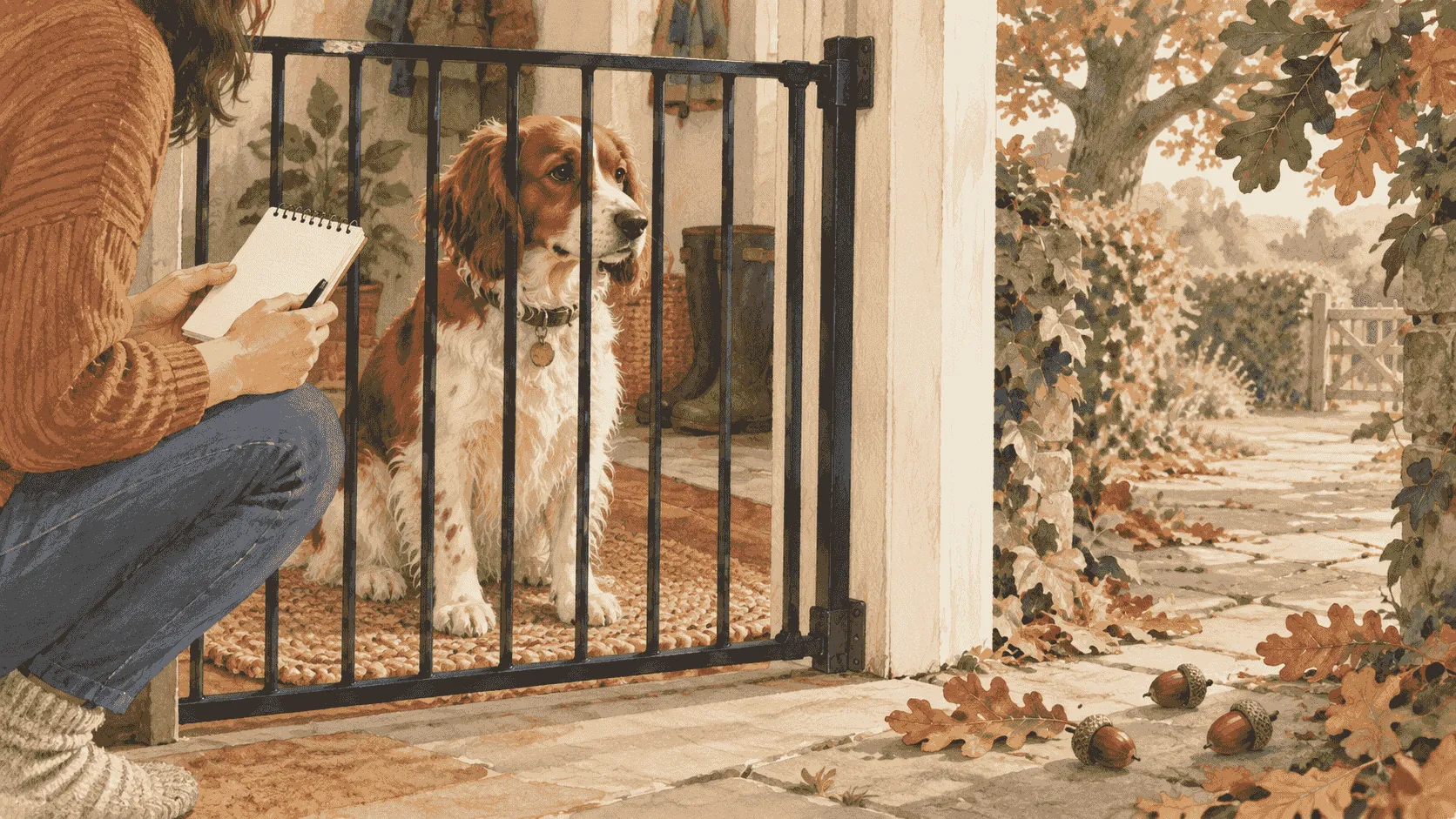
As a simple call-note aid, separate what you saw into three lines:
- Object: confirmed oak acorn, suspected oak acorn, or an unidentified object.
- Access: seen near it, chewing it, or possibly swallowing it; note if it may have been whole or a large piece.
- Uncertainty: what you do not know, including the possible time or amount.
That format keeps the conversation anchored to observations. It also avoids a common mistake: treating an uncertain amount as if it were a verified dose. The professional can decide what additional information matters for the individual dog.
Keep this guide in its lane
This article is about oak acorns and dogs. It does not classify oak leaves, buds, bark, prepared acorn foods, horse-chestnut conkers, cats, livestock, or an individual dog’s symptoms. A dog that looks normal has not thereby been cleared, and a dog that shows a change has not thereby been diagnosed by an acorn search.
For broader food-exposure organization, use the three-hazard dog food checklist. For routine nut questions, the whole-label nut guide explains why the full product and the individual dog matter. Neither page provides a safe acorn count.
The practical decision is simple even though the evidence is not: do not treat an oak acorn as an ordinary snack, do not guess from a universal number, and contact a veterinarian or animal-poison service for case-specific direction after a possible swallowed exposure.
Sources
Petzette's claim cards for this article point to the following scientific, veterinary, or animal-welfare sources.
- Oak Acorns (*Quercus* spp.): Dog-Access Assessment Boundary: Cross-source veterinary-toxicology, poison-control, canine case-report, and welfare-referral evidence note
- Poppenga RH. *Oak Toxicosis in Animals*. Merck Veterinary Manual. Full review June 2026; peer reviewed by Scott Radke, DVM, MS, DABVT.