Health Signals27 July 2026
Are Orchids Toxic to Cats and Dogs? Check the Label
Are orchids toxic to cats and dogs? Match a moth orchid to its botanical label, understand the listing, and know when to call.
TextPetzette Editorial
Read3 Min
Evidence status
Source-backed editorial
- Evidence record
- 3 claim cards linked to 3 documented sources.
- Independent expert review
- Not commissioned. Petzette Editorial is responsible for the published wording.
- Source record checked
- 27 July 2026
- Scope
- General information, not an individual diagnosis or treatment plan.
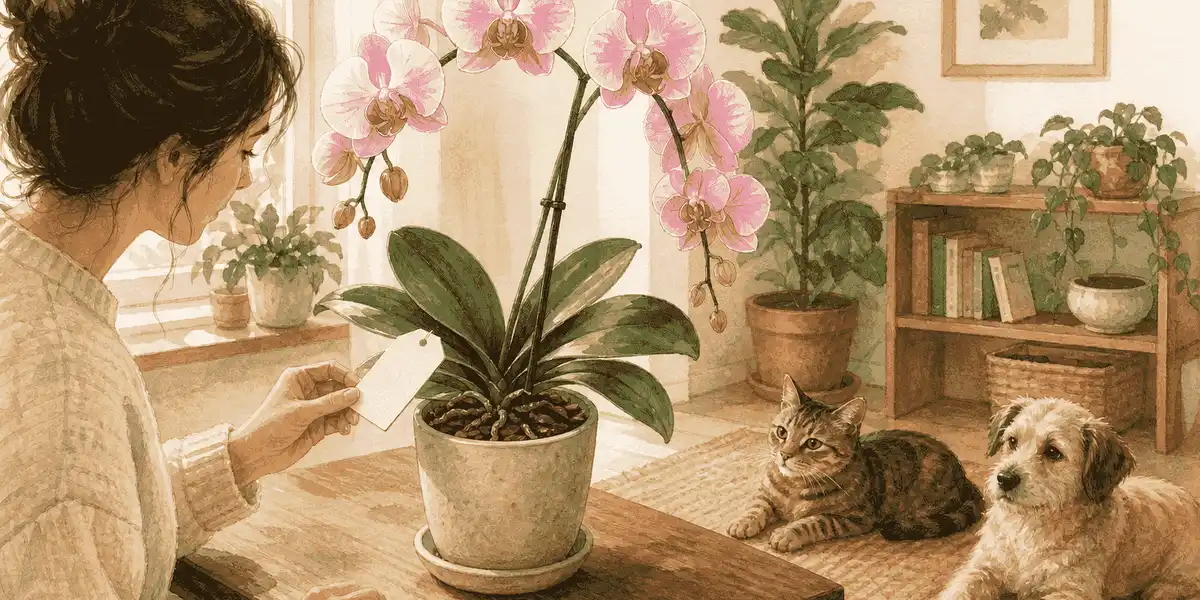
Are orchids toxic to cats? For a correctly identified Phalaenopsis—the moth orchid commonly kept as a houseplant—the ASPCA Animal Poison Control Center classifies the plant as non-toxic to cats and dogs. That is reassuring, but the useful answer begins with the botanical label and ends with the animal in front of you.
This guide handles one named-orchid decision. If the plant is unknown, part of a mixed arrangement, or clearly a different species, use the broader plants toxic to cats and dogs checklist instead of borrowing the Phalaenopsis answer.
Match “Orchid” to Phalaenopsis on the Label
Look for Phalaenopsis on the nursery tag, florist sleeve, receipt, or care card. The ASPCA entry names Phalaenopsis species in the Orchidaceae family and gives “moth orchid” and “moon orchid” as common names. The Royal Horticultural Society also identifies moth orchid by the botanical name Phalaenopsis.
That match matters. “Orchid” is a broad common word, while the poison-control classification is attached to a named plant entry. A flower shape, color, or phone-image match can help you ask a better question, but it cannot establish the botanical identity by itself.
If the label is missing, photograph the whole plant and any remaining packaging. Keep the uncertainty in your notes rather than upgrading a guess into a reassuring identification.
What the Non-Toxic Listing Does—and Does Not—Mean
For a confirmed Phalaenopsis, the ASPCA listing says non-toxic to cats and non-toxic to dogs. It does not say the plant is food, set an amount that is safe to eat, or predict how an individual pet will respond.
The ASPCA plant-database overview notes that eating plant material may still be associated with vomiting or gastrointestinal upset. In other words, “non-toxic” describes the poison-control classification; it does not promise a symptom-free afternoon.
Keep the plant separate from anything else involved. An uncertain spray, fertilizer, decorative pick, potting material, or second plant is a different exposure to report, not part of the orchid’s non-toxic label.
Choose the Right Route After a Chewed Orchid
Use three routes instead of trying to calculate a safe bite:
- Confirmed Phalaenopsis, pet comfortable: remove access, keep the label, note the time and what appears disturbed, and watch the whole animal rather than focusing only on the plant.
- Plant or exposure uncertain: record the common and botanical names you can find, save photos and packaging, and contact your veterinarian or an animal poison-control service for direction.
- Any concerning change: call a veterinarian promptly. Report the plant name, possible amount and plant part, time, pet details, and what you are seeing now.
Do not wait for an online article to identify the cause of vomiting, diarrhea, marked drooling, low responsiveness, or another sudden change. Those observations need individual advice, even when the plant beside the pet appears on a non-toxic list.

Call Before Trying a Home Treatment
American Veterinary Medical Association first-aid guidance says not to induce vomiting or give medication unless a veterinarian or poison-control professional directs it. Keep the plant tag or container available during the call and say plainly when a detail is unknown.
A professional can interpret the plant identity, exposure, current signs, and the individual animal together. This article cannot provide an amount threshold, diagnose a reaction, or decide whether a specific pet needs an examination or treatment.
Are Orchids Toxic to Dogs?
The same named-plant answer applies to dogs: ASPCA classifies Phalaenopsis species as non-toxic to dogs. The same limits apply, too. Confirm the botanical name, do not treat the plant as edible, and do not dismiss illness because the orchid itself has a reassuring classification.
A chewed pot can also leave several questions at once. Tell the veterinarian or poison-control service about every known material involved rather than asking only about the flower.
Make the Next Check Easier
Save a clear photo of the plant beside its botanical label before placing it in a pet-accessible room. Keep the tag with your household plant records, move the pot out of chewing range, and store your veterinarian and local poison-control details where everyone can find them.
The practical answer is precise: a confirmed Phalaenopsis moth or moon orchid is classified as non-toxic to cats and dogs. A missing label, another material, or an unwell pet changes the decision from reassurance to a professional call.
Sources
Petzette's claim cards for this article point to the following scientific, veterinary, or animal-welfare sources.
- Phalaenopsis Orchid Poison-Control Classification: Animal poison-control database and established horticultural guidance
- Spider Plant Poison-Control Classification And Name Check: Animal poison-control databases and veterinary manual guidance
- AVMA Pet First Aid: Poison Response Boundary: Veterinary-association first-aid brochure