Health Signals09 August 2026
Are Daisies Toxic to Cats and Dogs? Check the Botanical Name
Are daisies toxic to cats or dogs? Learn why Chrysanthemum and Gerber daisies need different checks, and what to do after a possible exposure.
TextPetzette Editorial
Read4 Min
Evidence status
Source-backed editorial
- Evidence record
- 3 claim cards linked to 2 documented sources.
- Independent expert review
- Not commissioned. Petzette Editorial is responsible for the published wording.
- Source record checked
- 09 August 2026
- Scope
- General information, not an individual diagnosis or treatment plan.
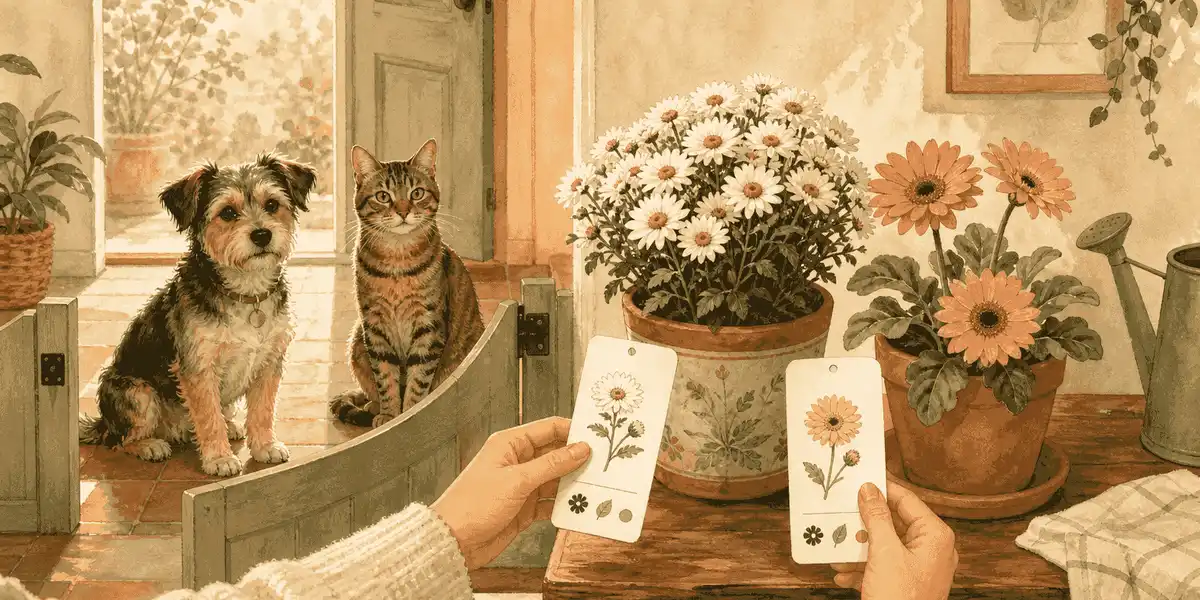
Are daisies toxic to cats? The useful answer is not one word, because “daisy” can name different plants. ASPCA Animal Poison Control lists Chrysanthemum species—also called chrysanthemums or mums—as toxic to cats and dogs. It separately lists Gerbera jamesonii, often sold as a Gerber or African daisy, as non-toxic to both. That contrast makes the first decision after a chewed flower or a new bouquet simple: identify the exact plant before trying to interpret the risk.
Daisy Is a Common Name, Not a Safety Result
Flower shape alone is not enough. A florist may use “daisy” for a chrysanthemum, while a garden-center tag may say Gerber daisy. Those names can look close in a search result, but the ASPCA records are different: Chrysanthemum and Gerbera jamesonii have different classifications for cats and dogs.
Start with the information attached to the actual plant. Look for the pot tag, florist sleeve, delivery note, nursery receipt, or bulb packet. If the label is gone, take a clear photo of the whole plant, its leaves, flowers, stem, and any packaging. A close-up bloom can be useful, but it does not settle the species by itself.
The same check matters with a mixed bouquet. One stem’s label cannot account for another flower, flower food, pesticide, fertilizer, or decorative material in the arrangement. The plant-exposure owner checklist can help you turn that uncertainty into a clear note for a professional instead of borrowing an answer from the closest-looking flower.
Chrysanthemum and Gerber Need Different Checks
ASPCA identifies the toxic “Daisy” record as Chrysanthemum species, with chrysanthemum and mum among the common names. Its Gerber Daisy record identifies Gerbera jamesonii and lists it as non-toxic to cats and dogs. That is a useful distinction for prevention as well as response: add the botanical name to your household plant list while the tag is still easy to find.
“Non-toxic” is not a blanket clearance for an unlabelled plant. It does not identify a look-alike, account for a chewed pot, or cover added products. It also does not turn a pet who seems unwell into a home-treatment project. If the daisy is unknown, the safer interpretation is that the identity belongs in the call.
For another example of why a common name needs checking, a lily question starts with the exact plant. The point is not to memorize a giant list. It is to keep a label or photo connected to the individual animal and exposure.

After a Possible Chrysanthemum Exposure, Make the Call Useful
For Chrysanthemum species, ASPCA names vomiting, diarrhea, hypersalivation, incoordination, and dermatitis among possible signs. A sign list cannot identify the plant, tell you the amount involved, or show how serious one animal’s exposure is. It is a prompt to collect better details, not a diagnosis.
Write down what you know without filling gaps with guesses:
- the botanical or common name on the label, plus a photo if available;
- whether your cat or dog chewed, swallowed, pulled up, or only contacted the plant;
- the plant part and what may be missing;
- the time of the possible exposure, or when the pet was last known to be away from it; and
- any change you have noticed, along with the pet’s age, approximate weight, and relevant health information.
Then contact your veterinarian or an animal poison-control service before trying a home treatment. American Veterinary Medical Association first-aid guidance advises against inducing vomiting or giving medication unless a professional directs it. Keep the tag, packaging, and short note close to the phone; even “unknown daisy” is useful information when paired with the exposure details.
Put Plant Names in Your New-Pet Home Plan
A new cat or dog explores with a different reach, jump, or pull than the animal you planned for. Before arrival, make a brief inventory of reachable houseplants, balcony pots, garden borders, and bouquets. Photograph their tags and store plant-care products separately. When a gift arrangement arrives, keep the florist sleeve until the flowers are gone.
This is a prevention habit, not a promise that every plant can be sorted at a glance. The value is speed and clarity when something changes: you can share the exact name, the possible route of exposure, and the timing rather than trying to reconstruct a flower from memory.
If your pet may have chewed a chrysanthemum, another toxic plant, or an unknown daisy, call promptly for veterinary or poison-control advice. If the plant is confirmed as Gerber daisy but your pet has a sudden or concerning change, that change still deserves veterinary attention. A label is useful context; it does not replace care for the animal in front of you.
Sources
Petzette's claim cards for this article point to the following scientific, veterinary, or animal-welfare sources.
- ASPCA Daisy and Gerber Daisy Plant Identification: Animal poison-control plant-database records
ASPCA Animal Poison Control Center. *Toxic and Non-toxic Plants*: “Daisy” (*Chrysanthemum* species) and “Gerber Daisy” (*Gerbera jamesonii*). Directly reviewed 2026-08-09.
- AVMA Pet First Aid: Poison Response Boundary: Veterinary-association first-aid brochure