Health Signals07 September 2026
Cat Grooming Services: A Calm First-Visit Fit Check
Considering cat grooming services? Use coat needs, handling comfort, carrier preparation, and clear veterinary boundaries to plan a calmer first visit.
TextPetzette Editorial
Read5 Min

Evidence status
Source-backed editorial
- Evidence record
- 7 claim cards linked to 8 documented sources.
- Independent expert review
- Not commissioned. Petzette Editorial is responsible for the published wording.
- Source record checked
- 23 July 2026
- Scope
- General information, not an individual diagnosis or treatment plan.
Cat grooming services can help with a coat-care task, but the word “service” does not tell you whether a visit fits this cat. The useful first-year decision is smaller: what does the cat actually need, what can they tolerate today, and when should a veterinarian lead instead? The same check applies whether you are considering a salon appointment, mobile cat grooming, or an in-home service.
Start with the coat and the individual cat, not a promised makeover. Long-haired cats may need frequent grooming to prevent matting, while short-haired cats may need less. Cats Protection’s choosing-a-cat guidance treats that difference as a time commitment, not a beauty label. A service is a good fit only when its task, pace, and stopping plan match the cat in front of you.
Decide Which Grooming Problem You Are Solving
“Grooming” can mean a brush-out, a bath, a mat assessment, nail care, coat clipping, or several separate tasks. Those are not interchangeable. Write down the smallest useful job before you contact anyone:
- routine brushing for a coat that is otherwise at its usual baseline;
- help with a coat-care task that is difficult to repeat at home; or
- a sudden coat, skin, handling, or self-grooming change.
The first two may be a home or professional-grooming decision. The third is a veterinary question before it becomes a cosmetic appointment. A greasy or suddenly changed coat, painful matting, apparent pain, or a new reaction to touch needs professional assessment rather than a stronger brush or a longer booking.
If ordinary brushing is still realistic, our calm cat-grooming routine covers coat-specific home care. This guide starts where you are considering outside help or a first visit.
Make the First Visit Smaller Than the Whole Job
A cat does not need to complete a full grooming appointment in one attempt. Cats Protection’s handling guidance begins with one second of touch in an area the cat already accepts, an immediate reward, and a clear exit. FelineVMA cooperative-care guidance uses the same small-step idea: one look, one paw on a mat, or one brief relaxed posture can be the whole lesson.
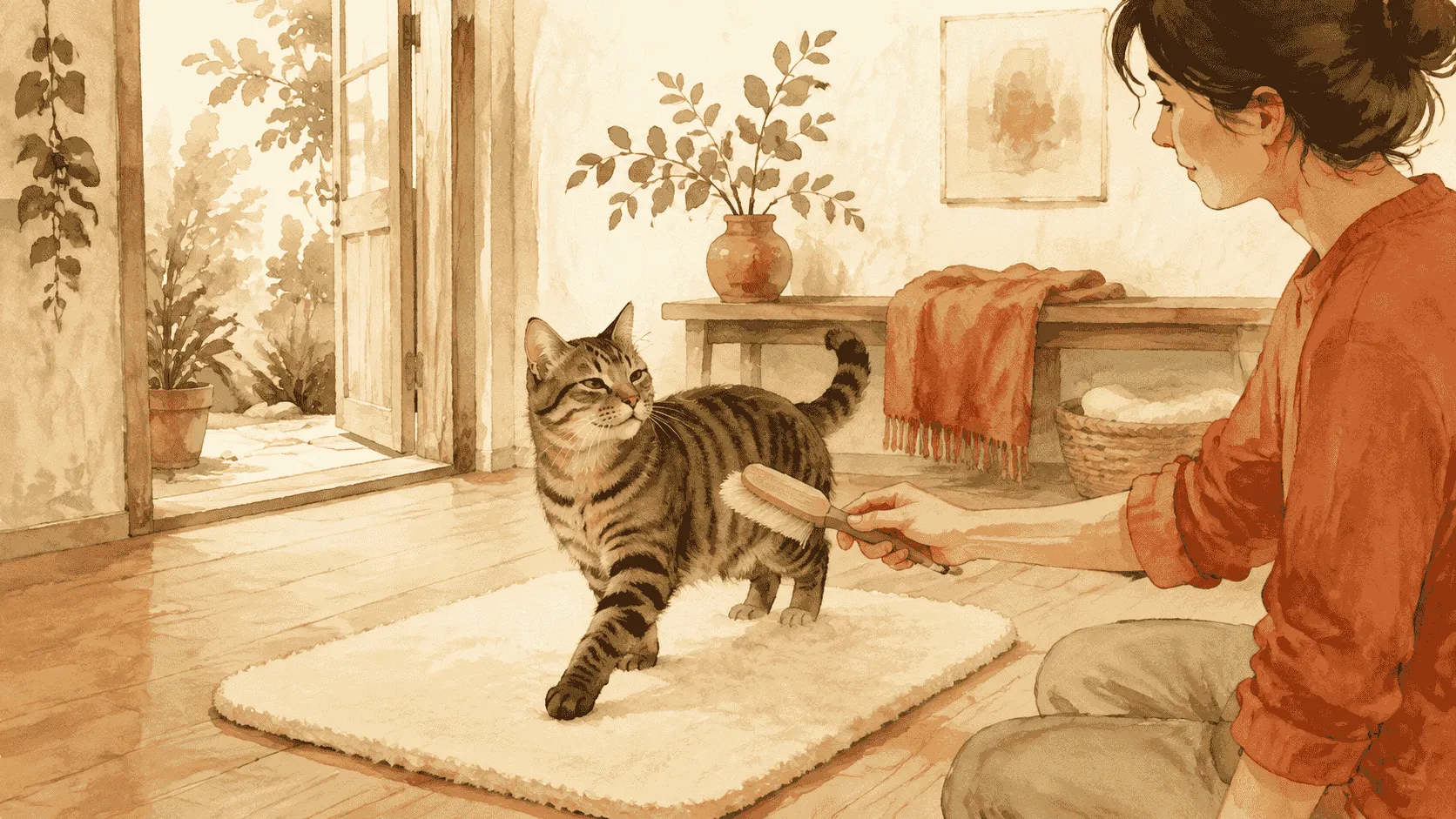
Try a short preparation sequence at home when your cat is relaxed and healthy:
- Put the brush or towel nearby without moving it toward the cat.
- Reward a calm look, approach, or sniff if your cat chooses to investigate.
- Touch one familiar area for about a second, then withdraw your hand.
- Stop while the cat can still leave; add duration or a new body area only after the easier step remains comfortable.
Moving away, hiding, stiffening, growling, hissing, or losing interest is information that the step was too difficult. Do not hold the cat still until the struggle stops. A cat who suddenly resists touch, especially around one area, needs a veterinarian rather than a more determined practice session.
Ask the Groomer Questions Before You Book
The first conversation is part of the care plan. Ask what the appointment includes and what happens if the cat cannot comfortably complete the task. Useful questions include:
- Which exact task will you attempt first, and what can wait for another visit?
- How will you give the cat time to look, move away, or settle before handling begins?
- What signs mean you will pause, shorten the session, or stop?
- How will you respond to tight mats, a skin change, apparent pain, or a cat who becomes frightened?
- What information should go back to the veterinarian if the visit reveals a concern?
You are listening for a process that treats a pause as useful information. A sensible plan may be a shorter visit, a referral, a return after easier handling practice, or no service until a health concern is assessed. Be cautious about any promise to finish the whole coat regardless of the cat’s response.
This is also where you can separate a grooming decision from a medical one. A groomer can describe what they observed and what task they could or could not safely perform. They should not be expected to identify the cause of a skin change, pain response, or sudden behavior change.
Prepare the Carrier Before the Appointment
If the service requires travel, the carrier is part of the first visit. AAHA guidance recommends keeping it accessible with familiar bedding and pairing it with voluntary investigation rather than bringing it out only when a stressful trip is imminent. A small 2018 randomized study of 22 healthy cats found lower transport stress scores and shorter standardized examinations after gradual positive-reinforcement carrier practice. That is useful evidence for preparation, not a guarantee that every cat will find travel easy.
Leave the carrier open in an ordinary room before the booking. Let your cat investigate at their own pace, reward an easy approach, and build only one small step at a time. Do not turn the carrier into a deadline by chasing a fearful cat around the room. If transport is already a severe fear response, or pain or travel sickness is part of the story, ask your veterinarian for an individual plan.
For a new kitten, place this preparation beside the broader first-visit records and questions checklist. The grooming appointment is not a substitute for veterinary care, and the kitten’s age, health history, and handling experience still matter.
Keep Baths and Health Changes in Their Proper Lane
Most cats do not need a routine bath calendar. Cats Protection guidance describes self-grooming plus appropriate brushing as the usual starting point, with bathing exceptions guided by the individual cat and veterinarian. Do not add a bath because a service menu makes it look routine, and do not choose a human or dog shampoo as a shortcut.
A bath, clip, or brush-out is not the right response to every coat problem. Pause and ask a veterinarian about a sudden grooming change, painful or tight matting, skin changes, toxic contamination, repeated hissing with touch, or a cat who seems unwell. Do not scrape, cut, medicate, or apply a home remedy based on a symptom match.
Use a Five-Question Service Check
Before you confirm a booking, ask:
- Can I name the exact grooming task rather than just saying “grooming”?
- Is my cat’s coat and handling response close to its usual baseline?
- Does the service have a clear pause and stop plan?
- Can the carrier and journey be prepared without chasing or forcing?
- Do I know when the veterinarian, not the groomer or an article, should lead?
If the answers are mostly yes, book the smallest sensible first step and describe what your cat accepts, avoids, and has recently changed. If one answer is no, ask another question or delay. The goal is not the longest appointment or the most dramatic finish. It is a repeatable care plan that protects the cat’s coat, choice, and health boundary.
Sources
Petzette's claim cards for this article point to the following scientific, veterinary, or animal-welfare sources.
- Cats Protection Choosing A Cat: Animal welfare charity guidance / cat-selection advice
- Cats Protection One-Second Handling Training: Animal-welfare handling guidance
- 2022 AAFP ISFM Cat Friendly Veterinary Interaction Guidelines: Peer-reviewed veterinary clinical guideline
- AAHA Cat Vet-Visit And Carrier Preparation: Veterinary association expert guidance
- FelineVMA Positive Reinforcement And Cooperative Care: Feline veterinary association caregiver guidance
- Routine Cat Bathing Is Usually Not Needed: Vet-reviewed UK feline welfare and grooming guidance
- Carrier Training Cats Reduces Transport Stress: Peer-reviewed randomized controlled carrier-training study
- Cats Protection Hissing Guidance: Current cat-welfare behavior guidance