Health Signals12 August 2026
Are Pothos Toxic to Cats? A Label-to-Call Plan
Are pothos toxic to cats? Identify Devil's Ivy, record a possible exposure, and call a veterinarian before trying home treatment.
TextPetzette Editorial
Read3 Min

Evidence status
Source-backed editorial
- Evidence record
- 3 claim cards linked to 2 documented sources.
- Independent expert review
- Not commissioned. Petzette Editorial is responsible for the published wording.
- Source record checked
- 12 August 2026
- Scope
- General information, not an individual diagnosis or treatment plan.
Are pothos toxic to cats? Yes—when “pothos” refers to Devil’s Ivy, Epipremnum aureum, the ASPCA Animal Poison Control Center classifies it as toxic to cats and dogs. If your cat may have chewed or swallowed part of one, keep the plant information, make a short exposure note, and contact your veterinarian or an animal poison-control service before trying a home treatment.
This page answers one named-plant question. If the label is missing, several plants or products may be involved, or you have only a photo match, use the broader plant-exposure owner checklist and include that uncertainty when you call.
Pothos Is a Common Name; Confirm Epipremnum aureum
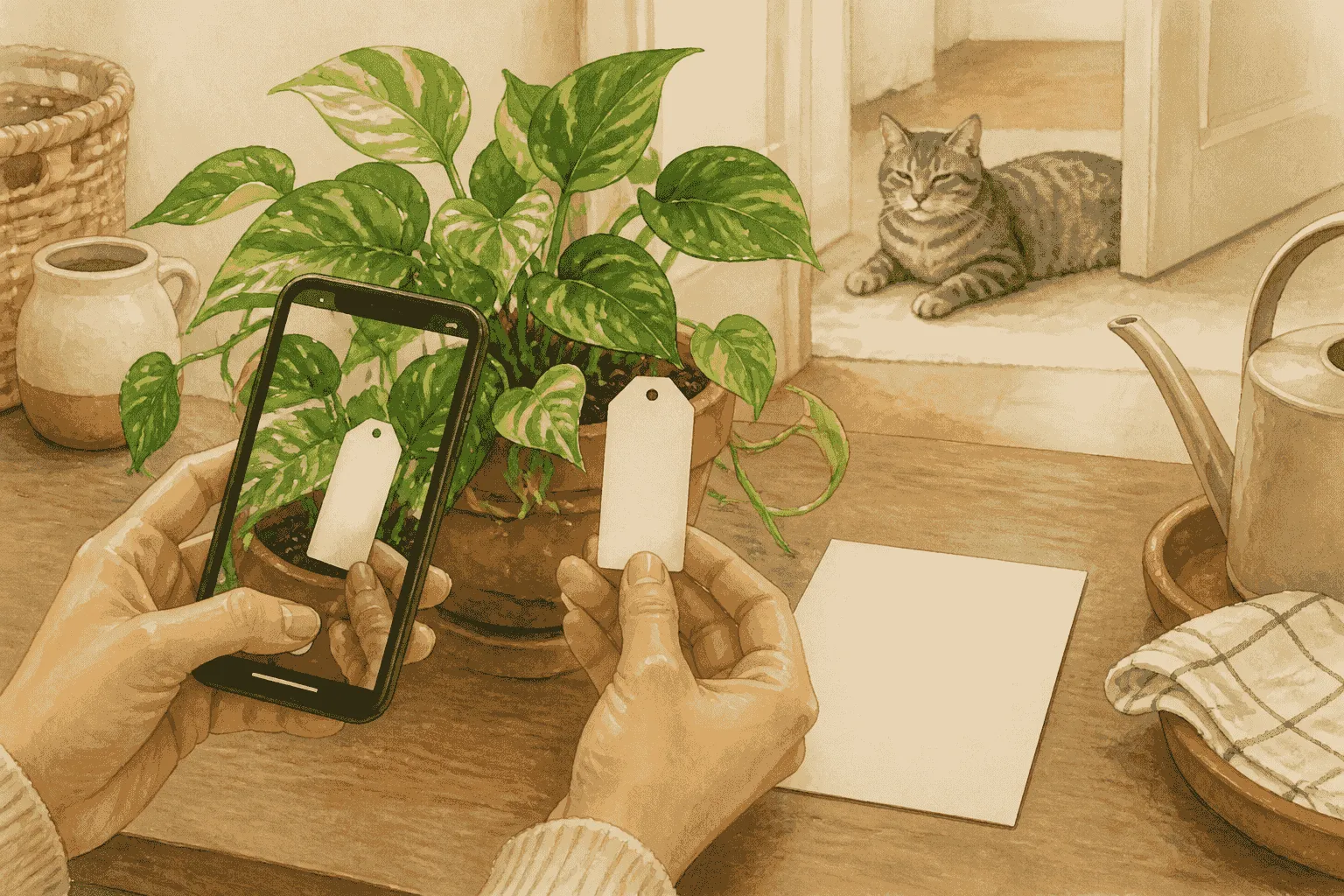
The ASPCA calls its entry Devil’s Ivy and lists Pothos, Golden Pothos, Taro Vine, and Ivy Arum as additional common names. Royal Botanic Gardens, Kew accepts Epipremnum aureum and lists Pothos aureus as a synonym. A nursery tag, retailer record, or saved plant note can therefore make the call more useful than a broad description such as “an ivy-like houseplant.”
That naming detail has a limit. It does not make every plant called ivy, every trailing plant, or every member of a broad plant family interchangeable. Do not treat one photo as confirmation or borrow a safety answer from a lookalike. The spider-plant safety guide shows why a common plant name can lead to a different evidence record.
What the ASPCA Listing Can—and Cannot—Tell You
For the named plant, ASPCA identifies insoluble calcium oxalates as the toxic principle. Its entry lists oral irritation; pain and swelling of the mouth, tongue, and lips; excessive drooling; vomiting; and difficulty swallowing as clinical signs.
Those listed signs can help you describe what you observe. They cannot prove that pothos caused a change, identify the plant after the fact, or predict what will happen to one cat. The public entry does not give an owner-use amount, timeline, or treatment plan. A small-looking chew, a cat’s size, or no visible change yet is not a home triage result.
Make a Pothos Snapshot Before the Call
Put the information a professional may need in one short note:
- the exact name on the plant label or your best honest description of what is unknown;
- which part may have been chewed, swallowed, or scattered, without inventing an amount;
- when it may have happened or when the plant was last known to be intact;
- current changes you have actually seen; and
- your cat’s age, approximate weight, relevant health information, and any product used on the pot or plant.
Keep the pot, label, detached pieces, and any fertilizer or pesticide packaging available. Secure the cat away from the plant while you gather those details, but do not delay the call in pursuit of a perfect record. “Unknown” is useful information.
Call Before a Home Remedy
American Veterinary Medical Association first-aid guidance says not to induce vomiting or give medication unless a veterinarian or poison-control professional directs it. That boundary matters here: an online plant page cannot decide what an individual cat needs after a particular exposure.
Call with the plant name, possible amount, timing, your cat’s details, and any observed changes. If you are uncertain whether the plant is pothos, say so. The aim is not to diagnose from a sign list; it is to give the professional the facts needed for the next step.
Are Pothos Toxic to Dogs, Too?
Yes. The same ASPCA Devil’s Ivy entry classifies Epipremnum aureum as toxic to dogs and lists the same insoluble calcium oxalates and clinical-sign information. The decision is also the same: keep the plant information, record what happened, and call before offering treatment at home.
Do not use a dog’s size as an amount threshold. The public source does not provide one. A named-plant classification is useful context for the call, not a prediction of outcome.
Make the New-Pet Plant Plan Concrete
For a new cat or dog, choose a home setup that prevents access to a plant you know is pothos rather than testing whether the animal will ignore it. Keep the plant’s full name with its room location, and save veterinary and poison-control contact details where everyone in the household can find them.
The useful next step is simple: identify the plant as accurately as you can, preserve the exposure details, and call before trying to treat it yourself.
Sources
Petzette's claim cards for this article point to the following scientific, veterinary, or animal-welfare sources.
- ASPCA And Kew Pothos Classification: Animal poison-control database and botanical taxonomic authority
- AVMA Pet First Aid: Poison Response Boundary: Veterinary-association first-aid brochure