Health Signals14 October 2026
Are Prayer Plants Toxic to Cats? Check the Label
Are prayer plants toxic to cats? Match the botanical label, separate plant from product exposure, and know when a veterinarian should guide the next call.
TextPetzette Editorial
Read3 Min
Evidence status
Source-backed editorial
- Evidence record
- 3 claim cards linked to 3 documented sources.
- Independent expert review
- Not commissioned. Petzette Editorial is responsible for the published wording.
- Source record checked
- 14 October 2026
- Scope
- General information, not an individual diagnosis or treatment plan.
Part of the plant safety checklist
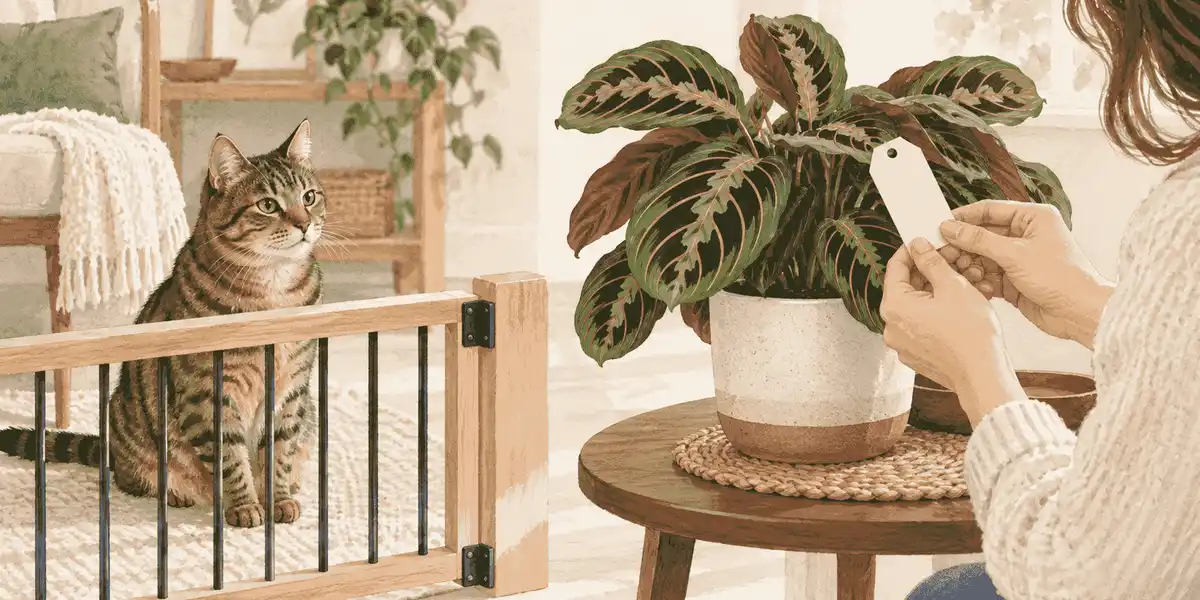
Are prayer plants toxic to cats? If the botanical label matches Calathea insignis, the ASPCA Animal Poison Control Center lists that named Prayer Plant entry as non-toxic to cats. That is a poison-control classification, not a snack label, a safe-amount rule, or a verdict about every plant sold under the same common name.
For a new-cat home, the useful decision is to identify the plant before interpreting the listing. Keep the cat away from the pot while you check the label, and treat an uncertain plant or an unwell cat as a veterinarian question.
Start With Calathea insignis, Not “Prayer Plant” Alone
The ASPCA entry identifies Prayer Plant as Calathea insignis in the Marantaceae family. It also lists common names including Maranta, Peacock Plant, Rattle Snake Plant, Red Veined Prayer, and Zebra Plant. Those names help you search, but the botanical name is the more useful checkpoint when a plant has been sold, gifted, or moved without its original tag.
Look for the nursery label, pot tag, receipt, or a reliable plant record. A photograph can help a professional, but it does not prove the species. Do not extend the Calathea insignis classification to an unlabeled plant that merely looks like a prayer plant, a mixed planter, or a product that happens to use “prayer” in its name.
The wider plants toxic to cats and dogs checklist is the right place for an unknown plant, several plants in one arrangement, or a room-by-room prevention check. This page owns the narrower named Prayer Plant question.
“Non-Toxic” Is a Classification, Not Permission to Feed the Plant
The ASPCA database records the named Prayer Plant entry as non-toxic to cats. That answer is useful for sorting a correctly identified plant from a known toxic classification, but it does not recommend chewing or eating the plant. The ASPCA plant-database guidance also warns that consuming plant material can still be followed by vomiting or gastrointestinal upset, even when a plant is listed as non-toxic.
That distinction prevents two common mistakes. First, do not turn a plant listing into a cat-treat suggestion. Second, do not dismiss a current change because the label says “non-toxic.” A cat’s condition, the plant’s identity, and everything else in the pot or room still matter.
Separate the Plant From What Is Beside the Pot
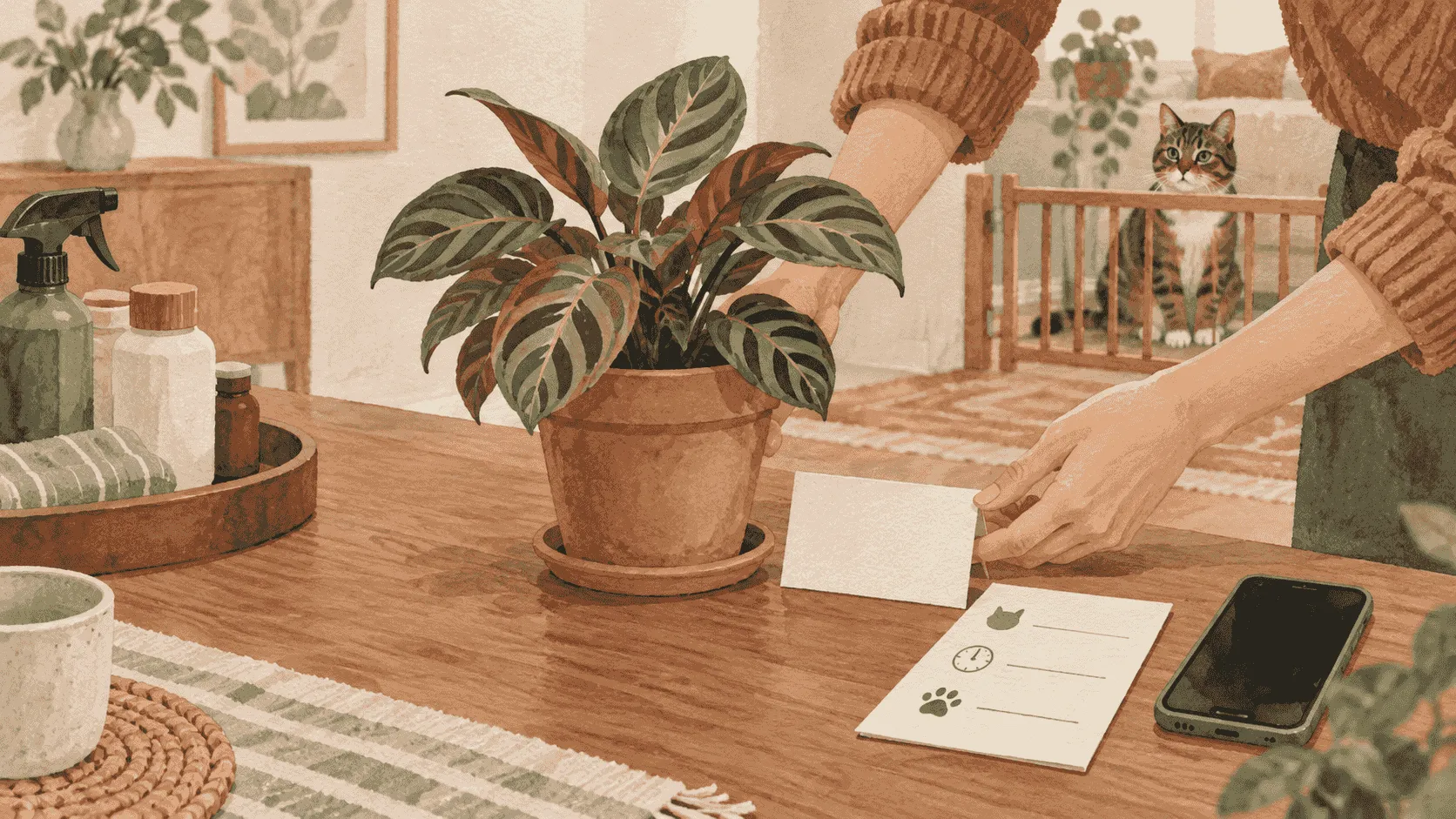
If a cat has reached the plant, write down what was actually accessible:
- the plant’s exact label or the best available identification;
- whether the cat chewed, swallowed, or only approached the plant;
- the possible time and amount of contact; and
- any fertilizer, pesticide, soil treatment, decorative pick, or other product in the pot.
These details keep a named-plant question separate from a product-exposure question. A non-toxic plant classification does not assess fertilizer, pesticide, potting material, or another plant sharing the container. Do not let the familiar common name erase those differences.
When to Ask a Veterinarian for the Next Step
Call your veterinarian or an appropriate animal poison-control service when the plant cannot be identified, the possible exposure involved a product or mixed planter, the cat is vomiting or otherwise unwell, or the amount and timing are unclear. Keep the label, a clear record, and any packaging available for the call.
Do not induce vomiting, give medication, or try a household remedy unless a veterinarian or poison-control professional specifically directs it. A non-toxic listing does not provide a dose, a waiting period, or a home-treatment plan.
The practical prayer-plant rule is short: match the label to Calathea insignis, keep the plant classification separate from the cat’s current condition, and call when the identity or exposure is uncertain. That gives a new-cat household a useful answer without pretending that one database entry can assess every plant, product, or individual cat.
Sources
Petzette's claim cards for this article point to the following scientific, veterinary, or animal-welfare sources.
- ASPCA Prayer Plant Poison-Control Classification: Animal poison-control plant-database record and public exposure guidance
- Spider Plant Poison-Control Classification And Name Check: Animal poison-control databases and veterinary manual guidance
- AVMA Pet First Aid: Poison Response Boundary: Veterinary-association first-aid brochure