Health Signals29 July 2026
Are Snake Plants Toxic to Cats? What to Do Next
Are snake plants toxic to cats? Confirm the plant, record a possible exposure, and call before trying any home treatment.
TextPetzette Editorial
Read4 Min

Evidence status
Source-backed editorial
- Evidence record
- 3 claim cards linked to 2 documented sources.
- Independent expert review
- Not commissioned. Petzette Editorial is responsible for the published wording.
- Source record checked
- 29 July 2026
- Scope
- General information, not an individual diagnosis or treatment plan.
Are snake plants toxic to cats? Yes. The ASPCA Animal Poison Control Center classifies the snake plant it names Sansevieria trifasciata as toxic to cats and dogs. If your cat may have chewed or swallowed part of one, keep the label, record what happened, and contact your veterinarian or an animal poison-control service before trying a home treatment.
This page handles one correctly identified snake-plant exposure. If the plant name is missing, several plants were involved, or you only have a photo match, use the broader plants toxic to cats and dogs checklist and report the uncertainty when you call.
Snake Plant Is Toxic to Cats: The Short Answer
The ASPCA entry identifies saponins as the toxic principle and lists nausea, vomiting, and diarrhea as clinical signs. Those categories explain why this is a call-first decision; they do not predict what will happen to an individual cat.
The public source does not provide an amount that owners can treat as safe, a timeline for signs, or a home-treatment plan. Do not turn a small-looking bite, a cat’s size, or the absence of a current change into a risk calculation. The exposure details belong in a professional conversation.
Why Two Scientific Names Appear on the Pot
You may see Sansevieria trifasciata on an older nursery label or poison-control entry. Royal Botanic Gardens, Kew now accepts Dracaena trifasciata and lists Sansevieria trifasciata as a synonym. In this case, the two full scientific names point to the same plant.
That does not make every Dracaena, every Sansevieria, or every upright striped plant interchangeable. Keep the complete name rather than relying on the genus or a picture alone. This naming boundary is also why the spider-plant safety answer cannot be borrowed for a snake plant.
Build a Label-to-Call Exposure Record
Make one compact note before or during the call:
- Plant identity: copy the full label, including either scientific name, and mark any uncertainty.
- Possible amount: note what looks chewed, missing, or scattered without inventing precision.
- Time: record when it may have happened or the last known time the plant was intact.
- Cat details: have age, approximate weight, relevant health information, and current changes ready.
- Other substances: keep the pot, label, and any product packaging available so you can describe the whole scene.
This is a handoff, not a scoring system. “Unknown” is useful information. Do not delay the call to create a perfect estimate.
Move the Plant Without Losing the Evidence
Separate your cat from the plant calmly and prevent another bite. Keep the plant, detached pieces, pot, and label available rather than discarding the only identity clues. If someone else is present, one person can secure the area while the other starts the call.
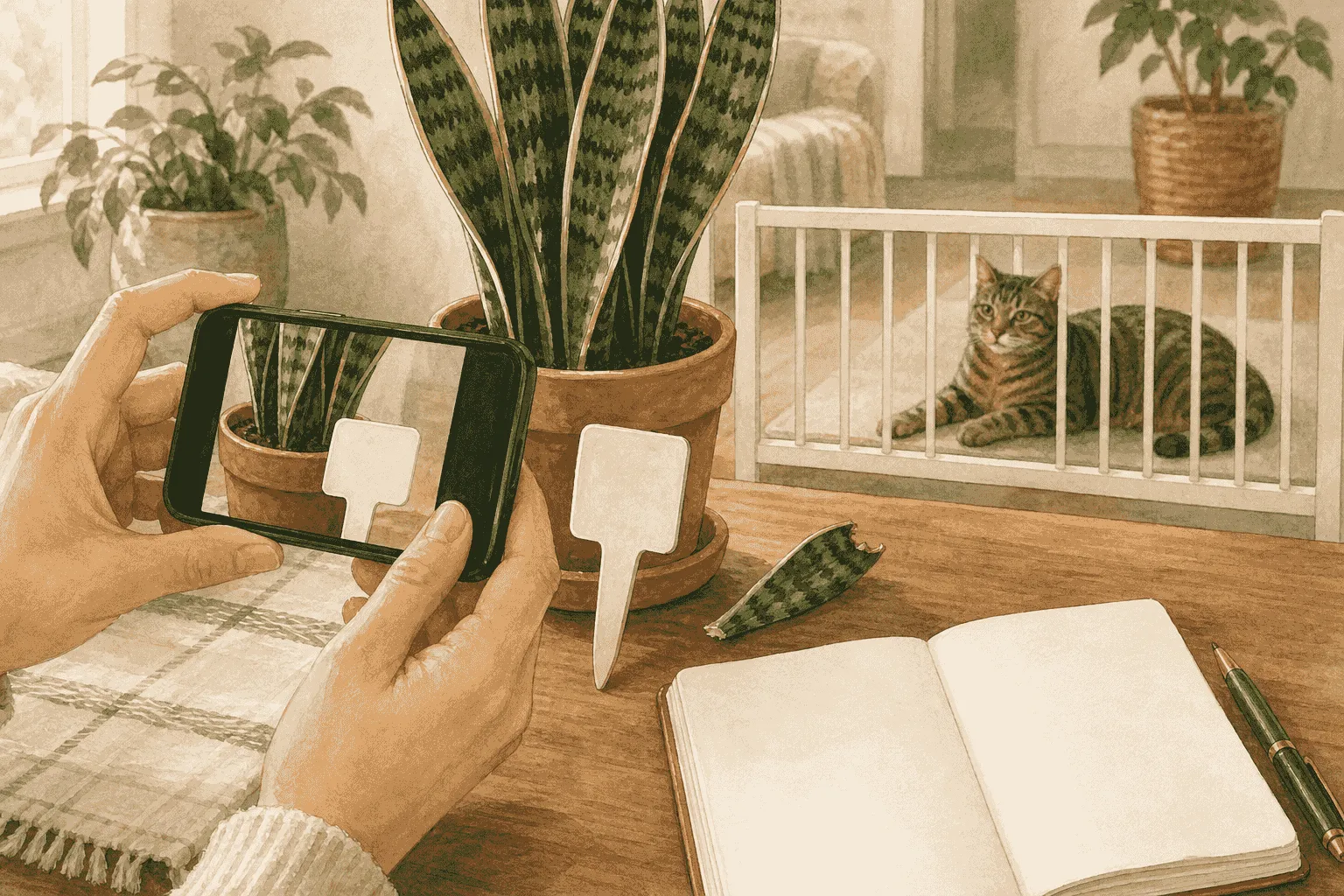
American Veterinary Medical Association first-aid guidance sets a clear boundary after suspected poisoning: do not induce vomiting or give medication unless a veterinarian or poison-control professional directs it. A general article cannot choose a treatment for the plant, amount, timing, and cat in front of you.
What the Listed Signs Can—and Cannot—Tell You
Nausea, vomiting, and diarrhea appear in the ASPCA snake-plant entry, but these signs have many possible causes. They cannot confirm the plant identity or diagnose snake-plant poisoning by themselves. Likewise, a cat that currently looks unchanged has not supplied an all-clear.
Describe what you actually observe and when it began. If vomiting is part of the picture, the guide to what to notice when a cat vomits can help you report the event clearly without using it as a diagnosis. Follow the veterinarian’s or poison-control professional’s instructions for the individual exposure.
Are Snake Plants Toxic to Dogs?
Yes. The same ASPCA entry classifies Sansevieria trifasciata as toxic to dogs and lists the same saponin and gastrointestinal-sign information. The response is also the same: secure the plant, keep the label, record the possible amount and time, and call for individual direction before giving anything at home.
Do not convert a dog’s larger body size into a safe amount. The public source does not provide an owner-use dose threshold.
Reset the Room for a New Pet
After the immediate question is handled, check every reachable plant for a complete label and save the botanical names in one household note. Move a known snake plant out of pet access rather than relying on a cat or dog to ignore it, and keep veterinary and poison-control contact details easy to find.
The practical decision is straightforward: a correctly identified snake plant is classified as toxic to cats and dogs. Preserve the name, record the exposure, and call before trying to treat it yourself.
Sources
Petzette's claim cards for this article point to the following scientific, veterinary, or animal-welfare sources.
- ASPCA And Kew Snake Plant Classification: Animal poison-control database and botanical taxonomic authority
- AVMA Pet First Aid: Poison Response Boundary: Veterinary-association first-aid brochure