Health Signals27 July 2026
Are Spider Plants Toxic to Cats? Check the Label First
Are spider plants toxic to cats? Compare the botanical name, understand conflicting guidance, and know when to call your veterinarian.
TextPetzette Editorial
Read4 Min
Evidence status
Source-backed editorial
- Evidence record
- 4 claim cards linked to 2 documented sources.
- Independent expert review
- Not commissioned. Petzette Editorial is responsible for the published wording.
- Source record checked
- 27 July 2026
- Scope
- General information, not an individual diagnosis or treatment plan.
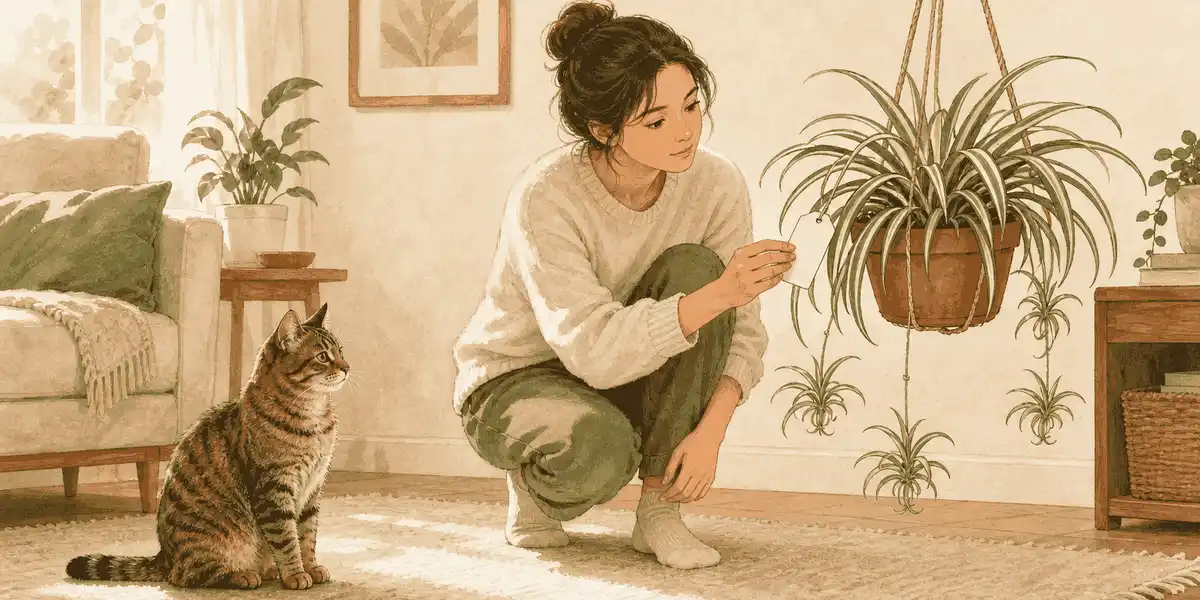
Are spider plants toxic to cats? For the houseplant botanically named Chlorophytum comosum, the ASPCA Animal Poison Control Center and Pet Poison Helpline classify it as non-toxic to cats and dogs. That is useful reassurance, but it is not a promise that chewing the plant will cause no signs. The safer decision depends on the exact plant, what happened, and how your cat is doing now.
This guide handles that one spider-plant decision. For an identification and call checklist that works across bouquets, bulbs, and unknown greenery, use the plants toxic to cats and dogs owner checklist.
Why the Spider Plant Answer Is Not One Word
ASPCA and Pet Poison Helpline agree on the named plant: Chlorophytum comosum is listed as non-toxic to cats and dogs. The ASPCA database also cautions that eating any plant material can be associated with vomiting or gastrointestinal upset.
The Merck Veterinary Manual takes a more cautious route. Its houseplant table records vomiting, salivation, retching, and a temporary reduction in appetite in cats after Chlorophytum species ingestion. It reports no deaths or diarrhea in that entry, but that does not create an amount that owners can treat as risk-free.
The practical reading is simple: “non-toxic” is a poison-control classification, not an edible label. It lowers concern about the specific poison profile, while the cat’s current condition still matters.
Check “Ribbon Plant” Against the Botanical Name
Common names can change the safety answer. Pet Poison Helpline notes that “ribbon plant” can mean Chlorophytum comosum, the spider plant it classifies as non-toxic, or Dracaena sanderiana, often called lucky bamboo.
Those plants do not share the same exposure profile. The Dracaena entry is associated with drooling and vomiting in companion animals and with dilated pupils and a wobbly gait in cats. Do not choose between them from one lookalike photo.
Find the nursery label, receipt, pot tag, or botanical name in a reliable plant record. If the name is missing or the pot contains more than one plant, treat the identity as uncertain when you call.
Use a Five-Detail Spider Plant Exposure Check
Move your cat away from the plant without turning the moment into a chase. Keep the plant and its label available, then write down:
- Identity: the common and botanical names, including any uncertainty.
- Contact: whether your cat chewed, swallowed, or only played with the leaves or plantlets.
- Possible amount: what appears to be missing, without inventing precision.
- Time: when it happened or the best estimate.
- Current condition: any vomiting, drooling, retching, appetite change, diarrhea, or other change, plus possible contact with fertilizer, pesticide, potting mix, or another plant.
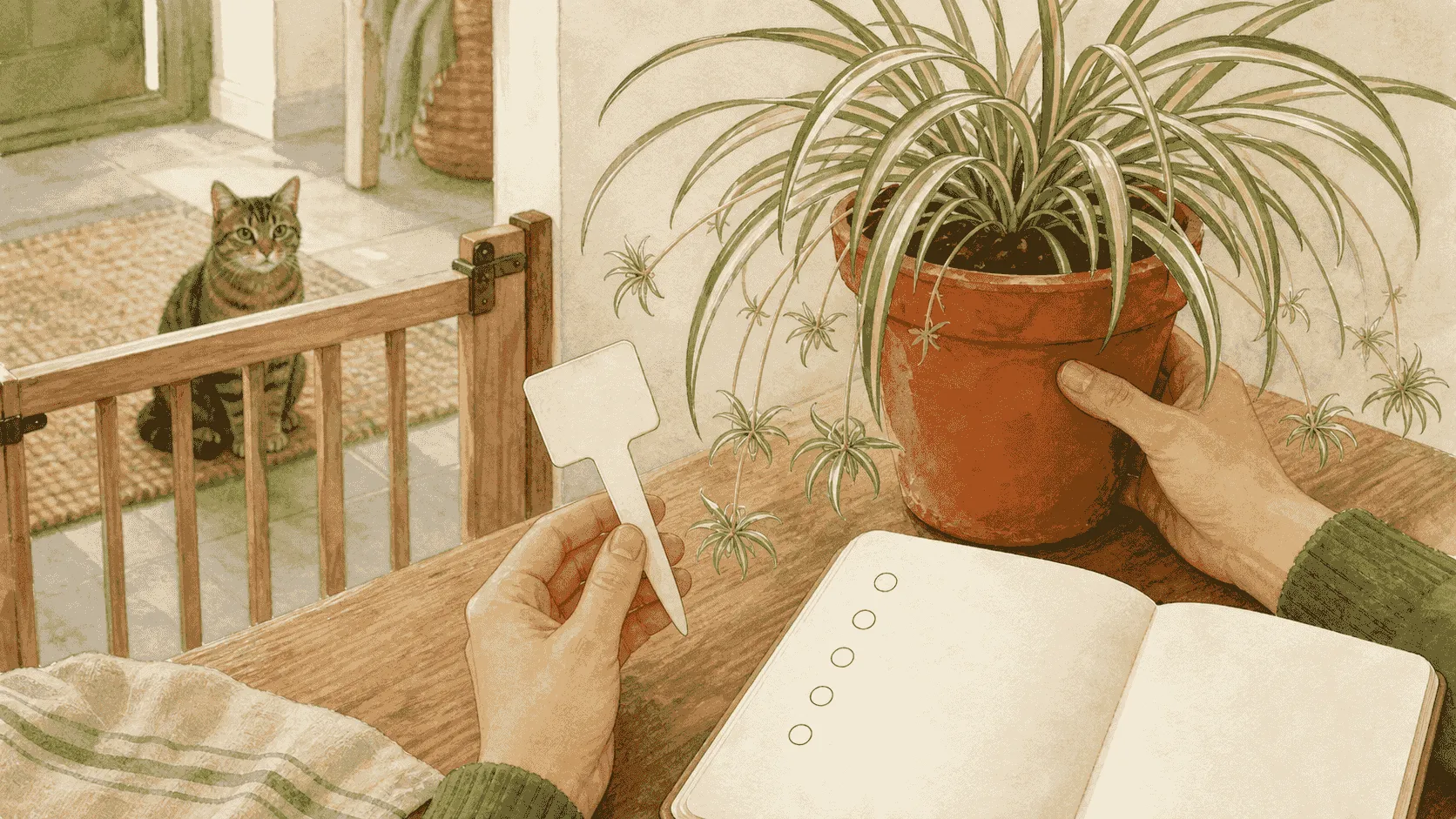
This record separates the plant classification from the real exposure. It also gives a veterinarian or poison-control professional facts they can use.
When to Call Your Veterinarian
Contact your veterinarian or an animal poison-control service when the botanical identity is uncertain, your cat is unwell, another product may be involved, or you have any concern about the exposure. A general article cannot set a safe amount for an individual animal.
American Veterinary Medical Association first-aid guidance says not to induce vomiting or give medication unless a veterinarian or poison-control professional directs it. Keep the label beside you and call before trying a household remedy.
Vomiting has many possible causes and cannot identify the plant involved. If you are trying to describe what you saw, the guide to cat vomiting and when to call explains the useful difference between vomiting and regurgitation without turning either event into a diagnosis.
Are Spider Plants Toxic to Dogs?
The same named-plant distinction applies to dogs. ASPCA and Pet Poison Helpline classify Chlorophytum comosum as non-toxic to dogs, but eating plant material can still coincide with gastrointestinal upset. Confirm the label, record the exposure, and ask a veterinarian for direction if your dog is unwell or the identity is uncertain.
Make the Next Check Easier
Keep the botanical label with the pot, and place trailing leaves and plantlets where your cat cannot repeatedly reach them. Check any fertilizer, pesticide, or soil-product label separately; the spider plant’s classification does not cover those products.
The evidence does not establish one reason a particular cat chews a spider plant, so avoid diagnosing boredom, stress, or a dietary problem from the behavior alone. If plant chewing becomes persistent or arrives with appetite, digestive, or other health changes, discuss the pattern with your veterinarian.
The useful answer is not simply “safe” or “toxic.” Confirm Chlorophytum comosum, note what happened, read the cat in front of you, and call when the name or the animal’s condition leaves doubt.
Sources
Petzette's claim cards for this article point to the following scientific, veterinary, or animal-welfare sources.
- Spider Plant Poison-Control Classification And Name Check: Animal poison-control databases and veterinary manual guidance
- AVMA Pet First Aid: Poison Response Boundary: Veterinary-association first-aid brochure