Nutrition05 September 2026
Are Mushrooms Toxic to Dogs? A Wild-Mushroom Safety Check
Are mushrooms toxic to dogs? Treat a possible wild-mushroom exposure as a prompt veterinarian or poison-control call, not a home identification test.
TextPetzette Editorial
Read5 Min
Evidence status
Source-backed editorial
- Evidence record
- 2 claim cards linked to 1 documented source.
- Independent expert review
- Not commissioned. Petzette Editorial is responsible for the published wording.
- Source record checked
- 05 August 2026
- Scope
- General information, not an individual diagnosis or treatment plan.
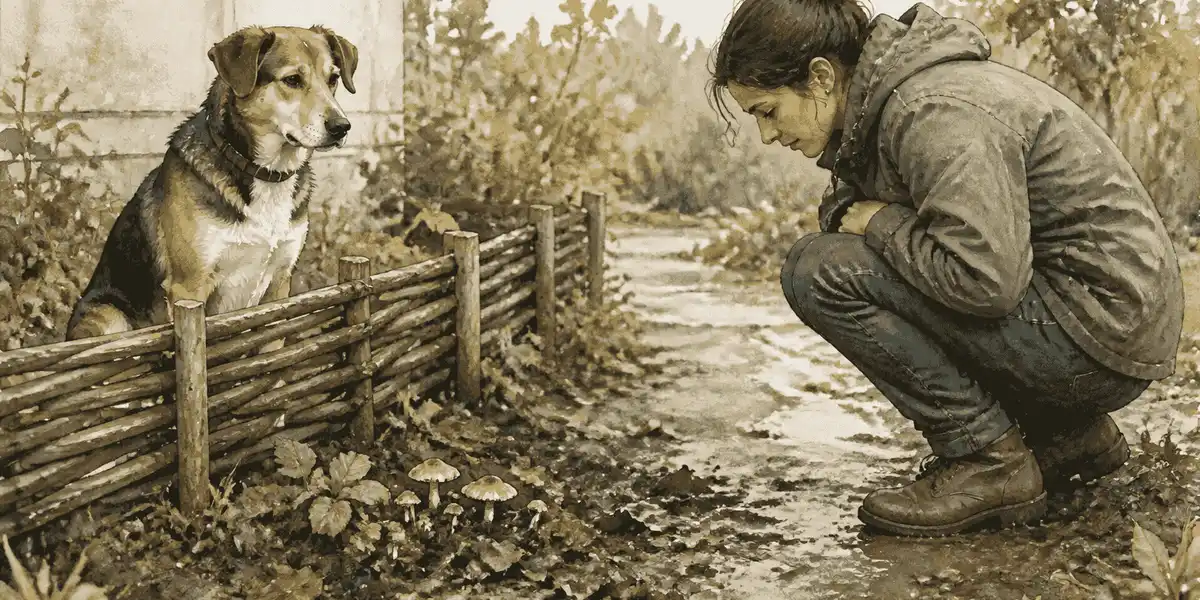
Are mushrooms toxic to dogs? Some wild mushrooms are toxic and some are not, and the difference can be difficult to judge from the mushroom in front of you. If your dog may have eaten a wild mushroom, the safer decision is to contact a veterinarian or animal poison-control service promptly—not to solve the species question at home or wait for one expected sign.
This guide is about wild mushrooms encountered outdoors in a yard, park, wood, or similar setting. It is not a mushroom-identification guide, a dose chart, or a treatment plan. Ordinary culinary mushrooms, prepared foods, and other exposures can lead to different questions.
Why the mushroom name is not enough
The UC Davis School of Veterinary Medicine explains that toxic and non-toxic wild mushrooms can be difficult to distinguish, and that different mushroom toxins can produce different effects. That makes a quick visual answer unreliable. A cap colour, a shape, a search result, or a photograph may look convincing without clearing the dog in front of you.
The useful first-year decision is therefore not “Which mushroom is this?” It is “Could my dog have accessed a wild mushroom, and who should guide the next step?” That keeps the response tied to the exposure rather than to a guess. It also avoids turning one familiar-looking specimen into a rule for every mushroom in the garden.
California Department of Public Health guidance also directs pet mushroom exposures toward a veterinarian or animal poison-control service. The two sources point to the same practical boundary: possible wild-mushroom ingestion belongs in a professional conversation, even when the mushroom is small or the dog seems unchanged at first.
If your dog may have eaten one
Use a short, calm sequence:
- Prevent another mouthful. Move your dog away from the patch or change the route so there is no second chance to eat from it. Do this without turning the moment into a chase or asking your dog to investigate the mushroom again.
- Make the call promptly. Tell your veterinarian or an animal poison-control service that a wild mushroom may have been chewed or swallowed. If you are unsure whether it was swallowed, say that plainly; uncertainty is useful information, not a reason to invent a safer answer.
- Keep the scene details. Note where it happened, when you noticed it, whether you saw mouthing or swallowing, and what else was accessible nearby. If a photograph already exists, keep it as context for the call, not as proof that the mushroom is safe.
The record does not need a perfect amount or a confident species name. Write “unknown” when that is the most accurate description. Your job is to preserve what you observed while a professional decides what information or assessment is needed for this dog.
Do not turn symptoms into a waiting rule
Wild-mushroom guidance does not support a symptom-timing chart that lets an owner clear a dog at home. Different toxins can produce different effects, and neither the absence of one visible sign nor the presence of a familiar sign explains the exposure on its own.
That means “wait for vomiting,” “watch for a few hours,” or “the dog is acting normal” are not substitutes for the call. A professional can decide how urgent the situation is from the possible material, the timing, the dog’s history, and the current condition. This article cannot make that decision for an individual animal.
Do not induce vomiting, give charcoal, offer medicines, or try another home treatment based on a mushroom search result. The accepted evidence supports prompt veterinary or poison-control direction; it does not provide a home decontamination method or a safe amount.
Reduce access before the next walk
Prevention is practical, but it is not a guarantee. UC Davis advises checking the outdoor areas a dog can reach, especially during warm, wet conditions, and keeping close watch around wild mushrooms on walks or in parks, woods, and rocky areas.
Build that check into the normal route rather than treating it as a one-time inspection:
- Scan the part of the yard your dog can reach before letting the dog out.
- Pay extra attention after warm, wet weather, when new growth may be easier to miss.
- On walks, keep enough awareness of the ground that you can redirect before your dog reaches a mushroom patch.
- If a route repeatedly contains mushrooms, choose a different line or keep your dog close enough to prevent access.
These steps reduce opportunity. They do not identify a mushroom, prove a yard is clear for the whole day, or change what to do after a possible ingestion. If you need a separate plan for a dog eating soil or scavenging ordinary nonfood material, keep that question separate and use the dirt-eating observation plan rather than borrowing a mushroom rule.
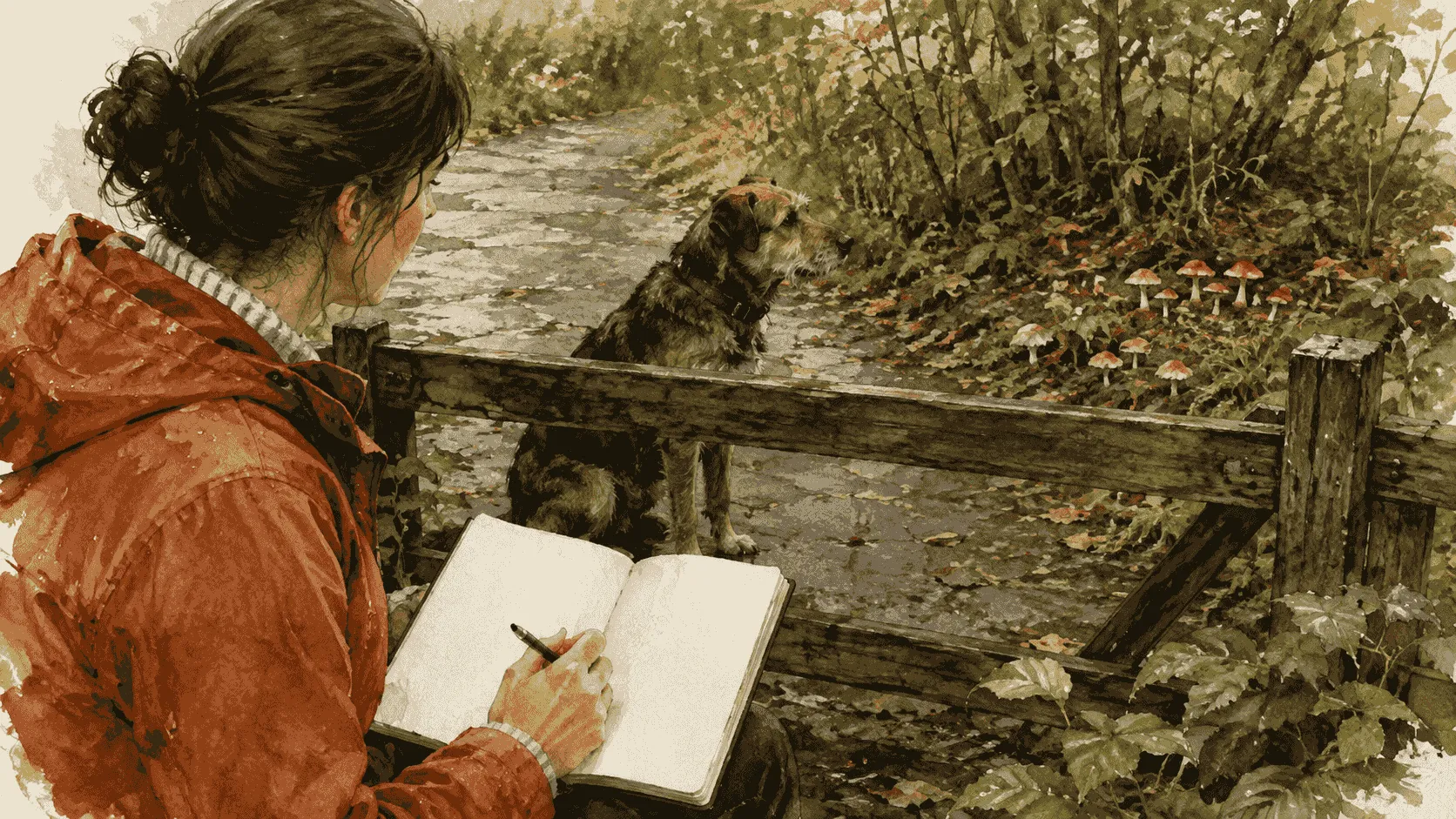
Keep the boundary clear for a new dog
A new dog may encounter mushrooms before the household has mapped every reachable part of a garden, park, or walking route. Use supervision and route choices to prevent access rather than expecting a cue to solve an unknown outdoor hazard.
Training can sit alongside those access checks, but it does not make an unknown mushroom safe and it does not replace professional direction after a possible ingestion.
The same principle applies if another person in the household finds the mushroom first. Agree on one simple response: keep the dog away, preserve the facts, and make the call. Avoid a group attempt to identify the specimen, compare internet photos, or wait for a dramatic change before deciding whether the exposure matters.
The useful answer is a next step
So, are mushrooms toxic to dogs? Some wild mushrooms are toxic, some are not, and the difference is not reliably settled by a quick home inspection. Treat possible access as a prompt veterinarian or animal poison-control question. Do not wait for a predicted symptom, do not improvise treatment, and do not let a photo or colour become a false all-clear.
For prevention, check reachable outdoor areas in warm, wet conditions and supervise around mushroom growth on walks. For an actual possible ingestion, move the dog away, keep the details, and contact the professional who can decide what happens next.
Sources
Petzette's claim cards for this article point to the following scientific, veterinary, or animal-welfare sources.
- UC Davis and California Public Health: Dog Wild-Mushroom Safety: Veterinary-school owner education and government public-health emergency guidance
- Young A, Palm C. “Mushroom Toxicity in Dogs.” UC Davis School of Veterinary Medicine, 3 December 2021. Directly reviewed 2026-08-05.