Health Signals04 August 2026
Are Sunflowers Toxic to Cats and Dogs? Check the Label
Are sunflowers toxic to cats and dogs? Match the plant label, separate added products, and know when an exposure needs a call.
TextPetzette Editorial
Read4 Min

Evidence status
Source-backed editorial
- Evidence record
- 3 claim cards linked to 3 documented sources.
- Independent expert review
- Not commissioned. Petzette Editorial is responsible for the published wording.
- Source record checked
- 04 August 2026
- Scope
- General information, not an individual diagnosis or treatment plan.
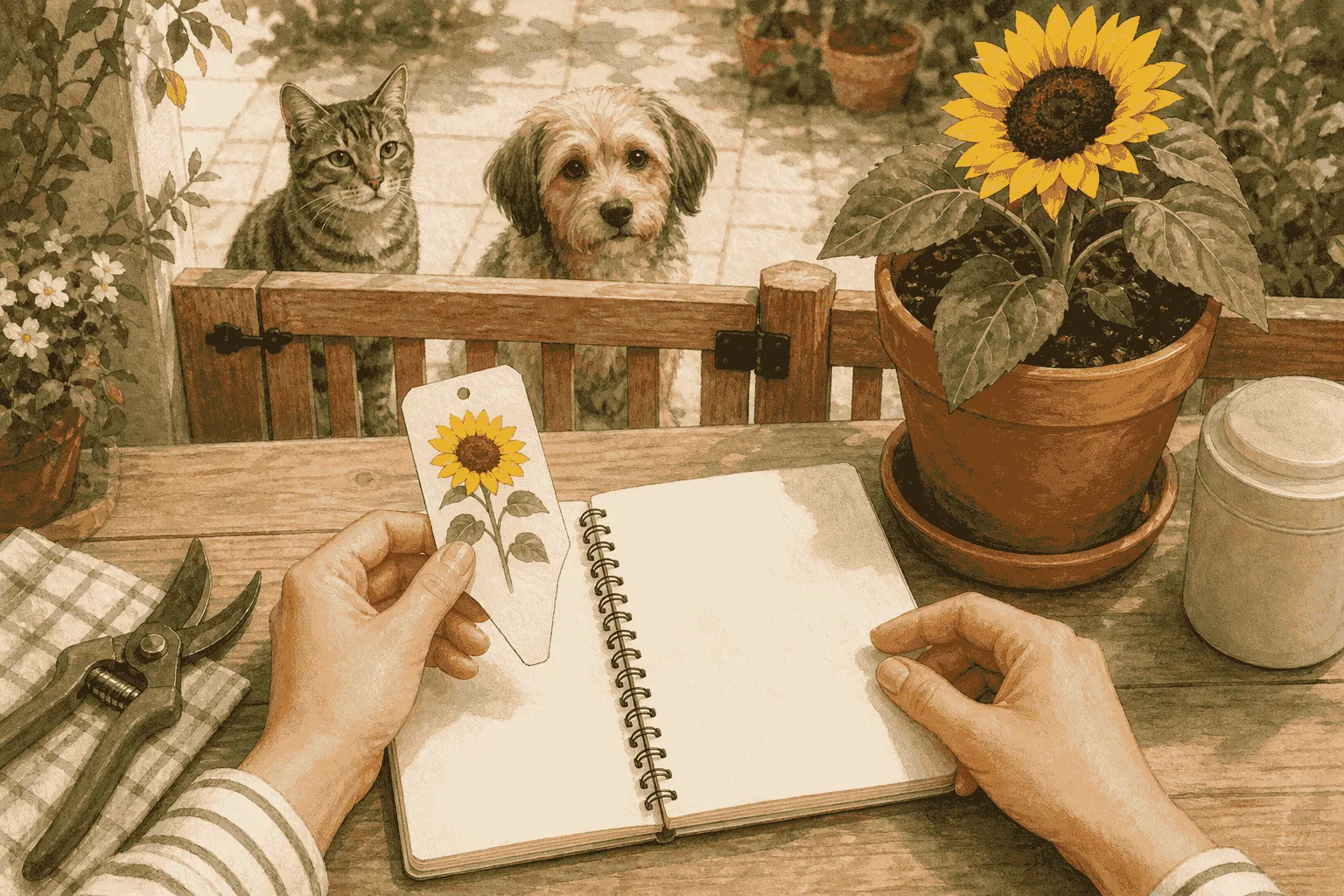
Are sunflowers toxic to cats and dogs? When the plant can be matched to a Helianthus label or reliable record, ASPCA Animal Poison Control Center guidance lists sunflower as non-toxic to both. The useful answer is still bounded: a non-toxic classification describes the named plant, not an unknown bouquet, a treated pot, or a pet that is unwell.
This guide handles one sunflower decision. For a mixed planting, a missing label, or a concerning exposure, start with the broader plants toxic to cats and dogs checklist. It also deliberately leaves seed packets, birdseed mixes, and products carrying “sunflower” in the name outside this answer; they are product questions, not the same as a named-plant classification.
The Short Answer Applies to a Confirmed Helianthus
The ASPCA entry headed “Sunflower” identifies Helianthus angustifolius, with “swamp sunflower” as an additional common name, and lists it as non-toxic to cats and dogs. ASPCA’s 2024 Animal Poison Control Center garden guidance also includes sunflower (Helianthus spp.) among plants that are non-toxic to both species.
That is a reassuring classification, not a broad permission slip. It becomes useful after you match the plant to a nursery tag, florist sleeve, receipt, or another reliable record. A flower color, a leaf shape, or a quick image search can support the question you ask, but it cannot confirm the botanical identity on its own.
If the label is gone, take a clear photo of the whole plant, the pot, and any packaging. Keep the uncertainty in the record. A professional can use that information; a confident guess can send the call down the wrong path.
Match the Garden Plant to the Record
Before deciding that a sunflower label answers the whole situation, separate these details:
- The named plant: note “sunflower” and any Helianthus name on the tag.
- What else was present: keep fertilizer, pest-control, flower-food, potting-material, or bouquet packaging information with the plant record.
- What happened: write down whether the pet chewed, swallowed, dug in the pot, or had contact with an uncertain mixture; include the possible time and amount without trying to invent precision.
This small record has a practical benefit: it keeps the sunflower classification separate from another material that may need its own answer. It also avoids turning a garden label into a diagnosis. If the plant name or an added product is uncertain, contact your veterinarian or an animal poison-control service for direction rather than trying to settle the question from a photo.
A Non-Toxic Listing Is Not an Edible Label
The ASPCA plant-database overview notes that eating plant material may still be associated with vomiting and gastrointestinal upset in cats and dogs. In other words, “non-toxic” is a poison-control classification; it does not predict a symptom-free afternoon or make the plant a treat.
Keep the plant out of routine chewing reach, and keep garden products in their original closed containers. If a pet becomes ill after contact with a sunflower, the plant listing alone cannot say why. The useful information is the full exposure record and the animal’s current condition.
Choose One of Three Next Steps
Use the route that matches what you actually know:
- Confirmed Helianthus, pet comfortable, no added product involved: remove access, keep the label, and make a short note of the time and disturbed plant parts. Watch the whole pet rather than treating the classification as a final health verdict.
- Plant or product uncertain: save the tag, packaging, and photos, then ask your veterinarian or an animal poison-control service for individual guidance.
- Any concerning change: call a veterinarian promptly. Report the plant name, possible amount and plant part, timing, the pet’s details, and what you are seeing now.
American Veterinary Medical Association first-aid guidance says not to induce vomiting or give medication unless a veterinarian or poison-control professional directs it. This page cannot provide an amount threshold, identify the cause of a sign, or choose treatment for one animal.
Let This Stay a Narrow Plant Answer
The same named-plant classification applies when the question is “Are sunflowers toxic to dogs?” The next action can still change if a dog encounters an unknown mulch, a garden product, or an unwell animal. That is why a sunflower page needs a different decision from the moth orchid label check: both start with identity, but neither makes a shared name or a reassuring listing do more than the evidence supports.
Before a new pet has access to the garden, photograph labels and store them with the household plant list. The calm, useful answer is precise: confirmed sunflower (Helianthus) is listed as non-toxic to cats and dogs by ASPCA guidance. Uncertainty, added materials, or illness are the cues to move from reassurance to a professional call.
Sources
Petzette's claim cards for this article point to the following scientific, veterinary, or animal-welfare sources.
- ASPCA Sunflower Plant Classification: Animal poison-control plant database and public safety guidance
- Spider Plant Poison-Control Classification And Name Check: Animal poison-control databases and veterinary manual guidance
- AVMA Pet First Aid: Poison Response Boundary: Veterinary-association first-aid brochure